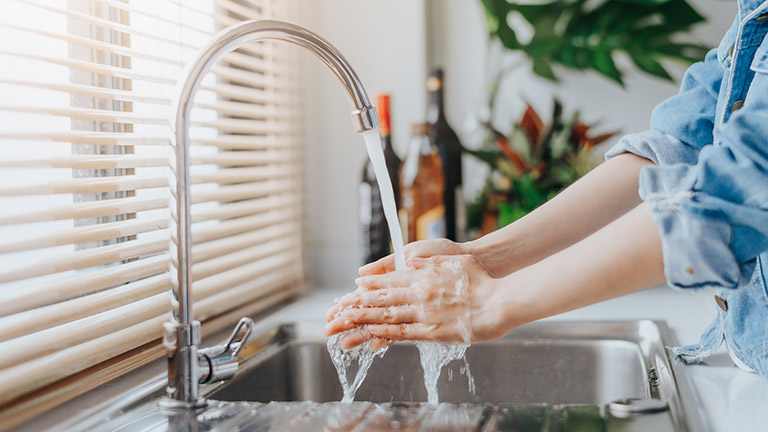
"I had a great experience with Total Care Plumbing. They came out quickly and repaired my kitchen sink faucet after the hose broke. Nolan was professional, efficient, and had everything working again in no time. I would definitely recommend them to anyone looking for reliable plumbing service."
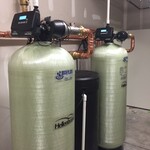
"High quality products, excellent service. I have their water treatment systems at my house, office and cabin. I highly recommend them if you are looking for quality products that will last a long time."
We are a locally owned and operated company that values honesty and integrity in all aspects of our business. Our dedicated team of professionals have several years of hands on experience to provide innovative ideas and suggestions tailored to your projects. Our services are customized to your individual needs, paying close attention to the details of each project that we are involved with. Please feel free to contact us today!
Our mission at Lindsay's Crystal Pure Water, Inc. is to continue the growth of our business by doing right by all of our clients. We love seeing that one of a kind smile on a home owners face at the end of a project! Lindsay's Crystal Pure Water, Inc. stacks up with the competition and surpasses it with competitive prices, second to none workmanship and a prompt/responsive team! We give you quality that you can measure, and a finished product that will enhance your home forever. Call us today!
FM Water Systems is your locally owned and operated authorized Kinetico Dealer with over 30 years of experience. We take great pride in our prompt response, expertise and superior customer service every time so call today!
\n
\nCommercial and Residential clients always welcome!
Yes. To get soft water, you can install a water softening system, which will replace the calcium and magnesium ions in the water with sodium or potassium ions. Water softeners cost anywhere from $200 to $6,000, depending on the size and complexity of the system. You can either install a water softener for the whole house or just at your shower heads. If you’re sensitive to sodium or potassium, you can install a salt-free water conditioner.
Most of the U.S. has hard water, especially across portions of the West and Midwest. The areas with the hardest water include parts of Texas, Oklahoma, Kansas, Colorado, New Mexico, Utah, Wyoming, Illinois, North and South Dakota, Ohio, and New York. You’ll find soft water in parts of New England, the Southeast, the Pacific Northwest, and Hawaii.
Hard water doesn’t hurt, but it might feel more abrasive, especially if you have sensitive skin. It’s also about how your skin feels after bathing. You might feel as though you have a sticky film over your body because you do—it’s all that soapy residue left behind because the hard water can’t rinse it off completely.
Soft water is better for your hair. The minerals in hard water can dry out hair, make it brittle, and leave a film on the hair and scalp that may cause irritation. Hard water also doesn't rinse out shampoo and conditioner effectively, which can lead to product buildup that makes hair look dull and limp. You may also find you need to use more shampoo to get a good lather in hard water.
Because it’s been through the water cycle, evaporating and becoming slightly acidic thanks to dissolved carbon dioxide in the atmosphere, rainwater tends to be naturally soft compared to groundwater, which has just been in contact with limestone. However, the natural hardness level of water always depends on where you are and other factors.
The Mekinock, ND homeowners’ guide to water softener services
From average costs to expert advice, get all the answers you need to get your job done.
Water softeners work to remove unwanted minerals from hard water through a filtration and recharge cycle. Keep reading to learn how a water softener works.
There are four common softener alternatives available on the market today. We compare and contrast each one to help you find your best-fit solution in this blog.
Water softeners rid your home of hard minerals and, well, soften your water. Even better, the regeneration process is an automatic cycle that works when you’re least likely to use it.
Water softeners remove hard minerals from your tap water, improving plumbing systems and water-using appliances. Here are the most efficient water softeners out there.