




Top-rated generator install pros.

Get matched with top generator install pros in Hazen, ND

Enter your zip and get matched with up to 5 pros

Need a pro for your generator install project in Hazen, ND?

Select your specific project to find the pro for you.

Find Generator install pros in Hazen

Avatar for ACT1V8 Electric, LLC
ACT1V8 Electric, LLC
4.7(
23
)

Serving Hazen, ND and surrounding areas

Approved

In business since 2020

Free estimates

Credit card accepted

"Aaron the owner came out on a weekend too do a wiring inspection on a house my wife and I just moved into. I made several calls trying too find an electrician and in a timely manner. Several tried to upcharge (and didnâ t know I am a licensed contractor in the state I just moved from. ) He provided not only honest answers but a fair affordable price that I can safely feel confident calling again for any further electrical needs"
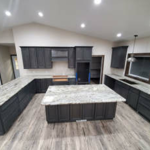
Electrical Wiring
Electrical Wiring
Panel Upgrade
Panel Upgrade
Electrical Wiring

+4

Response time2 days
Response rate85%
14 neighbors recently requested a quote
Lawson Electric LLC
New to Angi

Serving Hazen, ND and surrounding areas

Approved

In business since 2020

Free estimates

Credit card accepted

Lawson Electric LLC is committed to excellence in every aspect of our business. We uphold a standard of integrity bound by fairness, honesty, and personal responsibility. Our distinction is the quality of service we bring to our customers. Accurate knowledge of our trade combined with ability is what makes us true professionals. Above all, we are watchful of our customers' interests, and make their concerns the basis of our business.\n

Response time2 days
Showing 1-10 of 16
Generator Install questions, answered by experts

Here’s what you can run with different wattages and types of generators:

Portable generator:

  • 2,000 watts can handle a large appliance like a freezer or refrigerator, plus a few smaller items like phones or computer chargers. 

  • 4,000 watts will keep two large appliances operating and a few smaller devices.

  • 8,000 watts should power most essential appliances and other devices, including a sump pump, well pump, or your dishwasher.

Partial to whole-house generator:

  • 20,000 watts and above will make it seem like your home’s power is still on.

Yes, installing a generator usually increases your property value because buyers are getting the added peace of mind knowing they’ll be able to maintain power through blackouts. In most cases, you should see close to a 100% return on investment (ROI). Keep in mind that home generators usually need a permanent foundation, and installing a concrete slab will likely raise your property taxes slightly.

If you’re wondering whether gas generators produce carbon monoxide, know that natural gas generators do not produce carbon monoxide if they are functioning properly, as natural gas burns cleanly. However, if the generator malfunctions and the gas does not burn completely, there is potential for carbon dioxide to be produced. To prevent malfunctions, it's crucial to perform regular maintenance, including running the generator weekly and scheduling professional inspections every 6 to 12 months. Also, be sure to test your carbon monoxide detectors regularly to ensure they function in the rare case of the generator producing carbon monoxide.

If your home already has a grinder pump and you’re still noticing issues (like frequently clogged toilets and sinks), it could be time to upgrade your grinder pump. Start by checking your existing horsepower. If there are four or fewer people living in your home, using a 1/2-horsepower grinder pump should be sufficient. Larger households should consider investing in a 1-horsepower grinder pump to maximize wastewater removal efforts.

Sizing a generator is a careful process that requires calculating the electrical load of your entire house. You have to take into account every device you want to use and their wattage requirements, plus the wattage needed to start them, and look for a generator that can safely run all that at around 80% capacity.

In more practical terms, a small home can run on a 10,000-watt generator (and if you only want to power a few key appliances, much less than that). A mid-sized home may need something between 15,000 and 22,000 watts. Larger homes require 25,000 watts or more. 

The Hazen, ND homeowners’ guide to generator installs

From average costs to expert advice, get all the answers you need to get your job done.