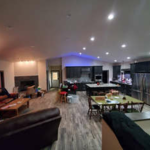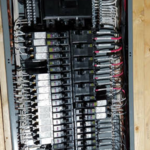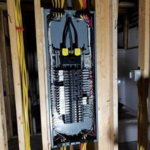



"Aaron the owner came out on a weekend too do a wiring inspection on a house my wife and I just moved into. I made several calls trying too find an electrician and in a timely manner. Several tried to upcharge (and didnâ t know I am a licensed contractor in the state I just moved from. ) He provided not only honest answers but a fair affordable price that I can safely feel confident calling again for any further electrical needs"
Lawson Electric LLC is committed to excellence in every aspect of our business. We uphold a standard of integrity bound by fairness, honesty, and personal responsibility. Our distinction is the quality of service we bring to our customers. Accurate knowledge of our trade combined with ability is what makes us true professionals. Above all, we are watchful of our customers' interests, and make their concerns the basis of our business.\n
Hi I’m JP. I’m an experienced electrician. I got over 15 years of professional installation expertise. Anything you need installed in a clean, never notice my work type of way. I can promise you it’s worth the call. No one is better. Let me show you.
With years of experience serving the Dickinson area, we are your solution for all your electrical needs. We take great pride in our extreme professionalism, timeliness and superior customer service on every job. We make sure to develop a lasting relationship so that the next time service is needed there will be no question on who to call. Check out our 5 star reviews from happy customers! Call us today so we can discuss your needs and make a plan that fits your budget. Satisfaction guaranteed!
Generally, you’ll want to keep between 60 and 70 feet between the generator and the transfer switch. There are a few reasons for this, including:
The distance reduces the noise coming from the generator into your home.
It increases efficiency because you won’t have a voltage drop from this short of a distance.
Prevents carbon monoxide poisoning: keep at least 15 feet between your generator and an open window.
It is safe to run a generator continuously, but you must follow safety protocols to ensure personal and home safety. Read the manufacturer’s instructions for specific recommendations, but the general recommendation is to turn generators off overnight or when you’re away from the house. Overworked generators can pose a fire hazard and if your generator is not in a well-ventilated area, running it continuously could lead to carbon monoxide poisoning.
The amount of time a standby generator can run continuously is around 3,000 hours on average. However, standby generators can generally run indefinitely as long as they have a continuous fuel supply. Generators hooked up to a home’s natural gas supply are the best option for extended usage, as these won’t rely on a finite fuel supply based on how much you have in storage. Generators running on liquid propane or diesel won’t last as long, as these require fuel storage and regular refueling to stay running.
In most cases, there are no tax credits available for home generators. However, that’s a general statement that applies to federal tax credits, so you might have access to state or local tax incentives. You can check the Database of State Incentives for Renewables & Efficiency (DSIRE) for more information about your area. If you hire a reliable home generator installer, they should also know if there are any state or local perks you can use to reduce your installation costs, including tax breaks and rebates.
While the rating will tell you how many watts the refrigerator needs at the peak of its cycle, it requires additional wattage to start. At the bare minimum, you’ll need a 1,500-watt generator to get the fridge up and running after a blackout. A 2,000-watt generator should be sufficient for most home refrigerators.
The Washburn, ND homeowners’ guide to generator installs
From average costs to expert advice, get all the answers you need to get your job done.
Natural gas generators are whole-home standby generators that are connected to your home’s natural gas line. The average cost for a natural gas generator is $12,000.
Generators should give you peace of mind, but you’ll only get that if your installer knows what they’re doing. Learn how to hire a pro and what red flags to look for.
Thinking about a generator installation? Learn about backup power options, costs to expect, and how to hire the right local pro to keep your home running.