Install Above Ground Pools questions, answered by experts
It is a good idea to brush a pool before shocking. Brushing the sides and floor loosen up anything that is growing on the surface, such as algae. It is then easier for the pool shock to kill the contaminants because more of it will come in contact with the chemicals.
Yes, they provide full-service inspections, identifying and resolving any potential equipment problems.
Yes, zero-entry pools are also referred to as beach-entry pools because the gentle slope leading to the water mimics the natural slope of a sandy shore leading to a lake or ocean. You can bring in sand or pebbles to truly capture the beach-like feel of a zero-entry pool.
Both above ground and inground pools can have pool liners. Inground pools made of gunite don’t need pool liners, and you’ve probably walked along an unlined pool and felt the ripples and ridges on the floors and walls. But adding a liner over gunite or other pool types helps protect the wall panels from algae growth.
Pool lights are designed to be safe by protecting swimmers from electrocution. These lights are made with waterproof fixtures and seals to prevent contact with the water.
Electrocution from pool lights is still possible, but rare. Faulty wiring or broken lighting equipment can make lights unsafe, so it’s important to replace lights as needed and have an electrician inspect and upgrade the wiring.
The Busby, MT homeowners’ guide to above ground pool installation services
From average costs to expert advice, get all the answers you need to get your job done.
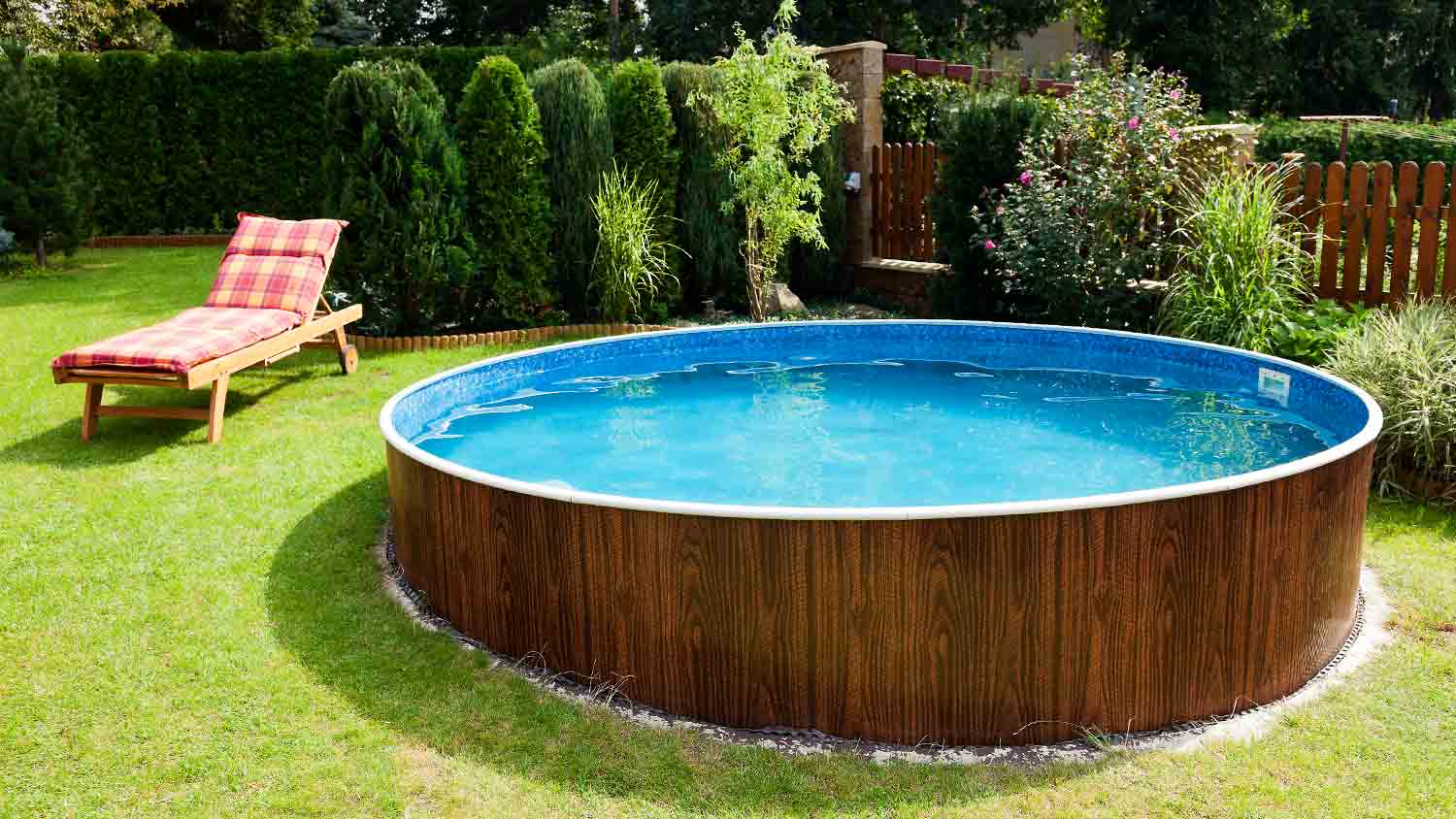
Above ground pools are more affordable than inground pools, so can you put an above ground pool in the ground to save money? Learn when it’s safe to do so.