




Top-rated tree service pros.

Get matched with top tree service pros in Laurel, MS

Enter your zip and get matched with up to 5 pros

Need a pro for your tree service project in Laurel, MS?

Select your specific project to find the pro for you.

TRUSTED BY LAUREL, MS HOMEOWNERS

  • Average homeowner rating star icon4.5
    Average homeowner rating
  • Verified reviews icon49
    Verified tree services reviews

Find Tree service pros in Laurel

Avatar for CP Services
CP Services
5.0(
4
)
Tree Stump - Remove

Serving Laurel, MS and surrounding areas

Approved

In business since 2021

Free estimates

Credit card accepted

Stump removal only* We take great pride in our experience, expertise, quality, and customer service that we provide to meet the consumer's needs. It is our mission to provide excellent workmanship and complete customer satisfaction, from the start to the completion of a project. In order to understand the needs and expectations of our customers, we take great care to work and communicate with every client in a professional manner. Our reputation is based on service, safety, and quality, regardless of how large or small the job.

Response time8 hrs
Recommended by100%of homeowners
Avatar for Haynes Stump Grinding
Haynes Stump Grinding
4.5(
11
)
Tree Stump - RemoveTree Stump - Remove - For Business

Serving Laurel, MS and surrounding areas

Approved

In business since 2003

Free estimates

Offers commercial services

"Was fast, and did the job ! I will use him again, price was reasonable for what he did. I handled the business with him over the phone from Biloxi Mississippi, where the stumps were grind in Columbia, Mississippi. Great job !! Would recommend him !!! if you’ve got stamps to grind I had one pretty big one and he grind it to a big pile of mulch, I would highly recommend this guy"
Response time6 hrs
Response rate95%
46 neighbors recently requested a quote
...
Showing 1-10 of 76
Tree Service questions, answered by experts

In most cases, you should not use a pruning seal on trees after trimming. Applying a sealant can interfere with the tree's natural healing process, and it does not guarantee protection from pathogens. Instead of sealing the cut, the best practice is to support the tree's natural recovery by providing it with plenty of water and a dormant-style fertilizer. However, there are exceptions. Pruning seals may be recommended for very vulnerable species, like elm trees, in areas where dangerous diseases such as Dutch elm disease are prevalent. In these specific situations, the protection offered by a sealant can outweigh its downsides. For advice tailored to your situation, especially after cutting large branches, it is best to consult a local tree trimming professional.

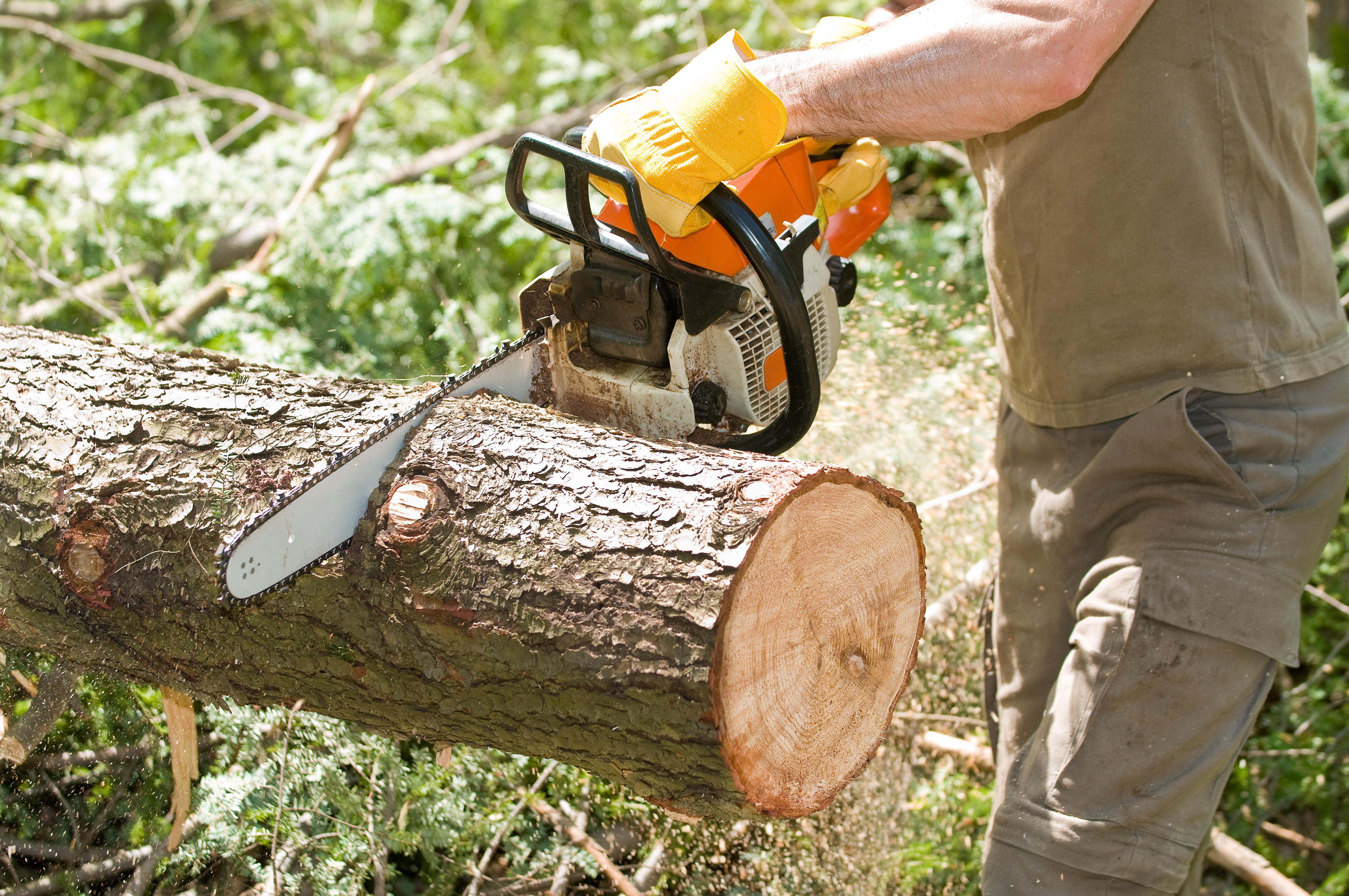
A chainsaw is the best tool to cut down a tree, but you may also use a handsaw or ax. You may also want to use a lopper or pole saw to remove limbs before cutting down the tree. Wear chainsaw chaps and protective gear, including eyewear and earplugs if you use a chainsaw. Again, if you’re unsure about how to use this tool, this project may be one to skip.

It can be bad to leave a dead stump in the ground. A stump becomes a hefty piece of dead wood in time and eventually (especially with the help of rain) starts to rot. That makes it a locus point for diseases and pesky insects, as well as a bit of an eyesore. It’s best to remove a tree stump completely before it starts to decay, especially before it starts to fall apart. If the tree was removed because of disease, it’s even more important to fully remove the stump if possible.

There are two types of arborists: certified and consulting. A certified arborist is licensed and equipped to provide tree pruning, planting, fertilizing, monitoring, transplanting, treatment, and removal services. A consulting arborist specializes in tree appraisals, diagnosing problems and recommending treatments for illnesses. However, they will not provide these services themselves. Most consulting arborists are certified arborists who can refer you to a tree service that can administer the correct treatments.

Yes, it’s okay to trim low branches on a tree, also known as limbing up or raising the crown. Essentially, you’ll trim the lower third of the tree (trunk) and leave the upper two-thirds of the tree (crown). Arborists recommend trimming 20% of a tree’s leaves per season for two to three seasons. Trimming low branches allows light to flow through the tree, increasing circulation and making the tree stronger and healthier.

The Laurel, MS homeowners’ guide to tree services

From average costs to expert advice, get all the answers you need to get your job done.