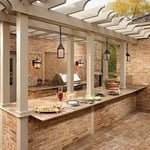







Top-rated outdoor kitchen pros.

Get matched with top outdoor kitchen pros in Freeman, MO

Enter your zip and get matched with up to 5 pros

Need a pro for your outdoor kitchen service project in Freeman, MO?

Select your specific project to find the pro for you.

Find Outdoor kitchen pros in Freeman

Showing 1-10 of 24
Outdoor Kitchens questions, answered by experts

Your maintenance needs revolve around the type of foundation you choose, as well as how you furnish or decorate it. Patios require little else other than the occasional hose-down, but decks and other wooden structures will require annual power washing and sealing. You may also need to restain the wood every two to three years.

Adding a solid roof rather than building a pergola or leaving the space open will make maintenance much easier. Without a roof, you will need to spend more time sweeping, washing, and covering your furniture to protect it from UV bleaching.

Pallet wood can withstand all kinds of outdoor weather conditions, which is part of why pallet fences are so appealing to DIY-ers. You can weatherproof the wood further before you paint or stain it, as well. Pallet fences are low-cost, easy to install, and can withstand sun and rain exposure without rotting.

How big a fire pit should be depends on how many people you want to get around it on a regular basis, and how big your space is. The average fire pit size is between 36 and 44 inches. However, if you regularly host big gatherings and have the appropriate outdoor space, you can go as big as 72 inches.

On average, installing a DIY outdoor kitchen costs between $4,550 and $19,000, which is about $1,500 to $6,000 less than having one professionally installed. Many variables factor into the cost of installing an outdoor kitchen, such as the type of material, accessibility to the job site, and the potential costs of hiring a professional electrician or plumber, as well as any necessary permits.

The best types of wood for outdoor kitchen cabinets are those naturally resistant to weather, water, heat, fading, and mold or mildew. Excellent choices include teak, mahogany, white oak, and Brazilian walnut. It's best to avoid softwoods like pine and cedar, as they are more susceptible to damage and can catch fire easily. For extra protection, ensure the wood is pressure-treated. Regardless of the wood you choose, you will need to apply sealants, oils, and stains regularly to protect your cabinets from the elements.

The Freeman, MO homeowners’ guide to outdoor kitchen services

From average costs to expert advice, get all the answers you need to get your job done.