



Top-rated asphalt driveway pros.

Get matched with top asphalt driveway pros in Four Seasons, MO

Enter your zip and get matched with up to 5 pros

Need a pro for your asphalt driveway service project in Four Seasons, MO?

Select your specific project to find the pro for you.

TRUSTED BY FOUR SEASONS, MO HOMEOWNERS

  • Average homeowner rating star icon4.3
    Average homeowner rating
  • Verified reviews icon23
    Verified asphalt driveway services reviews

Find Asphalt driveway pros in Four Seasons

Avatar for Luebbering Skid Steer Services and Excavating
Luebbering Skid Steer Services and Excavating
5.0(
11
)

Serving Four Seasons, MO and surrounding areas

Approved

In business since 2010

Free estimates

Offers commercial services

"We had our driveways groomed. Taylor did an excellent job neat clean on time and just a great young man. Very reasonable. Will be using him for lots of jobs"
Response time5 days
2 neighbors recently requested a quote
Recommended by90%of homeowners
Avatar for W & C Paving and Sealcoating
W & C Paving and Sealcoating
5.0(
9
)

Serving Four Seasons, MO and surrounding areas

Approved

Super Service Award Winner

In business since 2003

Free estimates

Credit card accepted

"They did a good job. They answered all my questions and had good communication. My driveway was an old two-lane road about 1700 feet long. They patched what they could I did a good job sealing it up. I will use them again when the need arises!!"
Driveway 1
Driveway
Driveway 3
Driveway 4
Driveway 5

+1

Response time11 hrs
Response rate92%
5 neighbors recently requested a quote
Avatar for Key Concrete LLC
Key Concrete LLC
4.9(
8
)

Serving Four Seasons, MO and surrounding areas

Approved

In business since 2021

Free estimates

Emergency services offered

"They were great throughout the whole process. It was great to be able to use one company for machine excavation, all dirt work, footings, foundation and back filling."
Mountain Rd.
Mountain Rd.
Mountain Rd.
Mountain Rd.
Mountain Rd.

+32

Response time2 days
Response rate100%
1 neighbors recently requested a quote
...
Showing 1-10 of 105
Asphalt Driveways questions, answered by experts

Driveways should be sloped with a minimum 2% slope—anything lower will cause precipitation and runoff to collect. A 2% slope is the equivalent of a 2-foot rise over 100 feet. One quick way to check the integrity of your driveway’s slope: no more than four inches of water should collect on the surface longer than 15 minutes after rain.
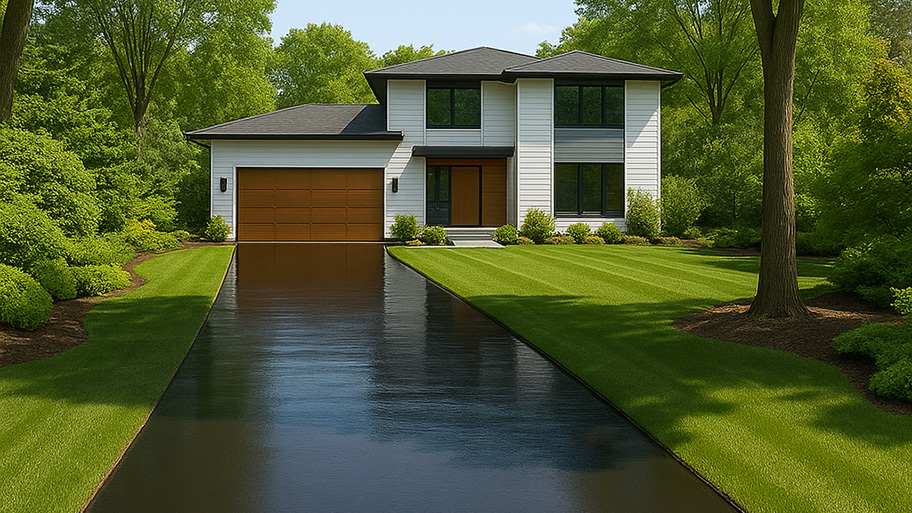
Even with regular maintenance, most driveways don’t last much longer than 30 years. Alligator cracking is a clear warning sign that your driveway’s foundation is failing, and cracks that are deep and wide can let water in, causing more damage. Standing water is another red flag. If your driveway doesn’t drain properly, it’s going to degrade slowly. Finally, if you’re seeing dips or uneven patches, that’s a sign the base layer or soil is shifting. If these issues pop up, it’s time to replace your driveway.

Gravel is one of the few driveway materials that can handle rain the second it’s installed. Unlike asphalt, which needs days to set, or concrete, which requires weeks to cure, gravel is ready as soon as it’s compacted. It’s naturally permeable, allowing water to drain straight through—with no risk of pooling or surface damage. Gravel driveways are one of the most affordable, at $1 to $3 per square foot, and can also last upward of 100 years.

New asphalt typically needs 24 to 72 hours to dry before it can handle light foot traffic and careful driving. Although it may appear solid after a few days, the full curing process, where the asphalt reaches its peak strength, takes much longer—generally from 30 days to a year.

During this extended curing time, the surface remains relatively soft and can be damaged by heavy vehicles, sharp objects, or high temperatures. To protect your investment, it's best to avoid parking heavy machinery on the asphalt until it has fully cured.

The exact time required for drying and curing depends on several factors, including the weather, the specific asphalt mix, and its thickness. For the most accurate advice tailored to your situation, consult with your asphalt contractor.

Asphalt and tarmac are not the same thing. Traditional tarmac, short for tarmacadam, uses tar as a binder to hold crushed stone together. Asphalt uses bitumen—a byproduct of crude oil—to bind aggregate. Though tarmac was once a go-to for roads, asphalt has become the modern standard. And these days, most surfaces referred to as “tarmac” are actually asphalt. So, while the names may overlap, the key distinction lies in the binder—tar for tarmac and bitumen for asphalt.

The Four Seasons, MO homeowners’ guide to asphalt driveway services

From average costs to expert advice, get all the answers you need to get your job done.