






Asbestos is commonly found in certain older homes, depending on the time period in which they were built. Asbestos use in home construction began in the 1920s and peaked after World War II before being limited by legislation in the ’70s, so a house constructed in 1880 is unlikely to contain asbestos, while one built in 1950 is much more likely to. Research a home’s history to determine the time period when it was built and any renovations made since.
In the 1980s, the use of asbestos in house siding materials underwent a significant decline, ultimately being phased out by the mid-1980s to early 1990s. This change was largely due to a growing awareness of the severe health risks associated with asbestos exposure, particularly its link to lung diseases and cancers. With increased public concern and regulatory agency involvement, building codes and regulations were updated to restrict the use of asbestos in construction materials.
Yes, even a single, one-time exposure to asbestos can be harmful and increase the risk of future illness, including certain diseases and cancers. The level of risk depends on several factors, such as the concentration and intensity of the exposure. A small, brief exposure is less likely to cause significant damage than an exposure to a high concentration of asbestos fibers.
The likelihood of developing severe health issues increases with repeated or prolonged exposure. Individual reactions to asbestos vary; some people may have multiple exposures without harm, while others are more susceptible. Asbestos-related illnesses may not manifest for 10 to 40 years after inhalation.
Due to these risks, it is crucial to take precautions. Personal protective equipment (PPE) may not offer complete protection, as fibers can get through small gaps. The EPA recommends hiring a professional for testing and removal if you suspect the presence of asbestos in your home. If you are concerned about a potential exposure, consult your doctor.
Asbestos siding can be dangerous, but it doesn't necessarily pose a health risk if it's in good condition and left undisturbed. The danger comes from inhaling asbestos fibers, which can be released if the siding is damaged, deteriorating, crumbling, or disturbed during remodeling or repairs. Exposure to these airborne fibers can cause serious, life-threatening diseases like asbestosis (lung scarring), mesothelioma (an aggressive cancer), and other lung cancers.
If your asbestos siding is intact, the general recommendation is to leave it alone. However, if it's damaged or you plan to renovate, it's crucial to handle it safely. Due to the significant health risks and the difficulty of containing the fibers, it is not recommended to perform any asbestos work yourself. Instead, you should hire a professional asbestos removal company to inspect, repair, encapsulate, or remove the material. The presence of asbestos can also negatively impact your property's value.
If your home was built before 1989 and still has original vinyl, there’s a high probability of asbestos mixed into the old flooring, which can harm you and your family if it’s disturbed from removal. If you suspect that you have asbestos, you’ll want to call in an asbestos removal expert to evaluate the situation.
The Bismarck, MO homeowners’ guide to percolation testing services
From average costs to expert advice, get all the answers you need to get your job done.
Dry wells are handy for anyone who’s experiencing drainage problems. But dry well installation costs can vary depending on its size, location, and volume.
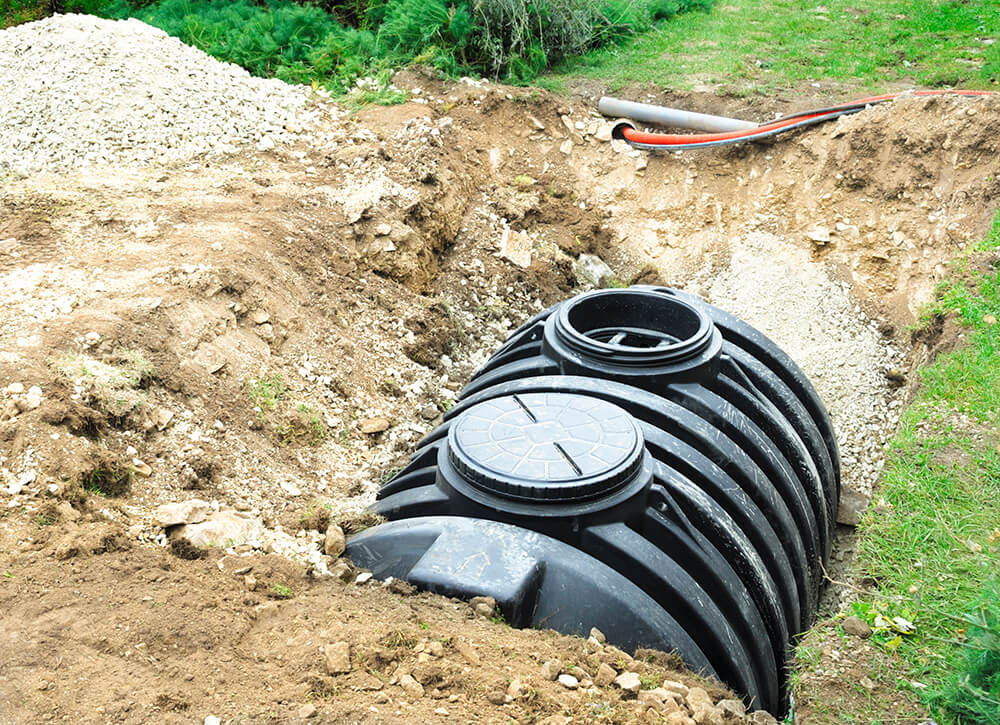
The time it takes to replace a septic tank depends on a few factors. Sometimes the fix is simple, but even if it’s not, here’s how long it takes to replace a septic tank.
A perc test for septic analyzes the absorption rate of the soil where a tank is going to be installed. Learn more about the test, cost, and passing grades.