


Find out how much a soil test costs and what you get for your money with our expert guide. Know what to budget for different types of soil tests.
Contractor service costs depend on your project and location. Check with a local pro for your specific job.

Professional perc testing costs between $750 and $1,900 for your property, depending on testing requirements.
Your property size sets the number of test holes, and local rules set hole depth and spacing.
Budget for septic installation, French drains, or grading, since add-ons range from $500 to $18,000.
Hiring a local soil testing professional ensures your results meet legal requirements and helps you avoid permit delays.
In 2026, the national average cost for a perc test falls around $1,300, with most homeowners paying between $750 and $1,900 depending on property size, test requirements, and accessibility. Costs can range from as little as $300 for a single hand-dug hole to as much as $3,000 for machine-dug holes on a larger property, with the purpose of the test and site conditions also playing a role.

Perc test costs range from $300 to $3,000, depending on a few key factors specific to your property and project.
Property size is the biggest cost factor when it comes time to do a perc test, and you can expect to pay around $150 per hole dug. Testing requires data from multiple points across your land, and most municipalities set maximum spacing between holes, so larger properties require more holes. Each additional hole adds directly to your labor costs.
The table below breaks down the average cost of perc testing based on your property size and the number of holes needed:
| Property Size (acres) | Holes Needed | Perc Test Cost in 2026 |
|---|---|---|
| 1/4 | 1–4 | $150–$600 |
| 1/2 | 1–8 | $150–$1,200 |
| 3/4 | 2–12 | $300–$1,800 |
| 1 | 3–20 | $450–$3,000 |
The reason you're scheduling a perc test may also dictate the number of holes you need and how far apart they must be on your property, which will directly affect the price you'll pay.
You may need a perc test for new construction if you're planning to add a septic system, if you need to replace or make changes to your existing septic system, or if you want to install a drainage system, such as a French drain. Tests related to septic system installations or expansions are often more expensive, as percolation problems in a septic drain field can lead to sewage backups, which pose a health hazard.
It's important to ensure you have the right soil before starting your project. Hire a soil or geotechnical engineer to perform testing on your soil to make sure it's suitable for your construction.

There are two main types of perc tests: those using shallow, hand-dug holes and those requiring deeper holes dug by an excavator, with excavator-dug holes costing more per hole. The type required depends on the purpose of your test and local regulations for testing percolation rates. Here is how perc test costs compare by hole type and depth:
| Type (Hole Depth) | Cost Per Hole in 2026 |
|---|---|
| Manual (2 feet) | $150–$300 |
| Manual (3 feet) | $200–$300 |
| Excavator (4 feet) | $550–$800 |
| Excavator (5 feet) | $625–$900 |
| Excavator (6 feet) | $700–$1,000 |
The accessibility of your property will also play a role in your pricing, especially if you need an excavator to maneuver onto your property to dig the holes. Homes in remote areas can drive up the costs, as can properties with excessive tree coverage or limited access for heavy machinery.
You'll likely see prices climbing to around $3,000 if your perc test requires larger, deeper holes but an excavator can't maneuver onto your property. In that case, your money will go toward manual labor instead of equipment rental fees.
Where you live also affects perc test costs, as each municipality sets its own regulations on how many holes are necessary and the depth of the holes. You can speak with your local building department or health department to discuss what's necessary in your area for the type of perc test you need.
Hiring a local soil testing service is mandatory to comply with legal requirements for projects such as constructing or modifying a septic system, installing a drainage system, or regrading your land. Most areas require a licensed professional and an on-site inspector, so hiring a soil testing expert ensures you’re able to progress your plans without legal red tape.
Since formal perc tests affect major projects like septic systems and land grading, here’s why it’s necessary to hire a professional soil testing service:
Pros know how many holes you need, how far apart they need to be, and how deep they should be.
Professional soil testers can maneuver around site challenges, such as dense tree coverage or limited access for machinery.
Hiring a qualified soil testing pro helps ensure your results are properly documented and usable for all permits and future constructions.
While you’ll need to enlist professional soil testing services if you’re taking on a major project, there are a few smaller-scale projects that you can DIY:
Use a DIY soil test kit to determine soil quality before planting a garden or landscape.
Use your soil test results to find out the optimal soil amendments necessary for your plants to thrive.
Limit your DIY testing to the specific portion of the property you’re curious about, rather than the entire lot.
A perc test is often the first step in a larger project, so budgeting for follow-on work alongside it is a smart move. Perc tests are valid for two to five years depending on local regulations, giving you a window to plan and save for what comes next. Here are some additional costs to budget for:
Cost to install a septic system: $3,600–$12,400
Cost to replace a septic system: $5,000–$12,000
Cost to install a French drain: $500–$18,000
Cost to grade land: $1,000–$3,300
Perc test costs can go up to around $3,000, and unfortunately, there are only a handful of things you can do to save on the total.
Choose the minimum number of holes necessary: Your local building department or health department will likely have requirements for the number of holes you need. You’ll pay an additional $150 per additional hole, on average, so make sure you’re only testing the required number of holes.
Test only the soil you need to test: For some projects, it may not be necessary to test percolation across your entire property, especially if you have a larger plot. Speak with local authorities to determine the smallest portion of your land you’d have to test for building approval.
Get multiple quotes: Your local municipality will often have its own fees for perc tests that aren’t negotiable, but you can always get quotes from multiple soil testing professionals to see which is the most affordable. Just be sure all contractors you’re getting quotes from understand exactly how many holes you need and what size and depth they need to be.
Make sure you need a perc test: Perc tests are more expensive than many other tests, so make sure you need a perc test and not a soil test. Perc tests are required by law for changes to septic systems and, in many cases, land grading and drainage system installation. If you’re looking for soil data for grass and garden health or to check for contamination, it might be time for a soil test instead.
The size of your property and which area needs testing, including how the land will be used (septic system, drainage, or grading)
The purpose of the perc test, such as installing a new septic system, modifying an existing one, or adding a drainage feature like a French drain
Whether manual or excavator-dug holes will be needed
Note any accessibility issues like trees or slopes
Home is the most important place on earth, which is why Angi has helped more than 150 million homeowners transform their houses into homes they adore. To help homeowners with their next project, Angi provides readers with the most accurate cost data and upholds strict editorial standards. We extensively research project costs to develop the pricing data you see, so you can make the best decisions for you and your home. We rely on reputable sources, including the U.S. Bureau of Labor Statistics, academic journals, market studies, and interviews with industry experts—all to ensure our prices reflect real-world projects.
Want to help us improve our cost data? Send us a recent project quote to [email protected]. Quotes and personal information will not be shared publicly.
Exquisite workmanship from Custom Paint Jobs LLC. My home has never looked better.
 Custom Paint Jobs, LLC
Visited my home for estimate same day that I called. Painted on Saturday. Great job. Good price!
Window Depot did an amazing job on my deck. I wasnt sure what I wanted to do, but their composite decking was affordable and will last a long time. I am excited to have family over, and I am no longer embarrassed by my backyard. Jeff and the ground crew were polite, respectful, and caring for...
 Window Depot USA of Central Ohio
The guys did an outstanding job and we had a great experience with CarifaTile. I appreciated that Joe reviewed the quotes with me and set expectations prior to the install. The crews showed up as scheduled and always left the areas clean upon leaving the house. We will definitely use...
 CarifaTile
Beginning with the estimate, Larry and Peyton were super helpful in getting my new condo's interior re-painted. Not only was the job well done, but also done in a super timely manner as promised.
 Five Star Painting of Plain City and Powell
BJ Trim Carpentry rescued me in the middle of a do-it-yourself project. I found I needed more expertise than I had...and more TOOLS! BJ Trim Carpentry responded quickly and completed what I needed expertly, politely and with a little humor!
This brownstone is historical and the carpentry work is very detailed. I was very happy to secure a company in NY and living in OH to complete the request. Wood work on this brownstone has been existing since approximately 1888 and West side did a GREAT JOB. I will not be able to...
 Westside Home Improvement
We had a great experience with Mark Rodgers Construction. We were in the process of seeking out estimates for possible foundation work for our front porch. Mark came out himself to provide the estimate. Turned out that the company deals mainly with concrete, so we wouldn't be getting an...
 Mark Rodgers Construction
Overall this experience was incredible! I looked on Angies List for a cleaning service because I was planning a holiday party and wanted to make sure we found a reliable, thorough and efficient cleaning service to make sure everything was perfect for the party since we had co-workers and...
From beginning to end our experience with Joe was very good. He was professional and prompt in his estimate for the job and worked hard to meet our schedule so that he could remove our old backsplash the day before our new countertops were removed and return shortly after they were removed to...
From average costs to expert advice, get all the answers you need to get your job done.
Find out how much a soil test costs and what you get for your money with our expert guide. Know what to budget for different types of soil tests.

Find out what impacts radon testing costs, including average prices for DIY kits and professional services, so you can protect your home and budget confidently.

Discover the average indoor air quality testing cost, what impacts pricing, and how to budget for healthier air in your home.
Not sure about the best time to do a perc test? Learn about factors that affect results and test costs to choose the ideal timing for your project.

Planning a new septic system? Learn about perc testing costs, soil drainage requirements, and how to hire the right local pro for your property.
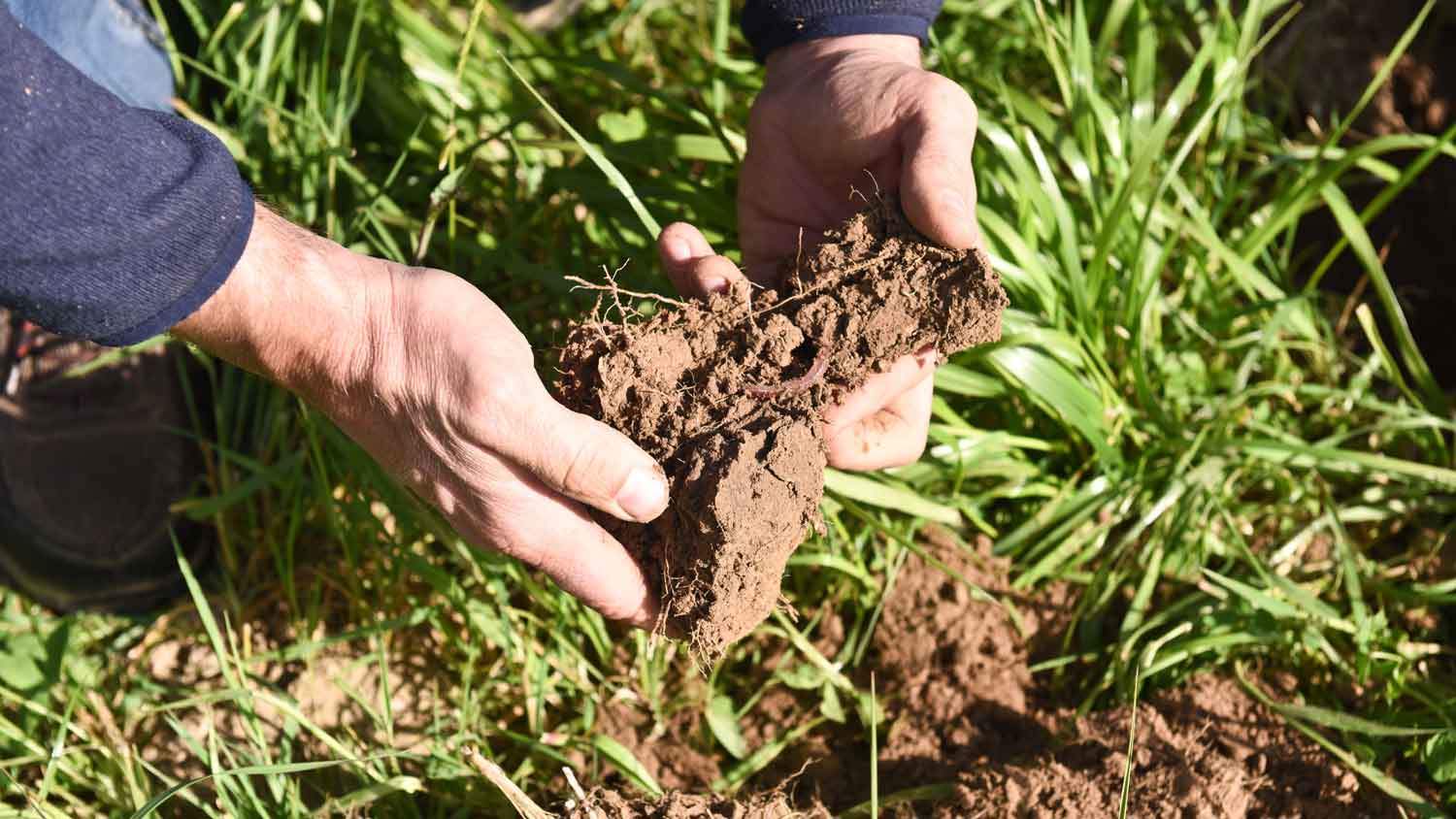
Getting the right pro for your perc test is crucial for getting legal approval for your project. Learn who does perc tests to ensure an official result.