



Top-rated radon detection and reduction specialists.

Get matched with top radon detection and reduction specialists in Sand Lake, MI

Enter your zip and get matched with up to 5 pros

Need a pro for your radon detection and reduction project in Sand Lake, MI?

Select your specific project to find the pro for you.

Find Radon detection and reduction specialists in Sand Lake

Avatar for Epic Radon Solutions
Epic Radon Solutions
4.9(
140
)
Radon Gas - Abatement

Serving Sand Lake, MI and surrounding areas

Approved

In business since 2021

Free estimates

Small jobs welcome

"We had a special situation, and Epic was the only company willing to come out to help us evaluate the best location for installation. Installer was great - he recognized asbestos tile on the basement floor, and recommended appropriate remediation service. System is basically invisible - no ugly pipe up the outside of the house! Follow-up test shows radon level reduced to well under recommended minimum."
Standard Radon Mitigation
Response time12 hrs
Response rate90%
55 neighbors recently requested a quote
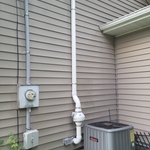
Avatar for SM Radon Pro, Inc
SM Radon Pro, Inc
5.0(
6
)
Radon Gas - AbatementRadon Gas - Testing

Serving Sand Lake, MI and surrounding areas

Approved

In business since 2017

Free estimates

Emergency services offered

With years of experience in HVAC, plumbing, electrical, and general contracting, we entered the radon industry when we saw a lack of quality. We design every system specific to your home with quality and longevity in mind. Many competitors have a focus on money and speed, we focus on quality and efficiency.

Additional Photos
Additional Photos
Additional Photos
Additional Photos
Additional Photos

+5

Response time1 day
Response rate100%
10 neighbors recently requested a quote

Double Check Inspect
3.8(
26
)
Radon Gas - Testing

Serving Sand Lake, MI and surrounding areas

In business since 2000

Free estimates

Credit card accepted

"I hired Double Check to do an inspection for a personal decision of "Repair or Replace". Justin came out, performed the inspection, took photographs and answered all my questions. He found some issues like a few shingles missing, popped nailheads and the like. We discussed the Repair or Replace decision. Very knowledgeable and easy to deal with. Highly recommended."
Response time3 hrs
Recommended by80%of homeowners
Showing 1-10 of 16
Radon Detection and Reduction questions, answered by experts

Radon is present almost everywhere but, like sunlight, the concentration levels and how often you are exposed to it have a large part to play in just how dangerous it is. There are levels of radon that are acceptable inside a house, but above a certain limit, radon becomes a serious radioactive hazard that is a known cause of lung cancer. In fact, radon exposure is the number two leading cause of lung cancer (after smoking).

The natural breakdown of uranium in soil, rock, and water can cause radon to appear in a home. The gas seeps into homes through cracks in foundations, walls, or floors, as well as through gaps around pipes or construction joints. Radon levels are influenced by soil composition, building materials, and ventilation. Poorly sealed or airtight homes can trap radon, allowing it to accumulate.

No level of radon is technically safe, but since it is present everywhere, complete avoidance is impossible. The average radon level in homes across the United States is 1.3 picocuries per liter (pCi/L). The Environmental Protection Agency (EPA) recommends taking preventative measures if your home's radon levels are between 2 and 4 pCi/L or higher.

Your radon fan needs to operate 24/7 to be effective. The only time the fan isn't operating is during its replacement. Radon levels in the home can increase within hours if the fan stops working or something obstructs the stack vent. Fortunately, radon systems require no downtime maintenance between fan changes.

Radon enters your home when warm air begins to rise and exits through the roof, creating a vacuum that pulls cooler air from under the foundation. Part of that air is radon, which is an invisible, odorless gas that develops naturally when radioactive particles are deep within the ground. Those particles usually come from decaying matter in soil and rocks.

The Sand Lake, MI homeowners’ guide to radon detection and reduction services

From average costs to expert advice, get all the answers you need to get your job done.