







Top-rated tree service pros.

Get matched with top tree service pros in Cadillac, MI

Enter your zip and get matched with up to 5 pros

Need a pro for your tree service project in Cadillac, MI?

Select your specific project to find the pro for you.

TRUSTED BY CADILLAC, MI HOMEOWNERS

  • Average homeowner rating star icon4.2
    Average homeowner rating
  • Verified reviews icon55
    Verified tree services reviews

Find Tree service pros in Cadillac

Avatar for Root's Renovations
Root's Renovations
4.4(
9
)
Tree Trimming

Serving Cadillac, MI and surrounding areas

Approved

Super Service Award Winner

In business since 2023

Free estimates

Offers commercial services

"Jesse and his partner did a great job in the time he provided. My yard looks fantastic. I was very please. I will hire him for other small jobs I come across. Thank you"
Water Damage Ceiling - Before
Water Damage Ceiling Repair - After
Demolition Work
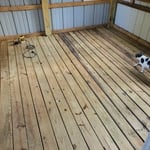
New Wood Floor Install - Work in Progress

+12

Response time11 hrs
Response rate96%
1 neighbors recently requested a quote
...
Showing 1-10 of 65
Tree Service questions, answered by experts

The recovery time for pruning depends on how much you prune, the species of tree, and how well you care for it afterward. All trees grow new wood and often sprout additional branches after pruning. Ideally, trees should recover from normal pruning after one or two years. Heavy pruning or slow-growing trees may take several years to fully recover.

In most cases, you should not use a pruning seal on trees after trimming. Applying a sealant can interfere with the tree's natural healing process, and it does not guarantee protection from pathogens. Instead of sealing the cut, the best practice is to support the tree's natural recovery by providing it with plenty of water and a dormant-style fertilizer. However, there are exceptions. Pruning seals may be recommended for very vulnerable species, like elm trees, in areas where dangerous diseases such as Dutch elm disease are prevalent. In these specific situations, the protection offered by a sealant can outweigh its downsides. For advice tailored to your situation, especially after cutting large branches, it is best to consult a local tree trimming professional.

Completely topping a plum tree is a risky business. Cut too much, and you’ll kill your tree. That said, you do need to trim the top of your tree to encourage bushy growth, maintain your tree’s vase shape, and limit size. 

A plum tree's central leader (or trunk) should never extend more than 3 feet above the highest branch. When you first plant your tree, cut the central leader so it’s 2 to 3 feet tall. As it grows, cut it back 12 to 20 inches until it reaches its desired height. Never prune more than one-third of the new growth.

A tree can grow back from its stump, but full regrowth is unlikely (especially for more stubborn conifer trees). Instead, trees are more likely to send up a number of shoots from the dead stump, which will try to develop into primary stems over time. In other words, it will start to look increasingly bushy. The goal of killing and drying out a tree stump is to prevent that from happening, as well as make the stump easier to completely remove.

Homeowners are usually not responsible for trees that fall on power lines. Power companies usually have utility easements around power lines, which give them the responsibility to maintain any trees within about 15 to 20 feet of the lines.

The Cadillac, MI homeowners’ guide to tree services

From average costs to expert advice, get all the answers you need to get your job done.