






Top-rated arborists.

Get matched with top arborists in Cadillac, MI

Enter your zip and get matched with up to 5 pros

Need a pro for your arboricultural service project in Cadillac, MI?

Select your specific project to find the pro for you.

TRUSTED BY CADILLAC, MI HOMEOWNERS

  • Average homeowner rating star icon4.3
    Average homeowner rating
  • Verified reviews icon68
    Verified arboricultural services reviews

Find Arborists in Cadillac

Avatar for Root's Renovations
Root's Renovations
4.4(
9
)
Tree Trimming

Serving Cadillac, MI and surrounding areas

Approved

Super Service Award Winner

In business since 2023

Free estimates

Offers commercial services

"Jesse and his partner did a great job in the time he provided. My yard looks fantastic. I was very please. I will hire him for other small jobs I come across. Thank you"
Water Damage Ceiling - Before
Water Damage Ceiling Repair - After
Demolition Work
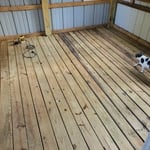
New Wood Floor Install - Work in Progress

+12

Response time11 hrs
Response rate96%
1 neighbors recently requested a quote
...
Showing 1-10 of 64
Arborists questions, answered by experts

Late winter is ideal, but if you’re pruning apple trees in the spring, prune them as early as possible in the season. You want to ensure your tree is just creeping out of dormancy and hasn’t started pushing out new growth. If you prune your tree too late into spring, you generally won’t see results until the following year.

That said, there’s no pruning season for unhealthy growth. Remove dead, dying, or diseased branches as soon as you notice them, regardless of the time of year.

Yes, you can prune a palm tree with a chainsaw, but a chainsaw is overkill for a job like this. You risk damaging the tree if you make a bad cut. More commonly, you’ll need pruning shears or a serrated knife to trim a palm tree, or you can use a specialized pruning saw instead of a chainsaw.

Yes, it’s okay to trim low branches on a tree, also known as limbing up or raising the crown. Essentially, you’ll trim the lower third of the tree (trunk) and leave the upper two-thirds of the tree (crown). Arborists recommend trimming 20% of a tree’s leaves per season for two to three seasons. Trimming low branches allows light to flow through the tree, increasing circulation and making the tree stronger and healthier.

If you’re planning on keeping the tree, unless the roots are invasive, there’s no need to remove them, as doing so can cause damage to the tree. If the tree has been cut down and the stump and roots are left, grinding and removing the stump can cause root decay for some species. For other species, the stump and roots will need to be removed to prevent pests, disease, and possible tree regrowth.

Since overwatering can harm mature trees just as much as a lack of water, it’s important to know the signs of an overwatered tree. If your tree’s leaves are yellowing, wilting, or dropping leaves, it’s likely that you’re overwatering. Other common signs include rotting, fungi, soggy soil, soft or peeling bark, falling leaves, and brittle roots. 

If you realize that you’ve been overwatering your mature tree, stop watering and give the soil time to dry out. Then moving forward, increase time between watering sessions. 

The Cadillac, MI homeowners’ guide to arboricultural services

From average costs to expert advice, get all the answers you need to get your job done.