






Top-rated tree service pros.

Get matched with top tree service pros in Burden, KS

Enter your zip and get matched with up to 5 pros

Need a pro for your tree service project in Burden, KS?

Select your specific project to find the pro for you.

Find Tree service pros in Burden

Avatar for McCune Tree Service
McCune Tree Service
4.8(
70
)

Serving Burden, KS and surrounding areas

In business since 2016

Free estimates

"McCune Tree Service was neither the least expensive or the most expensive company I spoke with. They completed the job in an efficient manner and cleaned up in a thoroughly. Tyler provides excellent customer service and I do not believe that we would have gotten a better job regardless of the price."
Response time3 days
Recommended by100%of homeowners
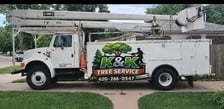
Avatar for K&K Tree Service
K&K Tree Service
4.5(
6
)

Serving Burden, KS and surrounding areas

In business since 2016

Free estimates

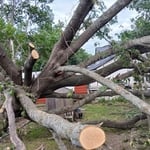
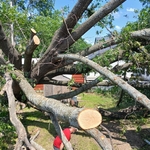
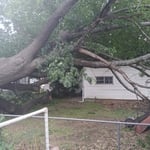
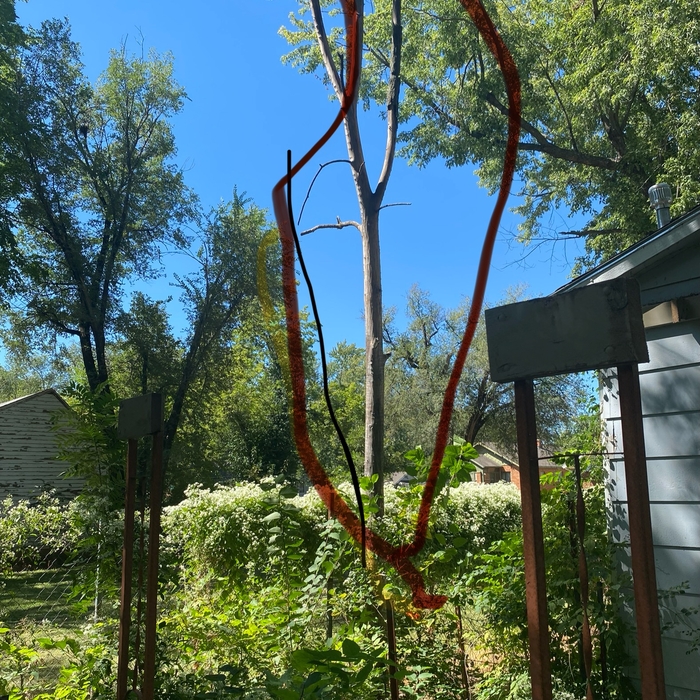
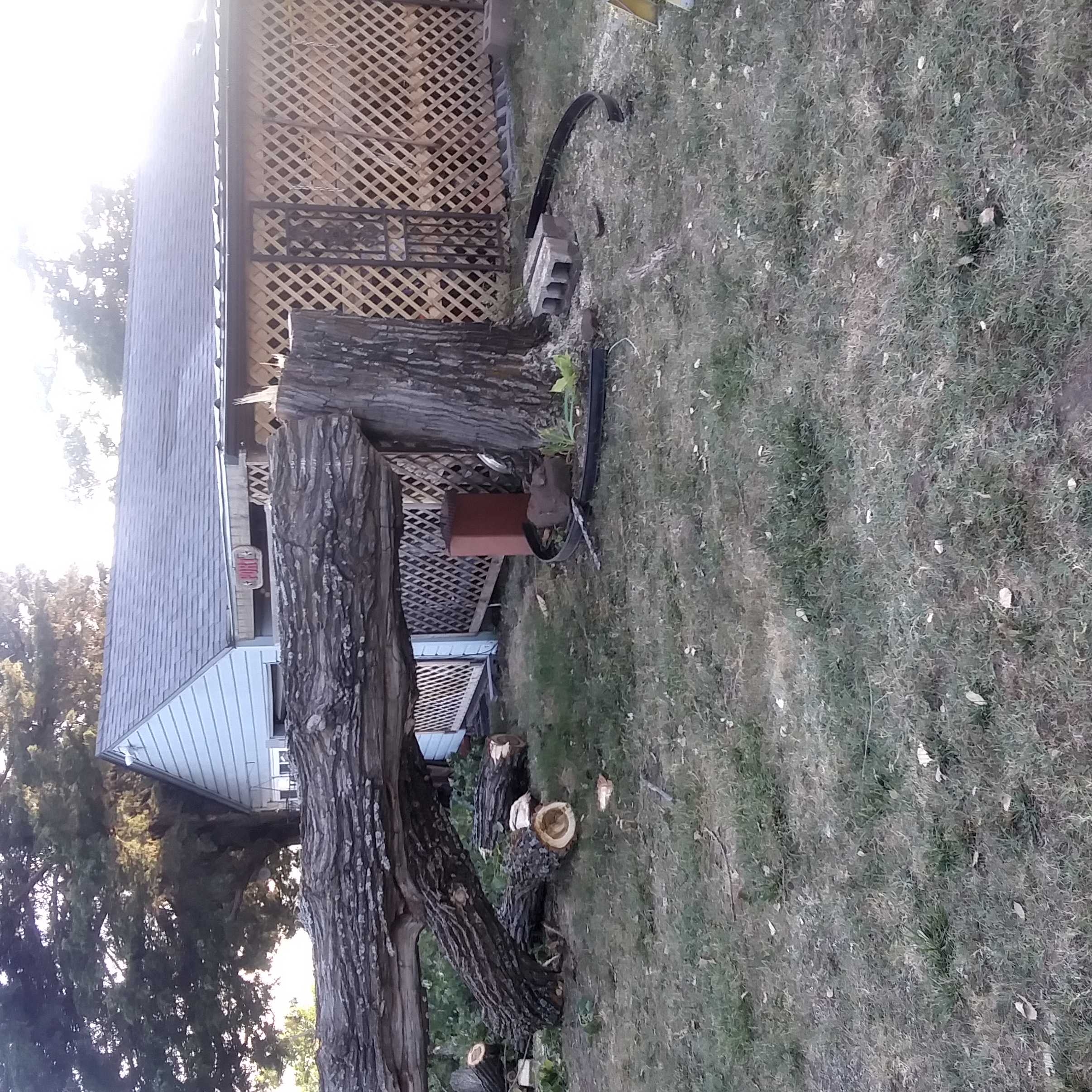
"It was fine. Everything was just perfect. They were efficient. It was a very a large tree next to the house. They did exactly what they said they would do. They cleaned up after themselves."
Additional Photos
Additional Photos
Recommended by83%of homeowners
Carson’s tree service llc
New to Angi

Serving Burden, KS and surrounding areas

In business since 2023

Free estimates

Emergency services offered

Carsons Tree Service is committed to excellence in every aspect of our business. We uphold a standard of integrity bound by fairness, honesty, and personal responsibility. Our distinction is the quality of service we bring to our customers. Accurate knowledge of our trade combined with ability is what makes us true professionals. Above all, we are watchful of our customers' interests, and make their concerns the basis of our business.

Avatar for Fluent Solar
Fluent Solar
5.0(
2
)

Serving Burden, KS and surrounding areas

In business since 2016

Free estimates

Emergency services offered

"When I first contacted solar installers, they asked for two items: address of my property a digital copy of my utility bill From my address they can survey the property using Google Maps. They use the satellite view to assess whether I have enough area on my roof to install an adequate number of solar panels, and whether the roof is unobstructed most of the day (by other buildings, trees, etc). Using my electric bill, they can assess my monthly payment and electricity usage. Once they size a system for me, they can then estimate my monthly savings. If this savings meets or exceeds the payment I will make for financing the solar panels, they consider the project to be economically worthwhile, and move forward with a proposal. Once a proposal was ready a sales rep from our installer visited my home, told us what we could expect and asked us to sign papers. Once signed, they were able to schedule installation, which was completed in under two months. The financing we signed was designed to avoid out-of-pocket costs. Payments were waived for the first three months, anticipating that the solar panels would not be ready before then. We were allowed to hold the full balance for up to 15 months, then the finance company expected a large payment approximately equal to the federal tax credit. Then monthly payments would continue to apply to both interest and principal, with the intent that monthly payments would not exceed the savings in electric power. It was structured as a 15-year loan, although we paid ours in full after 2 years, since the interest rate was fairly high (nearly 6%). On installation day a crew of 4 men arrived with a truck. They prepared my roof for mounting hardware, dug a trench for electrical conduit (needed for DC wiring from my detached garage), mounted the power inverter on the outside wall of my home, installed panels, wired up everything and tested. The whole installation needed about six hours to complete. Post installation, the company scheduled a city inspection. An electrical inspection and building inspection were both needed to verify the installation complied with building codes. The last step was for our electrical company to visit, test the system, install a new power meter, and begin our net metering service. In our state, we are credited for excess power that flows into the grid at the same rate as power we use from the grid. So we pay only for the “net” power we use (this is commonly known as “net metering”). Our monthly utility bill shows our inflow, outflow, how much we pay for our net usage (if any), or if we generate excess power for the month, how much we bank for later use. In the first full year, the system generated about 5,000 kWh of electricity, worth about $750 at typical electrical rates in our region. We paid $20k for the system, of which a third was refunded to us on our federal taxes (applying a credit for new solar generation capacity), so we financed around $13k. It would take 17 years to break even, assuming the system does not lose efficiency. However the solar panels add to the home’s value, so we would probably replace much of our investment if we choose to sell the home in 5–10 years. At our latitude, winter days are short (about 8 hours at the solstice) and the sun is at a lower angle in the sky, limiting daily generation to about 8 kWh when sunny. But in the summer, our days are nearly 16 hours, and we see close to 30 kWh generated on a sunny day. Fortunately peak generation also corresponds to our peak usage (due to air conditioning) so we pay little electricity in summer months. Here is a monthly breakdown I estimated for 2018 based on actual meter readings: In May we had an excess of power (before the days became hot enough for A/C). September was our peak usage. Our electricity costs for the year were under $600. In summary: Was the project a financial slam-dunk? Not really. In the long term it will pay for itself, but the savings are not enormous. Would we do it again? Absolutely, it feels good to have clean, renewable power at home, that we can generate ourselves, and be at least partly free from the electrical grid."
Solar Panels Project
Mike & Mary's Solar Panels Project
Solar Panels Project

+24

Recommended by100%of homeowners

Showing 1-10 of 36
Tree Service questions, answered by experts

Getting a tree pro with the right experience can be the difference between your transplanted tree surviving or not. When hiring a local tree transplanting and removal service, follow up on references, check their portfolio, ask for a breakdown of the costs, and get proof of liability and workers’ compensation insurance. 

Also, look for companies certified by the International Society of Arboriculture or registered with the Tree Care Industry Association and make sure they have an appropriate state or city license.

You can never truly stop a maple tree from growing taller, but you can rein in its growth by pruning. Proper pruning helps maintain a safe size for your tree without causing permanent damage. It’s important to start pruning a tree while it’s young, long before it becomes a problem. Otherwise, you may be left with too many hazardous branches to remove at once.

Unfortunately, palm tree stumps are one of the most difficult types to remove due to how their roots grow. Unlike other trees, palm tree roots grow horizontally and vertically. Palm tree roots grow as deep as three feet into the ground, although soil and growing conditions could mean they go as far as 50 inches into the earth. 

If you want to be able to repurpose the grass in the area where you removed a stump later, you’ll have to dig quite deep—and perhaps wide—to trim away all the roots.

Trees should be pruned every two to five years, depending on its age and type. Young trees should be inspected and pruned every two to three years. Mature trees should be inspected and trimmed every three to five years, and fruit trees should be pruned annually with a careful eye on seasonal growth. Evergreens typically don’t need pruning, unless branches or limbs are damaged, diseased, or harboring pests.

Using vinegar to kill tree roots is just one of the clever ways to use vinegar around the house. The method works best when you apply vinegar as directly to the root system as possible. For example, if the old tree roots and stump are currently exposed, drill holes in the tops of the roots and pour undiluted white vinegar into the holes to soak into the plant. Remember that vinegar can kill the surrounding grass and plants should it pour over the edge.

The Burden, KS homeowners’ guide to tree services

From average costs to expert advice, get all the answers you need to get your job done.

What do you need done? We’ll find top pros.
  • 🌱 "Mow a small front yard"
  • 🛠 "Fix a leaking pipe under the sink"
  • 🏠 "Repair shingles on an asphalt roof"