


Top-rated arborists.

Best arborists near Orleans, IN

Enter your zip and get matched with up to 5 pros

Need a pro for your arboricultural service project in Orleans, IN?

Select your specific project to find the pro for you.

TRUSTED BY ORLEANS, IN HOMEOWNERS

  • Average homeowner rating star icon4.6
    Average homeowner rating
  • Verified reviews icon47
    Verified arboricultural services reviews

Top-Rated Arborists in Orleans - Updated Nov 2026

Avatar for KEH Excavating
KEH Excavating
5.0(
1
)
Tree Removal

Serving Orleans, IN and surrounding areas

Approved

In business since 2021

Free estimates

Offers commercial services

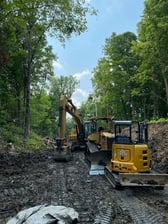
"Very fast work, have had them do a bunch of jobs for me! Always have the finished product exactly how I plan on it looking. Would definitely trust them to do any kind of work for me!"
Multiple projects
Multiple projects
Multiple projects
Multiple projects
Multiple projects

+4

5 neighbors recently requested a quote
Highline Excavation
New to Angi
Tree RemovalTree Stump - RemoveTree Trimming

Serving Orleans, IN and surrounding areas

Approved

Hi, I'm Isaiah, owner of Highline Excavation. I provide dependable excavation services throughout Owensboro, Bowling Green, Henderson, Evansville, and the surrounding areas. Whether you need a building pad, grading/sloping, trenching, gravel driveway installation or repair, land clearing, small demolition, or junk removal, I show up on time, work hard, and treat every job like it's my own property. If you're looking for honest work, fair pricing, and someone who takes pride in doing the job right the first time, I'd love the opportunity to earn your business. Reach out for a free estimate!\n

Modoc industries
New to Angi
Tree RemovalTree Stump - RemoveTree Trimming

Serving Orleans, IN and surrounding areas

Approved

Welcome to Modoc Industries.\nAt Modoc Industries, we believe in doing things the right way—the first time. Built on hard work, experience, and integrity, we provide dependable, high-quality service while maintaining the highest safety standards on every project.\nWe know trust is earned, which is why we treat every client like family. From the first conversation to the final walkthrough, you can expect honesty, professionalism, and a commitment to exceeding expectations. Our goal is not just to complete a job, but to build lasting relationships with the people and communities we serve.\nWith years of hands-on industry experience, we take pride in quality workmanship that stands the test of time. No shortcuts, no excuses—just reliable results and attention to detail from start to finish.\nThank you for considering Modoc Industries. We look forward to earning your trust and showing you the difference experience, dedication, and quality craftsmanship can make.

...
Showing 1-10 of 61
Arborists FAQs, answered by experts

If you’re planning on keeping the tree, unless the roots are invasive, there’s no need to remove them, as doing so can cause damage to the tree. If the tree has been cut down and the stump and roots are left, grinding and removing the stump can cause root decay for some species. For other species, the stump and roots will need to be removed to prevent pests, disease, and possible tree regrowth.

Unfortunately, palm tree stumps are one of the most difficult types to remove due to how their roots grow. Unlike other trees, palm tree roots grow horizontally and vertically. Palm tree roots grow as deep as three feet into the ground, although soil and growing conditions could mean they go as far as 50 inches into the earth. 

If you want to be able to repurpose the grass in the area where you removed a stump later, you’ll have to dig quite deep—and perhaps wide—to trim away all the roots.

We recommend removing the stump, and grinding is a popular way to do it. You can also dig out small stumps or stumps that have fully decayed instead of grinding them. However, don’t try using acids or fire for killing a tree stump, which is a fire hazard and illegal in many areas.

Leaving the stump alone invites eventual problems, including attracting termites, mold, and fungi.

Light-bark trees are most notorious for producing lots of sap when wounded. These varieties include maples, birches, poplars, dogwoods, magnolias, and elms, and they will bleed more when the trees are dormant. That’s why it’s a good idea to prune them in the summer months rather than waiting until winter.

Trees that flower in the spring—like dogwood, cherry, magnolia, and pear—should not be pruned during the winter. These spring-flowering plants grow buds on old growth, so you’ll actually remove what would’ve been gorgeous flowering foliage. Instead, wait to prune until right after they bloom, when the flowers fade.

The Orleans, IN homeowners’ guide to arboricultural services

From average costs to expert advice, get all the answers you need to get your job done.