






Top-rated arborists.

Get matched with top arborists in Campbellsburg, IN

Enter your zip and get matched with up to 5 pros

Need a pro for your arboricultural service project in Campbellsburg, IN?

Select your specific project to find the pro for you.

TRUSTED BY CAMPBELLSBURG, IN HOMEOWNERS

  • Average homeowner rating star icon4.7
    Average homeowner rating
  • Verified reviews icon51
    Verified arboricultural services reviews

Find Arborists in Campbellsburg

Avatar for Roths Tree Service
Roths Tree Service
4.9(
15
)

Serving Campbellsburg, IN and surrounding areas

In business since 2013

Free estimates

Credit card accepted

"I had two trees removed and two others trimmed up. Very reasonable on price. Very courteous and they left my yard in very good shape. Would highly recommend if you have any tree service needs."
Response time2 days
Recommended by92%of homeowners
Sons Construction
4.6(
28
)

Serving Campbellsburg, IN and surrounding areas

In business since 1993

Free estimates

"He did a great job for us. We had him cut back a lot of brush, trim trees and bushes and haul away. He works quickly and gets it done asap. He also did some inside work when we were in a pinch needing something done soon and he made time to get it done, and didn't charge us an arm and a leg. Very dependable, hardworking, trustworthy and communicates well too....would definitely hire him again."
Recommended by88%of homeowners
Showing 1-10 of 50
Arborists questions, answered by experts

A serrated knife will work for cutting off small palm tree fronds, about 1 inch in diameter. For larger fronds, you will need pruning shears. You may also use a pruning saw, and if your palm tree is especially tall, an extended pole saw can help you reach the brown fronds around the trunk.

Any tree that needs to be pruned should be pruned to remove dead branches at least once a year. You may need to prune far more often if you’re trying to maintain a certain shape or to save a tree that suddenly becomes infected.

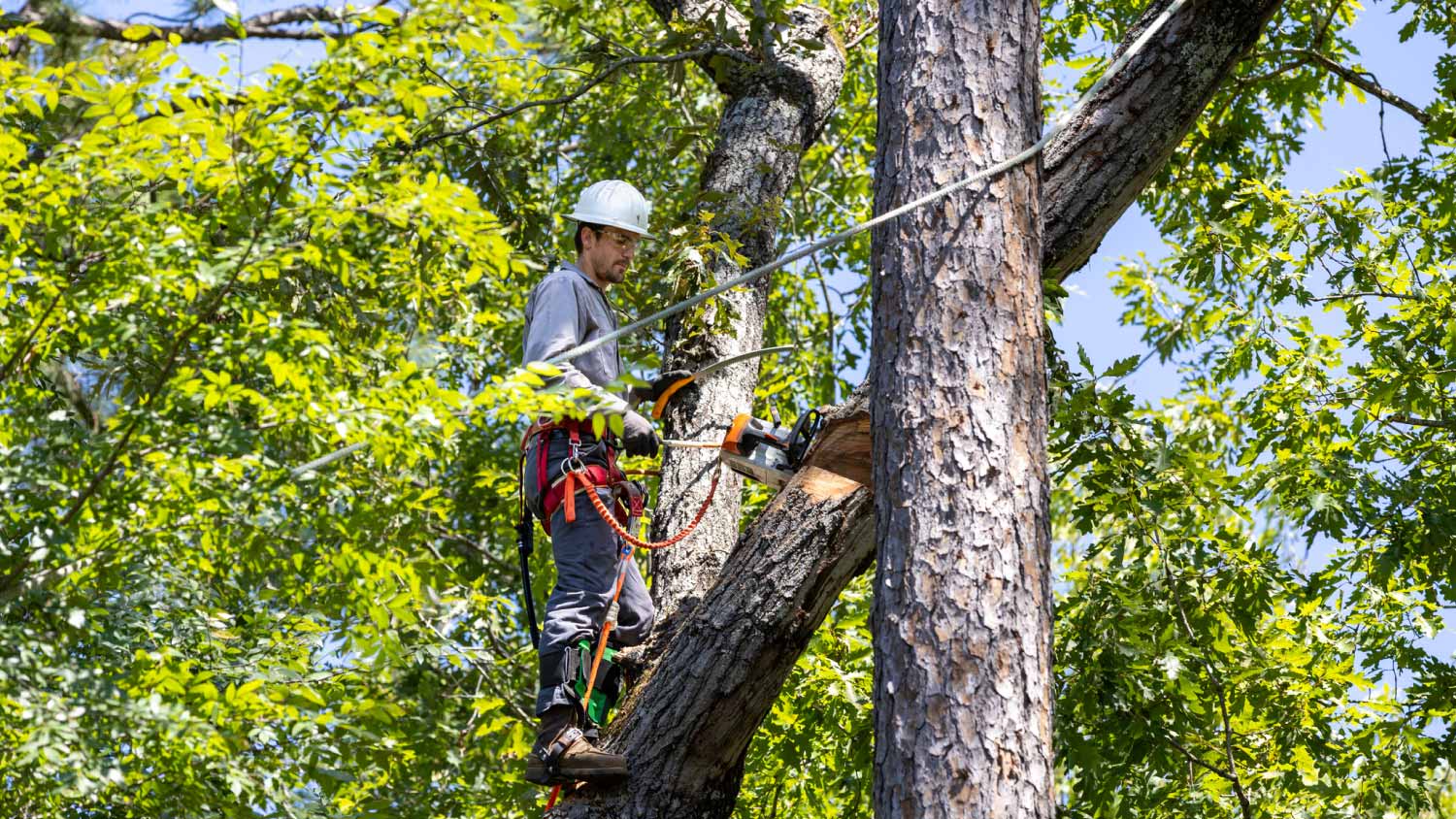
A chainsaw is the best tool to cut down a tree, but you may also use a handsaw or ax. You may also want to use a lopper or pole saw to remove limbs before cutting down the tree. Wear chainsaw chaps and protective gear, including eyewear and earplugs if you use a chainsaw. Again, if you’re unsure about how to use this tool, this project may be one to skip.

There are a few differences between tree guying and tree staking. Tree guying requires anchor stakes that are shorter and stronger than regular stakes and are driven deeper into the ground at an angle away from the tree. Tree staking uses longer stakes that are set parallel to the tree and are used for smaller trees. Consult a local tree professional to determine which method is best for your tree.

Generally, homeowners do not need permission to cut down a tree on their own private property, but there are several exceptions where a permit may be required. You might need a permit if the tree is particularly large, old, or a protected species, such as a heritage tree. Trees located near public property or power lines can also be subject to special rules. Additionally, many local governments and homeowners associations (HOAs) have regulations controlling which trees can be removed to manage an area's appearance or prevent the spread of invasive species. To avoid hefty fines, it is crucial to check with your local government and HOA to determine if a permit is needed before you begin.

The Campbellsburg, IN homeowners’ guide to arboricultural services

From average costs to expert advice, get all the answers you need to get your job done.