




Top-rated radon detection and reduction specialists.

Get matched with top radon detection and reduction specialists in New Salisbury, IN

Enter your zip and get matched with up to 5 pros

Need a pro for your radon detection and reduction project in New Salisbury, IN?

Select your specific project to find the pro for you.

Find Radon detection and reduction specialists in New Salisbury

Avatar for Radon Solutions of Southern Indiana
Radon Solutions of Southern Indiana
5.0(
15
)
Radon Gas - Testing

Serving New Salisbury, IN and surrounding areas

In business since 2021

Free estimates

Emergency services offered

"Ron from Radon Solutions of Southern Indiana arrived right when he said he would and cared enough to take the time and explain what he found from the test and all the solutions that we could use. From the initial appointment to when he left from putting in the mitigation system he was very personable and had great customer service. With his reasonable prices, customer service, and great final product I definitely recommend using his service to anyone else, in fact my own mother in law is getting a system installed by him in her new house she just moved into."
Foundation leak repair

+15

Response time8 hrs
Response rate90%
Recommended by92%of homeowners
Radon Detection and Reduction questions, answered by experts

Your radon mitigation system may be loud because it’s time to replace it. Any sounds are usually from the inline fan that helps create the vacuum and resulting airflow. If you hear a new, loud mechanical or humming noise from your radon fan, it might be time to replace it. Most fans used in radon mitigation systems last up to 10 years, but may need to be replaced sooner.

The fan that pulls the radon out of the air needs to run continuously, so you may see an increase in your electric bill once you install the mitigation system. Additionally, you may see an increase in your heating or cooling bills, as the fan can cause some loss of hot or cool air.

No level of radon is technically safe, but since it is present everywhere, complete avoidance is impossible. The average radon level in homes across the United States is 1.3 picocuries per liter (pCi/L). The Environmental Protection Agency (EPA) recommends taking preventative measures if your home's radon levels are between 2 and 4 pCi/L or higher.

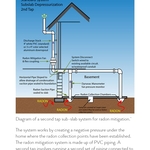
Options include sub-slab depressurization, crawlspace ventilation, and sealing cracks. Choose based on home construction and radon levels.

Radon is a cancer-causing radioactive gas that poses serious health risks, infiltrating homes through foundation cracks and unnoticed spaces.

The New Salisbury, IN homeowners’ guide to radon detection and reduction services

From average costs to expert advice, get all the answers you need to get your job done.