Top-rated tree service pros.

Get matched with top tree service pros in Carthage, IL

Enter your zip and get matched with up to 5 pros

Need a pro for your tree service project in Carthage, IL?

Select your specific project to find the pro for you.

Find Tree service pros in Carthage

Avatar for Giving Tree Land Development
Giving Tree Land Development
5.0(
10
)

Serving Carthage, IL and surrounding areas

In business since 2022

Free estimates

Credit card accepted

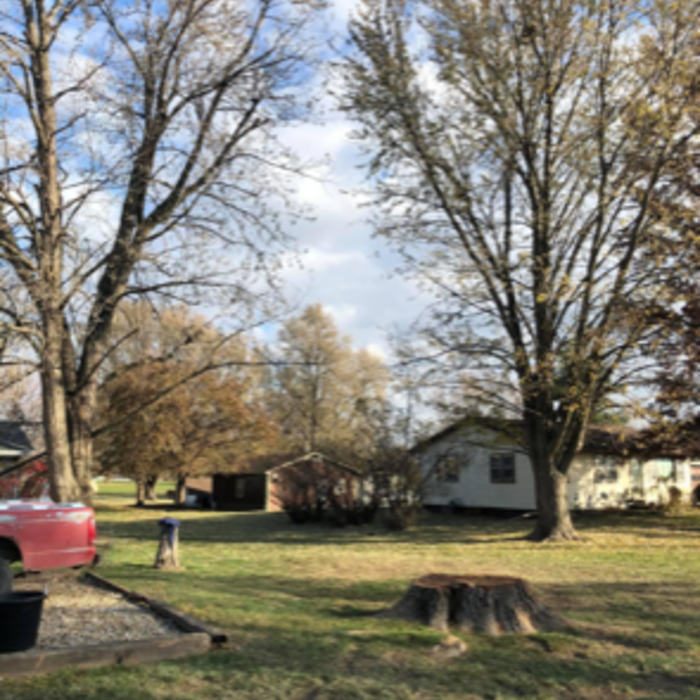
"I had a giant tree I needed removed from my property, Giving Tree had the right crew and the right tools to safely and quickly drop it for me and it didn't cost me an arm and a leg."
Mature Ash Tree Removal
Macomb Sycamore
Response time3 days
Response rate88%
Recommended by100%of homeowners
Williams Tree Service
3.5(
3
)

Serving Carthage, IL and surrounding areas

In business since 2017

Free estimates

Offers commercial services

"We have formed a great rapport with Alan and Williams Tree Service, with is why we keep using them. Their prices are great, the work is fantastic, they go above and beyond, and are very resourceful when noticing other any other work needing to be done, and have someone to recommend. fantastick and gores above and beyos resourceful on giveing other"
Response time2 days
Recommended by100%of homeowners
Z&B tree service
New to Angi

Serving Carthage, IL and surrounding areas

In business since 2022

Free estimates

5+ years of experience!\n\nWe are committed to excellence in every aspect of our business. We uphold a standard of integrity bound by fairness, honesty, and personal responsibility. Our distinction is the quality of service we bring to our customers. Accurate knowledge of our trade combined with ability is what makes us true professionals. Above all, we are watchful of our customers' interests, and make their concerns the basis of our business.\n

Showing 1-10 of 33
Tree Service questions, answered by experts

Opt for a barefoot tree. Pros harvest barefoot trees when they’re dormant (leafless). They shake the dirt from the root ball and pack it in moist material. 

These trees can cost half as much as the trees at your local nursery, and you can buy them online—so there’s a much wider selection. Just make sure you keep your barefoot tree cool until you’re ready to plant it.

Generally, homeowners do not need permission to cut down a tree on their own private property, but there are several exceptions where a permit may be required. You might need a permit if the tree is particularly large, old, or a protected species, such as a heritage tree. Trees located near public property or power lines can also be subject to special rules. Additionally, many local governments and homeowners associations (HOAs) have regulations controlling which trees can be removed to manage an area's appearance or prevent the spread of invasive species. To avoid hefty fines, it is crucial to check with your local government and HOA to determine if a permit is needed before you begin.

There are several signs that may indicate a tree needs to be cut down. These include visible damage to the trunk or branches, a hollow trunk, extensive storm damage, or a significant lean to one side. Other warning signs are pest infestations or the tree growing too close to a house, power lines, or other structures. It is best to hire a professional arborist to inspect the tree, as they can determine if it can be saved or if removal is necessary.

If it’s your property, then you can plant a tree near power lines, but it’s not the best idea. Any vegetation that grows within 10 feet or so of power lines will fall under the responsibility of the utility company, and they may trim or remove it as necessary. If you do move forward with your plan, try to choose a smaller ornamental tree, plant it as far away from the power lines as you can, and keep it trimmed to avoid future problems.

A dead tree should always be cut down, because it could fall and cause injuries or damage, and it can also attract insects like carpenter ants. A tree that’s diseased beyond repair should also be cut down, but it’s not always easy for a homeowner to tell. Signs of disease include dying branches, a hollow trunk, leaning, and discolored or missing leaves, but your best bet is to hire a local arborist who can evaluate the tree and tell you if it can be saved or should be cut down.

The Carthage, IL homeowners’ guide to tree services

From average costs to expert advice, get all the answers you need to get your job done.