Top-rated insulation pros.

Best insulation pros near Hidden Springs, ID

Enter your zip and get matched with up to 5 pros

Need a pro for your insulation service project in Hidden Springs, ID?

Select your specific project to find the pro for you.

TRUSTED BY HIDDEN SPRINGS, ID HOMEOWNERS

  • Average homeowner rating star icon4.8
    Average homeowner rating
  • Verified reviews icon95
    Verified insulation services reviews

Top-Rated Insulation pros in Hidden Springs - Updated Nov 2026

Avatar for Insulation Commandos of Boise
Insulation Commandos of Boise
5.0(
7
)
Blown-In Insulation - Install or UpgradeBatt, Rolled or Reflective Insulation - Install or UpgradeInjection Insulation - Install

Serving Hidden Springs, ID and surrounding areas

Approved

Free estimates

Small jobs welcome

Credit card accepted

"We recently had insulation work done by commandos Insulation and the entire experience was excellent from start to finish. The team was professional, punctual, and very knowledgeable. They explained the process clearly, completed the job efficiently, and left everything clean afterward. Their attention to detail and customer service really stood out. I would highly recommend them to anyone looking for quality insulation work at a fair price!"
30 neighbors recently requested a quote
Energy Allies, LLC
4.9(
88
)
Batt, Rolled or Reflective Insulation - Install or UpgradeBlown-In Insulation - Install or UpgradeInjection Insulation - Install

Serving Hidden Springs, ID and surrounding areas

In business since 2015

Free estimates

Credit card accepted

"They were quick to respond, and were able to get me in the same week they came out and gave me the quote. I am very impressed by this company and will refer them to anyone else that needs insulation Mark or duct cleaning"
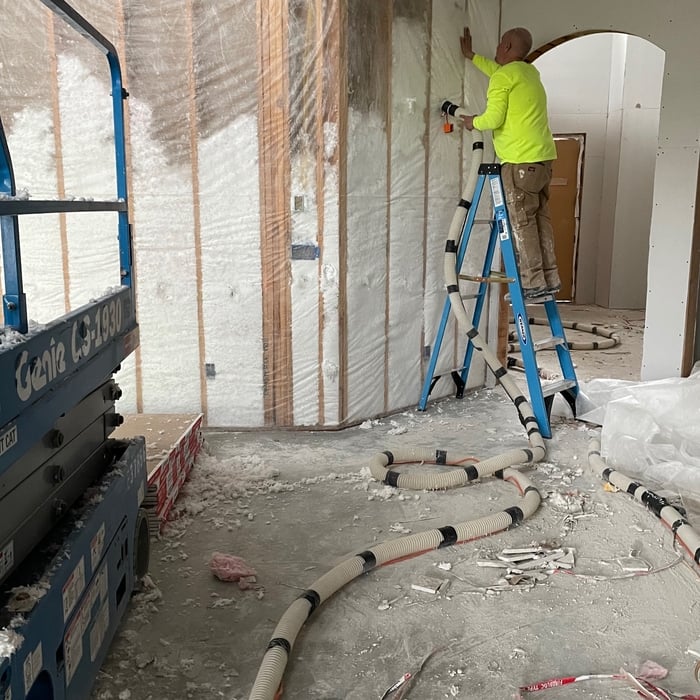
Blow in insulation
Blow in insulation
Air sealing an attic
Duct sealing

+3

Response time5 hrs
Response rate87%
Recommended by98%of homeowners
Showing 1-10 of 33
Insulation FAQs, answered by experts

The best type of insulation for your home depends on your specific needs, climate, and the area you are insulating. For new construction, structural insulated panels are a highly energy-efficient option that is easy to install during the building process. In very warm climates, reflective insulation can be a cost-effective choice. For cold climates, fiberglass is an excellent option due to its high R-value and resistance to settling over time. Spray foam works well in humid environments because of its moisture-resistant properties. For standard attics, loose-fill, spray foam, or blown-in insulation are all suitable options.

You don’t need to staple insulation, as your drywall and studs will hold it into place. But if you already have a staple gun and staples lying around, it can help keep the product in place and avoid any shifting. But, most experts agree it’s an unnecessary step.

If you’re adding a vapor barrier, you will need to staple that in place.

When temperatures are too cold, it can keep ice from melting, and products like ice melt and rock salt are ineffective. Water turns to ice in temperatures below 32 degrees Fahrenheit. Ice melts on its own when temperatures reach above 32 degrees Fahrenheit. 

Ice melt loses effectiveness in temperatures below -25 degrees Fahrenheit, and rock salt works in temperatures 5 degrees Fahrenheit and warmer.

The R-value is a rating that measures an insulation's thermal resistance—in other words, how well it insulates. A higher R-value provides more protection for your pipes, and all pipe insulation materials should have an R-value listed on the product description or label. Each insulation type has its own R-value, which typically falls between one and five for most pipe insulation. When making a selection, Energy.gov recommends choosing a pipe wrap that is at least one inch thick, and the International Code Council (ICC) suggests choosing a material with an R-value of at least 3.

Yes, exposure to fiberglass insulation can cause harm to your skin and eyes. However, this typically refers to the fiberglass insulation that is mostly used in walls and attics. Fiberglass doors don’t pose risks for fiberglass exposure because they're fully encased in polymer cladding.
The Hidden Springs, ID homeowners’ guide to insulation services

From average costs to expert advice, get all the answers you need to get your job done.