We are contractors specializing in structural repairs. Floors Sag or shake has been providing quality Foundation Repair, Structural Repair and Basement waterproofing to the Atlanta area for over 30 years. All our work is guaranteed for the life of the structure and with a professional and reliable staff, we are with you every step of the way.
"Elec72I started with using "Richard the Handyman" for a request to replace 2 sets of french door and some other sheet rock work that I had in the house. He did an excellent job on the doors and sheet rock repairs. In fact, I used Richard for about 2 to 4 weeks straight to make repairs to a rental house. Between Richard's work and the landscaper, the leasing agent wanted to sell the house due to the fact that it looked too good to be marketed as a rental. Ultimately, It was rented. What I can say about Richard that his word is good. He charges you what he says, shows up when he is suppose too, and finishes the job or jobs before moving onto his next client. I used Richard to do the following and I thought all of his work was very good and some of it was pure excellent. He did the following; 1) Replaced 2 sets of french doors. The doors did not fit right that I had ordered. He worked around the problem and came up with a great solution, 2) replaced a 32" basement door, 3) repaired sheet rock in walls, 4) repaired 3 or 4 spots in stippled ceilings. Out of the 4, only one was the repair obvious. You could not see the repair on the other 3. 5) He leveled a tub for me and repaired all damage to sheet rock and tile. 6) He painted the living room and ceiling. His paint work is excellent. 7) He repaired appliances for me. 8) He installed a microwave, bathroom fan, security light, repaired a wiring issues, 9) installed 2 toilets and snaked the pipes for me. 10) He replaced a water heater and repaired an outdoor bid hose faucet. 11) he installed a sump pump in my crawlspace to deal with water problem. 12) He repaired carpet, cleaned carpet, and did a touch up job on the house to make it more appealing. 13) He pressure washed the exterior. Overall, Richard did a great job and will do about any job that you have. He is honest and never deceived or took anything from me and kept his word through the 4 weeks. When he could find a way to save me money, he did. What else is to be said."
"The furnace took 4 days to get approved( not counting a Sunday) the others were quick but the water heater had to be ordered so without hot water for a week. One ceiling fan was easy but within a year their policy changed and They would not install the one I purchased and had to get a new one approved and then ordered online and took several weeks to get straightened out. Not sure who was at fault, AHS, installer or scheduling with renter. Fee is usually $75 per visit"
Im Adrian I been doing electrical since at a very young age I do it everyday for the past 10 years love what I do make sure everything is satisfied with the customer
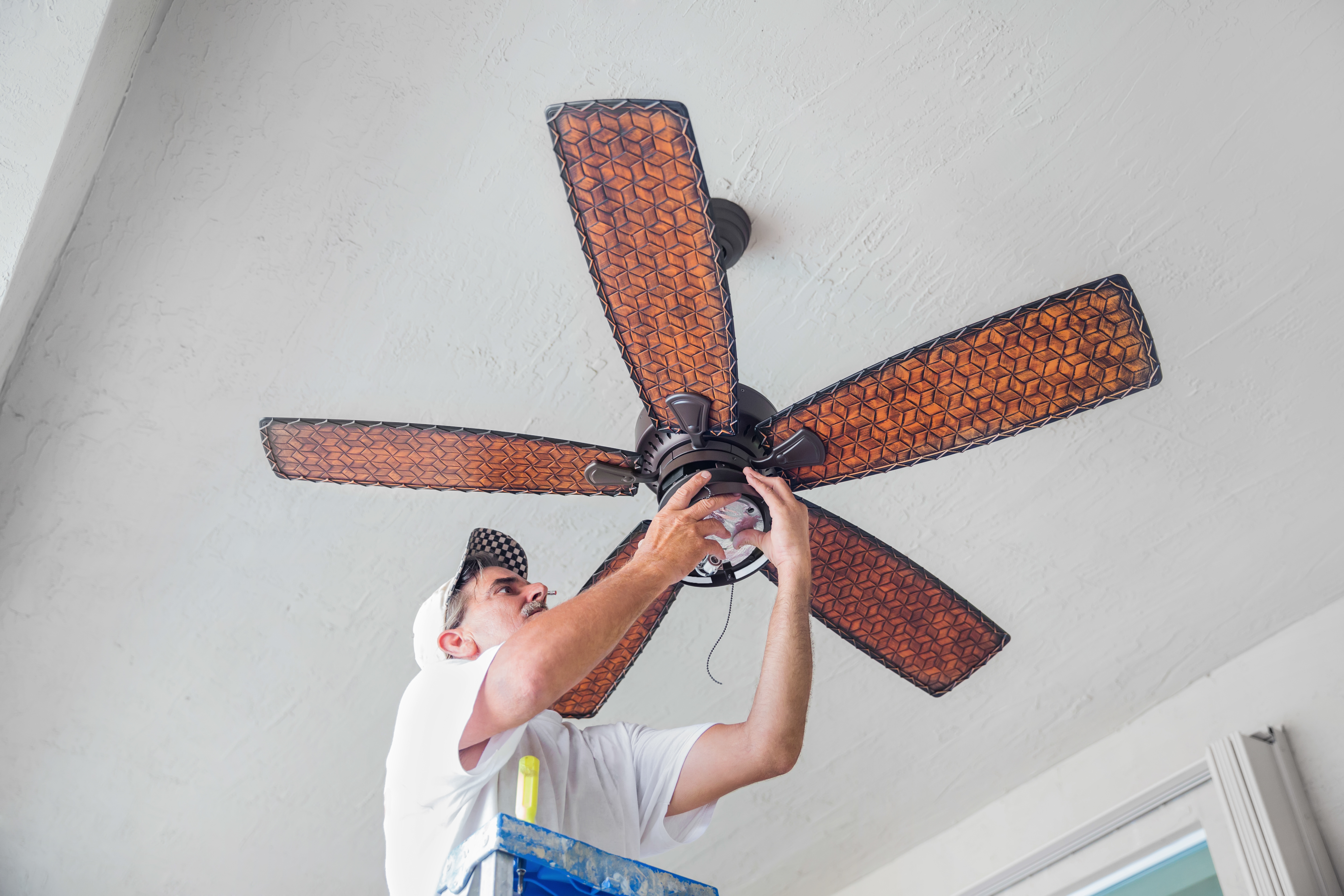
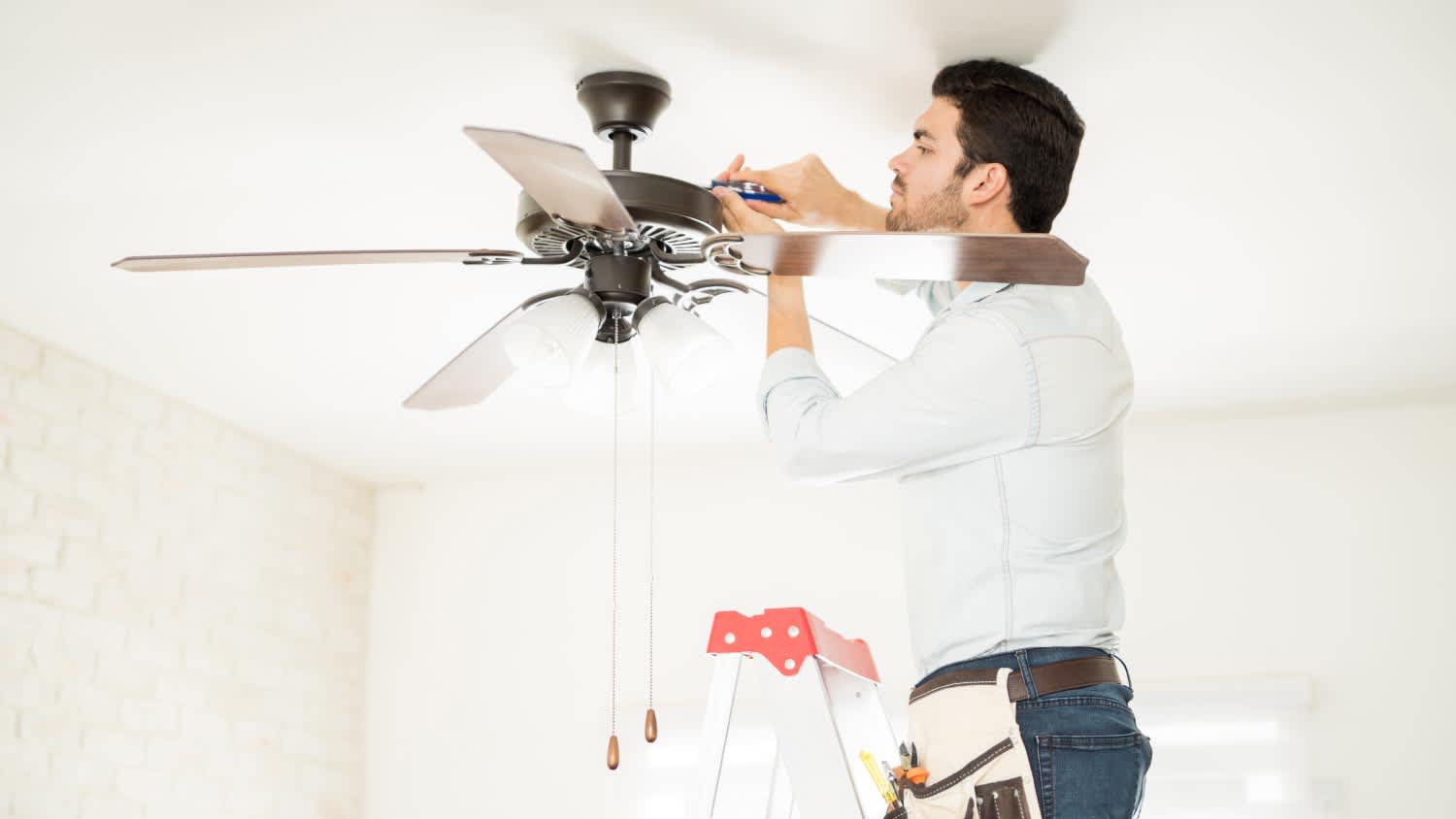
To convert a ceiling fan to wireless, you’ll need to install a canopy module to access the lighting and fan controls. Many options are available, all of which help you control specific elements of your ceiling fan, so you have plenty of choices depending on your needs.
Identifying the source of noises is your first step to soundproofing a room without overspending. Generally, sound comes from inside or outside of the house. Inside noises include creaking floors, living noises like TVs in the living room, cooking sounds, or kids being kids. External noises generally include incremental weather, disturbing neighbors, and street traffic. Inside noises require you to soundproof floors, ceilings, and doors, whereas outside noises may require you to soundproof your attic, windows, and walls facing the streets.
Fan power is measured by CFM, or cubic feet per minute. For every 1,000 feet of square footage in your attic, you need a minimum of 700 CFM. Steeper roofs may need larger fans or about 840 CFM. You can figure the size of attic fan you need by multiplying the square footage of your attic floor by 0.7. (multiply by 1.2 for a steep roof and 1.15 for a dark roof). That number is the CFM required for your fan to run efficiently.
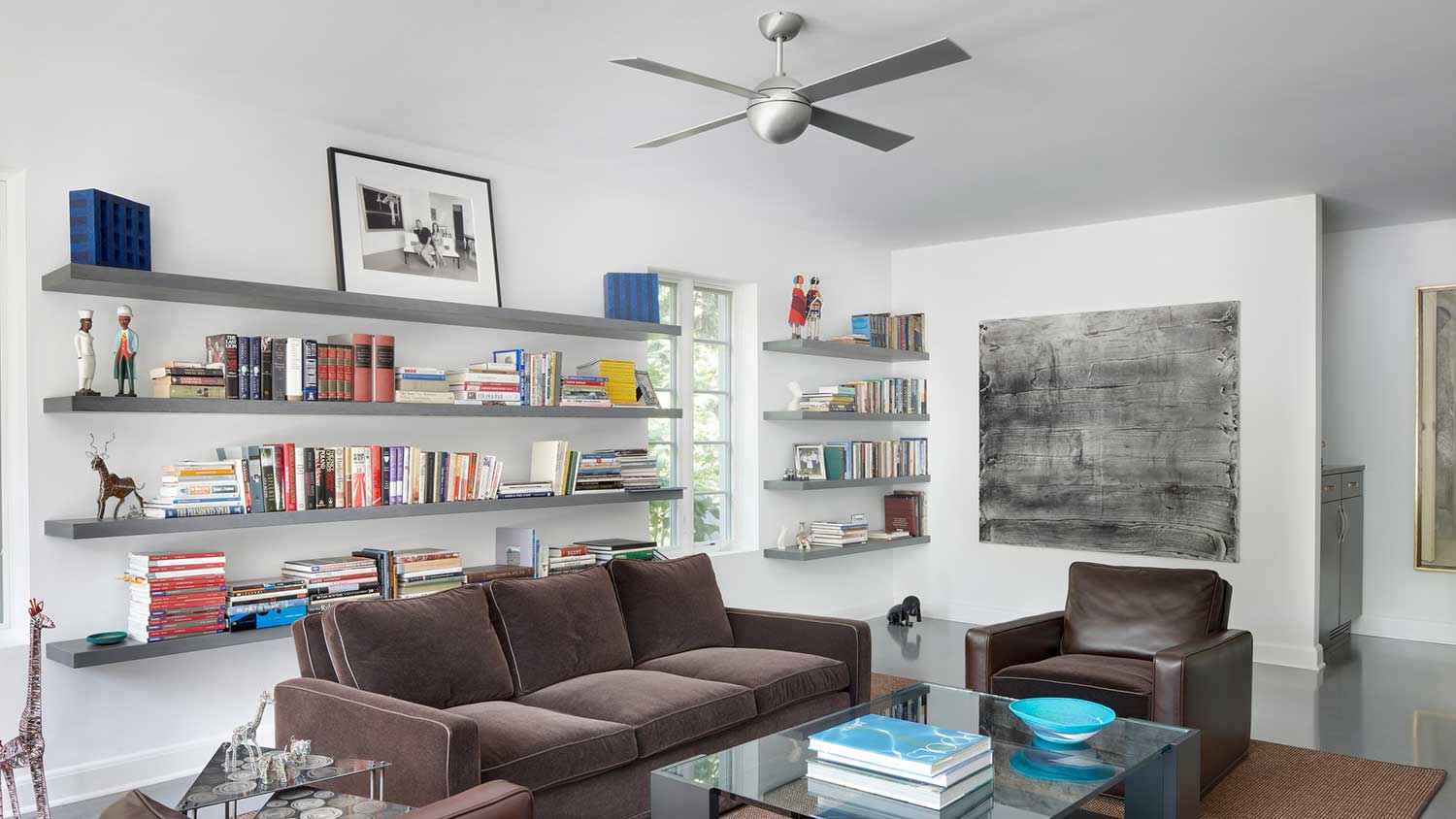
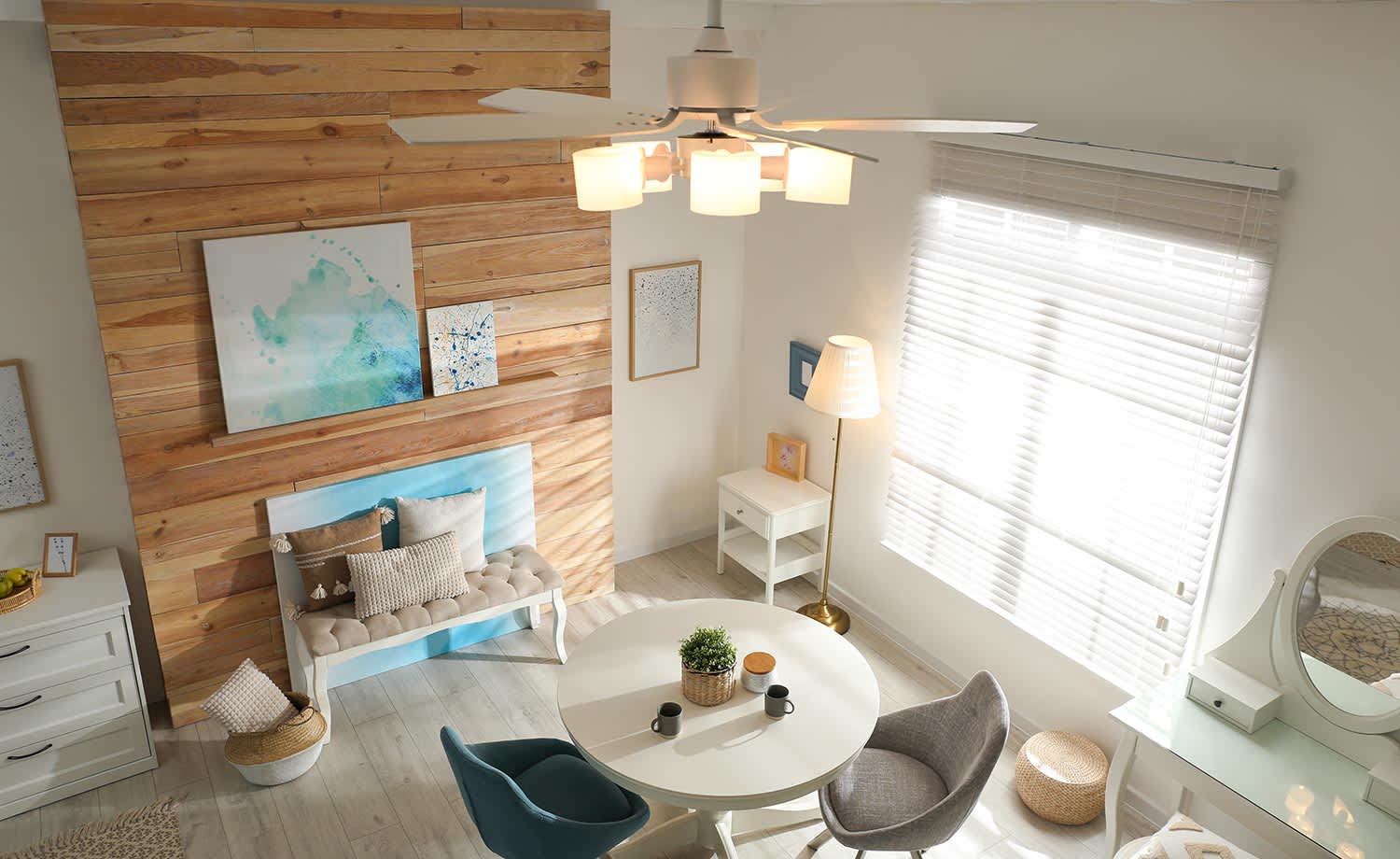
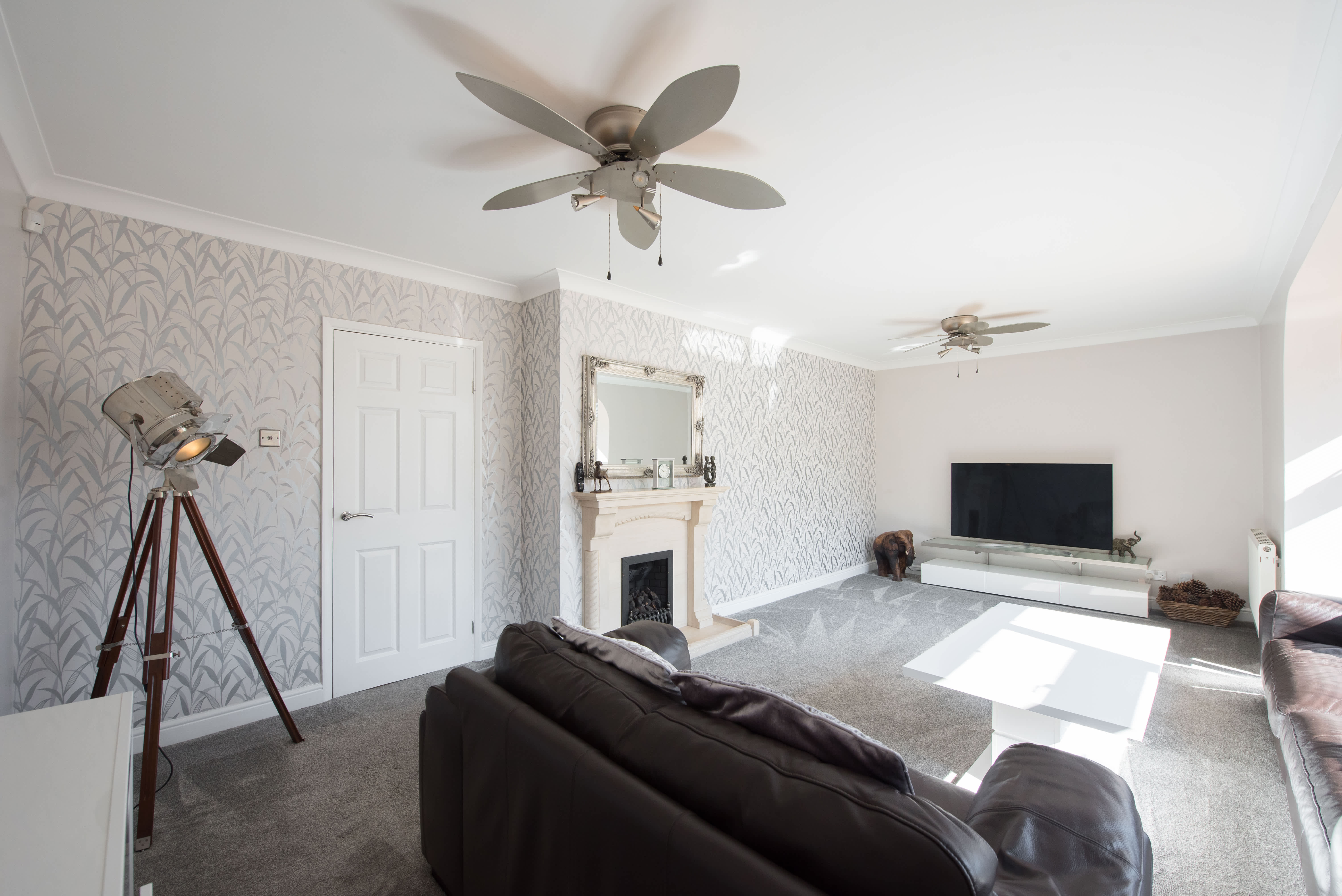
The number of blades for your fan poses both advantages and disadvantages. Typically, the more blades on a fan, the better the air distribution and cooling effect, but this also means that your fan will have more wear on its motor. For small rooms, three-blade fans should work fine. For larger areas like living rooms, four or five-blade fans might be the better option.
Many ceiling fan mounts feature a design that can accommodate slight slopes by using a ball joint mechanism at the end of the downrod. If your ceiling has a steeper slope than your fan allows for, you can install a downrod that will allow your fan to safely hang below the slope.
The Washington, GA homeowners’ guide to ceiling fan services
From average costs to expert advice, get all the answers you need to get your job done.
Discover the cost to install a ceiling fan, including labor, materials, and tips to save. Learn what impacts your price and how to budget for your project.
Ceiling fans cool down your home while stylishly accenting your space. With a variety of types of ceiling fan on the market to choose from, you can’t go wrong.
Although the risk is low, there are a few telltale signs that a ceiling fan will fall off your ceiling. This guide explains when to worry (and when not to).