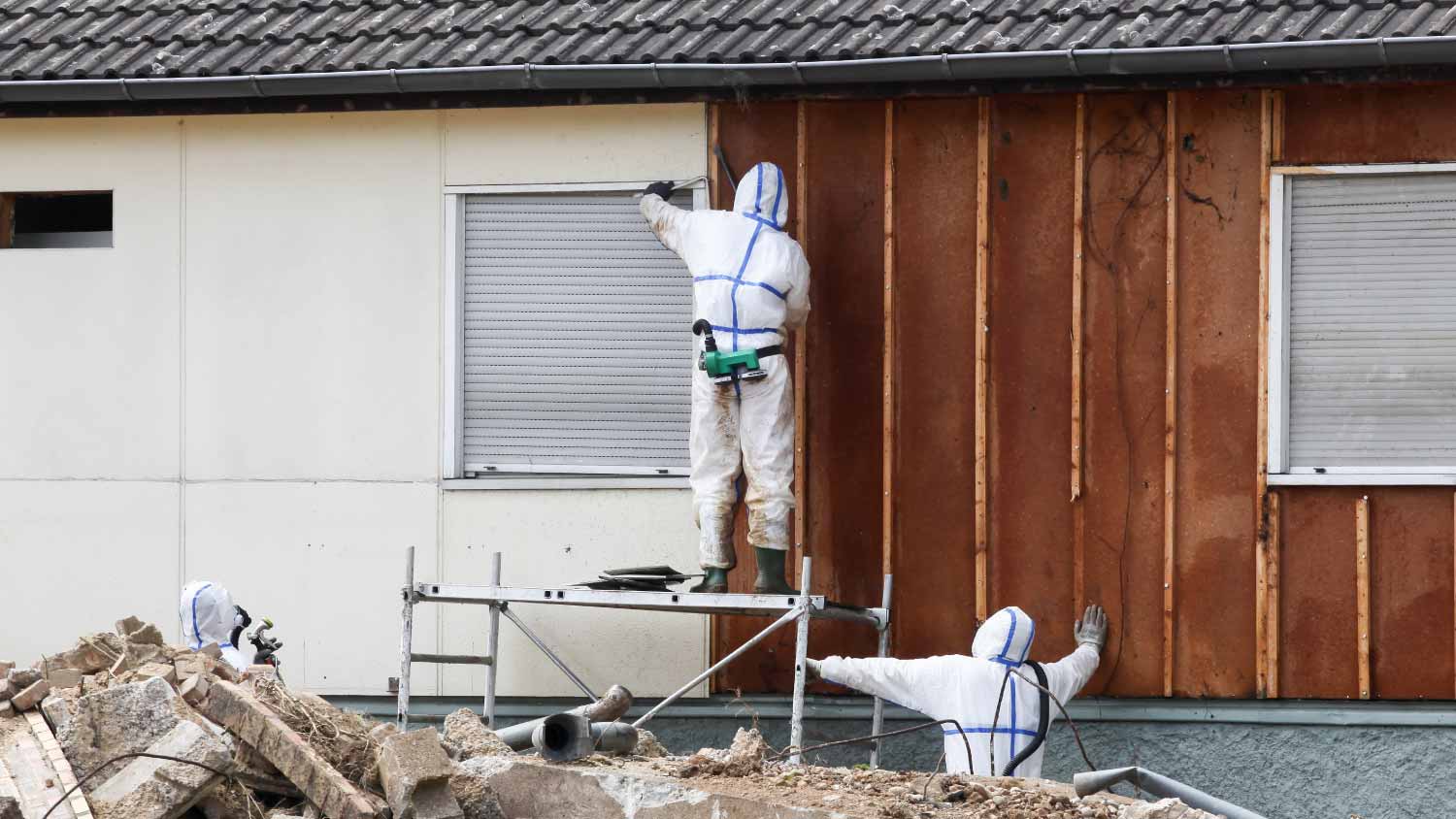
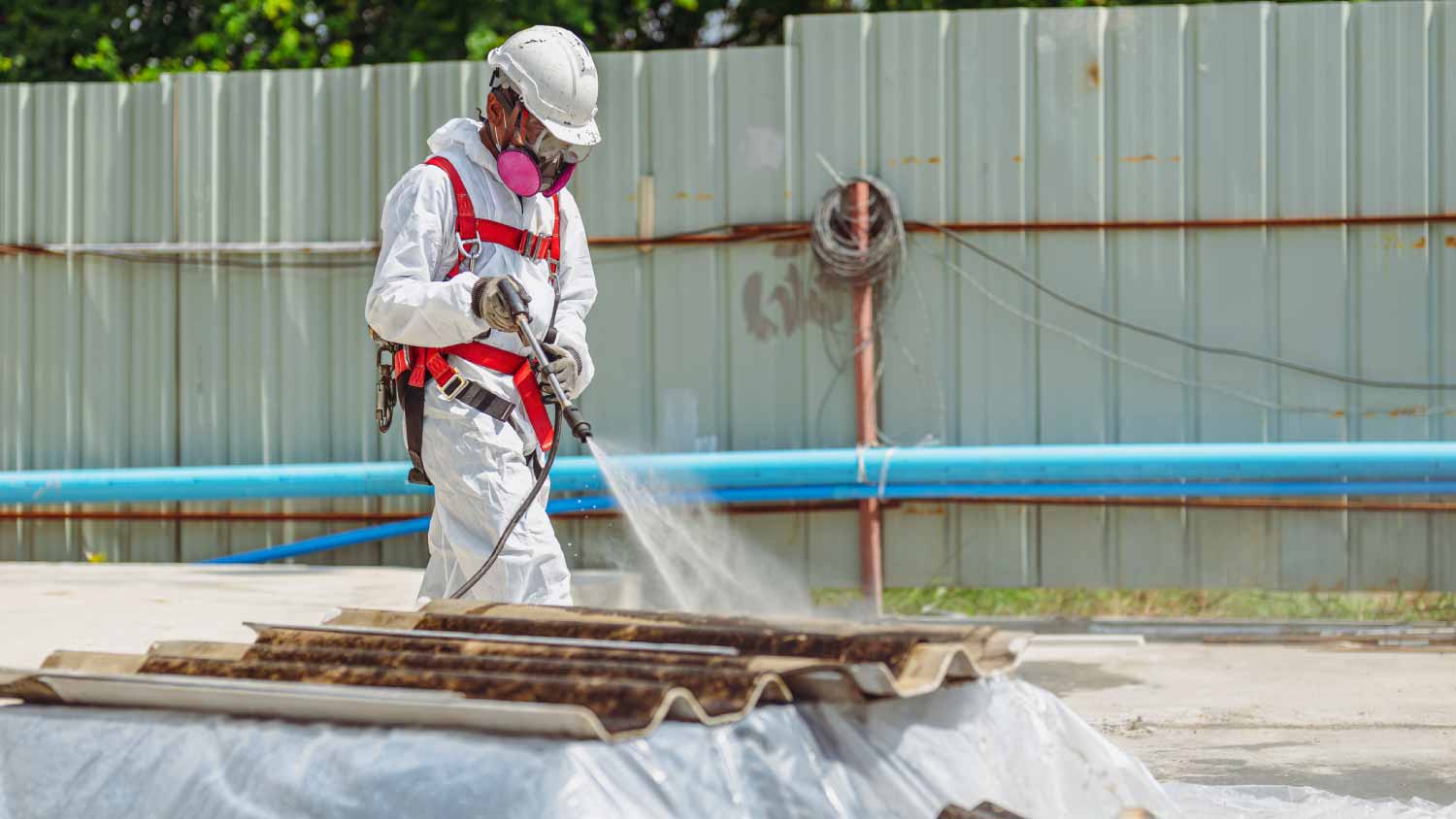
Top-rated asbestos removal specialists.

Best asbestos removal specialists near Tallevast, FL

Enter your zip and get matched with up to 5 pros

Need a pro for your asbestos abatement project in Tallevast, FL?

Select your specific project to find the pro for you.

Top-Rated Asbestos removal specialists in Tallevast - Updated Nov 2026

Avatar for Super Green Environmental, LLC
Super Green Environmental, LLC
5.0(
5
)
Asbestos - Testing

Serving Tallevast, FL and surrounding areas

In business since 2016

Free estimates

Emergency services offered

"“Super Green was quick in responding to my inquiry and very kind. They came out and explained all the steps of the testing to me and was very thorough and professional. Very glad I chose this company over the others.” I would definitely recommend Super Green"
Recommended by80%of homeowners
W L Smith and Associates Consulting, Inc.
0.0(
1
)
Asbestos - Testing

Serving Tallevast, FL and surrounding areas

In business since 2009

Free estimates

Credit card accepted

W.L. Smith & Associates is dedicated to environmental improvement through identifying and evaluating environmental risks and eliminating the risk to the community. In order to identify, evaluate and eliminate environmental risks, one would require the services of environmental professionals and a team of experienced, well trained, able bodied field experts. W.L. Smith & Associates is able to meet those needs with the true spirit of professionalism and excellence. \n \n

Recommended by100%of homeowners
Asbestos Removal FAQs, answered by experts

According to the Environmental Protection Agency (EPA), hazardous waste is generally classified into four main categories:

1. Characteristic Wastes: These exhibit at least one of four hazardous traits: ignitability (flammable, like gasoline), corrosivity (can rust or decompose materials, like car batteries), reactivity (unstable and can explode, like aerosol cans), or toxicity (harmful when ingested, like lead-based paint).

2. Listed Wastes: These are specific wastes from manufacturing and industrial processes that the EPA has officially designated as hazardous. They include byproducts from processes that use solvents, pesticides, and other chemicals.

3. Universal Wastes: These are commonly generated hazardous items that are subject to streamlined regulations. Examples include batteries, pesticides, mercury-containing equipment (e.g., bulbs), and some lamps.

4. Mixed Wastes: This category includes waste that contains both hazardous and radioactive components, making it subject to regulation by both the EPA and the Nuclear Regulatory Commission.

If asbestos is found, it is crucial to consult with a professional. They will provide recommendations for appropriate abatement actions, which may include safe removal, containment, sealing, or enclosure. All actions must be planned and executed in accordance with local regulations for handling asbestos.

Epoxying over asbestos tiles is generally considered a safe option when done correctly. Epoxy acts as a sealant, encapsulating the asbestos tiles and preventing the release of asbestos fibers into the air. The key is ensuring that the asbestos tiles are in good condition, firmly adhered to the substrate, and not damaged or deteriorating. This method is only appropriate for tiles that are undamaged and securely in place. If the asbestos tiles are already loose, damaged, or deteriorating, encapsulating them with epoxy may not be a sufficient solution, as it might not address the potential for ongoing asbestos exposure.

Asbestos is a carcinogen, meaning it increases the risk of cancer. Inhaling asbestos fibers is linked to several respiratory issues, including asbestosis, or scarring on the lungs, lung cancer, and mesothelioma, another type of cancer. There's also a link between asbestos exposure and an increased risk of colon cancer and other cancers of the digestive system.

Usually, the people most at risk for disease related to asbestos exposure are those who spend a lot of time working around the material without protection. Electricians who work with asbestos wire have a higher risk of developing mesothelioma or lung cancer due to their exposure.
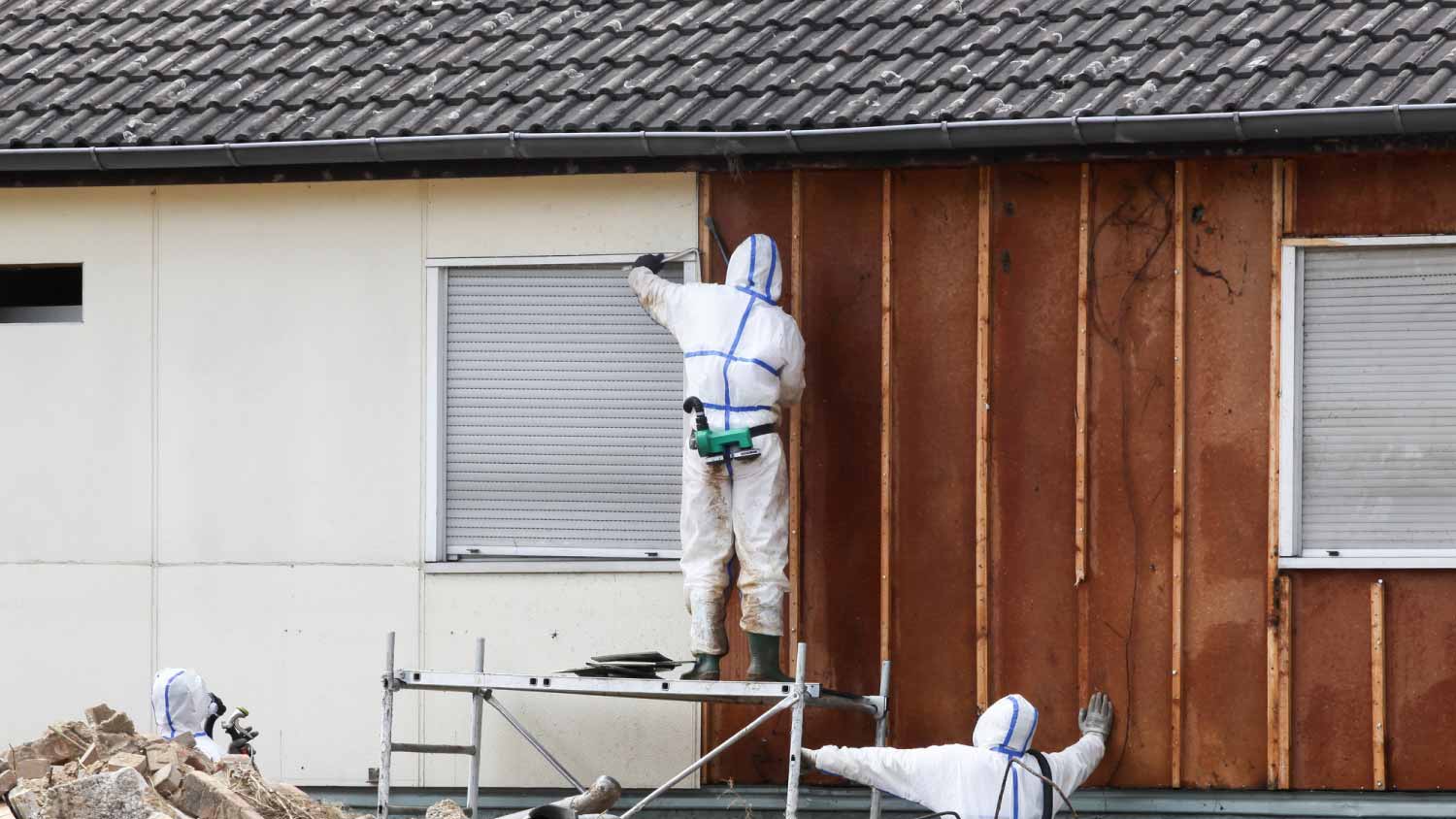
Typically, homeowners insurance does not cover asbestos removal or abatement. Most policies exclude coverage for pollutants, contaminants, and hazardous materials, which includes asbestos. Because asbestos is often considered a pre-existing condition in older homes, its removal is usually viewed as a maintenance expense rather than an insurable loss. However, there is a key exception: if asbestos-containing materials are discovered or disturbed due to a covered event, such as a fire or storm, your policy may cover the abatement as part of the necessary repairs. For example, if a storm damages your roof and an insurance adjuster discovers asbestos while inspecting the damage, the policy might pay for the removal cost. If removal is not covered and is outside your budget, you might consider encapsulating the asbestos. The viability of this option depends on the condition of the contaminated materials. It is recommended to speak with an asbestos abatement specialist to understand your options.

The Tallevast, FL homeowners’ guide to asbestos removal services

From average costs to expert advice, get all the answers you need to get your job done.