


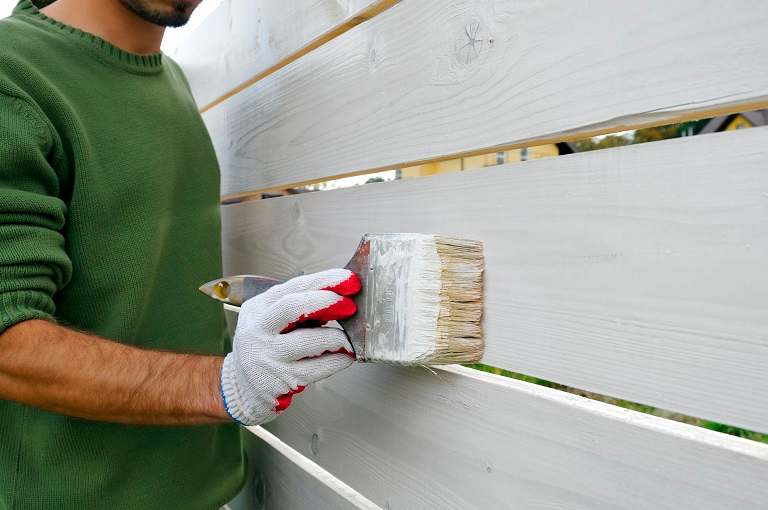
Top-rated fence painters.

Get matched with top fence painters in Landers, CA

Enter your zip and get matched with up to 5 pros

Need a pro for your fence painting project in Landers, CA?

Select your specific project to find the pro for you.

TRUSTED BY LANDERS, CA HOMEOWNERS

  • Average homeowner rating star icon4.8
    Average homeowner rating
  • Verified reviews icon20
    Verified fence painting services reviews

Find Fence painters in Landers

No results for Fence painter in

Try adjusting your search criteria.
Fence Painting questions, answered by experts

Wood stain is not flammable after it dries. The solvent in wood stain is what causes the liquid form to be highly flammable, but the stain drying process involves the solvents dissolving, which leaves behind a non-flammable product on your wood project. Wood stain is, however, flammable before you apply it, so you should always store partially full cans and used wood stain rags away from sources of heat and open flames.

Acrylic latex paint is the best option to use on your outdoor wrought iron fence, because it holds up well against the elements. Use a high-quality, exterior-grade paint specifically designed for use on metal. You can choose between spray paint or regular liquid paint. As for primer, it's best to use an oil-based and rust inhibiting option before painting your wrought iron fence.

A five-gallon bucket of deck stain will cover roughly 875 square feet in a single coat. Actual coverage will vary based on the type of wood you’re staining and the number of coats. If you plan on doing multiple coats, multiply the square footage by the number of coats to calculate how many buckets of stain you’ll need.

While the answer varies based on weather, 10 a.m. is a good time to start painting. The dew will have dried, meaning there’s no moisture on the house, and the temperature will likely be moderate and the sunlight less direct. Starting mid-morning should also give you enough daylight and pleasant weather to work on the job for several hours.

Limewash and whitewash are two techniques used to give brick a light, matte finish, but they differ in composition, application, and permanence. The best choice depends on your aesthetic goals and the specific surface.

Composition

  • Limewash: A natural and environmentally friendly option made from limestone, water, and sometimes pigments. It is breathable and soaks into porous surfaces like brick.

  • Whitewash: Traditionally made from lime, water, chalk, and binders, but a similar look can be achieved with watered-down white paint. It is paint-based and sits on top of the surface.

Appearance and Finish

  • Limewash: Provides a natural, textured appearance that allows the brick's character to show through. It offers a more traditional finish.

  • Whitewash: Creates a softer, more opaque finish, often used for a rustic or shabby-chic style.

Application and Permanence

  • Limewash: Is semi-permanent and can be removed, making it a good choice if you might want to change the look in the future. It requires more skill to apply and cannot be used on previously painted brick.

  • Whitewash: Is a more permanent solution. It is more forgiving to apply and can be used on painted brick. However, because it sits on the surface, it can trap moisture.

Ultimately, if you want a breathable, natural, and reversible finish for unpainted brick, limewash is a great option. If you need a more permanent, opaque coating that can be applied over painted surfaces, whitewash is the better choice. Whitewashing may also be more economical, costing approximately $1.40 to $4.20 per square foot.

The Landers, CA homeowners’ guide to fence painting services

From average costs to expert advice, get all the answers you need to get your job done.