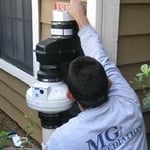








Top-rated radon detection and reduction specialists.

Get matched with top radon detection and reduction specialists in Kensington, CA

Enter your zip and get matched with up to 5 pros

Need a pro for your radon detection and reduction project in Kensington, CA?

Select your specific project to find the pro for you.

Find Radon detection and reduction specialists in Kensington

Avatar for Fire & Water Damage Recovery
Fire & Water Damage Recovery
4.7(
69
)

Serving Kensington, CA and surrounding areas

In business since 1997

Free estimates

Emergency services offered

"The experience with Justin at Fire & Water Damage Recovery was excellent. They were referred by the plumbing company that serviced my sump pump. We still got 3 estimate, Justin's estimate was in the middle but I felt good with Justin based on our phone conversation and the referral so we went with this company. Justin did tell me that he might have estimated on the high side because he does not like to surprise the homeowners. What a surprise when I go the final invoice. The final invoice came in much lower and was very close or lower than the lowest estimate I got. Justin and his team also took pictures of how the place was before and after for me to see. They even took pictures of the pathway that they took to get to the crawl space to assure me that they kept the place clean when they got in and out. I was very satisified with Justin and his company."
Additional Photos
Additional Photos
Additional Photos
Additional Photos
Additional Photos

+27

Recommended by88%of homeowners
Radon Detection and Reduction questions, answered by experts

No level of radon is technically safe, but since it is present everywhere, complete avoidance is impossible. The average radon level in homes across the United States is 1.3 picocuries per liter (pCi/L). The Environmental Protection Agency (EPA) recommends taking preventative measures if your home's radon levels are between 2 and 4 pCi/L or higher.

Keeping radon from getting into your home is much better than having to get rid of it once it's already indoors. While there may not be a way to fully prevent radon from getting into your home, there are things you can do to reduce the gas's ability to enter. 

Sealing foundation cracks and openings can help keep the gas from seeping inside. Improving air flow, such as by opening windows, can also be helpful. If you're building your home from scratch, talk to your contractor about using radon-resistant construction to keep the gas out.

If your home has a sump pit, you can integrate it with a radon mitigation system. You can accomplish this by sealing the pump cover with an airtight lid that accommodates radon vent pipes and sump pump hoses. This allows the vent pipe to redirect the radon gas outside of your home.

There are steps you can take as a homeowner to remediate radon yourself. While a radon reduction professional can make the biggest impact in your home, you can make efforts to improve radon levels on your own by sealing cracks, increasing ventilation, and testing for radon regularly.

No, air purifiers are not an effective way to reduce or remove radon. Radon is a radioactive, inert gas that cannot be filtered by standard air purifiers, which are designed to capture particulates like dust and mold. While an air purifier can improve indoor air quality by removing other pollutants, it should not be relied upon for radon. The only effective solution for high radon levels is a dedicated radon mitigation system.

The Kensington, CA homeowners’ guide to radon detection and reduction services

From average costs to expert advice, get all the answers you need to get your job done.

What do you need done? We’ll find top pros.
  • 🌱 "Mow a small front yard"
  • 🛠 "Fix a leaking pipe under the sink"
  • 🏠 "Repair shingles on an asphalt roof"