


Top-rated excavation pros.

Get matched with top excavation pros in Clarendon, AR

Enter your zip and get matched with up to 5 pros

Need a pro for your excavation project in Clarendon, AR?

Select your specific project to find the pro for you.

Find Excavation pros in Clarendon

Avatar for R&R Dirtworks
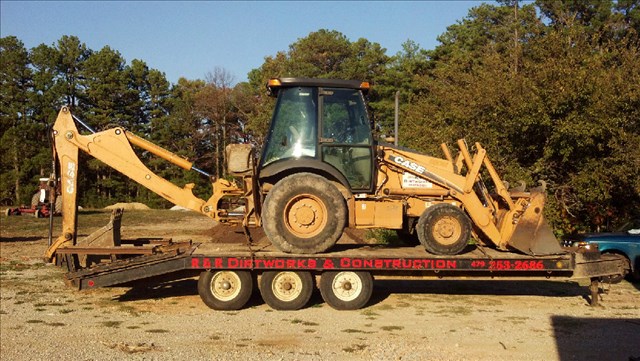
R&R Dirtworks
5.0(
4
)

Serving Clarendon, AR and surrounding areas

"All the materials I've purchased from him have been completely satisfactory. He finds out what you need and makes sure that you're getting exactly what you need. I've never heard of him not completing a project. He'll let you know of any unexpected things that you might encounter as well."
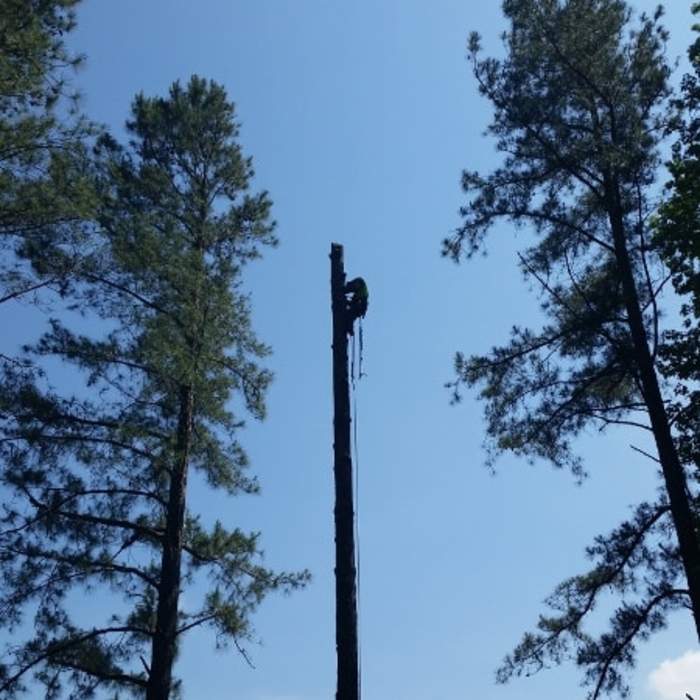
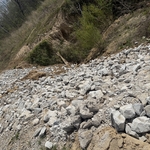
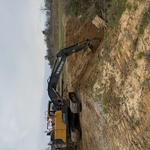
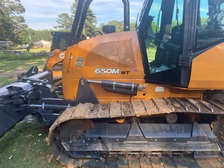
Additional Photos
Additional Photos
Additional Photos
Recommended by100%of homeowners
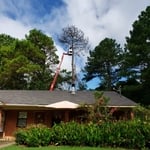
The Upton Group
New to Angi

Serving Clarendon, AR and surrounding areas

In business since 2010

Free estimates

The Upton Group, is a locally owned and operated company that values honesty and integrity and treats your home as if it were our own. We provide a variety of quality building, remodeling, and home improvements. You will find that we pay close attention to the details of each and every project. We look forward to building long lasting relationships and guarantee your satisfaction!

Excavating questions, answered by experts

A perc test can take anywhere from one to eight hours to complete. The total time depends on factors like the amount of excavation required, the depth and width of the holes, and whether multiple test holes are needed. For a single hole, the process of filling it with water and monitoring the drainage rate usually takes less than an hour. Professionals can often complete the entire test in a single day. While it's possible to get results the same day, some companies may take a few days to provide the official report.

Excavation is priced in cubic yards, so you’ll need to find the volume of the area in order to calculate costs. Multiply the length, width, and proposed depth of your excavation site, then convert it into yards to get the volume. Multiply this figure by the price per cubic yard.

Most homeowners can measure by hand to get a rough estimate, even if it’s tedious. You may want to pull out a tape measure or use a string to help mark the area.

There is no standard depth for burying a septic tank; they are typically buried anywhere from 4 inches to 4 feet underground. The final depth depends on several factors, including the depth of your main sewer line, the height of the bedrock, soil type, local regulations, and the property's landscape. If you plan to grow grass or plants over the tank, a depth of at least 4 to 6 inches is recommended. Deeper tanks can be more difficult to locate, but a septic professional can help find it for you.

The best type of soil to build on is a mixture of sand and clay, known as loam soil. Loam soil has the best combination of these soil types to build a foundation on. The clay particles help with water retention, so it won’t erode like sandy soil might, and the sandy particles help with drainage, so you won’t see unsafe soil expansion or have an increased risk of leaks from water sitting against your foundation.

No, a ditch isn’t a trench. A ditch is an open, relatively shallow channel that’s carved out of the ground and used for drainage purposes. In contrast, a trench is a deeper excavation that’s entirely underground. Trenches have many uses, including gas lines, sewage systems, and electrical wiring. Unlike trenches, ditches don’t get filled back in with dirt after they’re dug.

The Clarendon, AR homeowners’ guide to excavation services

From average costs to expert advice, get all the answers you need to get your job done.