
Top-rated tree service pros.

Get matched with top tree service pros in Fayette, AL

Enter your zip and get matched with up to 5 pros

Need a pro for your tree service project in Fayette, AL?

Select your specific project to find the pro for you.

Find Tree service pros in Fayette

4S Tree Service & Stump Grinding LLC
New to Angi
Tree RemovalTree TrimmingTree Stump - Remove+2 more

Serving Fayette, AL and surrounding areas

Approved

In business since 2010

Free estimates

Credit card accepted

We take great pride in our experience, expertise, quality, and customer service that we provide to meet the consumer's custom needs. It is our mission to provide excellent workmanship and complete customer satisfaction from start to completion of a project. In order to understand the needs and expectations of our customers, we take great care to work and communicate with every customer in a professional manner. Our reputation is based on service, safety, and quality, regardless of how large or small the job.

12 neighbors recently requested a quote
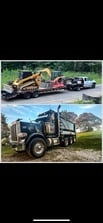
Natdawgs hauling &excavating llc
New to Angi
Tree RemovalTree Removal - For BusinessTree Stump - Remove+3 more

Serving Fayette, AL and surrounding areas

Approved

Free estimates

Emergency services offered

Small jobs welcome

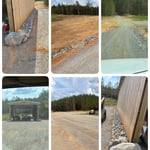
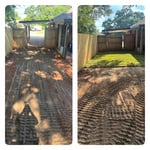
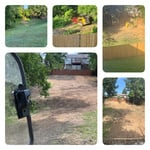
I’ve been doing tree and skid steer work for about 20 years, customer satisfaction is my goal. The job is not complete until you, the customer, are happy. I am a perfectionist, I like and want stuff done right! I am willing to travel almost anywhere within the state. I am highly efficient in a skid steer and working out of a bucket truck..

Showing 1-10 of 44
Tree Service questions, answered by experts

On grafted trees, tree suckers will grow from the root stock, not the branches grafted onto it. Therefore, the leaves and characteristics of the suckers aren’t the same as the tree because they are different varieties. Root stock has more hardiness, strength, or drought tolerance than its grafted limbs, so if the suckers are from fruit or flowers, it might be different than the main part of your tree.

You can use a chainsaw, but it won’t remove the entire stump or root ball and is not a recommended method. It takes quite a bit of physical work to achieve and will likely dull or ruin your chainsaw. Instead, consider using salt, herbicide, light deprivation, boiling water, stump grinding, or burning to kill a tree stump. These methods allow you to kill a stump using minimal machinery and physical exertion.

It is possible to cut down a tree on your property yourself, but it is generally not recommended unless specific conditions are met. You should only consider this project if the tree is small (e.g., under 4-5 inches in diameter and short enough that you don't need a ladder to reach the branches), and you are experienced in handling a chainsaw. The tree must also be located far from any power lines, fences, homes, or other structures. Even for small trees, the work can be dangerous, and it's always advisable to have a spotter to ensure the tree falls correctly and no branches fall on you.

For any tree that is large, requires a ladder to access, or is near electrical lines or structures, you should always hire a professional. Attempting to remove a large tree yourself is extremely dangerous, poses a risk of serious injury, and could result in significant damage to your property.

Before any tree removal, it's also important to check your local and state regulations to ensure the tree is not historic or otherwise protected by your city.

In the case that a tree is growing directly on your property line, the cost of maintaining the tree is shared and is the property of both owners in common. In this case, all decisions regarding the maintenance of the tree must be made jointly, and both parties must agree on a course of action. You will need to agree with your neighbor about the cutting of any roots before you carry it out, and your neighbor must also consult with you before doing any trimming. Coming to an agreement with your neighbor about any shared trees ahead of necessary trimming and maintenance will make this process much simpler.
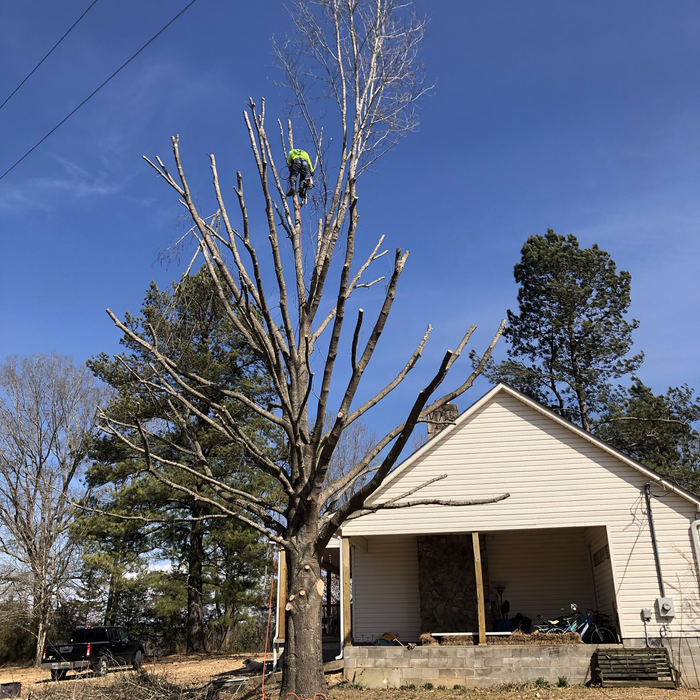
It depends. Smaller, younger trees take longer to mature, but they're more resilient, their roots don't get as damaged during transplanting, and they recover faster. Plus, they're much more affordable to plant, and it's possible to DIY the planting. 

On the other hand, mature trees produce fruit faster and provide more shade and privacy immediately. Ideally, a small or medium tree is the better choice if you can wait a few years for it to mature. But if you need immediate maturity, a larger tree is the only option.

The Fayette, AL homeowners’ guide to tree services

From average costs to expert advice, get all the answers you need to get your job done.