
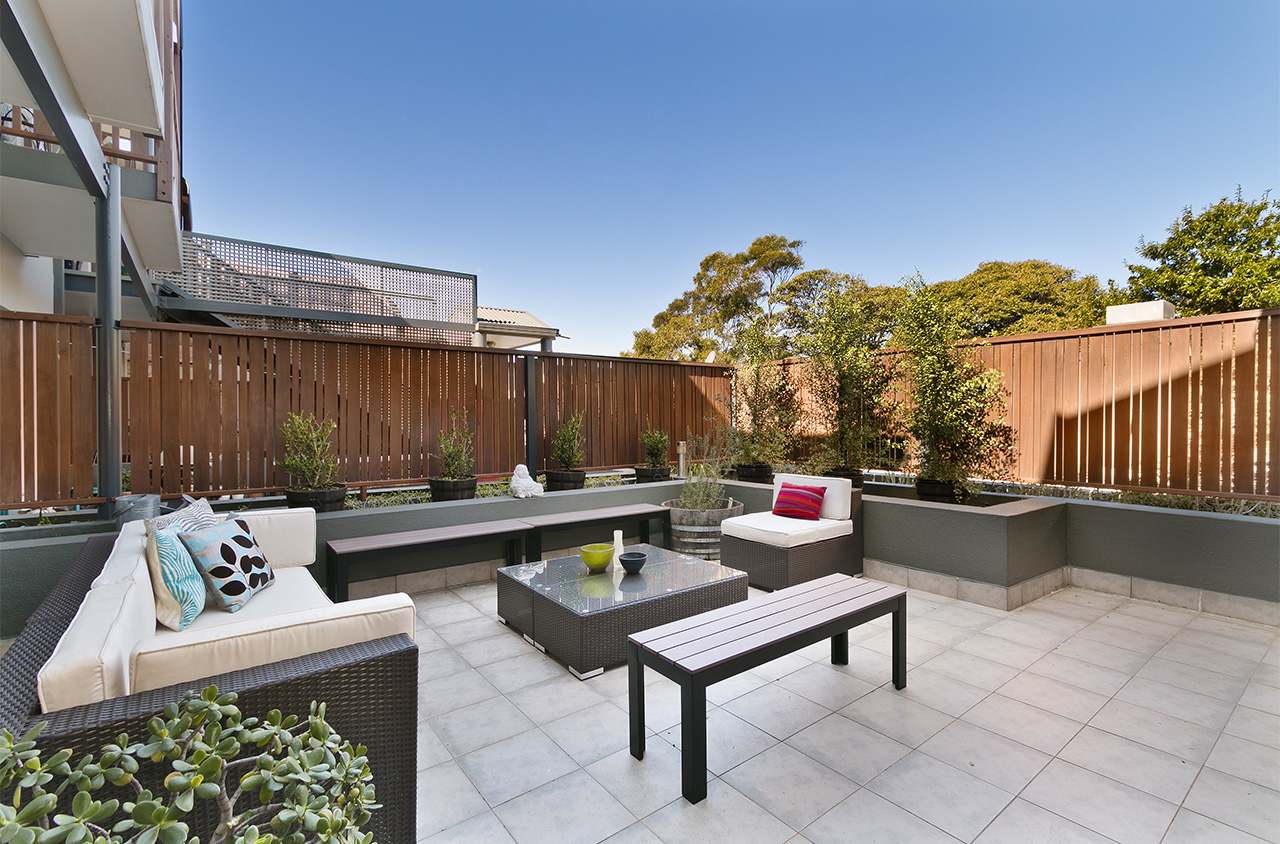
How much a wood fence costs depends on the material, add-ons, and more. Read this guide to learn how each cost factor impacts the price of a wood fence.
From classic to creative, a wood fence is a canvas for your personality
 - Derek Rose.png?impolicy=thumbnail)
Wooden fence ideas range from classic white picket designs to modern horizontal slats, letting you match your yard's style with practical benefits.
Reclaimed wood fences cost $20 to $40 per square foot, while bamboo fences average $2,800 for 150 feet compared to $3,100 for other wood types.
Your fence choice depends on your needs: solid board panels provide privacy and security, while split-rail designs suit large properties without blocking views.
Hiring a local wood fence building professional keeps your installation on track, from selecting the right wood type to ensuring posts stay level and secure.
The type of fence you install not only alters the appearance of your yard, it also has many practical effects, like providing privacy and security. When it comes to wooden fences, there are countless options, ranging from rustic to modern, simple to extravagant. We’ve put together 25 popular wooden fence ideas to help you find your home’s dream design.

A trellis can either be made from thin slats of wood, vinyl, or metal, weaved in a lattice pattern to create a structure that can either stand alone or be supported by beams to create a full fence. Many choose to surround a garden with a trellis fence, but you can also use it around the perimeter of your property. Plant climbing foliage near the trellis, such as wisteria or honeysuckle, for added privacy and visual intrigue.

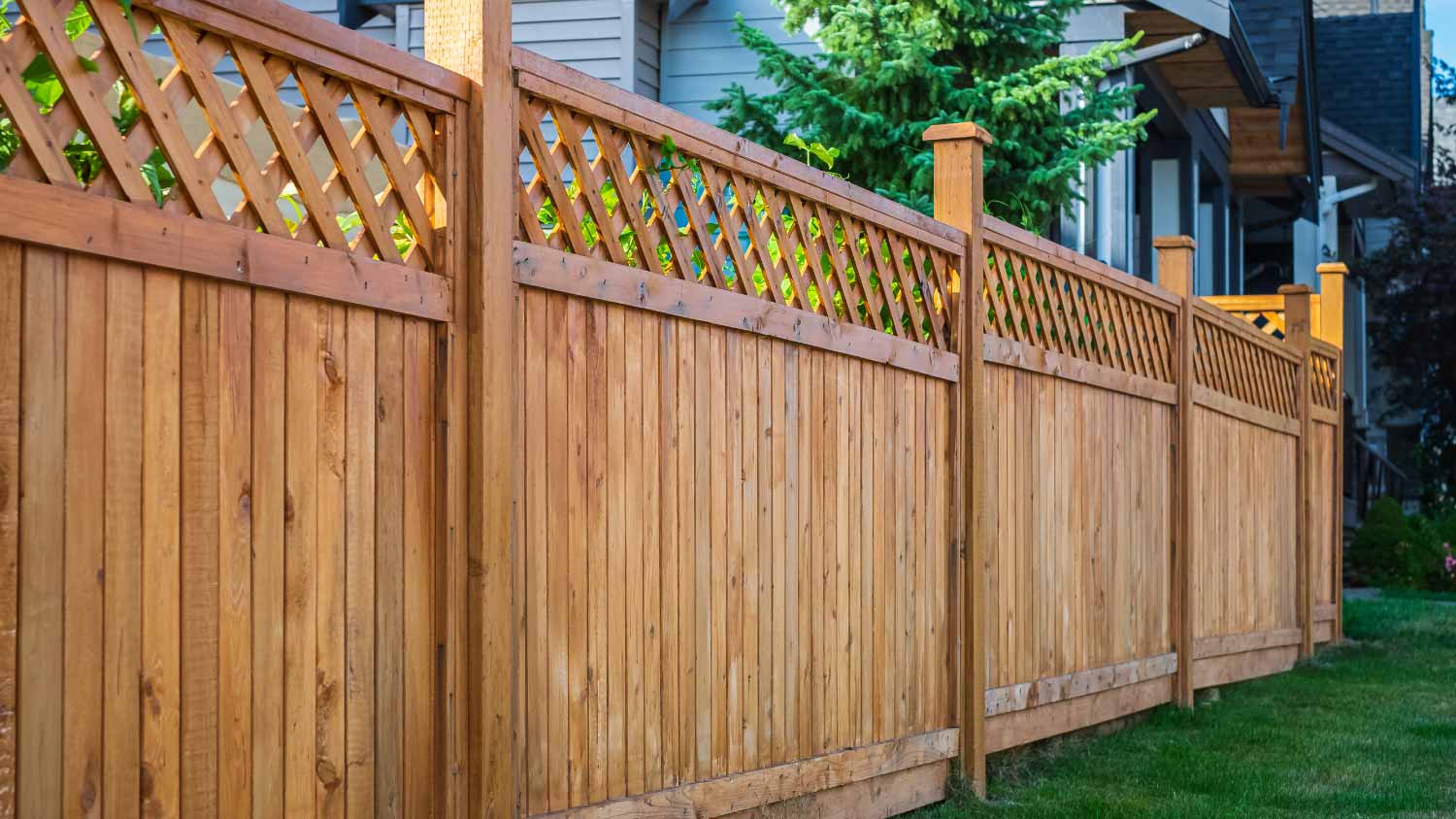
If you like the look of a trellis but prefer a more traditional wood fence for functionality, you can have the best of both worlds with this lattice-detailed privacy fence. This fence design features full wood panels with a charming lattice pattern on the top, providing you with privacy, sound and wind protection, and security.

For a quick and budget-friendly option, consider installing a pallet fence. In many cases, this can be a DIY fence project and can be accomplished in a few steps:
Look for heat-treated pallets (marked with an “HT”) from a local large retailer or factory that are being given away.
Sand them down and repaint them with outdoor-friendly paint.
Arrange them in your chosen layout.
Dig post holes 96 inches apart.
Position a 4X4 wood post in each hole, then fill them in with cement. Remember to use pressure-treated posts to prevent rotting.
Once the cement has cured, slide the pallets over the posts and attach the panels together using three-inch bolts.
Pallet fences work well to contain small areas, like a garden fence, but may not be the best option if you need a taller barrier or if you’re surrounding a large property.

Shou Sugi Ban is a Japanese technique that adds both form and functionality to natural wood. Shou Sugi Ban is accomplished by charring cedar wood, allowing it to cool, brushing away the ash remnants with a wire brush, then coating it with oil. This creates a dark surface that accentuates the natural grain of the wood. The longer the wood is charred, the darker the appearance will be. This technique helps to preserve, as well as waterproof the wood, making this a great option for outdoor use. The charring creates a versatile look that complements rustic-style homes to modern aesthetics alike.

Solid board panels are a popular fence choice, as they provide privacy, wind and sound protection, security, and an increase in resale value. While a solid board fence is associated with a higher price tag, it’s a smart choice if you live on a busy street or in close quarters to neighbors, have pets or small children, or are looking to boost the curb appeal of your home’s exterior.

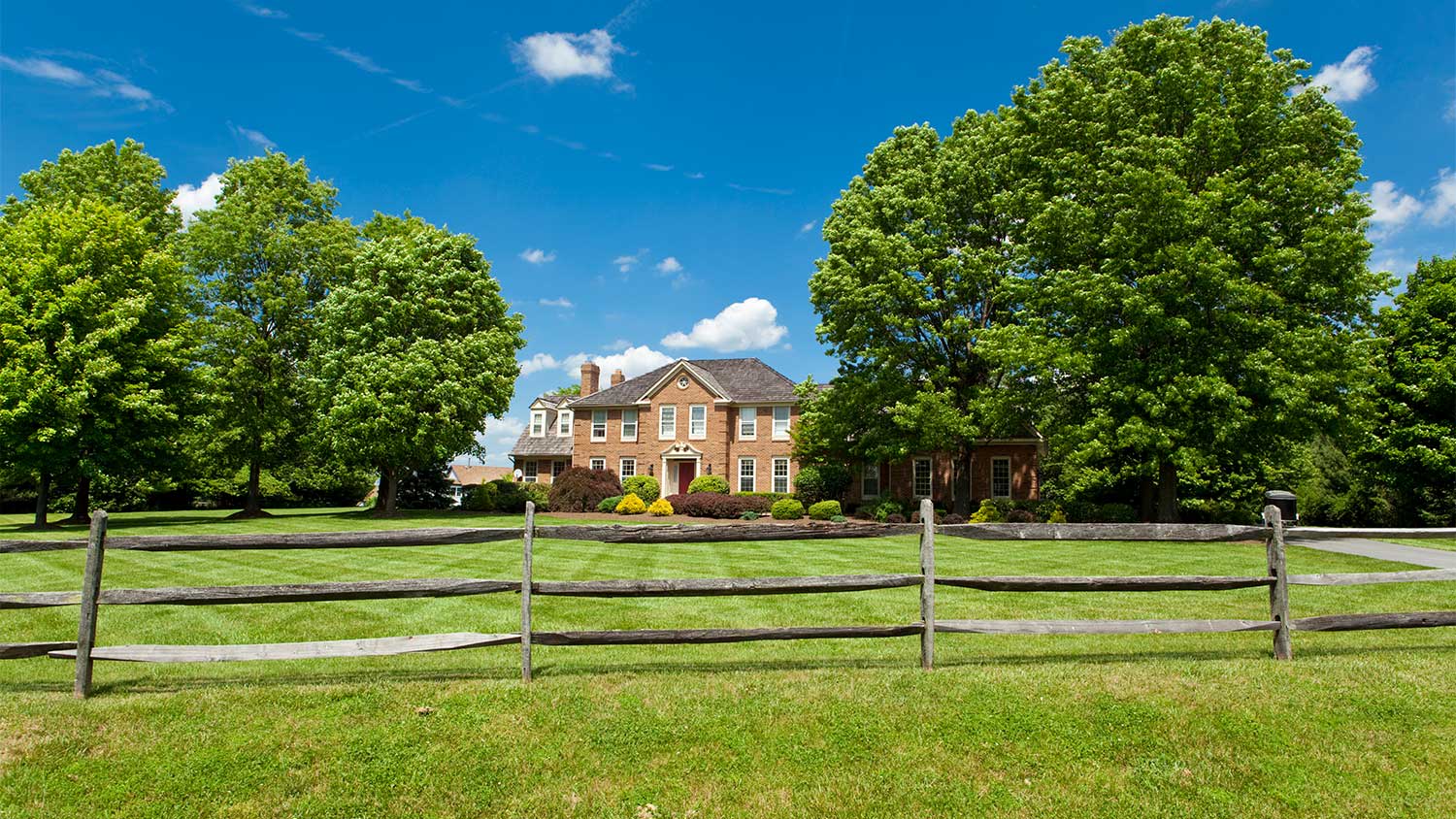
A post-and-rail fence adds a rustic look to your property line. Post-and-rail fences are made with just that—two posts and two to three rails connecting the posts together. They are a popular option to delineate large properties, as they require less maintenance and have a lower upfront cost than other types of fences. Because they’re not fully enclosed, many homeowners choose this option if they don’t want to cover up their view with a fully enclosed type of fence.

Similar to the post-and-rail fence is the split-rail fence, which uses a similar design, but has a more natural look. A post-and-rail fence uses uniform pieces of rails connected to slots in the posts to provide a smoother-looking finish, whereas a split-rail fence uses natural live-edge pieces of wood rails connected to natural wooden posts. Both a post-and-rail and split-rail fence serve similar purposes, so it comes down to your personal style preferences when deciding between the two.

What’s more classic than a white picket fence? This timeless type of fence adds charm and curb appeal, while also creating a barrier to surround your home’s exterior. This particular fence features slats that are uniform in height, but you can also find more intricate designs with varying height slats to create a more decorative look. You can cut costs by using a shorter picket fence in the front yard and a taller picket fence in the backyard. Install a matching picket fence gate in a designated place on your property to better direct foot traffic and keep pets and little ones contained.

Louvered fence panels are positioned on a slant to increase privacy, but still allow wind to pass through and visibility from one direction. You can position it horizontally or vertically depending on your landscaping, aesthetic preferences, and the directional view you wish to see from your yard.

Shake up the standard vertical panel wood fence design, and try out a different configuration. Arrange the boards in a herringbone pattern to give your fence a more customized look. You can streamline the boards and use one color, or stain them varying shades to add more depth and dimension.

Dog-ear fencing refers to the style of paneling used to build a wood fence, and may be one of the first things that comes to mind when you picture a wooden fence. Typically made from pine, dog-eared fence panels taper at the top of the slat to provide a finished and tapered look. They either come in full panels or individual slats, and can be placed close together for full privacy, or further apart to provide a bit more visibility.
What’s more, if you have the carpentry skills, this can be a DIY project over the course of a long weekend for most homeowners. Check out our How to Build a Fence guide to learn how to cut costs and build a simple fence on your property.

Similar to the dog-ear fence, a stockade fence is typically made from pine, and refers to the style of panels used to create the structure. The pickets are butted up against each other to create a tight fit with minimal spacing. As opposed to dog-eared fencing, stockade pickets point toward the top to provide a classic look.

A shadow-box fence, sometimes referred to as a board-on-board fence, is constructed using standard pickets that overlap with little to no spacing between the boards. The staggered pickets on both sides of the fence provide an aesthetically pleasing view of the fence for both you and your neighbors.

Rather than installing a wood fence with wood posts, use metal posts instead for a longer-lasting option. You can use galvanized steel posts, aluminum, or painted steel to add more durability. Not only does this ensure you won’t need to replace the posts as often, but it also breaks up the fence to add depth and dimension to the overall structure.

Not just for chicken coops—a price-tag-friendly fence option is to construct a unit made from both wood and chicken wire. Use fence posts made from wood, and wrap them in chicken wire or box wire. Use this type of fence to delineate a particular area, keep animals contained, or create a garden fence.

Incorporate gardening into your fence design by making a planter box part of the structure. This will encourage you to garden more often, without taking up a lot of room on your property. Fill the planter box with high-quality potting soil and a homemade compost mixture to ensure your plants will flourish.

Go for a more modern look, and turn the wood rails horizontally instead of vertically for a twist on the traditional wood fence design. This fence stacks the wood rails high enough to provide privacy and completely enclose the space but leaves small gaps between the slats so you can still feel a light wind on breezy summer afternoons.

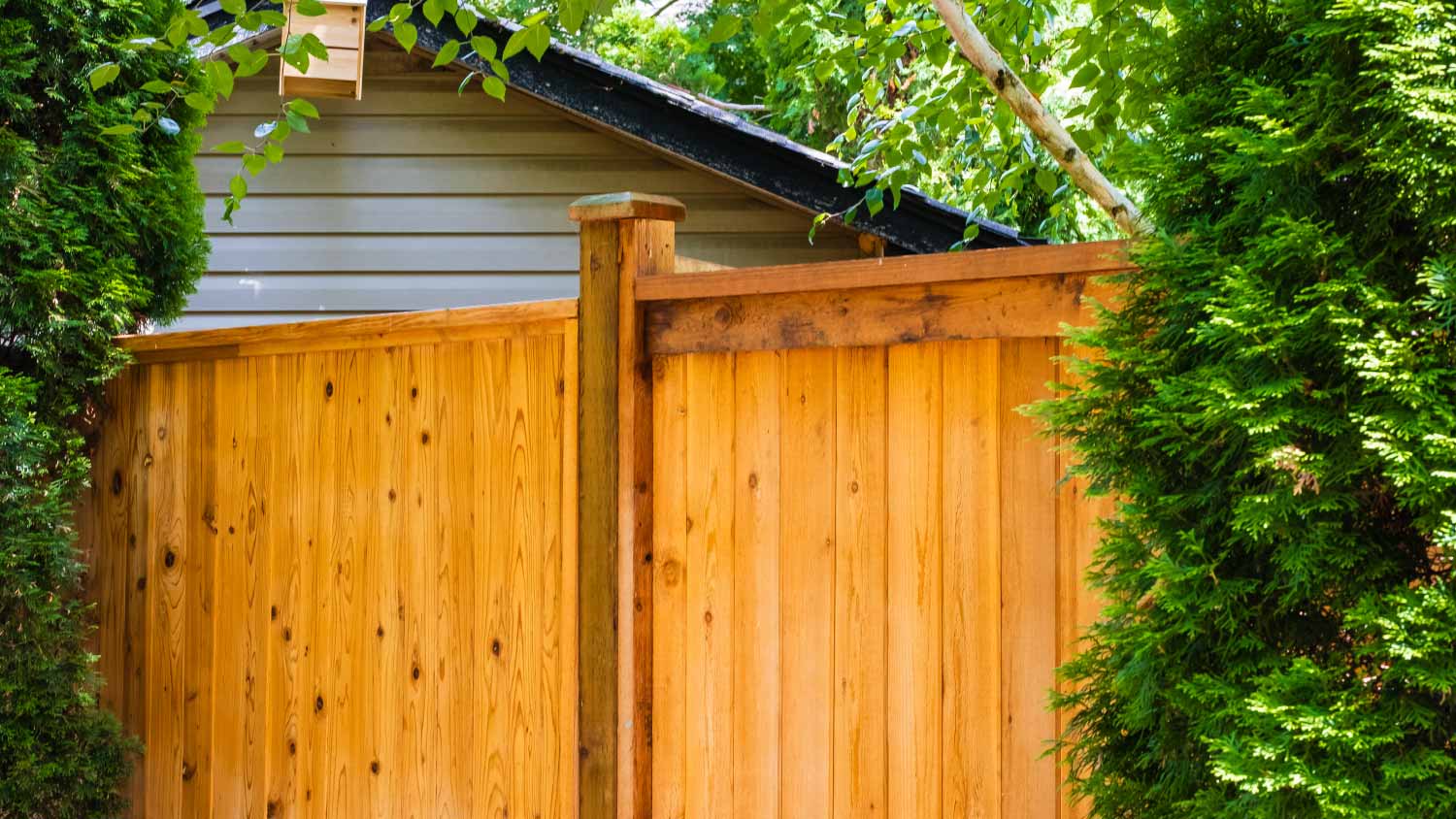
A cap-and-trim fence provides the dual benefit of style and stability. It’s a type of privacy fence where all of the pickets are “capped” with a top piece of wood, making the fence look neat and tidy and strengthening it against the elements. The cap also guards pickets from excess moisture and increases a fence’s life span. Cap-and-trim fences typically have vertical slats with no spaces in between, so they’re a good option if you want privacy from neighbors or passersby.

If you’re looking for a fence with an eye-catching style, you can add a basket-weave fence to your yard, whether it’s a DIY project or installed by professionals in your area. The idea is to create an interlaced design with vertical or horizontal planks, similar to a wicker basket. These fences stand out because they have more texture and look more complicated than a standard picket fence, even though installation is pretty straightforward. Keep this style in mind as well if you’re in the market for a good neighbor fence, which is a type of fence that’s identical on both sides.

Scallop fences, also called wave fences, are pleasing to the eye, as their swooping top imitates the gentle undulations of a hillside. You can purchase fence panels that are pre-cut with a scallop shape. Or, for those who have an existing wooden fence around in their yard, a scallop design can be cut into it. This design can also be used for gates if you want a small visual accent instead of a fully scalloped fence.

This design is simple yet incredibly popular. A convex fence features sloping curves, and it works with numerous types of fence panels, including dog-ear and picket slats. Convex fences are essentially the inverse of scallop fences. Here, the center of each fence panel is the highest point, whereas scallop fences use the center of each panel as the lowest point. Think little mountains versus little valleys.

Projects that use reclaimed wood are sustainable and create a unique, rustic look, whether it’s for a bench, coffee table, or fence. Even though it’s been previously used, reclaimed wood is not always cheaper than new wood; it can cost $20 to $40 per square foot. On the plus side, reclaimed wood is often stronger and denser than new wood. The mottled grain and mismatched pickets also add some personality to the yard.

The asymmetrical beauty of live-edge furniture can be brought to your yard, too. The phrase “live edge” refers to wood that retains its natural edges—imperfections and all—as opposed to wood that’s cut evenly. The biggest downside is that live-edge wood planks are more expensive than straight-edge ones.

Using a less common wood makes your yard stand out, and it can offer advantages over a more traditional variety like pine and redwood. Bamboo is lightweight, which you’ll appreciate if you’re installing the fence yourself. It’s also resistant to termites and is more eco-friendly because it grows so quickly. Sometimes, bamboo will save you money, too. A 150-foot bamboo fence costs $2,800 on average compared to the cost of other wood fences at $3,100 on average.

Crossbuck fences are a type of post-and-rail fence common on farms and ranches. They are easy to identify by their crisscrossing horizontal rails, which form an X pattern. The design doesn’t offer many practical advantages other than slightly additional support to the fence posts, yet it has become emblematic of property with horses or livestock on it. If you have smaller animals around that could fit through the rails, you may want to add hog wire.
Learn about some of the most common types of wood used to construct a fence. Before making your decision, consider your local weather conditions, as well as your budget, to find the best type of wood for your new fence.
Redwood is one of the most commonly used fencing materials due to its durability and visual appeal. While it has a higher price tag than other types, it’s resistant to insects, such as termites, and less likely to warp or decay. Redwood has a rich appearance, almost the color of cinnamon, which gives it an elegant look. It’s important to note that this type of wood is less available on the East Coast and areas outside of California.
Pine is widely used to construct various classic fences—stockade, dog-eared, and shadow-box styles, for example—due to its durability. Compared to other types of wood, pressure-treated pine is one of the most cost-effective options. It’s softer, making it easy to work with and less likely to shrink, but it can warp and fade over time.
Cedar is another versatile option and works well for different fencing styles. Cedar fencing has a level of elegance and doesn’t require a chemical treatment. The reddish-brown tint is visually appealing and cedar deters insects. However, compared to other materials, it has a higher price tag, and should not be used for fence posts, as it doesn’t hold up when directly exposed to soil.
Cypress is a good alternative to cedar because of its visual appeal, as well as its resistance to insects. What’s more, this type of material is durable, affordable, and less likely to rot than other woods. It’s a harder type of wood, so it works well for yards that are highly trafficked. Keep in mind that the price for cypress is higher in other areas of the U.S. outside of the Southeast, where it is locally grown.
Kristin Salaky contributed to this article.
A reliable team for moves across state. My switch to a new place needed careful lifting through tight hallways. The movers checked the doorway first, then carried heavier pieces with slow, controlled movements. Their patience helped prevent damage, and I?d choose them again.
We have used Window Warriors many times with no issues. They arrived on time and were very professional . We have pets and Window Warrior team treated them very well, well trusted team.
 Window Warrior of Columbus, Inc.
We have bought and sold numerous times over the past 50 years. Sherman Hall and Top Line are top notch. Thorough and detailed, he explains every possibility, probability, and eventuality. High class and pleasant. The best.
 Top Line Home Inspections, LLC
Our homes curb appeal skyrocketed thanks to Custom Paint Jobs LLC s exterior painting.
 Custom Paint Jobs, LLC
Window Depot did an amazing job on my deck. I wasnt sure what I wanted to do, but their composite decking was affordable and will last a long time. I am excited to have family over, and I am no longer embarrassed by my backyard. Jeff and the ground crew were polite, respectful, and caring for...
 Window Depot USA of Central Ohio
Storms Mobile Welding was great to work with. They were prompt, professional and did an overall excellent job on the project. I highly recommend.
Great job...edging and pre clean up went well with a great job with seal coat. Friendly, efficient and professional.
 All Star Paving and Sealing
Did an amazing job transforming my yard. Also installed sod in places, would recommend to everyone.
 Cardinal Landscaping & Construction LLC
We hired Andrew and the team from Midwest Lightscapes for a custom lighting design and installation on a Victorian Village home. The house had outdated low-voltage halogen outdoor lights and many of them were not working. Andrew designed and installed a new system including uplighting on the...
 Midwest Lightscapes
The work was completed in a day and a half. They cut small trees, pulled out an old swing set, pulled out railroad ties and left the place spotless when the job was complete. I am very happy with the fence and their efforts were above and beyond my expectations.
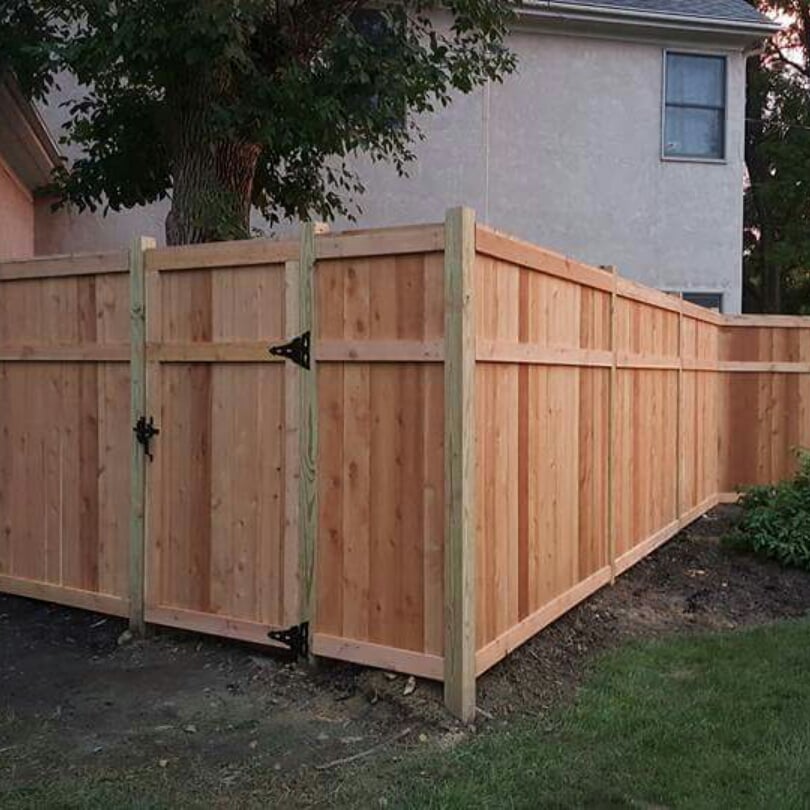 Elite Fence
From average costs to expert advice, get all the answers you need to get your job done.
How much a wood fence costs depends on the material, add-ons, and more. Read this guide to learn how each cost factor impacts the price of a wood fence.
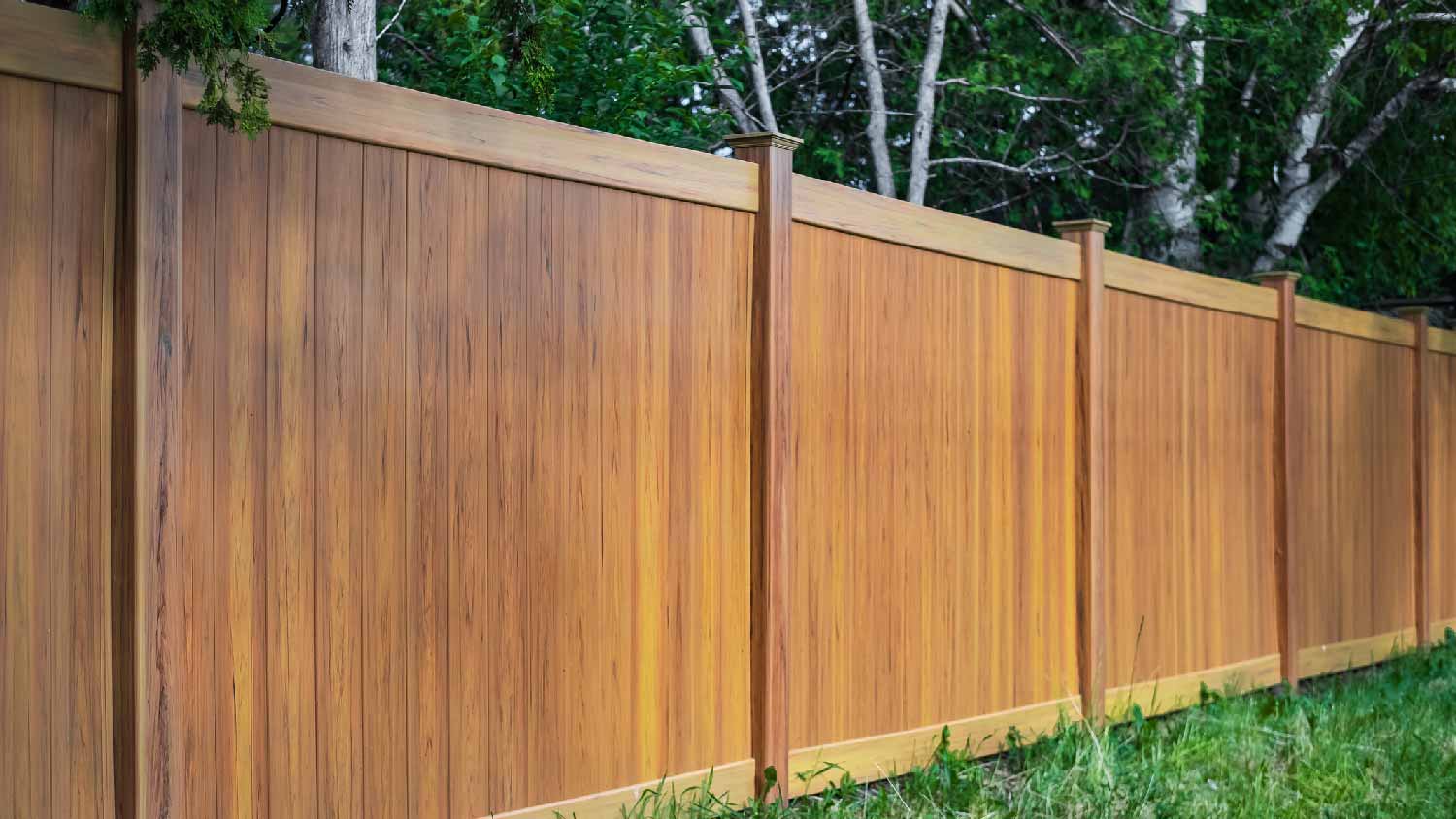
A board on board fence costs more than the typical privacy fence because of the increased materials and installation complexity. Estimate your cost with our guide.
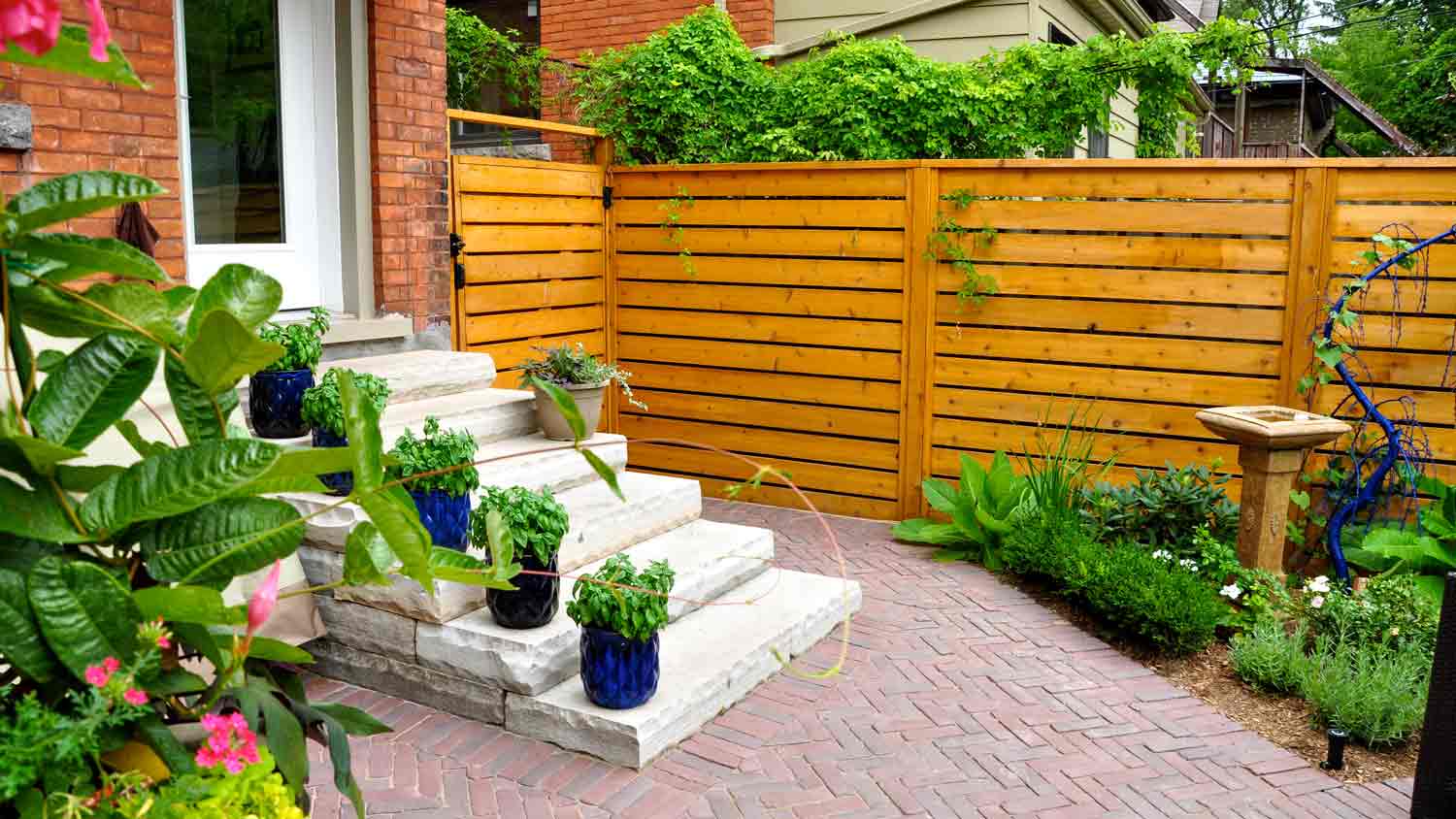
Get a clear estimate of wood fence repair costs. Learn what impacts price, compare repair types, and find tips to save on your next fence project.
The best wood for fencing is also the most durable—and beautiful. Our guide breaks down the top picks for your wood fence project.
Whether you're building a new wooden fence or simply curious about the one you have, here's what to know about all the parts of a wood fence.
Cedar fences are a perfect blend of nature, style, and affordability. Use this guide to find your perfect design and upgrade your yard.