

Is your furnace not blowing hot air? Find out 13 common culprits behind a cold furnace, plus tips for how to get the warm air pumping again.
Don’t get red hot at the first sign of a broken air conditioner

Your air conditioner blowing hot air often indicates dirty or clogged air filters that prevent free-flowing air from moving through the system.
AC compressor costs range from $800 to $2,800, so addressing problems early helps you avoid higher repair bills down the road.
Frozen evaporator coils cause warm air because they can't cool the refrigerant, and low refrigerant or restricted airflow creates this freeze-up.
Hiring a local air conditioning repair professional provides reliable support with refrigerant leaks and compressor issues, keeping your home cool and comfortable.
When your AC is blowing hot air on a scorching summer day, you’re going to want to find the cause of the problem—and fast. Not only will the hot air blowing inside the house make you break a sweat, but it could also mean there’s a serious problem with your cooling system. The faster you find the issue, the faster a pro can come in and make repairs, saving you from even more expensive repairs and cooling off your home in no time.
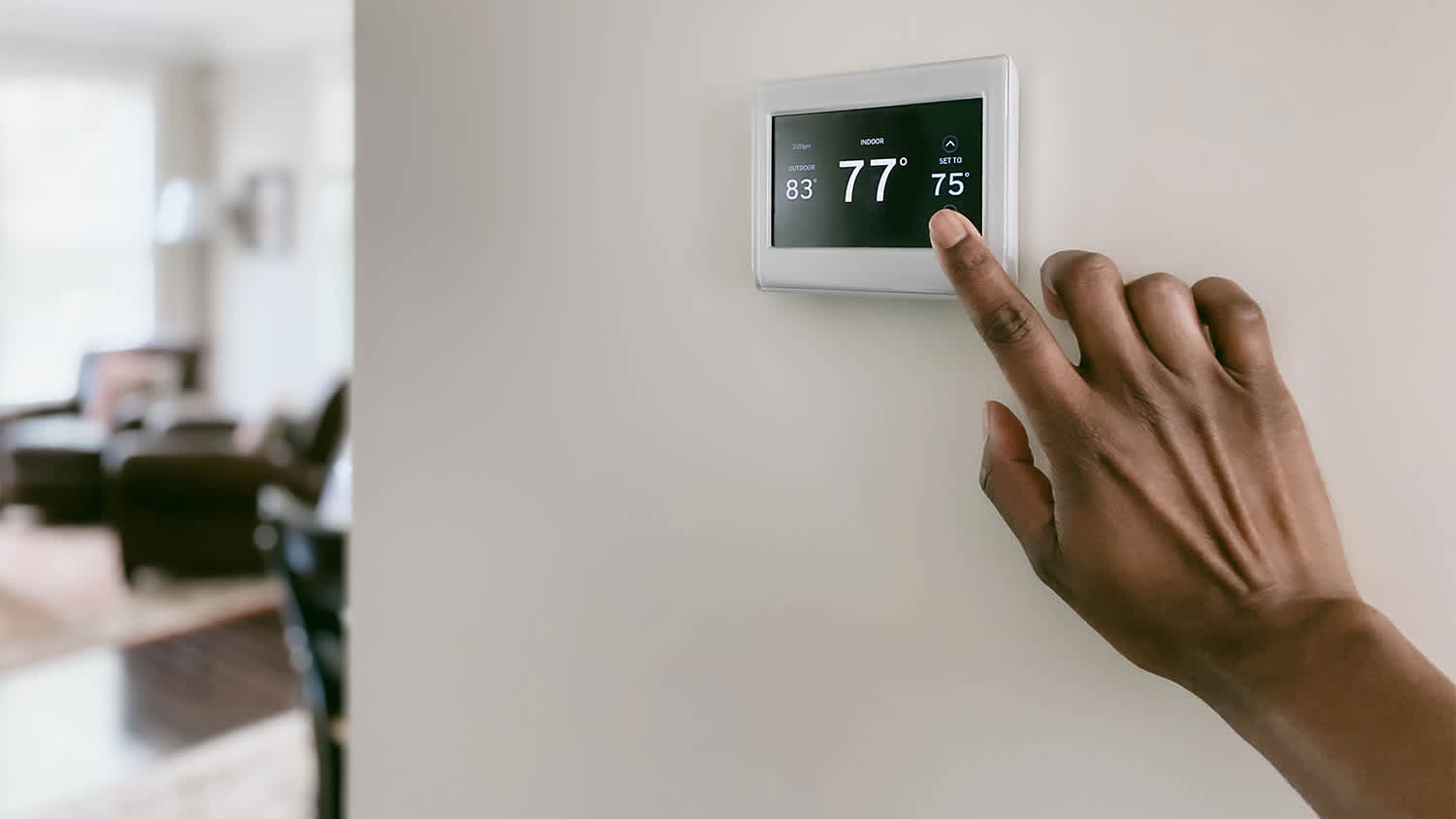
It’s easy to set a thermostat to an incorrect setting, especially if you have a busy household. Before heating up at the thought of a broken AC, take some time to investigate the thermostat, which tells your AC to cool your home.
When looking at your thermostat, ensure it’s on cool mode, not heat mode.
There are many ways to accidentally bump a thermostat or change settings—children playing, a bump with a purse or backpack, or an accidental tap on a smart thermostat app. It’s also easy to forget to change the thermostat setting from heat to cool when the seasons change. If you’re nearing the first days of winter, be sure to check the setting.
If your thermostat is on the cool setting, but your AC is still not blowing cold air, check the thermostat to ensure the fan setting is on auto. When it’s set to on, your air conditioner’s fan will blow air continually, even if it’s not cooling your house—meaning it will circulate warm air when your AC is not pumping cool air.

A dirty or clogged air filter is a common reason your AC is not cooling properly. The air filter traps dirt, dust, and other foreign particles and prevents them from circulating in your home. This is great news for your air quality, but all of that yuck has to go somewhere.
A dirty filter prevents free-flowing air from moving through your AC system. When the air cannot move freely, your AC has to work harder to cool down your home, making it feel warmer in the process. Remember that an air conditioner working double time will eventually break, which can be expensive to replace or repair.
The air filter should be changed monthly, depending on several factors for your home. Things like the number of pets you have, the number of smokers in your household, and the square footage of your home all play an essential part in how soon you need to replace the filter. Changing your air filter before it gets too clogged will help keep your unit running smoothly.
The evaporator coils in an AC are often overlooked, but they’re an essential piece of the equation when keeping your home cool. Evaporator coils absorb the heat from your home. When dirty, these do not function properly and cannot work to help bring the temperature down.
This common problem is easily fixed with routine air conditioner maintenance from an HVAC pro. You can clean your air conditioner coils yourself in just a few steps if you’d like to help maintain the life span and efficiency of your AC.
Evaporator coils are an important part of the AC system, as they hold refrigerant and allow it to cool incoming air that will then be dispersed throughout the home. But evaporator coils can freeze, often when airflow is limited. Airflow can be disrupted by dirty air filters, drain line clogs, or closed vents. Low refrigerant or a coolant leak can also cause evaporator coils to freeze.
It seems counterintuitive at first that frozen coils would lead to hot air, but if the coils are frozen, they aren’t able to turn the refrigerant from liquid to gas and back to liquid again. Why does this matter? This process is what cools the air for your home.
It may be tempting to bring out a few tools and start digging out the ice, but you could accidentally puncture parts of the AC system if you try that. Instead, turn off the AC and hire a pro to take a look. If there’s a refrigerant leak, you’ll want a pro to find and fix it as soon as possible.

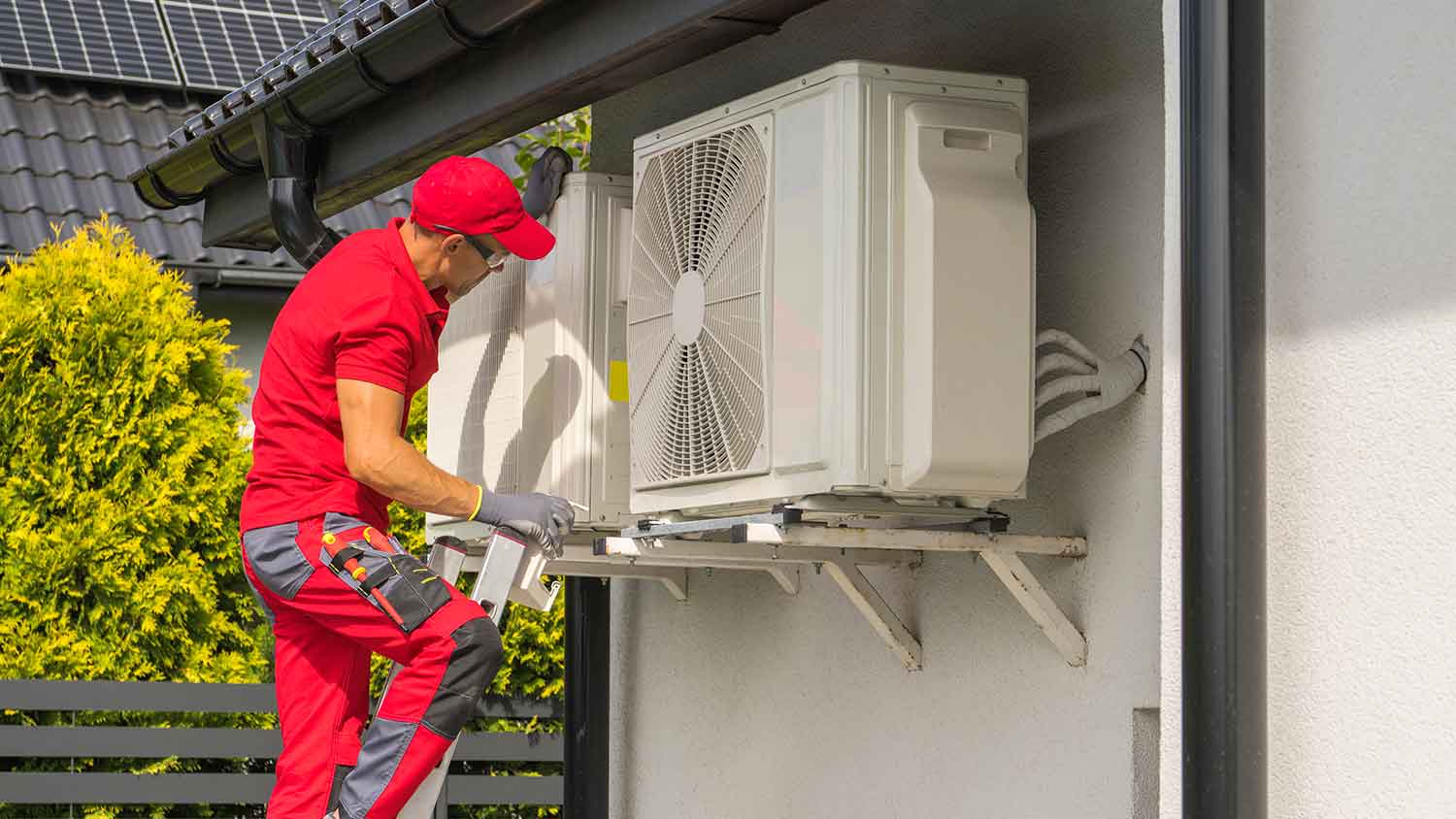
Air conditioners are multi-unit systems. The indoor unit blows the air around and through your home, while the outdoor unit is the actual structure that cools the air down. If you notice that your AC is blowing warm air, it could be because the outdoor unit has lost power and can’t cool down the air.
Generally, this is due to a blown fuse or a tripped circuit breaker. You can check your circuit breaker box; if the breaker is flipped off, you can simply flip the breaker back into the on position. This should restore the outdoor unit's power to cool the air again.
If the breaker in the box isn’t tripped, but the unit still doesn’t have power, a blown fuse might be the culprit. To ensure this problem is being corrected safely (and to diagnose why it’s blown in the first place), contact an HVAC professional to scope out the problem.
Your AC is responsible for cooling your home and pulling the humidity out. The drain line moves water from the drain pan to the outside of the unit. If there is a clogged drain line, the water cannot flow freely and can cause several issues, from mold and mildew to the complete failure of your air conditioner.
Besides your AC blowing warm air, other signs of a clogged condensate drain line include:
A puddle of water near your indoor unit
A moldy smell coming from your air vents
Water damage near your indoor unit
Your AC not starting
Drain lines should be cleaned every three months to ensure no clogs are forming. The great news is that you can clean an AC drain line yourself. Tackling this quick project can help keep your AC blowing cool air. Still, if the clog is too big to handle or repeated cleaning doesn’t help, a local air conditioning professional can help diagnose a more severe problem.
Your AC's refrigerant is what keeps things cool. This liquid is responsible, in part, for absorbing heat and humidity in your home. If you have the correct thermostat setting and your coils are clean—but you’re still not getting cold air—your refrigerant levels might be low due to a leak. This leak will cause your AC to blow warm air, as it must work hard to reach the set temperature.
It’s important to note that an AC refrigerant leak is not fatal but can cause health problems if left untreated. Some typical symptoms of refrigerant poisoning can include coughing, respiratory distress, dizziness, and headaches.
Federal law prohibits the handling of refrigerant without a license. Ask your pro if they are “Section 608 certified,” which means they are trained and licensed by the EPA to recharge your air conditioner with refrigerant.

If you suspect a refrigerant leak, turn off your AC unit and unplug the power source, if applicable. Fixing an AC refrigerant leak is best left to the pros, even if you can see a visible hole in one of the coils. An HVAC technician will assess the cause of the leak, often using special equipment. They can patch the cracked coil if the hole isn’t too big or replace the whole coil if it is too damaged.
Hiring an HVAC tech can help find a problem that’s not related to a coil; these could include:
A clogged air filter
A cracked drain pan
A clogged drain line
While it might be tempting to try to diagnose and fix the problem yourself, most refrigerant leak repairs require the tools and skill sets an HVAC pro would have. Plus, due to the hazardous nature of the refrigerant itself, it’s best left to the pros to tackle.
If you’re getting hot air when you run your AC, your air ducts might be to blame. Your ductwork delivers cool air throughout your home when you run the AC. When there is a big enough leak, the warm air that leaks in can mix with the cool air being pumped into your house, resulting in hotter air.
An HVAC pro can ensure your ductwork is clean and sealed correctly. Whether you’re having any issues or not, you’ll want to have your ducts cleaned and serviced about every three years to ensure everything works correctly and prevent future problems.
Your AC’s condenser fan moves heat from the refrigerant system to the outdoors, keeping things from overheating. An overheated air conditioner can lead to full-system failure and could be costly to replace. An AC fan not working could be due to the following:
Fan blades not turning due to electrical issues or a broken motor
Fan operates slower than required due to issues with a circuit board
An obstruction where the fan blades turn
Warped fan blades due to usage over time
Because the condenser fan could have various problems, it’s best to leave the diagnosis and repair to a licensed HVAC technician. They will check the fan, blades, and all to ensure all parts are working properly. During routine air conditioning maintenance, your tech will inspect the condenser fan for proper upkeep.
Your air conditioner’s compressor is the system that moves the refrigerant through the AC unit. If all of the above steps have checked out and aren’t seeming to be the problem, you might have a damaged compressor. If the compressor is damaged, it cannot move the refrigerant, meaning it cannot cool the air.
Fixing a damaged compressor can be expensive and does require a licensed technician to diagnose the issue correctly. The cost of an AC compressor can range between $800 to $2,800. Depending on the age of the compressor, it might be worth it to replace the whole air conditioner.
Both air conditioners and their compressors last up to 15 years. If you're putting a new costly compressor into an old unit, you might find yourself replacing more parts down the road.
Maybe a family member accidentally shut a return vent, or kids have piled up their toys in front of the vent. However, return vents need to be open and clear to keep a balanced air pressure in the ductwork. If you close a return vent in the hopes of redirecting the air, or if the vents get blocked by furniture, toys, or other household objects, air pressure can build up, causing air duct leaks.
Blocked or closed return vents also cause the system to work harder to push cooled air throughout the home, which will put more wear and tear on other parts of the system, like the fan and fan motor.
Fortunately, you can fix a blocked or closed return vent without any special tools or expertise. All you need to do is check the return vent locations around your home for any obstructions. Then, move anything that may be blocking the vents. If the vents aren’t blocked, make sure they’re open. To open them, use the louver on the side of each vent.
Sometimes, there is not one specific problem with your air conditioner; it could be too old to continue doing the job it once did. As stated above, air conditioners last between 15 and 20 years. There are times when the cost of buying an air conditioner is more cost-efficient than the HVAC repair prices you’ll need to pay to keep an older unit running.
Of course, the best way to avoid replacing your air conditioner sooner than 15 years is to have your AC serviced at least once a year by a licensed HVAC technician to make sure it’s in tip-top shape to cool your home.
The technician checked our unit and found a leak because it was low on refrigerant. Our AC is 11 years old. He gave us two options: Add refrigerant and sealant to plug the leaks or install a new AC. We chose to repair the unit. It's now 2 years later, and it is working fine.
— Barb K., Kasidonis Heating and Cooling, Medina, OH
I have used Columbus Worthington Air for years and recommend them whenever I have a chance. The staff is quick, courteous, and well-trained.
 ARS Columbus Worthington Air
If you’re good people wanting to do business with good people, hire Matt. He is a consummate professional and utterly competent. He installed a water heater in my home at a price that beat competitors by hundreds of dollars with a promise to support the unit for its life (even after its 6 yr...
 Greene's Plumbing Services
Corey Carr was great. I had damage from a recent storm and needed to have my mast and other components replaced. The project entailed coordinating with AEP, and Corey helped make a stressful situation a lot less stressful. I really appreciated his dedication to service and the job very well done.
 Mr. Electric of Columbus
This service was great. My air conditioner went out during the heat spell that we had. My husband has health issues and they came out that night and at 9:30pm the air conditioner was fixed and running. We are sooo very thankful, this is the company I will be using from now on and would...
 Mr. Mechanical Ohio
Great company! Price was competitive, technician showed up on time and completed the job (exterior electric Radon fan replacement) quickly. Would hire them again.
 MaGen Property Inspections and Radon Mitigation
Raven and crew does absolutely fantastic job. They are very professional if any concerns were to occur with any of her work she always took responsibility and finished out with a great job. I have worked with her business for a year and have always been satisfied. Very trusted business and...
 Creations of Transformation LLC
I would recommend this company to anyone! He showed up on time, was friendly, completed a very difficult repair on our dryer vent cover, was responsive, and pricing was extremely fair and competitive. I would have him back to do any of our repairs or cleanings without hesitation!
 U.S.A. Dryer Vent, LLC
Ace Fireplace Services' chimney sweep service is truly exceptional. They used advanced technology to ensure a thorough cleaning process, and my chimney has never looked better. I highly recommend their services.
 Ace Fireplace Services
The technician was very professional and friendly. He answered all my questions and was very thorough. He left the fireplace area very clean . He inspected from the roof and advised me as to other work that might need to be done. There was no pressure there. I was very satisfied with the...
 Supreme brick & chimney
On time, clean and finished fast. Windows seem sturdy and the finish is good. Caulking was done with no smudges. Would recommend.
 Window Depot USA of Central Ohio
From average costs to expert advice, get all the answers you need to get your job done.
Is your furnace not blowing hot air? Find out 13 common culprits behind a cold furnace, plus tips for how to get the warm air pumping again.

Is your AC blowing cold air but your house is still hot? Learn the common causes, what to do, and when to call in a pro.
An air conditioner enhancer can help reduce humidity in your home, making indoor temperatures more comfortable. Here’s what you need to know about AC enhancers.

Your AC can overheat for several reasons, such as lack of maintenance and clogged air filters. Learn why your air conditioner is overheating.
Several signs might indicate your HVAC is not working properly. Our guide will tell you when an issue is serious and when to call HVAC repair.

Is your heat pump not blowing hot air? Several factors could be causing this issue, and we dive into seven of the most common heat pump issues.