

Don’t ask yourself, “Why is my AC blowing hot air?” this summer. Follow along with our guide to find the most common AC issues so you can get back to being comfortable.
Let fixing your AC be a breeze

Hot and cold air issues often stem from insufficient insulation or air leaks around your doors, windows, and attic, letting cool air escape.
Expect to pay $1,820 to $4,400 for professional insulation installation, depending on your home's size and the insulation type you need.
Your AC blowing cold air but your house staying hot indicates problems like dirty filters, duct leaks, or a thermostat needing recalibration.
Hiring a local HVAC repair professional takes the guesswork out of diagnosing refrigerant leaks and ductwork issues, keeping your home comfortable and safe.
When your AC is blowing cold air but the house is still hot, it can be frustrating, but there’s no reason to sweat. A local pro can pinpoint the issue quickly and easily, and you might even be able to sniff out the problem on your own. You may have insufficient insulation and air leaks, your thermostat might need recalibrating, or you might need a new filter. Learn about more common causes and what you can do to fix them.
If you have gaps on the sides of your windows and doors, cold air might be leaking out, and hot air might be seeping in. A lack of insulation in your attic and throughout your home can also cause cold air to leave your home quickly. When your AC system has to work harder, it uses more energy to cool your home, increasing your utility bills.
Check for air leaks and gaps around your doors, windows, and electrical outlets. If you feel warm air seeping in during the hot months, you may have air leaks. If you feel cold air and draftiness in the cooler months, the same applies.
Look to see what attic insulation and basement insulation you have, especially around your rim joists and in crawl spaces. You may also need to insulate your garage. If you see insulation that’s crumbling, peeling, or discolored, you may need to replace or reinforce it.
Remove outlet covers to see if you have insulation in your walls. If it feels hot upstairs and cold downstairs, or you notice uneven temperatures and drafts between rooms, you may not have insulation in your walls.
Contact a local insulation company to help optimize insulation in your attic, basement, and other key areas of your home. The average cost to install insulation is $1,820 but can reach up to $4,400 depending on the type of insulation and size of the space.

If you have leaks in your air ducts, cool air isn't being routed throughout your home. Instead, it escapes or goes to your attic. Ductwork can shift, rust, separate, and get holes over time. If the AC is blowing cold air but the house is still hot, your ductwork could be the issue.
Take note if you experience uneven heating throughout your home, such as if it’s warm in one room and cold in another. The uneven heating is often a sign that your vents or ducts are the problem.
Look at the visible ductwork in your basement. See if you notice any gaps, holes, or separation.
Contact a local HVAC repair pro to come look at your ductwork and make repairs. Trying to patch HVAC ducts on your own is unlikely to offer lasting results.
Closing your vents can cause your air conditioner's blower to work overtime in moving cool air throughout your home. It takes longer to cool a home when there’s more pressure in the duct system.
Check to make sure all of the vents are open throughout your house. Open them if they are not already.
If AC performance doesn't improve, you may have a block in your vent or ductwork. Contact a local HVAC technician to come check it out.
Your AC might not be working properly if your thermostat is out of batteries or has faulty wiring. If your AC is blowing cold air but the house is still hot, you may need to recalibrate your thermostat to show the correct temperature.
Tape an accurate thermometer on the wall next to your thermostat.
Wait 30 minutes and check to see if the wall thermostat and taped thermometer show the same temperature.
If they have different readings, recalibrate your thermostat according to the manufacturer's instructions. If recalibrating the thermostat doesn't resolve the issue, you may need to contact a local heating and cooling pro.

Refrigerant cools the air before it gets sent throughout your house. The system recirculates refrigerant, so you will only need more if there’s a leak. AC Freon leaks can be dangerous, with exposure potentially leading to coughing, vomiting, dizziness, headaches, and nausea, according to the Missouri Poison Center. So, be sure to turn off your system immediately and call an HVAC pro if you suspect a refrigerant issue.
Watch for signs of a refrigerant leak: your AC is making a high-pitched hissing or bubbling sound, you have higher utility bills, it takes the AC longer to cool the home, or you smell a sweet, chemical-like aroma from your vents.
If you suspect a refrigerant leak, turn off your AC unit immediately because Freon is a health hazard. You'll need to contact a local air conditioning repair company who can fix the leak. Refrigerant leaks are not a DIY-friendly project due to health risks.
The EPA prohibits handling AC refrigerant without a license. This is one DIY project you shouldn’t try—having a licensed AC repair technician refill your AC refrigerant is the safest (and legal) option.

Your outdoor unit has a condenser that disperses the heat from inside your home. Sometimes, the coils are clogged or dirty. Plants, dirt, or other debris covering your AC might impact its function.
Turn off your AC system at the circuit breaker before touching or cleaning any parts of your AC unit to avoid damage and injury.
Go to your outdoor AC unit and look for any fallen branches, debris, or dirt. Clean your AC coils by brushing or blowing away debris and spraying the coils.
You can also contact a local HVAC company to look at the issue to find the root cause of the problem.

You need to clean or change the AC filter at least once every three months. Once the filter reaches its limit of dust, debris, and pet dander, your AC system slows its function and limits its air movement.
Find your air filter on your indoor air conditioning unit. It's located between the return duct and the air handler.
If it's dirty, clean your AC air filter or replace it with the same size and type of filter.
Restart your AC unit and see how it performs.

An air conditioner that's too small for your home won't generate enough cool air. Whether you've recently added a room to your home or have an older AC unit, the size might be the issue.
Hire an HVAC professional to calculate the size of the air conditioner you need for the square footage of your home. Replacing an AC unit costs anywhere from $3,900 to $8,000.
If your system isn't working optimally and is approaching the end of its lifespan—10 to 15 years—it might be time for a replacement. If you live in a home with improper insulation or air leaks, your air conditioner might not last as long because it's working harder to cool your entire home.
If you have an older AC system or notice ongoing problems, it may mean it's time to replace your AC unit.
Contact at least three local AC companies to give an estimate. Consider what type of air conditioner might be right for your home.
If you’re good people wanting to do business with good people, hire Matt. He is a consummate professional and utterly competent. He installed a water heater in my home at a price that beat competitors by hundreds of dollars with a promise to support the unit for its life (even after its 6 yr...
 Greene's Plumbing Services
Corey Carr was great. I had damage from a recent storm and needed to have my mast and other components replaced. The project entailed coordinating with AEP, and Corey helped make a stressful situation a lot less stressful. I really appreciated his dedication to service and the job very well done.
 Mr. Electric of Columbus
This service was great. My air conditioner went out during the heat spell that we had. My husband has health issues and they came out that night and at 9:30pm the air conditioner was fixed and running. We are sooo very thankful, this is the company I will be using from now on and would...
 Mr. Mechanical Ohio
I normally do not leave reviews, but my experience with Worthington Air was extremely frustrating and disappointing. About 30 days ago, I had a consultation done for an HVAC replacement and was quoted approximately $15,079. Based on that quote, I applied for financing through their company...
 ARS Columbus Worthington Air
Great company! Price was competitive, technician showed up on time and completed the job (exterior electric Radon fan replacement) quickly. Would hire them again.
 MaGen Property Inspections and Radon Mitigation
Raven and crew does absolutely fantastic job. They are very professional if any concerns were to occur with any of her work she always took responsibility and finished out with a great job. I have worked with her business for a year and have always been satisfied. Very trusted business and...
 Creations of Transformation LLC
I would recommend this company to anyone! He showed up on time, was friendly, completed a very difficult repair on our dryer vent cover, was responsive, and pricing was extremely fair and competitive. I would have him back to do any of our repairs or cleanings without hesitation!
 U.S.A. Dryer Vent, LLC
Ace Fireplace Services' chimney sweep service is truly exceptional. They used advanced technology to ensure a thorough cleaning process, and my chimney has never looked better. I highly recommend their services.
 Ace Fireplace Services
The technician was very professional and friendly. He answered all my questions and was very thorough. He left the fireplace area very clean . He inspected from the roof and advised me as to other work that might need to be done. There was no pressure there. I was very satisfied with the...
 Supreme brick & chimney
On time, clean and finished fast. Windows seem sturdy and the finish is good. Caulking was done with no smudges. Would recommend.
 Window Depot USA of Central Ohio
From average costs to expert advice, get all the answers you need to get your job done.
Don’t ask yourself, “Why is my AC blowing hot air?” this summer. Follow along with our guide to find the most common AC issues so you can get back to being comfortable.
We polled over 1,000 people to find their average room temperature. Here's what people are setting their thermostats to.

Air conditioners have a really important job, which is why it’s upsetting when they stop working. Check out 12 air conditioner troubleshooting tips here.

There are several reasons why you might have air coming out of your vents when the AC is off. Learn how to determine and fix the issue.
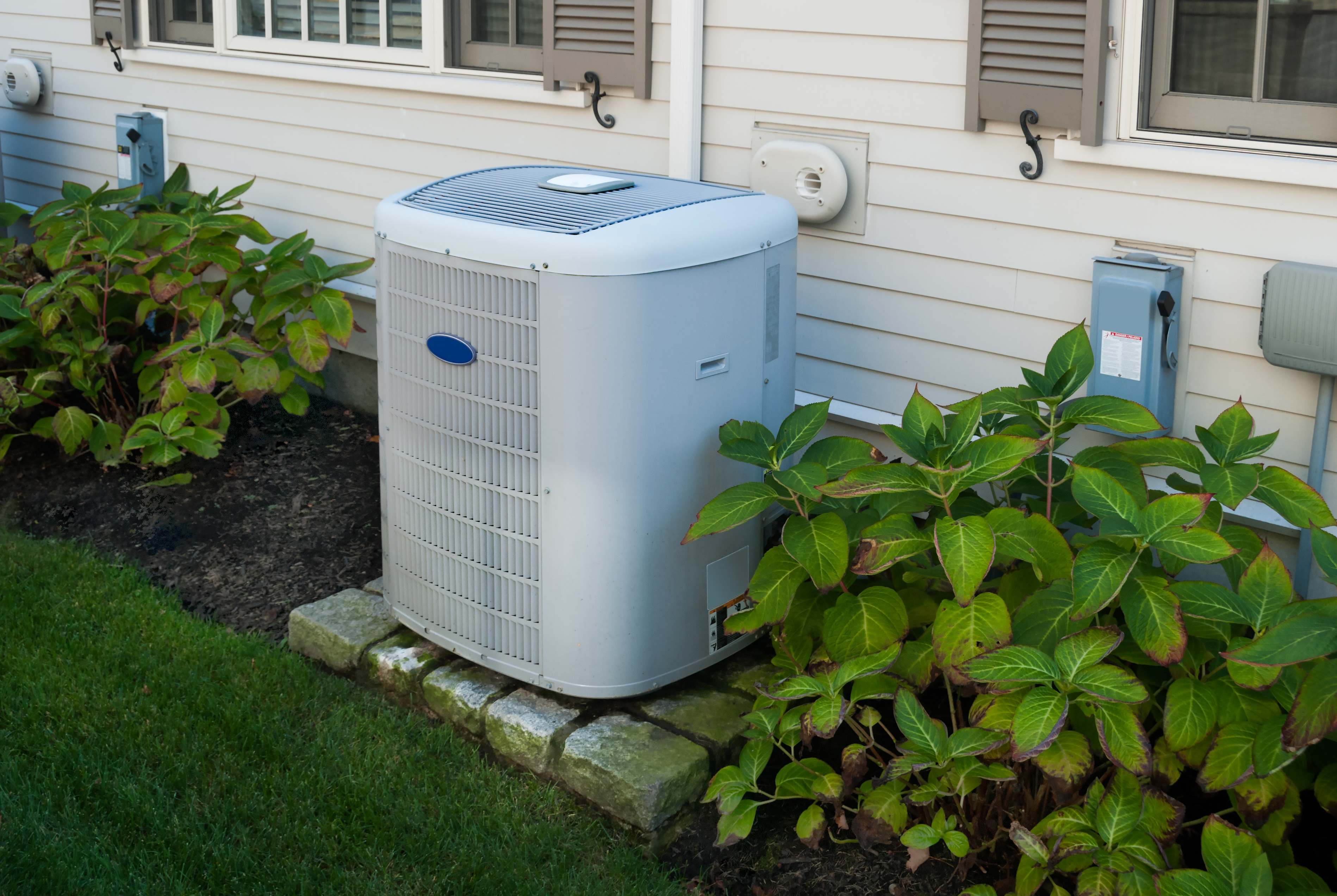
Leaking AC coils can compromise your entire home cooling system. Look for these six signs of a leaking evaporator coil, and schedule a repair ASAP.

Is your furnace not blowing hot air? Find out 13 common culprits behind a cold furnace, plus tips for how to get the warm air pumping again.