
Houses treat their wastewater with either a septic tank or the public sewer system. Your property records will confirm the existence and location of your septic tank, if you have one.
Your home’s design style can be a peek into its history

Identifying your house type helps you plan renovations that match your home's architectural style, especially when dealing with features like steep roofs, dormers, or symmetry.
Homes with exposed beams or thatched roofs often fall into styles like Cottage or Tudor, requiring higher maintenance to preserve their rustic, historic character.
Your home's design influences everything from energy efficiency to resale value, so understanding its style helps you make smart decisions about upgrades and repairs.
Hiring a local custom home building professional provides expert guidance on your home's architectural features and helps you plan additions or renovations that honor its original design.
A home's architectural style can say a lot about its history. You'll find countless architectural influences around the United States, from 17th-century log cabins to modern Art Deco homes. House styles are often named after their place of origin or intent of use, making distinct designs stand out from the street.
Curious to know your home’s architectural influence? Learning about your home style can be helpful, especially when planning renovations or highlighting unique features to prospective buyers. Here are the 27 most popular house styles in the U.S. and how to identify them.

Log cabins originated in the 1600s, and they were often found in rural settings, such as within the mountains or woods. Similarly to cottages, log homes are known as rustic, cozy escapes from a busy world.
Most log cabin homes have:
Log exteriors
One main bedroom and an open floor plan
Rustic aesthetic
| Pros | Cons |
|---|---|
| Heat-efficient | Require extensive maintenance |
| Fire-resistant | Expensive to build |
| High return on investment | Prone to pests |

Simplistic yet charming, the saltbox house style arose in America during the 17th and early 18th centuries. The name derives from wooden salt containers with slanted lids that were popular during that time, inspiring the overall design of this house style. Most saltbox homes today are found in the coastal Northeastern areas.
You can identify a saltbox home by its signature features:
Timber framing
Sloped roofs (often on one side)
Two stories in the front, one in the rear
Flat front, simplistic colonial look
Symmetrical brick chimney
| Pros | Cons |
|---|---|
| Simple construction | Hard to insulate |
| Historic look | Difficult to add to or extend |
| Good for snowy areas | Prone to water damage |

The neoclassical home style was popular among government buildings and many universities during the 18th century. Like Greek Revival styles, neoclassical homes also exude wealth and extravagant living. The neoclassical style also seeps into interior design, where you’ll commonly find crown molding, chandeliers, and marble floors inside homes.
A home with neoclassical influence most likely features:
Symmetrical architecture
Tall columns
Ornate doorways
Gold and marble finishes
| Pros | Cons |
|---|---|
| Grand, elegant feel | Expensive to maintain |
| Spacious rooms | May feel overly formal |
| Strong sense of symmetry | Expensive to build |

A cottage home style may come to mind when describing a house in a fairy tale—cozy, charming, and hidden in the woods. Typical cottages have one story and an old-fashioned feel, but many modern versions may have two stories with interior upgrades. Many cottage homes are located in a rural or semi-rural area, including near mountains or a lake.
You can recognize a cottage home by its signature features:
Wooden exterior and stone accents
Gabled or thatched roof
Open floor plan
Central fireplace
| Pros | Cons |
|---|---|
| Less expensive | Limited space |
| Rustic, rural feel | Requires extensive maintenance |
| Less costly to heat and cool | Lower value appreciation |

There's no lack of drama in a Greek Revival home. This home style emerged between the late 18th and early 19th centuries and influenced what we know as the federal house style. While eye-catching, the style is simple compared to others and often symmetrical. This symmetry easily translated to the neoclassical federal style seen in the White House.
You’ll know you have a Greek Revival home by its noteworthy features:
Brick or white facade
Several massive columns
Central entranceway
Tall windows
One or two balconies
| Pros | Cons |
|---|---|
| Grand, formal feel | Difficult to repair |
| Impressive curb appeal | Prone to rot |
| Great for entertaining | Susceptible to roof problems |

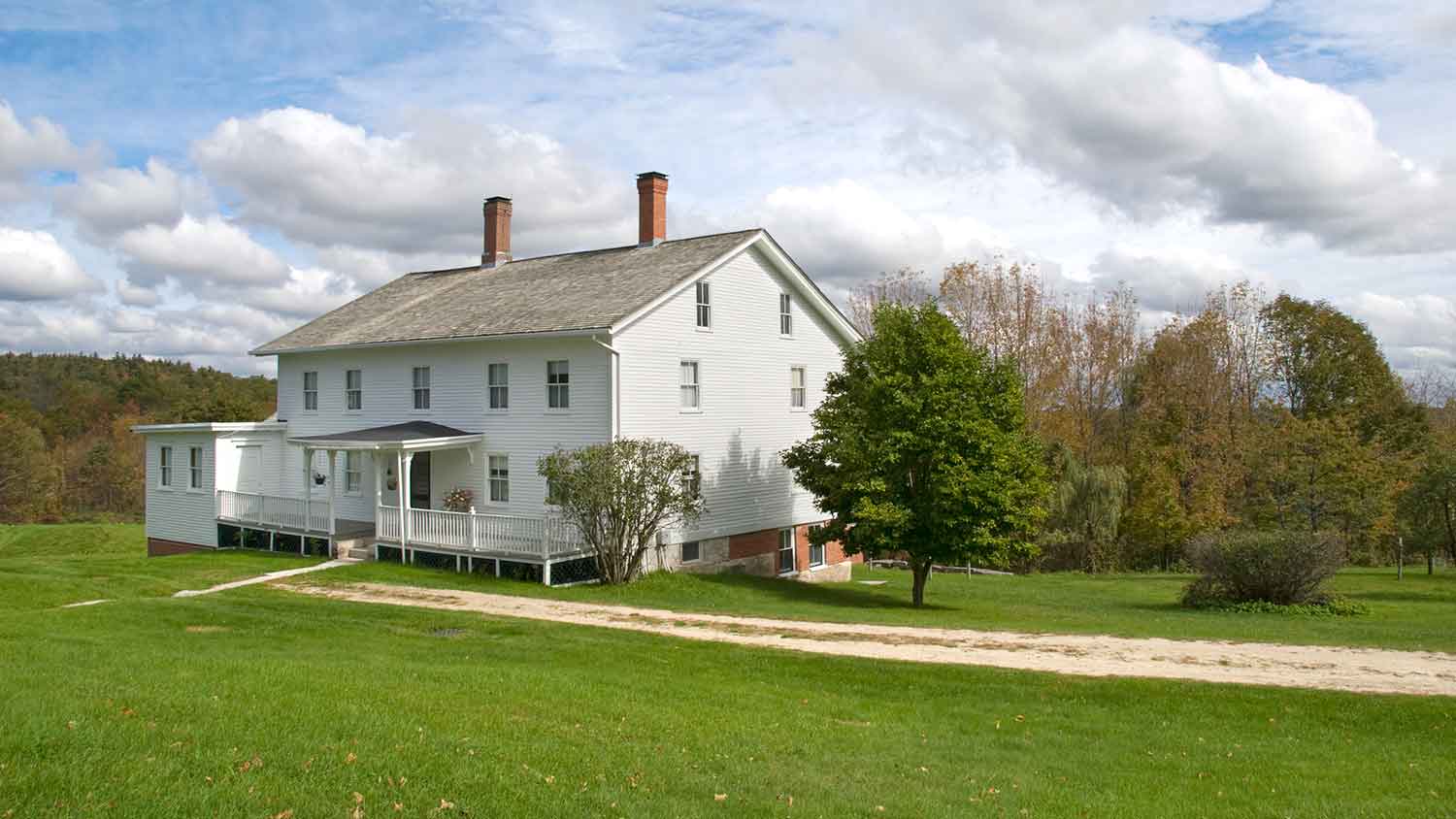
Farmhouses emerged across Southern states in rural and agricultural areas during the 1700s and 1800s. This house style is built for functionality rather than extravagance, combining long-lasting, natural materials with simplistic designs.
Farmhouse-style homes will have:
Organic materials like wood, stone, and metal
Rustic railings and details
Informal yet inviting exterior
Tall ceilings and exposed ceiling beams
Functional front porch
| Pros | Cons |
|---|---|
| Large living areas | Costly to maintain |
| Often on large plots of land | Less energy-efficient |
| Warm, charming feel | Prone to pest problems |

By far the most common home architecture style in the U.S., Colonial-style homes cover the designs brought over by early waves of settlers. You'll find colonials from the British, Spanish, French, and Dutch from shore to shore. Colonial revivals brought this design back in the late 19th century. Most colonial homes you find today outside of the Northeast popped up during this time.
These types of homes will often include the following characteristics:
Symmetrical exterior
Two or three floors
One or paired symmetrical chimneys
A traditional floor plan (bedrooms upstairs, staircase between the living and dining rooms)
| Pros | Cons |
|---|---|
| Classic look | No open floor plan |
| High resale value | Expensive to maintain |
| Lots of living space | Difficult to remodel |

Originating in the mountains of Europe, chalet-style homes are now popular mountain and lakeside retreats in the U.S. These cozy and inviting homes were designed for heavy snowfall areas, making them popular in areas known for skiing, hiking, and other outdoor activities.
They often include these key elements:
A-frame structures
Timber framing and natural materials
Multiple balconies
Overhanging eaves
Large windows
Open-concept layout with a central fireplace
| Pros | Cons |
|---|---|
| Easy to build | Prone to water damage |
| Private vacation lodgings | Less energy-efficient |
| Often rented out for additional income | Small, limited living space |

There's nothing quite as romantic as a Victorian home, and you're unlikely to find one the same as the next. Queen Anne homes also fall into this category and include the most ruffles and frills, often with multiple dormers, dramatic eaves, and asymmetrical floor plans.
Popular in the 1830s and into the later 19th century, Victorian houses are known for featuring:
Two or three stories
Sharply pitched roofs
Ornate exteriors
Wraparound porches
Rounded or rectangular towers
| Pros | Cons |
|---|---|
| Grand, dramatic fee | Expensive to maintain |
| Extensive living space | Difficult to heat |
| Unique layouts and features | Often need extensive restoration |

Italy's architectural styles started to make a splash in the U.S. during the mid-to-late 19th century. While you'll spot elements of Victorian homes, the structure is much more symmetrical. Fun fact: Many of today's traditional brownstone townhouses in the Northeast include Italianate architecture.
They often have:
Brick or wooden siding
Two stories with or without a dome
A flat or low-pitched roof
A covered porch
Rounded windows
Decorative corbels
| Pros | Cons |
|---|---|
| Stately, eye-catching look | Require significant upkeep |
| Can accommodate large families | Expensive to restore |
| Solid construction | Original materials prone to rot |

Functionality over flash summarizes this popular house style. American architect Frank Lloyd Wright created the Prairie House, and he was influenced by the Arts and Crafts movement of the late 19th century. You’ll find prairie house styles throughout the Midwestern states, especially areas with extensive and flat grasslands.
When searching for a prairie home, expect to see these elements:
Long, flat roofs
Rows of windows
Woodwork and handcrafted details
Horizontal lines and patterns
Open floor plans
Built-in furniture
| Pros | Cons |
|---|---|
| Open floor plan | High maintenance costs |
| High resale value | Prone to leaks |
| Abundant natural light | Difficult to remodel |

Originating in Belgium and the Netherlands, row houses or “townhouses" came to the U.S. in the early 19th century during the Industrial Revolution. This house style is known for its creative use of vertical space, and it’s popular in major metropolitan areas like Seattle and New York City.
Townhouses will most likely feature:
Tall, slender structures
Two or more stories
Adjoined to another house by a wall
Identical to or coordinated with other homes in its row
| Pros | Cons |
|---|---|
| Often more affordable | Noise from shared walls |
| Little to no exterior maintenance | Accessibility challenges from stairs |
| Spacious living in cities | Usually under an HOA |

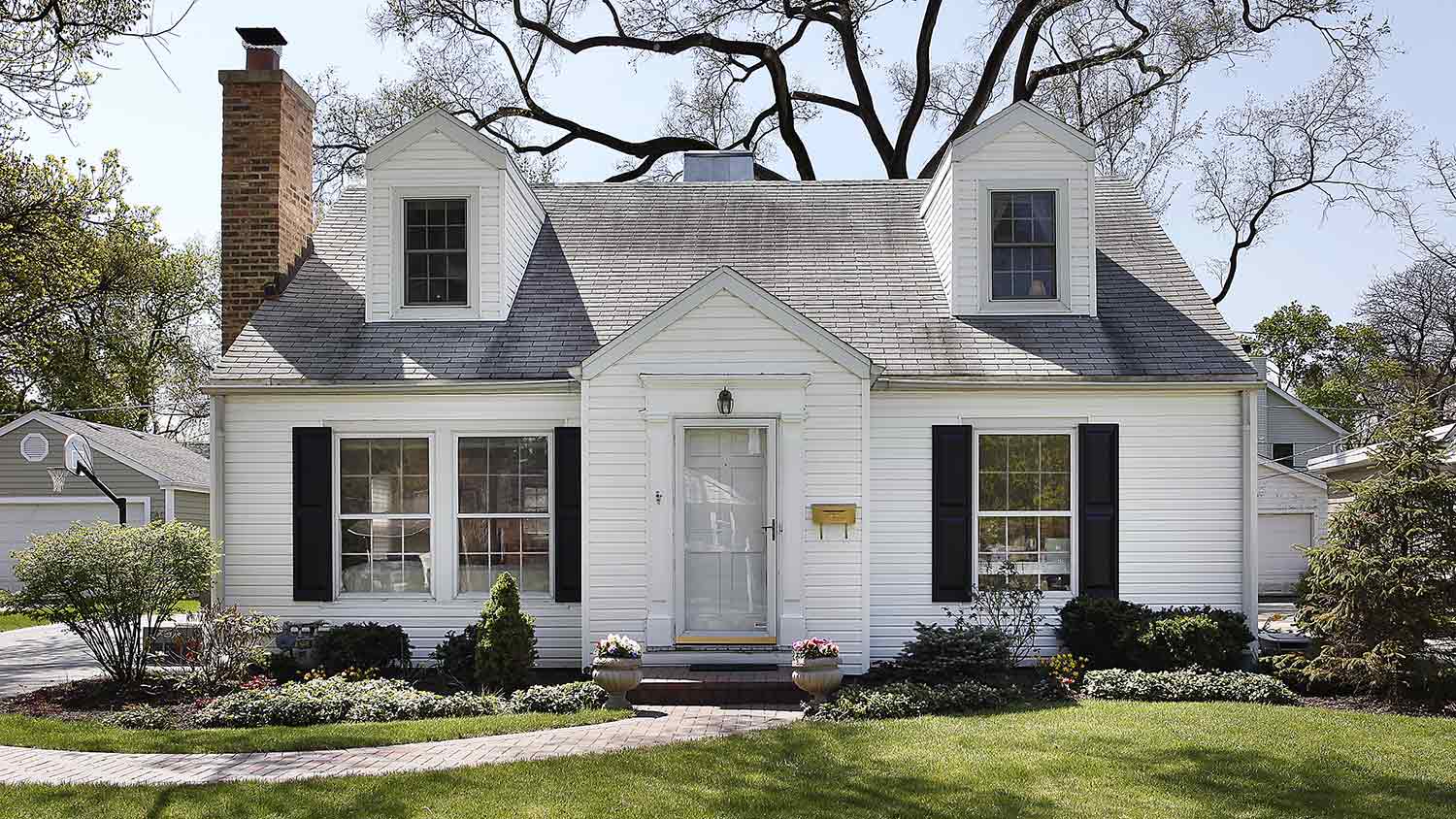
While technically a member of the colonial family, Cape Cods have their own signature look that sets them apart. Settlers built these homes for their sturdiness and ability to hold in heat long before the convenience of central HVAC systems. Most Cape Cods are in the Northeast, but they came back in the mid-20th century with more natural light.
You'll know a Cape Cod home by its signature look:
Steep, sloped roof
One or one-and-a-half stories
Pair of dormer windows on the front (in modern revivals)
Decorative shutters
Symmetry
Wood siding
| Pros | Cons |
|---|---|
| Classic curb appeal | Difficult to expand |
| Easy to heat | Limited living space |
| More affordable | Shorter roof lifespan |

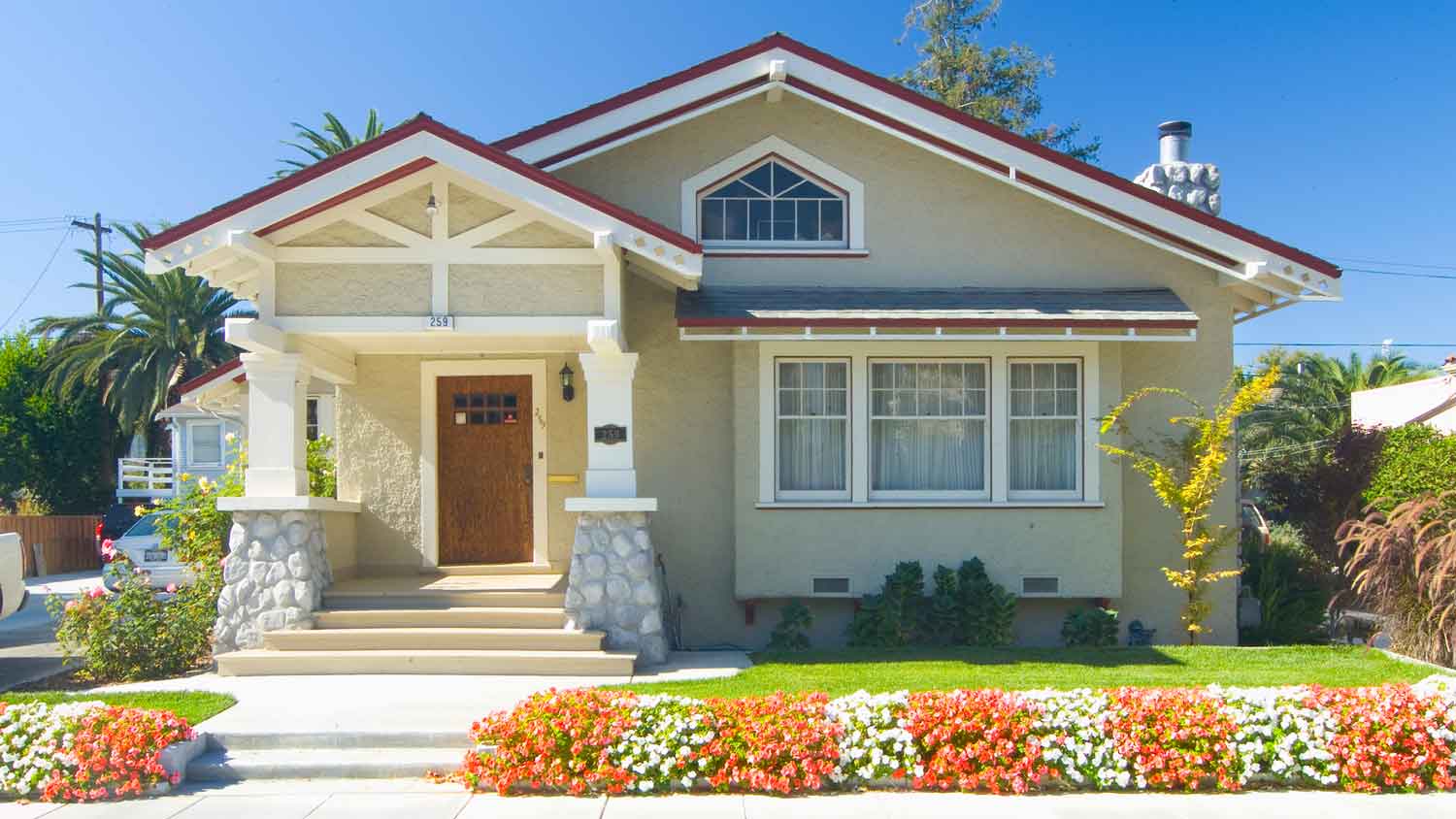
These sturdy yet uniquely designed home types are often the envy of the home market. Their symmetry makes them aesthetically pleasing, but they have enough unique accents to set themselves apart from the rest of the homes on the block.
Some homeowners encounter structural issues with Craftsman-style homes built from 1900 to 1930. Poorly poured basements or slab foundations can lead to extra upkeep.
Signature Craftsman houses have:
Long, horizontal design
Low-pitched roofs
Symmetrical gables
Top dormer windows
Exposed beams
| Pros | Cons |
|---|---|
| In-demand for resale | Often needs foundation repair |
| Built-in features | Smaller floor plan |
| Great curb appeal | High maintenance costs |

Tudor homes may look like something from the 16th century, but they appeared in America in the early 20th century to pay homage to the English style. The color of Tudor homes makes them stand out, with white or cream exterior walls lined with dark brown or black trim.
They also have:
Multiple roof peaks and dormers
Two or three stories
Asymmetrical design
Exposed beams
Arched doorways made of brick
Stone chimneys
| Pros | Cons |
|---|---|
| Solid construction | Expensive to purchase |
| More square footage | Prone to roof problems |
| Historical look | Expensive to restore |

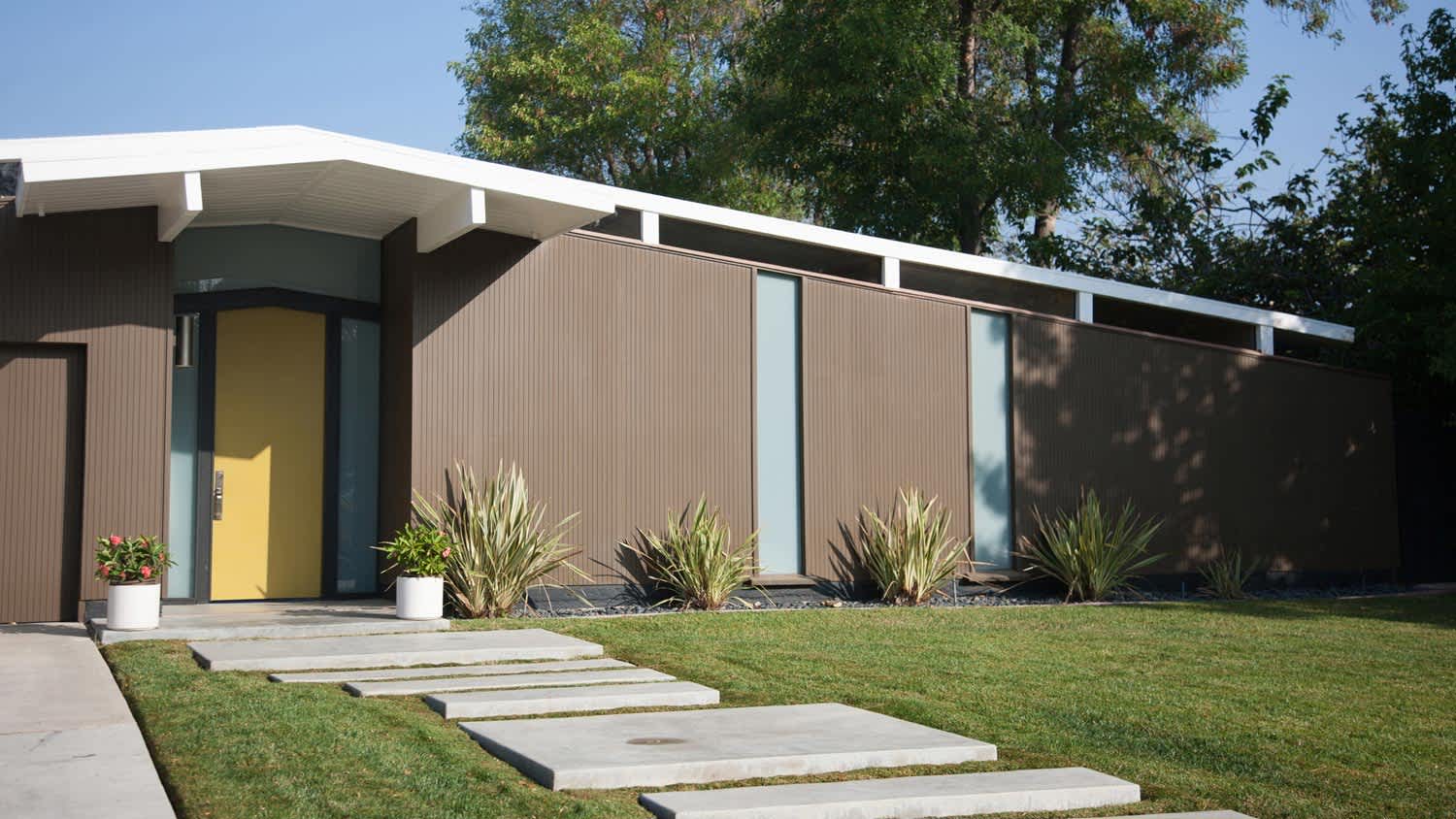
Moving into the modern architectural period, you'll encounter homes built between the 1940s and 1970s. Like contemporary homes, you'll find a wide range of unique takes on style in this category, making every home slightly different than the next. While these homes gained popularity on the West Coast, the style influenced many new suburban developments across the country during this time of growth.
You may encounter these home features:
Floor-to-ceiling windows
Danish, Dutch, and Nordic elements
Coordination with the outdoor space
Changes in elevation between rooms
Wide, single-floor layout
| Pros | Cons |
|---|---|
| Timeless aesthetic | Often require extensive maintenance |
| High resale value | Lack of privacy |
| Functional design | Difficult to expand or add on |

The other style to launch in the mid-20th century was the ranch home. These are the iconic suburban home types you imagine from most images of the 1950s, but many are still popular today.
Ranch-style homes have:
One story
Low-pitched roofs
Open floor plans
Sliding doors into the backyard
Large outdoor living spaces
Attached garages
| Pros | Cons |
|---|---|
| Accessible for mobility-challenged residents | Limited living space |
| Easy to expand or add on | Can look dated |
| Open floor plan | Difficult to heat and cool |

Split-level homes are like grown-up ranches. They appeared in the 1960s and followed many of the same design principles. The major difference is that split levels have a second floor, but there is a small flight of steps to get there.
They often include these key elements:
Small front porches
Decks off the back into the yard
Low-pitch roofs
Open floor plans with large living spaces
Minimalist interior and exterior design
| Pros | Cons |
|---|---|
| Large square footage | Difficult to navigate |
| Adaptable for uneven lots | Harder to heat and cool |
| Distinct living spaces | Difficult to expand |

Much like mid-century homes, the contemporary style is constantly changing based on the fresh ideas of today's top architects. These are the eye-catching homes on the block that challenge—or creatively combine—the traditions on this list.
They may have:
Clean lines
Asymmetrical structures and layouts
Ample windows and natural light
Simplistic facades
Single or multiple stories
Open floor plans
Highly landscaped outdoor spaces
| Pros | Cons |
|---|---|
| Flexible floor plans | May feel quickly dated |
| Indoor/outdoor living | Expensive to maintain |
| Great curb appeal | Higher purchase price |

French country homes emerged after World War I, blending early 20th-century French and American architecture. You’ll see these elegant house styles in states with historical French ties, such as Louisiana.
Drawing from France’s countryside architecture, landscape additions such as whimsical walkways and lush gardens can easily enhance your home’s romantic French country aesthetic.
Many French country homes feature the following:
Natural materials
Symmetrical exterior designs
Quaint decor
Exposed wooden beams
Highly pitched roofs
Stone facades
| Pros | Cons |
|---|---|
| Grand, elegant layout | Expensive to update |
| Durable exterior construction | Require extensive maintenance |
| Customizable floor plans | Prone to roof problems |

In the 1920s, more notably called the Roaring ’20s, the Art Deco style captivated the U.S. with luxurious and elegant details in architecture, interior design, and personal style. Popular cities like Hollywood and Miami boast these eclectic looks in their mansions, skyscrapers, and speakeasies.
An Art Deco home style consists of the following:
Bold colors and motifs
Sleek and shiny accents
Geometric shapes
Sharp edges
Metal and glass elements
| Pros | Cons |
|---|---|
| High resale value | Less energy-efficient |
| Distinctive, iconic look | Prone to moisture damage |
| Unique character | Often need insulation updates |

Inspired by Spanish temples of worship, this architectural style became increasingly popular in the U.S. during the early 20th century. Spanish architecture can be found in states with warmer climates, including Florida and California, emphasizing indoor/outdoor living.
Spanish house styles generally include these features:
Porches and corridors with arches
Square pillars
Earth tones like clays and creams
Stucco walls and decorative tiles
Low-pitched roofs
| Pros | Cons |
|---|---|
| Great for warm climates | Expensive to build |
| Indoor/outdoor living | Require frequent maintenance |
| Lots of natural light | Usually need large lots |
Brutalism came to be in the 1950s in the United Kingdom as part of the reconstruction projects in the post-war era. Brutalist architecture has a minimalist design that shows bare building materials in lieu of decorative features.
A brutalist home style consists of the following:
Concrete
Exposed brick and wood
Monochromatic color scheme
Small windows
Rough looking surfaces
| Pros | Cons |
|---|---|
| It stands out from other homes | Exposed surfaces are difficult to maintain |
| Spacious due to its design | Hard to expand the home once it’s built |
| More insulation from the concrete walls | Concrete isn’t the most environmentally friendly material |
Federal architecture is a type of classical architecture originally built in the United States after the American Revolution. The style was most popular from 1785 to 1815.
A federal home style consists of the following:
Central front door
Side-gabled roof slanting toward the front of the house
Columns and pediments
Symmetrical facade
Greek and Roman-inspired carvings
| Pros | Cons |
|---|---|
| Your home will be set apart from others due to its unique look | These homes are often older, which leads to higher insurance costs |
| Symmetrical structure is easy to maintain | Exteriors are lacking in ornate details, which may leave less room for creativity in home design |
| Brick exterior is long-lasting | Older houses may need more repairs |
Renaissance architecture is the architectural style that emerged in Europe between the 15th and 16th centuries. It originated in Italy but spanned many different regions of Europe.
A Renaissance home style consists of the following:
High ceilings
Open spaces
Geometric design
Symmetrical design
Ornate details
| Pros | Cons |
|---|---|
| Ornate details offer a charm from the past | High cost due to design complexity |
| Unique, beautiful style that will stand out | Difficult to clean and maintain due to elaborate and tall design features |
| Represents historical influence | Difficult to expand the home once built due to elaborate designs |
When renovating historic homes, your HOA or local government may have specific laws or requirements. A contractor with experience remodeling historic or specialty homes can help navigate local red tape.

Named after the first four British monarchs, Georgian architecture is the style of home most prevalent in English-speaking countries throughout 1714 and 1830 and features Gothic elements.
A Georgian home style consists of the following:
Minimalist detailing
Clean lines
Exposed brick
Symmetrical design
Gothic motifs
| Pros | Cons |
|---|---|
| Large windows add natural light | Maintenance can be costly |
| They are built to last | As they are older, they are not always the most energy-efficient |
| Built to have ample space | Roof issues may occur due to design |

As the name implies, Mediterranean architecture draws inspiration from countries surrounding the Mediterranean Sea, including Portugal, Italy, and Spain. These house styles became trendy in the U.S. during the early to mid-1900s, especially among grand hotels in warm-weather states.
Mediterranean-style homes commonly consist of the following:
Terracotta or red-tiled roofs
Large windows
Second-floor and bedroom balconies
Big terraces around the property
| Pros | Cons |
|---|---|
| Large, grand living space | Less energy-efficient |
| Indoor/outdoor living | Exterior requires extensive maintenance |
| Open floor plan | Prone to pest problems |
American home architecture varies from town to town and state to state, mapping out the region's history that left its mark there. Once you learn your home’s architectural style (or your favorite for a future home), you’ll have a better idea of upgrades that complement the design.
From design enhancements to landscaping plans, you can find a local contractor to help preserve your home’s unique style and historic charm.
If you’re looking to build new, knowing what style you’re looking for can help you find the right architect near you and give you an idea of architect costs and the cost to build the house. If you to add some custom aspects and flair to your home, hire a custom home builder near you.
Mr. Presutti was recommended to me by my architect. He was professional and punctual as were his employees and subs. Work was completed to my specifications and in the rare instance that I wasn't happy with something, work was revised to my satisfaction. I will be using his services to...
4 Seasons was on the roof of my condo building with a man from the architect's office, checking heat pumps for common areas. They noticed the one for my unit was smoking! They offered to replace failed parts but recommended a complete replacement because the warranty had expired and the...
 4 Seasons Air
THERE WAS AN AREA THAT DID TURN OUT RIGHT BUT THE FIXED RIGHT AWAY. THERE WERE A COUPLE OF OTHER JOBS THAT CAME UP AND THEY GAVE US ESTIMATES ON THEM AND THEN DID THE WORK AND IT TURNED OUT THAT THEY CHARGE LESS THAN THE ESTIMATE. I WAS WORKING WITH A ARCHITECT AND HE FELT THAT THEY HAD...
From average costs to expert advice, get all the answers you need to get your job done.
Houses treat their wastewater with either a septic tank or the public sewer system. Your property records will confirm the existence and location of your septic tank, if you have one.
Bungalow-style houses are a great choice for small families. Find out what a bungalow is and if it’s the right choice for you.
Ready to apply for a home loan, but not sure where to start? Check out the most common types of home loans to find out which option is right for you.
Discover eight home foundation types for home construction, their functions, benefits and drawbacks, and how to identify each kind.

If you’re looking to build your new home, knowing what questions to ask a home builder can ensure you find the right professional for the project.
Home inspections give you peace of mind that the home you’re about to invest your life savings into is worth the price. Learn how to hire a reputable home inspector, avoid potential scams, and what contract exclusions to ask about.