

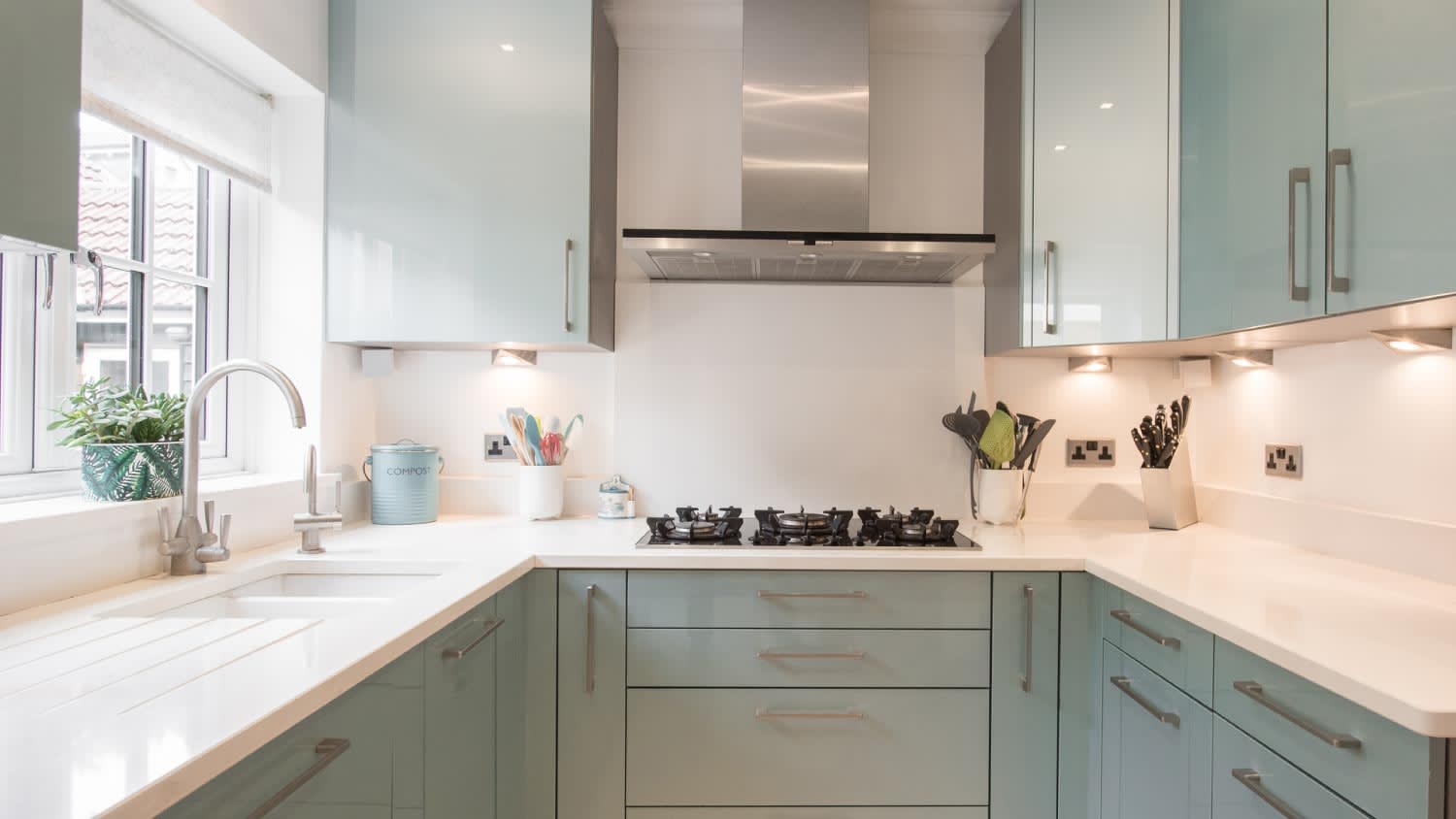
Are you getting close to deciding on Caesarstone® countertops for your home? Discover all the details behind Caesarstone® countertop costs in this guide.
Marble and granite service costs depend on your project and location. Check with a local pro for your specific job.

Porcelain countertop installation costs $1,500 to $3,800 for your kitchen or bathroom project, with materials and labor included.
Your choice between porcelain slabs or tiles and the edge style you select will determine your final installation total.
Account for cutouts for sinks or cooktops at $100 to $200 each and old countertop removal when creating your budget.
Hiring a local countertop professional ensures your porcelain countertop is installed correctly and boosts the overall home value.
Porcelain countertops cost $50 to $70 per square foot, on average. Though prices can rise for larger projects, most homeowners spend between $1,500 and $3,800—or an average of $2,900—on their installation. This price includes materials and professional labor.
If you’re looking to install kitchen or bathroom countertops, porcelain is one of the most popular choices for a reason. This material has a high heat resistance (don’t fret about hot pots and pans) and is relatively easy to clean and maintain. This guide will help you set your budget.
One of the largest cost factors is the size of your porcelain countertop. You’ll usually find prices ranging from $10 to $120 per square foot, though the average cost is $50 to $70 per square foot. Most projects, like your standard kitchen or bathroom countertops, are 30 to 40 square feet in total, though larger homes may have larger countertops.
| Room | Countertop Size (Sq. Ft.) | Average Cost of Porcelain Countertops |
|---|---|---|
| Small Kitchen | 20 – 30 | $1,000 – $2,100 |
| Average Kitchen | 30 – 40 | $1,500 – $2,800 |
| Large Kitchen | 40 – 60 | $2,000 – $4,200 |
| Average Bathroom | 30 – 40 | $1,500 – $2,800 |
| Single Bathroom Vanity | 5 – 10 | $250 – $700 |
Compared to other countertop materials, porcelain is relatively affordable. For reference, Corian countertops cost about the same, but high-end granite or marble can cost considerably more. Despite the modest price tag, certain factors will impact the cost of your porcelain countertop installation. Expect the little details to play a big role.
| Type of Porcelain Countertop | Average Cost (Materials Only) |
|---|---|
| Slab | $50 – $120 |
| Tile | $10 – $50 |
There are two types of porcelain countertops: porcelain tile and porcelain slabs. Porcelain tiles cost about $2 to $30 per square foot, while porcelain slabs cost $20 to $65 per square foot. The material costs aren’t dramatically different when you factor in grout and adhesive—especially if you seal your grout, which helps prevent staining.
Even if material costs are similar, the installation makes porcelain slabs the pricier option. Slabs are thin and fragile, so your contractor will need to take extra care to avoid cracking your countertop.

You may find that porcelain has limited edge options compared to other materials. This is because the pattern and glossy glaze are only surface-deep, and the edges must be created during fabrication. Square and eased edges don’t cost extra, but beveled and bullnose edges may cost an additional $10 to $12 per square foot. More complex built edges may cost $15 to $25 per square foot.

Porcelain comes in fewer finishes than other countertops. You can choose from polished or unpolished. An unpolished finish will add about $1 per square foot to your total costs. Not every porcelain pattern will be available in both finishes, but you can usually get the most popular looks (which mimic natural stone) in either.
If you choose a porcelain slab, your contractor may need to cut the countertop to make room for accessories like a sink, cooktop, or outlet. Expect to spend around $100 to $200 per cutout. Since this type of countertop is so fragile, it’s important that you hire an experienced contractor who understands how to cut porcelain.
If you’re replacing countertops, you’ll need to remove your old countertop first. Some contractors charge around $50 to $300 for the removal and disposal of the old materials because it’s extra labor.
In general, expect to spend an average of $10 to $20 per square foot on professional labor for your installation. Costs vary depending on the location. If you live in an area with a higher cost of living, you can expect to pay higher prices for labor.
In general, permits cost about $50 to $500, depending on what’s required by your local municipality. You may not need a permit if you’re replacing your existing countertop with a countertop of the same size. You will need a permit if your project involves plumbing or electrical work.
Porcelain countertops are durable, especially regarding heat resistance, which is ideal for a kitchen. You’ll still need to maintain them properly. The good news is that maintenance is generally wallet-friendly. You may need to make some repairs along the way, but it shouldn’t happen often.
Porcelain countertops are somewhat vulnerable to chips and cracks, even if they withstand stains and scratches. With an epoxy fissure repair kit, you can fix small cracks (or at least stop them from worsening). Depending on the damage, a professional typically charges $150 to $800 per repair.
If you opt for porcelain tiles, you may need to replace a chipped or cracked tile eventually. This can happen if you drop a heavy object on your countertop. Expect to spend about $120 to $500 on tile replacement.
If you have tile, you may need to clean or repair your grout occasionally. Grout, in particular, is prone to staining (unless it’s sealed) and crumbling. Expect to spend around $100 to $700 on grout repairs, with the average cleaning ranging from $100 to $475.
Hiring a local countertop contractor costs more upfront, but you benefit from faster results, less risk of damage or miscuts, and a professional finish. Pros bring specialized equipment and experience to your countertop project, making the process smooth and saving you money on potential delays, damage, or mistakes in the long run.
Installing porcelain countertops is an extensive and delicate project that requires specialized expertise. Here are some of the top reasons to work with a pro:
A pro can prevent damage, uneven surfaces, and poor joints that can result from DIY installation, which may require expensive repairs or replacements.
Porcelain slabs are very thin and can be prone to cracking if not handled with specialized equipment and techniques, which countertop contractors have.
Experienced pros provide a seamless and level countertop that is both beautiful and long-lasting, adding value to your home.
Contractors have access to the necessary equipment for precise cuts and a secure installation, saving you the expense of buying or renting equipment or tools.
Many contractors offer warranties on their work, providing peace of mind and a safety net in case something goes wrong later.
If you want to take on some aspects of the project yourself, here are a few DIY tasks that can help save time and labor costs:
Remove everything from the floor-level cabinets and any cabinets under the sink to give the contractors more room to work.
Remove all items, appliances, and decorative objects from the countertops and the surrounding area.
Ensure any appliances connected to countertops, like a cooktop or sink, are safely disconnected and removed.
Use tarps or cloths to cover floors and furniture along the path and in the adjacent areas to protect them from dust and debris.

There are a few different jobs homeowners commonly add to their countertop installation. If you’re planning a bathroom or kitchen renovation, you can usually save money by grouping related jobs. For example, if you’re upgrading your countertops, you might also want to upgrade your sink or cooktop. Here are some extra expenses to consider.
| Add-On Project | Average Cost |
|---|---|
| Backsplash Installation | $600 – $1,300 |
| Sink Replacement | $250 – $1,600 |
| Appliance Installation (Labor Only) | $70 – $225 |
| Cabinet Refacing | $5,000 – $10,600 |
| Cabinet Refinishing | $700 – $6,000 |
| Kitchen Island Installation | $2,500 – $10,000 |
You may want to install a new backsplash to match your new countertop. A kitchen backsplash generally costs $15 to $40 per square foot for installation, depending on the material. If you use porcelain tile, your backsplash installation will have a similar cost to your countertop installation. Most homeowners spend $600 to $1,300 on a backsplash.
A sink replacement costs $250 to $650 on average, though it can cost more than $1,600 depending on the model. Copper sinks cost the most, but a simple drop-in or undermount sink can run you as little as $250.
If you’re upgrading your kitchen countertops, you may want to upgrade your appliances. Homeowners often install a new cooktop, stove, refrigerator, or microwave. Expect to spend about $125 to $300 on appliance installation costs—plus the cost of the appliance itself.
Some homeowners choose to reface or refinish their cabinets when installing new countertops. This can give your cabinets a fresh new look without the cost of a full replacement. On average, cabinet refacing costs around $7,250, and refinishing costs $3,000. Painting and staining alone costs $4 to $10 per square foot.
If you’re installing new countertops and always dreamed of having a kitchen island, now is your chance. On average, homeowners spend about $4,000 installing a new kitchen island, depending on the size. Permanent prefab islands typically cost $2,500 to $3,500.

Porcelain is a great option for homeowners with a mid-range budget. It’s not the most expensive but isn’t considered low end. If you’re looking to install kitchen countertops on a budget, there are some ways you can lower the cost of porcelain. You just have to get creative.
Choose tiles over slabs
Go with larger tiles
Opt for standard edges and finish
Do the demolition yourself
Bundle similar projects for a reduced rate
Get multiple quotes
Porcelain countertops are quickly gaining popularity because they’re attractive and long-lasting. But that doesn’t mean they’re the right option for every homeowner. Here are some benefits and drawbacks of porcelain countertops in your home.
| Pros | Cons |
|---|---|
| Sturdy | Surface-only design |
| Versatile | Costly |
| Easy to clean | Less available |
| Sustainable | Design choices can reduce functionality |
| Easy to install |
Ask your pro about their experience with porcelain slabs specifically and ask if they have a portfolio they can share with you.
Inquire about the substrate they will use to support the porcelain and how they will handle the edges.
Get a written quote that includes all costs for labor, materials, and any other fees.
Inquire if they provide a warranty on their workmanship and materials and ensure they are properly licensed.
Home is the most important place on earth, which is why Angi has helped more than 150 million homeowners transform their houses into homes they adore. To help homeowners with their next project, Angi provides readers with the most accurate cost data and upholds strict editorial standards. We extensively research project costs to develop the pricing data you see, so you can make the best decisions for you and your home. We rely on reputable sources, including the U.S. Bureau of Labor Statistics, academic journals, market studies, and interviews with industry experts—all to ensure our prices reflect real-world projects.
Want to help us improve our cost data? Send us a recent project quote to [email protected]. Quotes and personal information will not be shared publicly.
Joseph did a great job with the staircase and trim. Timely and efficient, clear communication about the work, very fair pricing. For the stairs in particular, done very skillfully in an old house (1893) in a tight spiral, and very creative with how to do the handrail. Did a nice job with...
 Vouis Trim Carpentry L.L.C.
I had FabClean 614 clean my apartment, and she did an outstanding job. She was so professional and efficient. My apartment looks absolutely spotless every surface, every corner, all cleaned to perfection. Definitely highly recommend FabClean 614 if you're looking for top-notch cleaning...
 Fab Clean 614
Cole has been handling plumbing and general contracting for our four properties over the past three years, and he’s always done a great job. Most recently, he installed a sink and countertop in our retail store where none existed before, and it turned out exactly how we needed. He’s...
 ANB Renovations LLC
I conferred with 2 other contractors before Armstrong Electric. Nick and his crew showed me that the project was not as convoluted as the other contractors made it appear to be. They completed the entire project on time. They were professional, friendly and cleaned up after at completion. I...
 ARMSTRONG ELECTRIC, LLC
Ace Fireplace Services came to the rescue for my chimney repair. They were quick to pinpoint the issue and worked their magic to fix it. My chimney is now in excellent shape, and I'm a satisfied customer.
 Ace Fireplace Services
Supreme Brick & Chimney did an excellent job restoring the brick and mortar joints on my home. Their team was professional, knowledgeable, and completed the work on time. I highly recommend them and will hire them again in the future! Thanks!
 Supreme brick & chimney
I recently hired Custom Paint Jobs LLC to repaint my home, and I couldnt be happier with the results. Their attention to detail and professionalism were outstanding. Highly recommended
 Custom Paint Jobs, LLC
On time, clean and finished fast. Windows seem sturdy and the finish is good. Caulking was done with no smudges. Would recommend.
 Window Depot USA of Central Ohio
Great job...edging and pre clean up went well with a great job with seal coat. Friendly, efficient and professional.
 All Star Paving and Sealing
They are very reliable and available. They the drains all the time
 The Waterworks
From average costs to expert advice, get all the answers you need to get your job done.
Are you getting close to deciding on Caesarstone® countertops for your home? Discover all the details behind Caesarstone® countertop costs in this guide.
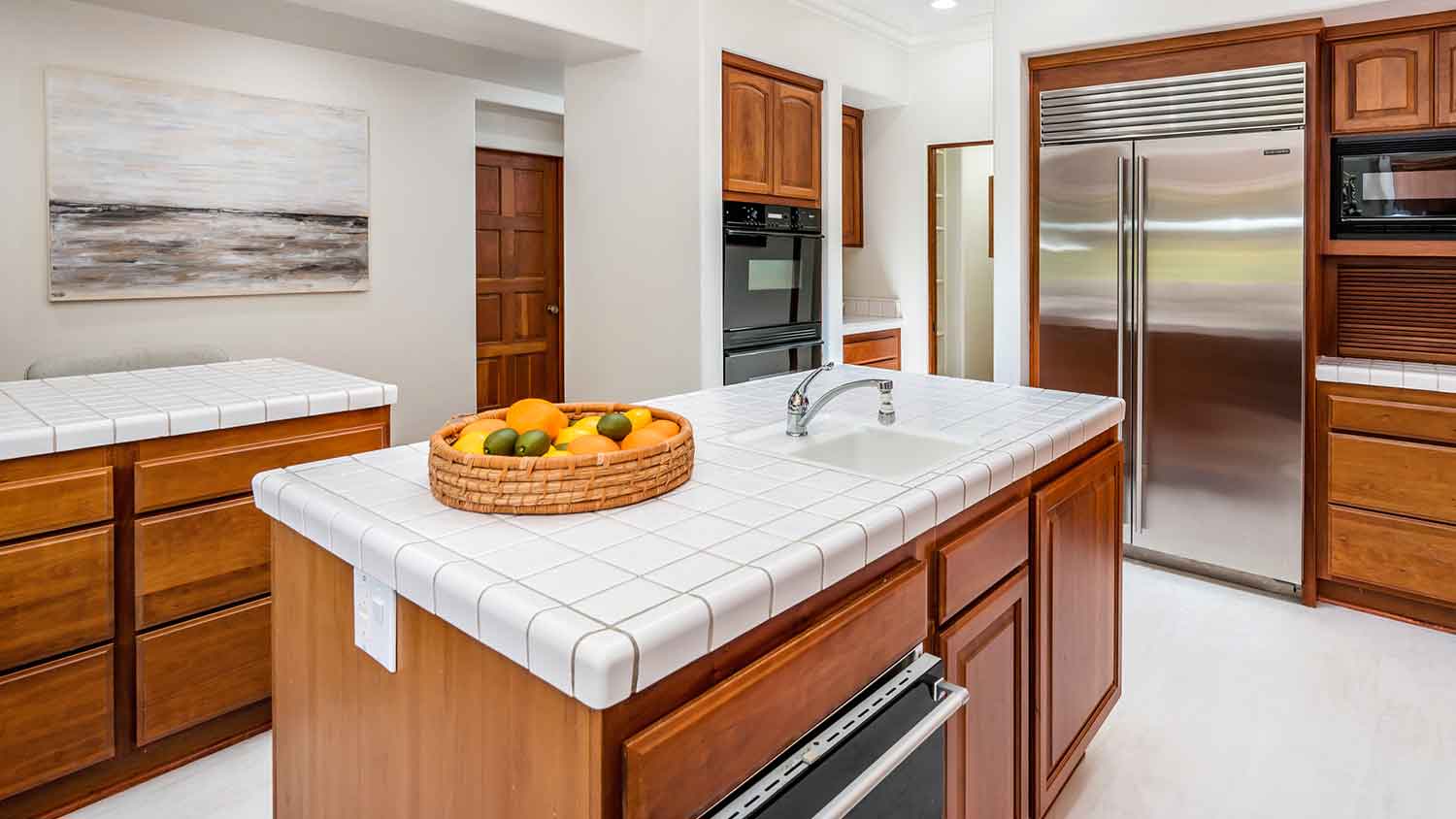
This guide covers the cost to tile a kitchen countertop and the main cost factors, including tile type and grade, kitchen size, and whether you hire a pro for the installation.
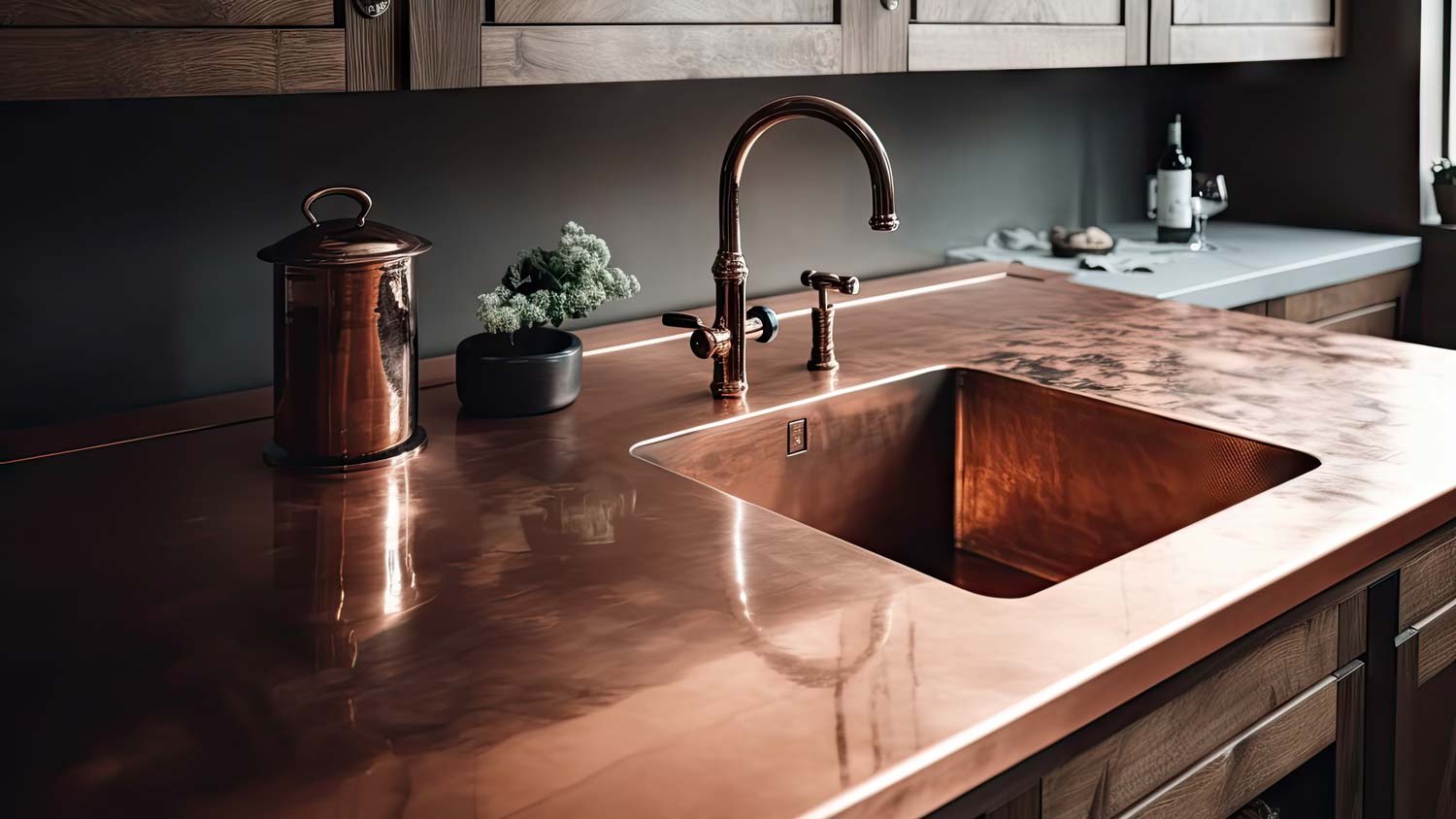
Discover the average copper countertops installation cost, key price factors, and expert tips to help you budget for your new kitchen upgrade.
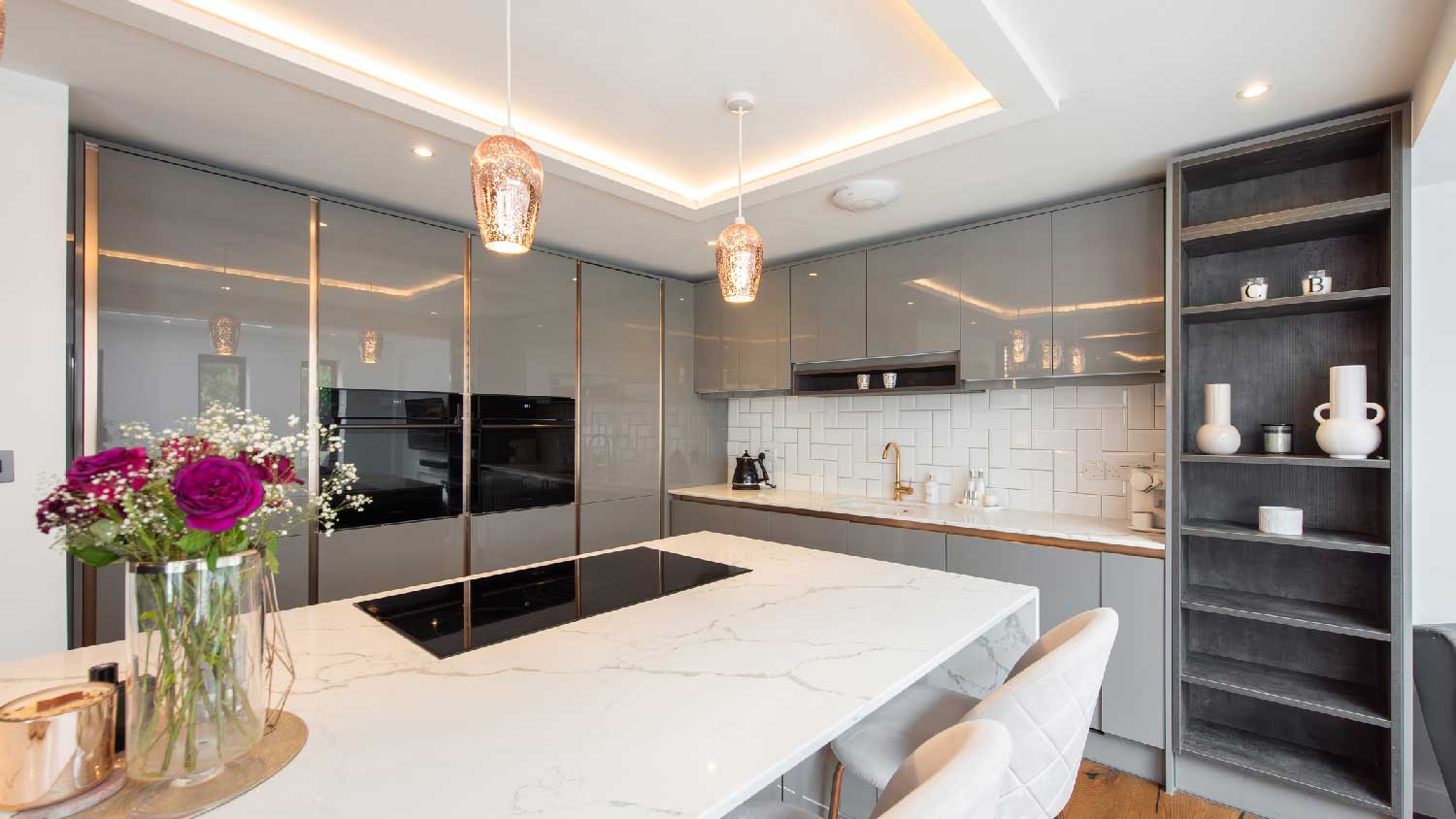
Looking for a unique countertop material that’s low maintenance, durable, and cost-effective? Check out the pros and cons of porcelain countertops.

Choosing countertops is a big deal, only comparable to choosing your cabinetry. Read this guide if you are waffling between porcelain or quartz countertops.
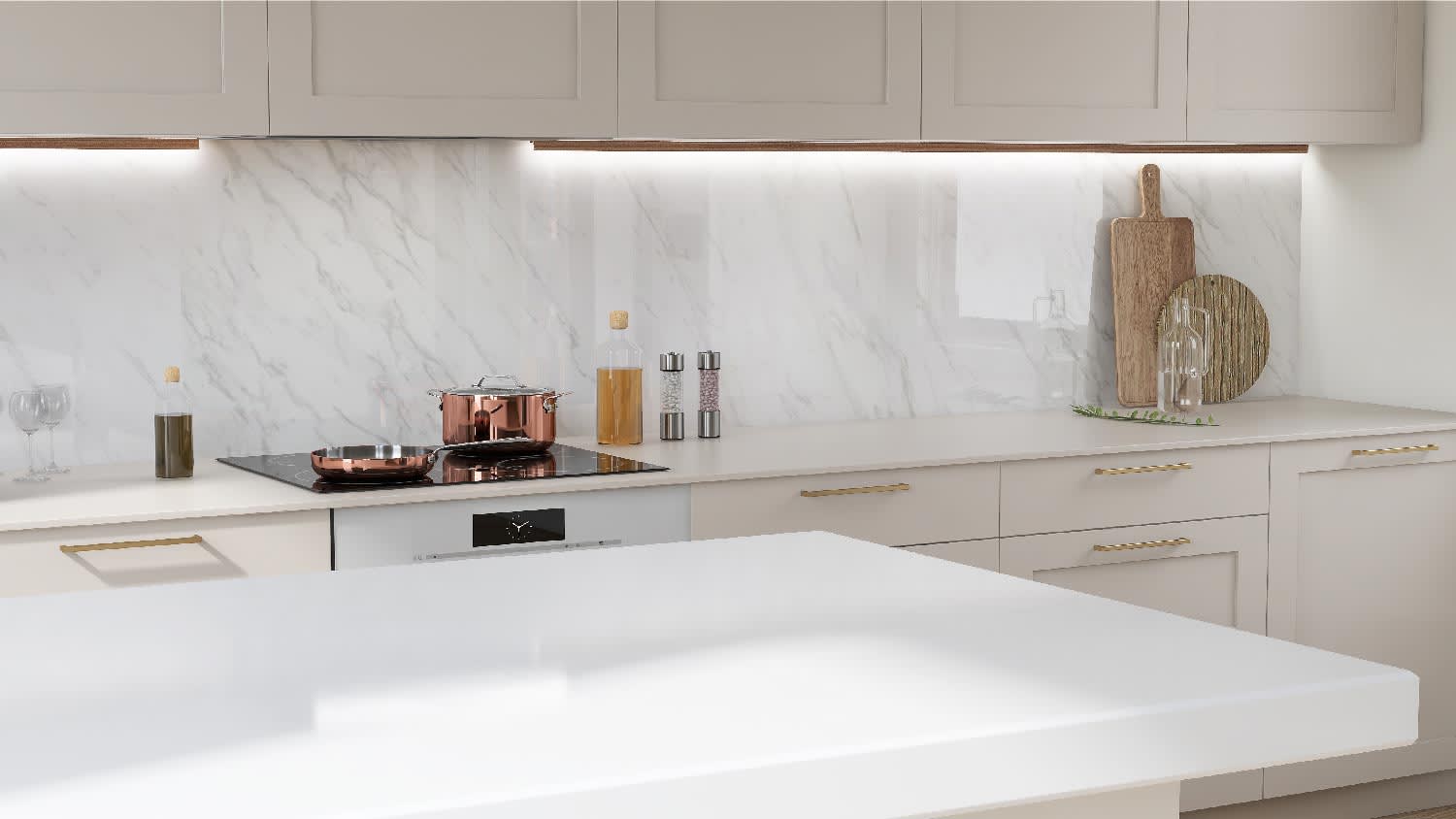
Looking for the easiest countertops to maintain? Here are 9 types of low-maintenance countertops, as well as the pros, cons, and prices.