
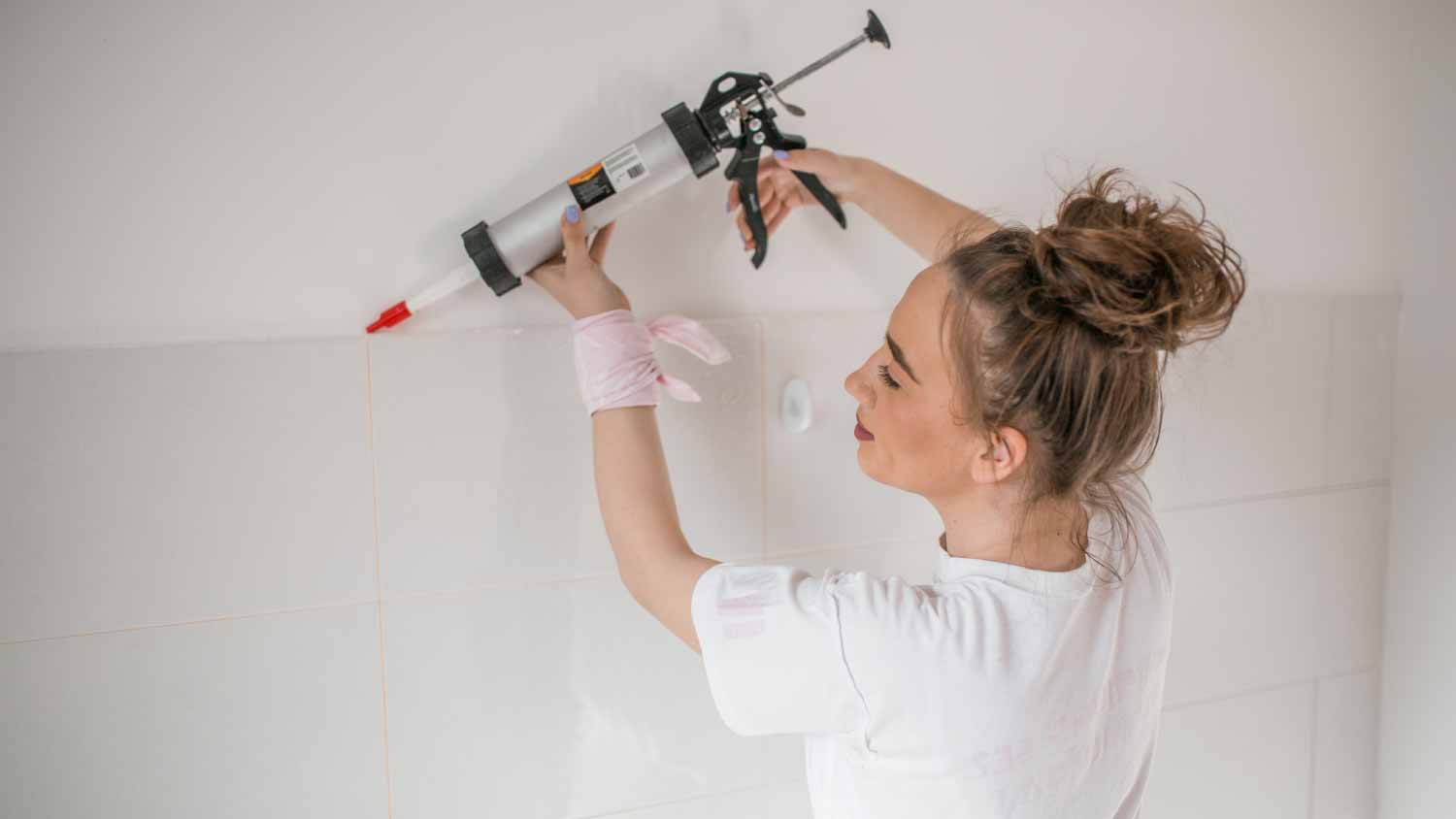
Discover the key differences between caulk versus silicone. We discuss the pros and cons and when to use each for the best results in your DIY projects.
Don’t get caulky and use the wrong type for your project

Latex caulk offers more color variety and can be painted, while silicone caulk is more flexible and waterproof for your projects.
Latex caulk costs $4 to $8 per bottle, while silicone caulk costs $8 to $12, making latex the more budget-friendly option.
Silicone caulk lasts up to 20 years and withstands moisture and temperature changes better than latex, which lasts 10 to 15 years.
Hiring a local caulking service professional keeps your bathroom and kitchen sealing projects clean and even, especially when working with tricky silicone.
When it comes to choosing between silicone versus latex caulk for a project, there are several characteristics to consider. If you’re sealing a gap in a wood door frame, you probably want a caulk with a similar color that will blend into the frame. Perhaps you’re just looking to make a quick caulking fix on a tight budget. Or maybe you need a highly waterproof option to seal the tiles around your shower. No matter what you need to caulk or why, keep reading to compare latex and silicone caulks and find which type is right for your project.
One of the biggest differences between latex versus silicone caulk is that silicone caulk is more flexible, waterproof, and longer lasting, but it comes at a higher cost. Latex caulk is better for indoor projects and rooms that don’t get a lot of moisture. Silicone works best for high-moisture areas, like bathrooms and kitchens, and it also works well for outdoor projects. If the look of the caulk matters to you, latex is a better choice because it comes in more color options and can even be painted for a more custom appearance.

Latex caulk, or acrylic latex caulk, is a more rigid yet customizable type of caulk that works well for indoor projects, like sealing doors and windows. Latex caulk is vulnerable to temperature changes and moisture, so it’s not ideal for bathrooms or outdoor projects. A major benefit of latex caulk is that it comes in a variety of colors and can even be painted to blend in or stand out from its surroundings. Latex caulk is also less expensive than silicone caulk.
| Pros | Cons |
|---|---|
| Lower cost | Vulnerable to moisture |
| Variety of colors | Vulnerable to temperature changes |
| Minimal odor | Shorter life span |
Best for:
Interiors of doors and windows
Wood frames
Dry and temperature-stable areas
Latex caulk is popular because it’s a low-cost option that comes in a wide variety of colors. Even if you don’t find the right color for your project, you can still paint over latex caulk to help it blend into the surrounding tile or trim. Plus, applying latex caulk is often easier than handling silicone caulk.
Another benefit of latex caulk is that it releases minimal odors. While you should still properly ventilate a space and put on personal protective equipment before you start caulking, acrylic latex caulk shouldn’t smell as strongly as silicone caulk.
While latex caulk offers a better look and lower cost than silicone caulk, it still comes with major drawbacks. One of its biggest vulnerabilities is water, so you should avoid using latex in bathrooms and outdoor spaces unless you’re willing to re-caulk more frequently.
Latex caulk also tends to shrink and expand when the surrounding air swings from warm to cool and vice versa. This makes latex caulk vulnerable to cracking and other damage, which shortens its life span.

Silicone caulk is your best friend when it comes to sealing bathtubs, showers, kitchen backsplash, plumbing, or other high-moisture areas. This caulk is more flexible, allowing it to better squeeze into grooves and protect against water. Silicone caulk is more expensive, but it also lasts up to twice as long as latex caulk. In addition to being waterproof, silicone caulk also withstands fluctuations in temperature. But keep in mind that this caulk comes in limited color options, often only white or clear.
| Pros | Cons |
|---|---|
| Waterproof | More expensive |
| Longer lasting | Limited colors |
| Withstands temperature changes | Harder to remove |
Best for:
Tubs and showers
Kitchens
Outdoor projects
The biggest benefit of silicone caulk is how durable it is. Whether you need a waterproof caulk to protect your shower tiles or a heat-resistant caulk to seal an outdoor door frame, silicone can withstand water, mildew, temperature fluctuations, and more.
Because of this durability, silicone caulk can last several years. Although you should expect to re-caulk about once every five years, silicone caulk may last up to 20 years with proper application and care.
Silicone caulk’s durability can also be its downfall. While latex is easy to remove with a scraper tool, you’ll need solvents to break down and remove silicone caulk when it’s time to replace it. When you need to re-caulk, you can also expect to spend more on silicone caulk than latex.
Another drawback to silicone caulk is its appearance. It dries into thicker lines, making it more visible. You also can’t paint over silicone caulk like you can with latex, and it often only comes in white or clear.
Latex and silicone caulk can both provide added sealing properties to many areas of your home, but they look and perform differently while also ringing up at different costs. Consider the following major differences between latex and silicone caulks.
If you want your caulk to fade into the background and provide a seamless look, latex might be the best option for you. You can find latex caulk in the classic clear or white colors that you’d expect of caulk, but it also comes in a wide variety of colors, from wood tones to deep greens and blues. Even if you can’t find just the right color of latex caulk to match your tiles, tub surrounds, or wood door frames, this type of caulk is paintable, unlike silicone.
Silicone is extremely durable, making it a good option for a wide variety of projects. The thick, flexible material provides a tight seal against water, and it won’t shrink or crack when temperatures swing from hot to cold and back again.
Caulk costs $1.25 to $4 per linear foot for professional installation. DIY caulking costs $10 to $30 for a caulk gun and other supplies, plus $0.05 to $0.20 per linear foot for the caulk. Either way, latex caulk costs less per bottle than silicone caulk. You can find a 10-ounce bottle of latex caulk for $4 to $8, but a similarly sized bottle of silicone caulk costs $8 to $12.
Latex caulk is popular with homeowners because it’s easier to work with. This type of caulk is easier to control when using a caulk gun, and it’s easier to achieve an even bead of caulk with the latex formula. Silicone, while flexible, can be more challenging to apply yourself, and it can quickly look messy and uneven. For best results, hire a caulking service near you to install silicone or latex caulk for your projects.
Homeowners should expect to re-caulk about every five years, and this process involves removing any worn out, cracked, or otherwise damaged caulk, cleaning the area, then installing fresh caulk. Because silicone caulk requires solvents to fully remove it, it’s harder to remove than latex caulk, which often comes up with just a scraper tool and some elbow grease.
Silicone caulk has an impressively long life span of up to 20 years, even when it’s exposed to water, heat, or cold temperatures. By comparison, latex caulk has a life span of 10 to 15 years, and this can be cut short if the caulk is applied in areas with extreme temperature changes or a lot of moisture, like bathrooms and kitchens.
Neither latex nor silicone caulks are considered eco-friendly in terms of materials, but for eco-conscious homeowners, there are some ways to caulk more sustainably. Look for caulk products with UL Greenguard Gold Certification, whose emissions limits have been used by the U.S. Environmental Protection Agency, on the label. If you’re considering silicone caulk for your projects, look for solvent-free varieties. You can also reduce the amount of off-gassing from caulk products by opening windows and properly ventilating the project area before you start working with caulk.
Remember, caulking can help seal troublesome gaps that allow in drafts. By caulking, you can help improve your home’s energy efficiency.
Terrible experience. Walls/trim/floors/cabinets/doors all have drip marks, overspray, etc. Tiling at the fireplace had to be redone by another vendor due to incorrect and shoddy install by Profect. Contractor had his children in our house while he was on site without prior authorization or...
 Profect painting & exteriors
It was wonderful working with Yordy and his team. They were very professional and are experts in what they do. They have completed the work on time, with better quality and with in fairly reasonable price. We just started with backsplash work , but liking his work, we went on to provide...
 Flooring Solutions
We were having 2”x 2” tile installed . There was a small installation error and the new additional replacement tile was from a different lot and the colors didn’t match. Joe assured us that he would rectify everything , which he did without hesitation. We decided to go with the 18” x 36” tile...
 CarifaTile
For several months I was looking for somebody to tile a wall in my master bath and move lighting fixtures, and could not find anybody who was responsive. I contacted Rowe through Home Advisor and within days they came by to assess the job and provide an estimate. The cost was very...
 Rowe House Development
It went very well! The end product was amazing and we keep getting a lot of compliments from friends! M&E were very professional and they made sure we were happy with the product before leaving. They met with us in our home and at the tile shop to make sure we were okay with our tile and...
 M&E Remodeling
Involved an extensive bathroom remodel, including removing tub & installing walk in shower, new drywall, custome tile work to ceiling, plumbing, etc. Overall, job was done on time and on budget. Nick & his team were very professional and had high attention to detail. Quality was great. Highly...
 Stamos Flooring and Remodeling LLC
Very pleased with the service and level of professionalism. Courteous and very unobtrusive in performing service. Unlike several other companies, Bradford Xteriors was willing to perform work on a three story home with a clay tile roof. <br />
 Bradford Xteriors
This company did a very good job on the brick wall and it looks just amazing. The staff was always professional and was practically OCD on how the bricks were stacked and how they were laid. Although it took longer than expected, I am willing to sacrifice time over perfection anyday. The...
 My Handy Mate LLC Improvement & Remodeling
He did the tile work and he was good at it. He used other subcontractors for the rest of the work (like putting in the cabinetry) and they were okay but not great. He was a great guy! He was easy to work with and had a good eye for the detail of his work. There were a couple of things that I...
 Brian Miller Custom Remodeling
I was very impressed with Miller Cantrell! I live in an old home in which the sewage line that runs from my home to the sewage system is a line of clay tile. These eventually collapse and need to be replaced - an expensive problem and sure to happen at the worst time. I told them that my...
From average costs to expert advice, get all the answers you need to get your job done.
Discover the key differences between caulk versus silicone. We discuss the pros and cons and when to use each for the best results in your DIY projects.

Discover the key differences between acrylic versus silicone caulk to choose the right sealant for your next DIY project.

Discover why your silicone caulk is not drying and learn effective solutions to fix the issue. Ensure a flawless finish for all your sealing projects.

Learn how to remove mold from under silicone caulk with our expert guide. These safe, effective methods will keep your home clean and mold-free.

With so many different types of caulk on the market, how do you know which one is right for your home improvement project? Here’s how to figure it out.
Discover the best methods for how to clean silicone caulk and prevent mold. Keep your bathroom and kitchen spotless with our expert cleaning tips.