

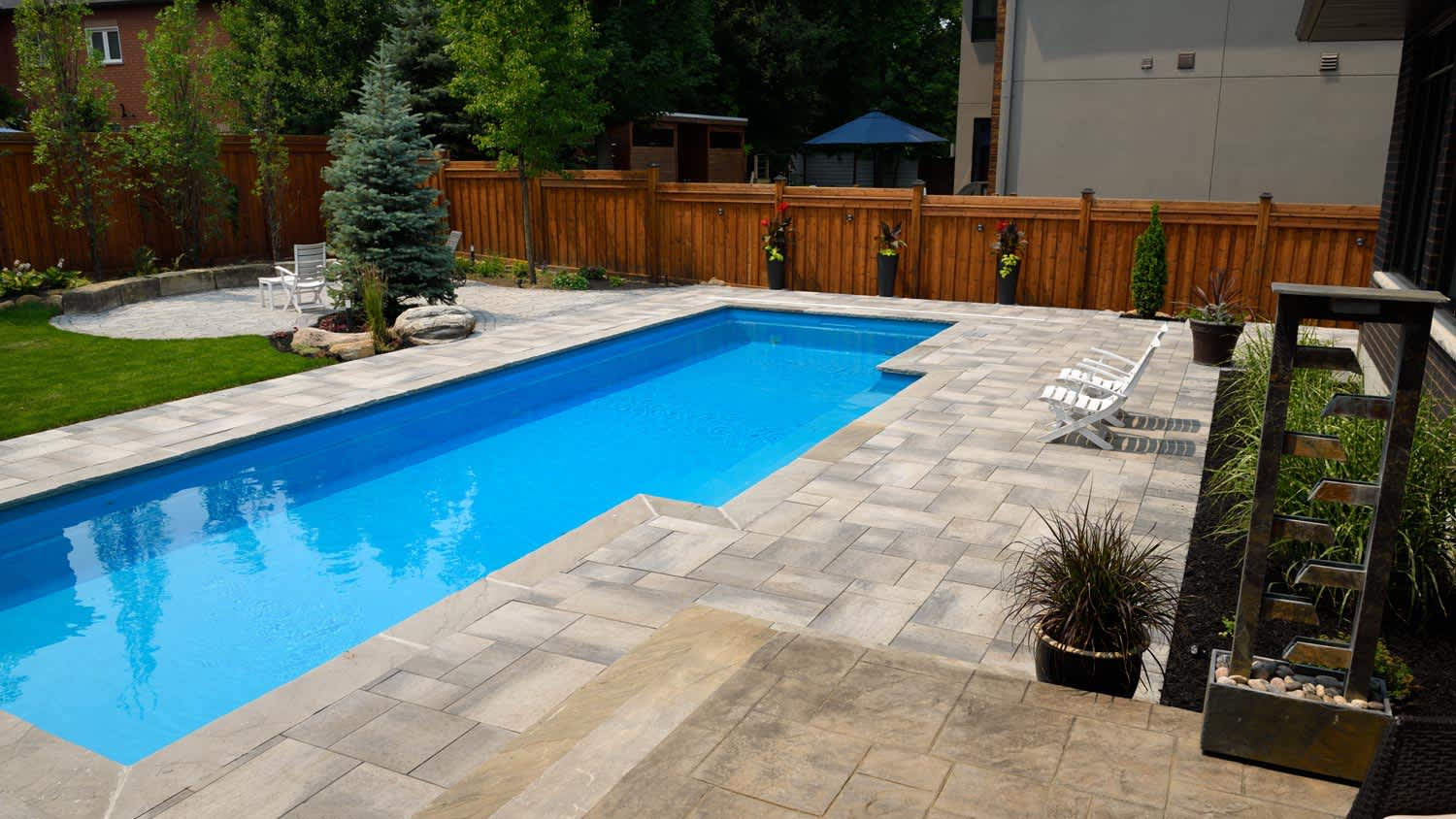
Fiberglass pools are a solid choice. If you are looking into installing one at home, read this guide to learn all the ins and outs of fiberglass pool costs.
Pool construction and installation costs depend on your project and location. Check with a local pro for your specific job.

Lap pool installation costs range from $4,000 to $100,000, helping you set a realistic budget early.
Your pool type, size, and material drive your total, with in-ground builds requiring more labor than aboveground.
You should budget for permits, water delivery, and site prep like excavation and leveling before construction starts.
Hiring a local swimming pool installation professional keeps the build safe and ensures your lap pool meets code.
In 2026, the national average cost to install a lap pool is $44,000, though your total can shift significantly based on pool type, size, and material. Most homeowners spend between $6,000 and $80,000, with costs climbing as high as $100,000 for in-ground or indoor builds. Choosing between an aboveground model and a fully excavated in-ground pool is one of the biggest factors driving that spread.
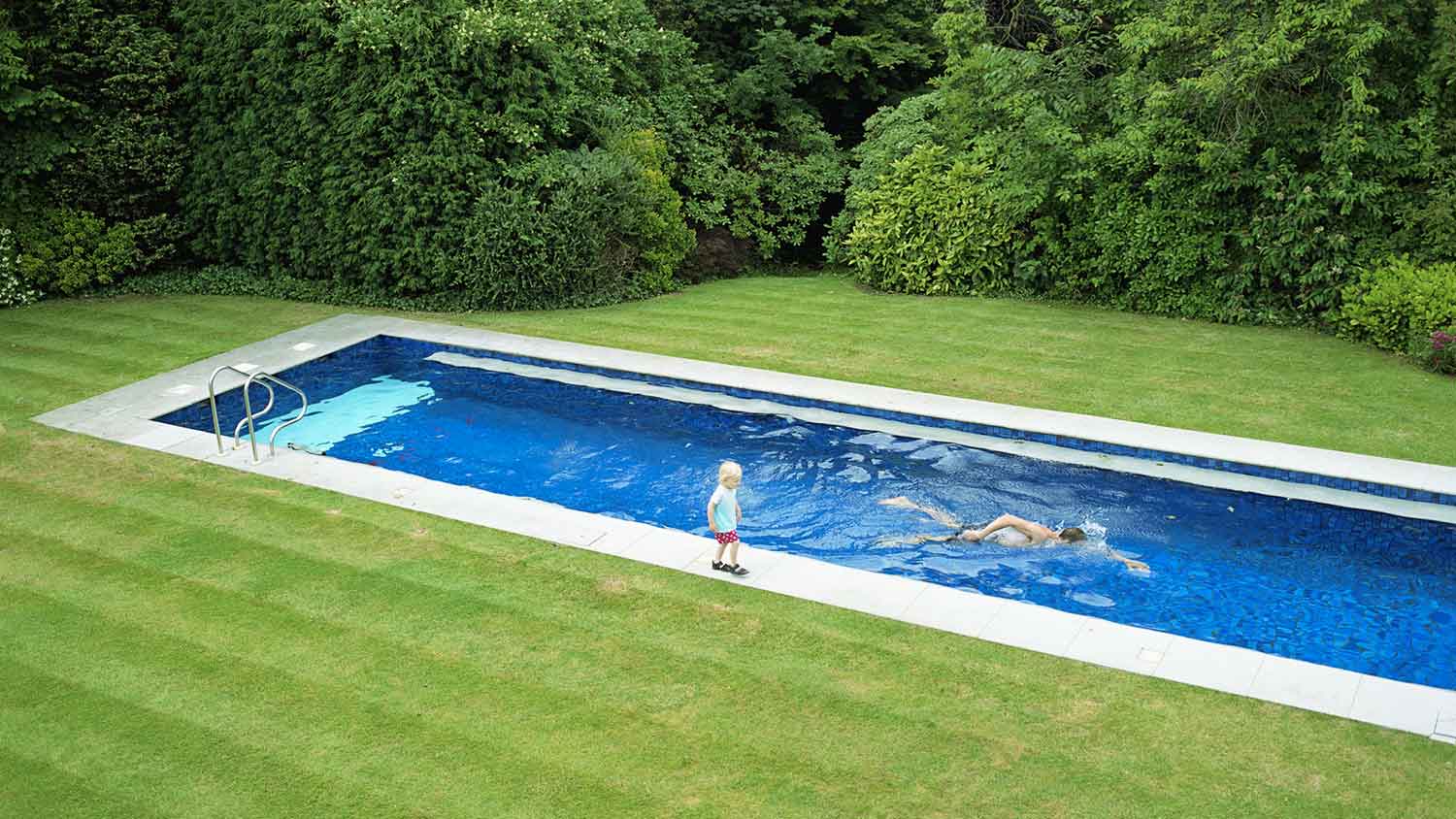
The size of your lap pool is the primary driver of its total cost, with the most common 40-foot length averaging $45,000 to install. Stepping up to an 82-foot short-course pool raises that investment to $100,000 to $400,000, while an Olympic-size 50-meter pool runs $300,000 to $500,000. Pool width, which typically ranges from 6 to 10 feet, also factors into the final price.
For an in-ground lap pool, the surface material you choose for the walls, floor, and surrounding area will directly shape your budget. Most residential lap pools measure 8-by-40 feet and are 4 feet deep, so material costs scale with that footprint. Costs vary significantly by material type, as the breakdown below shows.
| Lap Pool Material | Average Cost (Per Square Foot) in 2026 |
|---|---|
| Vinyl | $21 |
| Fiberglass | $35–$66 |
| Concrete | $55–$72 |
| Stainless steel and copper | $128 |
In-ground pools made with sealed concrete are considerably more expensive than aboveground pools, but they also last longer and add more value to your home. Metal or resin shells are the most durable for aboveground pools, while flexible liners are more vulnerable to damage.
Lap pool prices vary widely depending on placement and construction style, so choosing between an in-ground versus an aboveground pool comes down to your budget and available space. Costs vary significantly by type of pool, as shown in the breakdown below:
| Type of Pool | Average Cost in 2026 |
|---|---|
| Aboveground | $6,000 |
| In-ground | $67,000 |
| Indoor lap | $50,000 |
| Infinity | $80,000 |
| Saltwater | $50,000 |
| Endless | $24,000 |
Aboveground Pools: Aboveground pools cost $6,000 for professional installation and $3,000 for a DIY option. They're easily disassembled if you don't want a permanent pool. However, they're susceptible to damage from weather, particularly high winds.
In-Ground Pools: In-ground pools average $67,000 but go up to $135,000. Many customizable options are available, including shape, surface, and style. If the cost of a pool heater is in your budget, it can also be a convenient upgrade.
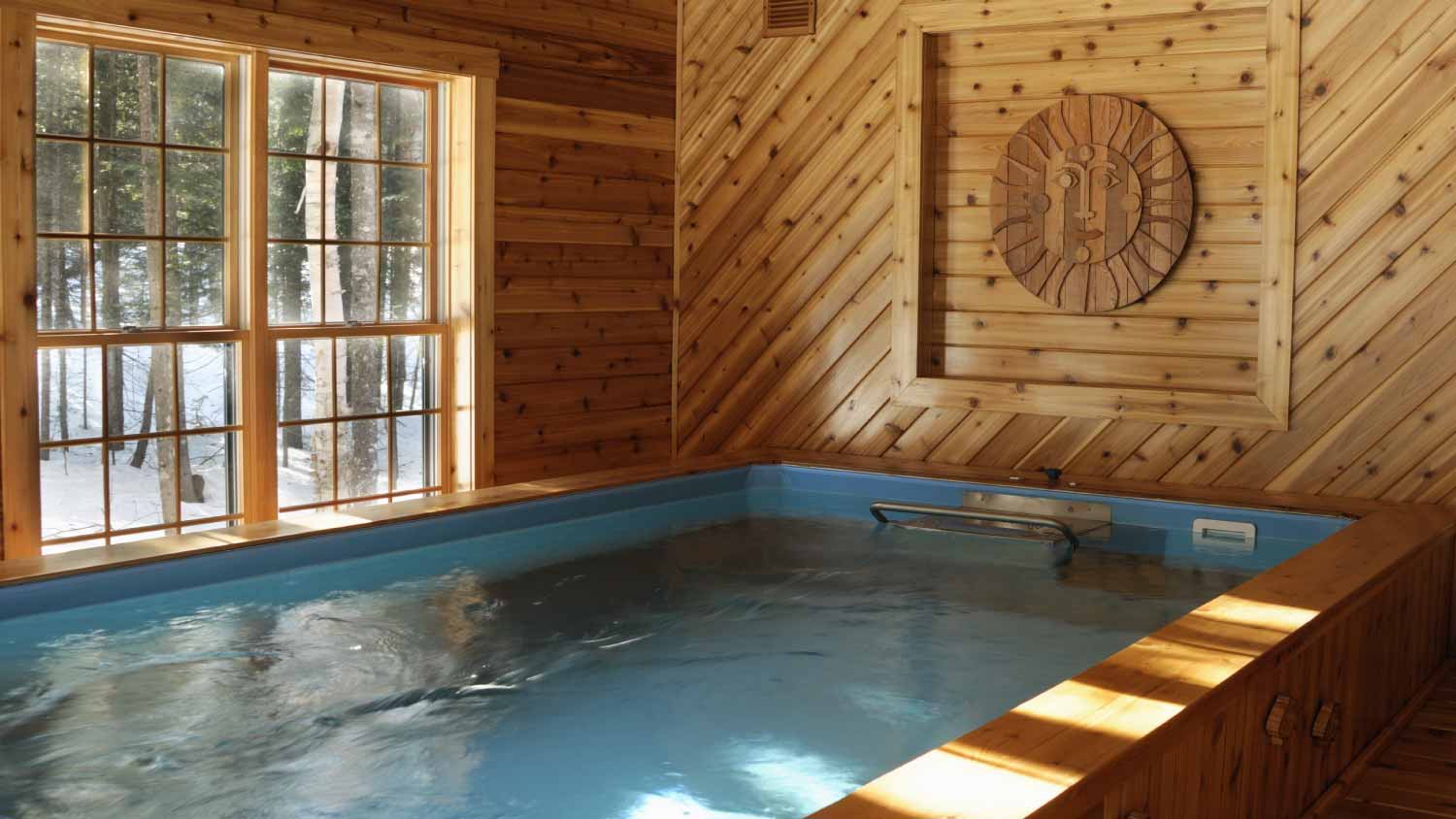
Indoor Lap Pool: Indoor lap pools cost $50,000 to $100,000 or about $6,000 for an aboveground option. These pools require a dehumidifier system, either a portable one for $200 or a built-in one for $5,000. Having an indoor pool allows you to enjoy it year-round regardless of the weather.
Infinity Pool: Luxury infinity pools cost $80,000 to $130,000 and have an edge that seems to disappear on the horizon. You'll need two pool pumps: a standard one and one for the overflow edge.
Saltwater Lap Pool: These pools are gentler on eyes and skin than chlorine pools and cost $50,000. A saltwater generator converts the salt into chlorine to sanitize the pool, which costs $500 to $2,500.
Endless Lap Pool: Like a treadmill, an endless lap pool allows you to enjoy swimming long distances without a big pool. A pump creates a current you can swim against for as long as you want. An endless lap pool costs $24,000 and measures 14 feet long.
Labor typically accounts for 25% to 50% of your total lap pool project cost, covering everything from planning and excavation to construction and features. Because pool builds require a range of specialized skills, many pool contractors bring in subcontractors for work like plumbing and electrical, and costs for those trades vary by specialty, as the breakdown below shows.
| Subcontractor | Average Cost in 2026 |
|---|---|
| Plumber | $45–$200 per hour |
| Electrician | $50–$100 per hour |
| Pool designer | $600–$2,500 |
| Land excavator | $1,000–$1,500 |
Beyond the pool itself, several additional expenses can add up quickly, including excavation, permits, and water to fill the pool.
In-ground lap pool installation requires excavation, with pool excavation costs running $1,000 to $1,500 for digging and backfilling. Obstacles like roots, rocks, or dense soil can push that figure higher, and hauling away excess dirt adds roughly $600 to the total.
Yard leveling costs $200 to $900 for pools and is a critical step that protects your investment regardless of pool type. Skipping it on an in-ground pool risks liner leaks and soil erosion, while an aboveground pool on a sloped yard can collapse entirely.

To find how much water you need, you'll use the calculation "length x width x average depth x multiplier." The multiplier varies based on the shape of the pool.
The multiplier for:
Square, Rectangle, or Free-Form Pools: 7.5
Round or Oval Pools: 5.9
So if you have an average rectangular pool (8-by-40 feet with a depth of 4 feet), you're looking at around 9,600 gallons. The average water cost is about $1.50 per 1,000 gallons. Keep in mind that you'll be using water to filter the pool, so once your pool is filled, it doesn't mean the water bill stops there.
You'll need to chlorinate the water as well, which will also factor into your regular maintenance costs.
Most lap pool installations, whether aboveground or in-ground, require a permit before work can begin, with an average cost of around $1,000. Your actual permit fee will depend on your state, county, and local ordinances, so check with your municipality early in the planning process.
The cost of maintaining a pool is easy to underestimate, running $150 to $260 per month during swim season for professional vacuuming, skimming, and chemical balancing. Handling maintenance yourself brings that down to about $50 per month for chemicals and supplies.
These pool add-ons and features will help elevate your pool experience. Here are the common ones you might want for your home:
Pool Covers: Pool covers cost $150 to $4,500 or more. They keep your pool protected during the offseason, and you can opt for a basic cover that you install manually or a fancy automatic one that works at the touch of a button.
Pool Enclosure: Pool enclosures cost $7,000 to $18,000, and depending on your area, building codes may require them. They keep the pool safe from unwelcome intruders like alligators and allow you to enjoy a swim without the nuisance of insects.
Adding a Hot Tub: Adding a hot tub to your pool costs $2,500 to $15,000. You can choose from in-ground, aboveground, prefab, or custom tubs. Hot tubs are relaxing and enjoyable year-round, so they might be a good choice regardless of your climate.
Pool Heater: Pool heaters cost $1,800 to $4,100 and are powered by electricity, gas, heat pumps, or solar energy. They're a great addition to consider if you live in an area with cooler weather.
Pool Lighting: Lighting for a pool costs $450 to $1,700. It's an intensive job, so you'll want to tackle this during the pool installation. Lighting is a must-have if you're planning on enjoying night swims, plus it adds a nice ambiance to the area.

Installing a lap pool is a big undertaking with various moving parts. Unless you're installing an aboveground pool, you'll need to hire a swimming pool installer near you who can take care of the job safely and efficiently. The labor costs are worthwhile, as a properly installed pool will last longer and provide you and your family with years of enjoyment.
Here are some advantages to hiring a pro to build your new lap pool:
Installing an in-ground pool involves complex and potentially hazardous tasks—such as excavation and working with electrical wiring and plumbing—that require the expertise of pool installers who follow strict safety protocols.
Aboveground lap pools are larger than other types of pools, so hiring a pro is beneficial, as they'll ensure a proper installation free of leaks.
Lap pool installation pros can help you design your new pool, select the right materials, and recommend the ideal location for it in your yard.
Your pro will handle the prep work, secure permits, and complete the work to code.
You can opt for warranties that can come in handy if you encounter issues down the road.
You'll avoid potential DIY pitfalls, such as damaging wiring and plumbing during excavation or improper installation, which can lead to leaks and structural damage.
You'll need to hire a swimming pool installer for this project, but there are some smaller tasks you can complete on your own, such as:
Remove furniture, planters, storage boxes, and debris to make it easier for your pro to access the area.
After your in-ground lap pool is installed, you can enhance the surrounding landscaping by planting trees and shrubs and applying mulch.
Furnish the patio or deck area with loungers, tables, and decor.
Lap pools are worth it if you plan to use one regularly for exercise. Since they're narrower than traditional pools, it's a fitting option if you have a smaller yard.
The ROI of a pool installation is 7% to 8% on average, but it ranges between 5% and 56%. Your area, the pool's design, and maintenance all impact the overall value. Your ROI will be on the higher side if you live in a sunnier state where pools are highly desirable, like California and Florida. ROI is the highest for well-kept in-ground pools that are ready to be used. The pool should be free of algae and have equipment that's in good condition.
On the other hand, if you aren't passionate about swimming laps, consider a traditional pool with more space to accommodate friends and family for pool parties and neighborhood barbecues.
Be prepared to discuss your preferences for your new lap pool, including the ideal size, materials, and type of pool.
Consider the size of the deck you want and the materials you prefer, such as composite wood or concrete.
Let your swimming pool installer know if you’re looking for add-ons, such as a pool cover, enclosure, heater, and lighting.
Ask about your pro's availability and get an idea of the project timeline to see if your pool will be ready by summer.
Home is the most important place on earth, which is why Angi has helped more than 150 million homeowners transform their houses into homes they adore. To help homeowners with their next project, Angi provides readers with the most accurate cost data and upholds strict editorial standards. We extensively research project costs to develop the pricing data you see, so you can make the best decisions for you and your home. We rely on reputable sources, including the U.S. Bureau of Labor Statistics, academic journals, market studies, and interviews with industry experts—all to ensure our prices reflect real-world projects.
Want to help us improve our cost data? Send us a recent project quote to [email protected]. Quotes and personal information will not be shared publicly.
If you’re good people wanting to do business with good people, hire Matt. He is a consummate professional and utterly competent. He installed a water heater in my home at a price that beat competitors by hundreds of dollars with a promise to support the unit for its life (even after its 6 yr...
 Greene's Plumbing Services
Joseph did a great job with the staircase and trim. Timely and efficient, clear communication about the work, very fair pricing. For the stairs in particular, done very skillfully in an old house (1893) in a tight spiral, and very creative with how to do the handrail. Did a nice job with...
 Vouis Trim Carpentry L.L.C.
This company does it right. Firstly, I want to say that Landan was a joy to work with. He was so kind, transparent, and had everything under control. His entire team showed up ready to work and they were all very respectful of the fact that we were in an office space. A little backstory – we...
 Krumlauf Floors
Professional Team, smooth to communication chain and schedule flexibility. Follows proper construction procedure and completes task on time.
 Pegasus Concrete
Very professional, knowledgeable and helpful! Completed the install on time and as expected.
 Ward's Services
Cole has been handling plumbing and general contracting for our four properties over the past three years, and he’s always done a great job. Most recently, he installed a sink and countertop in our retail store where none existed before, and it turned out exactly how we needed. He’s...
 ANB Renovations LLC
Excellent, Prompt, Courteous Service!!! They were super friendly and quite personable. I felt very comfortable with the gentlemen that did the installation. They installed it exactly where I asked them to and they did an excellent job!! I loved their service so much.
 Tether House
I hired windows depot USA of central to install new windows in house in Oshawa. Ilya was very professional from the start, not only did he offered a great price, he also made sure the installation was on time. I am very satisfied with final outcome. The windows look great and the overall...
 Window Depot USA of Central Ohio
The guys did an outstanding job and we had a great experience with CarifaTile. I appreciated that Joe reviewed the quotes with me and set expectations prior to the install. The crews showed up as scheduled and always left the areas clean upon leaving the house. We will definitely use...
 CarifaTile
Did an amazing job transforming my yard. Also installed sod in places, would recommend to everyone.
 Cardinal Landscaping & Construction LLC
From average costs to expert advice, get all the answers you need to get your job done.
Fiberglass pools are a solid choice. If you are looking into installing one at home, read this guide to learn all the ins and outs of fiberglass pool costs.
Discover how much pool maintenance costs, including average prices, cost factors, and expert tips to help you budget and keep your pool sparkling all season.

If you’re looking to get your backyard summer-ready, use this guide to learn pool opening costs, budget appropriately, and how to save money.
Not sure what type of pool would suit your yard best? Use this guide on the different styles and designs to maximize appeal and utility.
Swimming pools come in many sizes, but this pool size chart will simplify your choices and give you tips on how to choose the perfect size for your space.
Dreaming of getting in those daily laps without tearing up your backyard? Here’s what to know about endless pool costs so you can plan your project.