
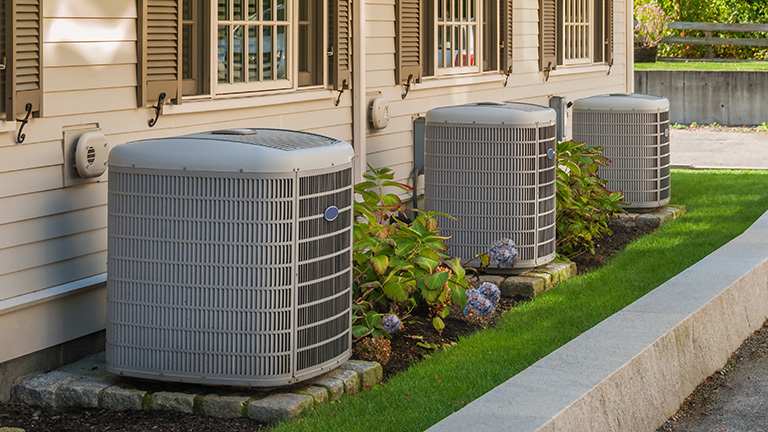
HVAC replacement costs depend on a lot of factors, like unit type, size, and labor. See what you can expect to pay for HVAC replacement here.
Heating and air conditioning service costs depend on your project and location. Check with a local pro for your specific job.

HVAC filter replacements cost between $10 and $150 depending on your filter type, thickness, and MERV rating.
Filter thickness and MERV rating determine how well your filter captures particles and how long it lasts between changes.
You should budget for potential HVAC repairs between $130 and $2,000 if your system needs attention during filter replacement.
Hiring a local air conditioning repair professional ensures your filter is sized correctly and keeps your HVAC system running smoothly.
On average, you can expect to pay $20 to replace your HVAC filter, with costs commonly ranging from $10 to $50 or even more. Replacing your HVAC filter is the simplest yet most effective way to keep your HVAC system healthy and working properly. Doing so can potentially save you thousands, so let’s dive into the cost details of this important maintenance task.
The cost to replace an HVAC filter will vary based on several factors including size, thickness, MERV rating, and more. Let’s take a closer look at how each one will affect your final price.
There are several types of HVAC filters you can choose from, each varying in price. Disposable, flat, and pleated filters, the most common types, typically cost anywhere from $10 to $50. Flat filters are the lowest in price, which only cost around $5 for a pack of two. For higher quality filters, such as washable and HEPA filters, expect to pay more.
| Filter Type | Cost Range |
|---|---|
| Flat | $5–$10 |
| Pleated | $20–$50 |
| Washable | $30–$50 |
| HEPA | $20–$100 |
HVAC filter thickness ranges from one to five inches. The thickness of a filter also affects how much you pay for it. The standard disposable filter is 1 inch and usually the cheapest option. The thicker the filter, the better job it does at filtering out debris and other contaminants. While thicker filters tend to cost more, they also don’t need to be replaced as often.
The reason thicker filters generally cost more than thinner ones is because they have greater efficiency, also known as a MERV rating. Minimum Efficiency Reporting Values, or MERVs, reflect a filter’s ability to catch particles between 0.3 and 10 microns. MERV ratings range from 1 to 20, with higher values indicating that the filter is better at capturing specific types of particles.
Simply put, the higher the MERV rating for an air filter, the more you’ll pay. Filters with a MERV rating of 1 to 7 typically cost between $5 and $20. Filters with ratings of 8 to 13 can cost anywhere from $20 to $150. HVAC systems in residential homes usually don’t need (and often cannot handle) filters with a MERV rating of more than 13. It’s important to make sure that your home’s system can handle the MERV rating you choose.
This also goes for FPR and MPR ratings. Both of these systems measure filtration performance similarly to MERV. Higher FPR and MPR numbers equate to better performance and more expensive filters. Often, you’ll find MERV ratings listed beside MPR or FPR on a pack of HVAC filters, so the price difference is the same ($20 to $150 for higher ratings, $5 to $20 for lower ratings).
Filters come in several different lengths and widths to match the size of your HVAC system. Larger systems will require larger filters, which also will cost more. Here are the cost ranges for some common filter sizes.
| Filter Size | Cost per Filter |
|---|---|
| 20-by-20-by-1 in. | $5–$20 |
| 14-by-18-by-1 in. | $5–$20 |
| 20-by-25-by-2 in. | $10–$30 |
| 16-by-25-by-4 in. | $20–$60 |
| 16-by-25-by-5 in. | $20–$60 |

In most cases, replacing an HVAC filter won’t come with a long list of expenses. It’s usually as simple as buying a replacement filter, removing your old one, and installing the new one. However, if you discover that your HVAC system isn’t working properly, this may result in unexpected costs. Here are some additional costs to be prepared for.
In the process of replacing your HVAC filter, you may find out that your HVAC system is in need of some repairs. Maybe there’s an issue with your ignitor, thermostat, or another part. Whatever the issue, you can usually expect HVAC repairs to cost between $130 to $2,000, with the average cost being $350.
In the worst-case scenario, your entire HVAC system could need to be replaced. This can be quite costly, as HVAC replacement costs anywhere between $5,000 and $12,500. While this can seem like a significant amount, replacement may be the cost-effective choice if your old system is nearing the end of its lifespan or repair costs are more than 50% of the cost to replace.
There are advantages to trusting the pros with your HVAC filter requirements, especially if it’s a new system. Hiring a local AC repair pro ensures fast, high-quality results so your HVAC system runs smoothly.
Hiring heating and cooling pros for filter replacements has several benefits, including:
You can arrange for quarterly filter maintenance so you don’t have to worry about when to replace your filters.
Professionals can instruct you on the right size filter, how to access it, and which direction it should face.
The pros can inspect for additional problems with your HVAC and fan system while they handle the filter replacements.
Most homeowners can handle an HVAC filter replacement if they need to. Follow these guidelines for a successful replacement:
Access to your old filter is close to your fan system, often located at an indoor unit for your heating or cooling system.
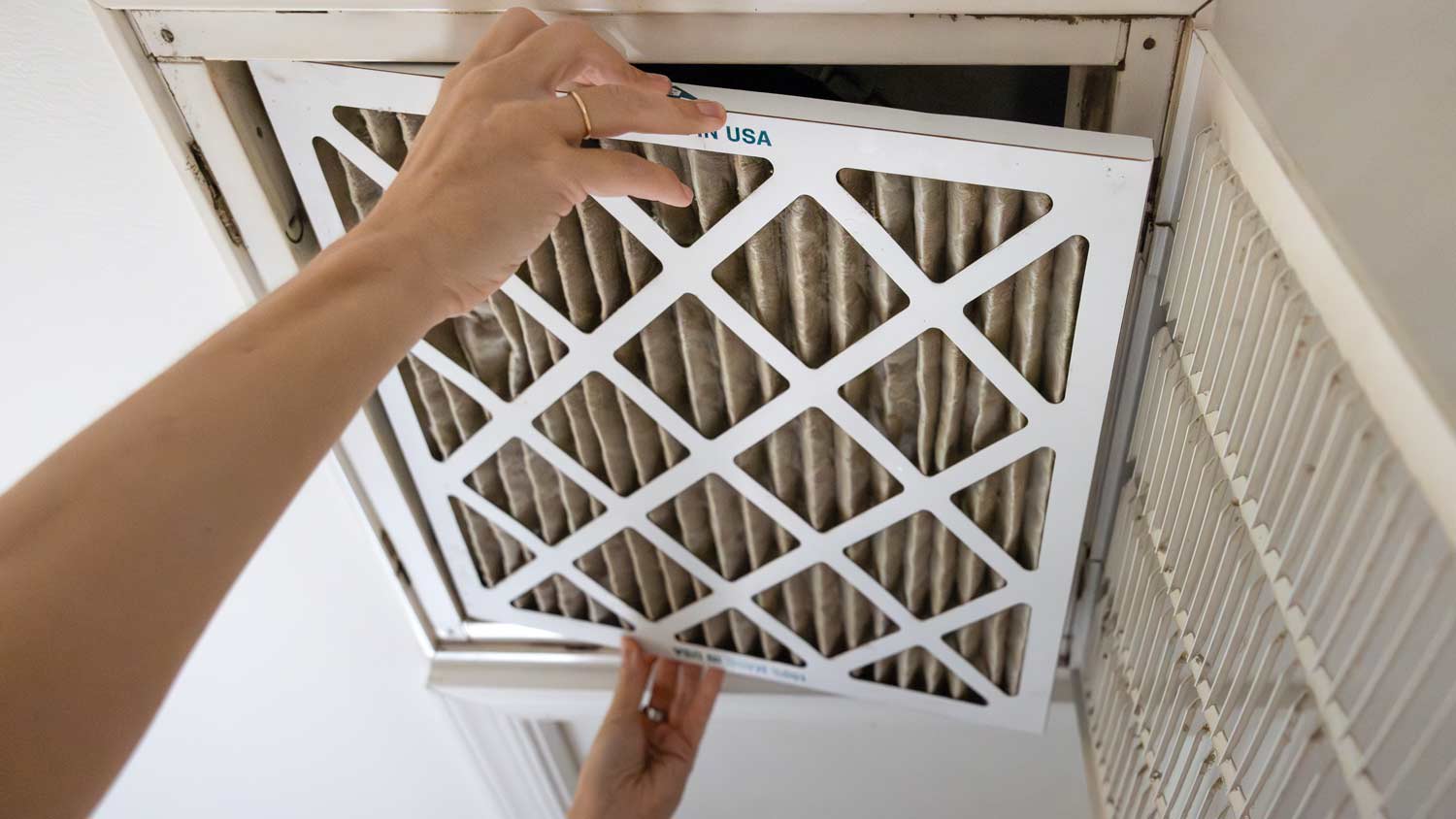
Before you take the old filter out, pay close attention to its dimensions and the direction it’s pointing, which is very important for proper filtration. Most filters have dimensions printed on them and arrow marks for direction (arrows should follow the airflow).
When in doubt, inspect your fan system for labels or marker notations, which may indicate the type of filter you need.
Regularly changing your HVAC filter is one of the easiest and most inexpensive ways to save money in the long run. Taking good care of your HVAC system keeps it clean and maximizes its lifespan, which can help you avoid costly repairs or having to replace your system altogether.
Even still, there are ways to save on HVAC filter replacement costs. One way is to consider investing in a reusable filter rather than disposable ones that need to be replaced every few months. While a reusable filter costs more upfront, you’ll likely save money on a long-term basis by not having to change the filter so often.
Most homeowners can DIY changing an HVAC filter:
Turn off the system at the thermostat
Locate the filter compartment, which is typically near the furnace or behind a return air vent
Open the compartment and remove the old filter.
Insert the new filter, ensuring a snug fit
Close the compartment
Turn the HVAC system on
Make sure the new filter is correctly sized for your system. If you aren’t sure, pop open the compartment and measure the current filter. There’s also the matter of airflow direction. Look for arrows along the filter's exterior and ensure they point toward the unit once installed.
Home is the most important place on earth, which is why Angi has helped more than 150 million homeowners transform their houses into homes they adore. To help homeowners with their next project, Angi provides readers with the most accurate cost data and upholds strict editorial standards. We extensively research project costs to develop the pricing data you see, so you can make the best decisions for you and your home. We rely on reputable sources, including the U.S. Bureau of Labor Statistics, academic journals, market studies, and interviews with industry experts—all to ensure our prices reflect real-world projects.
Want to help us improve our cost data? Send us a recent project quote to [email protected]. Quotes and personal information will not be shared publicly.
If you’re good people wanting to do business with good people, hire Matt. He is a consummate professional and utterly competent. He installed a water heater in my home at a price that beat competitors by hundreds of dollars with a promise to support the unit for its life (even after its 6 yr...
 Greene's Plumbing Services
Corey Carr was great. I had damage from a recent storm and needed to have my mast and other components replaced. The project entailed coordinating with AEP, and Corey helped make a stressful situation a lot less stressful. I really appreciated his dedication to service and the job very well done.
 Mr. Electric of Columbus
This service was great. My air conditioner went out during the heat spell that we had. My husband has health issues and they came out that night and at 9:30pm the air conditioner was fixed and running. We are sooo very thankful, this is the company I will be using from now on and would...
 Mr. Mechanical Ohio
I normally do not leave reviews, but my experience with Worthington Air was extremely frustrating and disappointing. About 30 days ago, I had a consultation done for an HVAC replacement and was quoted approximately $15,079. Based on that quote, I applied for financing through their company...
 ARS Columbus Worthington Air
Great company! Price was competitive, technician showed up on time and completed the job (exterior electric Radon fan replacement) quickly. Would hire them again.
 MaGen Property Inspections and Radon Mitigation
Raven and crew does absolutely fantastic job. They are very professional if any concerns were to occur with any of her work she always took responsibility and finished out with a great job. I have worked with her business for a year and have always been satisfied. Very trusted business and...
 Creations of Transformation LLC
I would recommend this company to anyone! He showed up on time, was friendly, completed a very difficult repair on our dryer vent cover, was responsive, and pricing was extremely fair and competitive. I would have him back to do any of our repairs or cleanings without hesitation!
 U.S.A. Dryer Vent, LLC
Ace Fireplace Services' chimney sweep service is truly exceptional. They used advanced technology to ensure a thorough cleaning process, and my chimney has never looked better. I highly recommend their services.
 Ace Fireplace Services
The technician was very professional and friendly. He answered all my questions and was very thorough. He left the fireplace area very clean . He inspected from the roof and advised me as to other work that might need to be done. There was no pressure there. I was very satisfied with the...
 Supreme brick & chimney
On time, clean and finished fast. Windows seem sturdy and the finish is good. Caulking was done with no smudges. Would recommend.
 Window Depot USA of Central Ohio
From average costs to expert advice, get all the answers you need to get your job done.
HVAC replacement costs depend on a lot of factors, like unit type, size, and labor. See what you can expect to pay for HVAC replacement here.

Heating and cooling system on the fritz? Discover the factors that go into HVAC repair costs and how you can save money on this crucial home update.
Average costs of HVAC inspections vary based on house size, location, and type of HVAC system. Follow our easy guide to gauge your home’s HVAC inspection cost.

Dirty filters can make a furnace and AC work harder, increasing your bills. Here’s how often to change your HVAC filters to keep the system running efficiently.

Are you running your furnace without a filter? It could damage your furnace and affect your health. Click here to learn why.
Learn what factors affect how often to change air filters in HVAC systems and why this task is important to keep your system running.