

•
Discover the cost to paint a commercial building exterior, including average prices, key cost factors, and tips to help you budget your next project.
Exterior painting costs depend on your project and location. Check with a local pro for your specific job.

Exterior house painting costs between $1,819 and $4,551, and your home size drives the total.
Your siding type and number of stories affect labor time, and brick or stucco requires more prep work than vinyl.
Account for paint stripping, power washing, and permits in your budget, which add $200 to $300.
Hiring a local exterior painting professional delivers high-quality results and keeps you safer off ladders and scaffolding.
In 2026, the national average cost to paint the exterior of a house is $3,178, based on 39,126 verified projects from Angi Pros. Most homeowners pay between $1,819 and $4,551, with the spread driven by home size, siding type, and the number of stories. If your project includes extras like paint stripping, power washing, or permits, budget an additional $200 to $300, and costs can reach as high as $7,700 for larger or more complex homes.
Exterior house painting costs $1.50 to $4 per square foot on average, so your home's total paintable area is the primary driver of your final bill. Paintable area plays a major role in your exterior house painting cost by square foot costs, as the breakdown below shows:
| Paintable Area (Sq. Ft.) | Average Cost to Paint Exterior in 2026 |
|---|---|
| 1,000 | $1,500–$4,000 |
| 1,500 | $2,250–$6,000 |
| 2,000 | $3,000–$8,000 |
| 2,500 | $3,750–$10,000 |
| 3,000 | $4,500–$12,000 |
It averages about $1.50 to $4 per square foot to paint the exterior of a house. That means that the bigger your home is, the more money it will cost to paint. Homes with more stories and hard-to-reach areas, like dormers, will also increase costs by around 50% per story.
Several variables shape the cost to paint your home's exterior, including size, siding type, accessibility, paint selection, and the current condition of your siding. Because each of these factors interacts differently for every home, your final price will be unique to your project.
Painting a two-story house can cost up to 50% more than a one-story home because upper stories require scaffolding and ladder setup that adds significant labor time. The table below breaks down estimated costs by number of stories.
| Number of Stories | Estimated Paintable Area (Square Feet) | Average Cost to Paint in 2026 |
|---|---|---|
| Single Story | 1,000–1,500 | $1,500–$3,500 |
| Two Stories | 1,500–2,500 | $3,000–$6,200 |
| Three Stories | 2,500–3,000 | $4,500–$10,000+ |
Painting a two-story house can cost up to 50% more than painting a one-story house. This is mainly because the additional stories are harder to reach, so setting up scaffolding and ladders will tack on extra labor costs.
Here’s what those increases could look like:
Add 30% above 8 feet.
Add 60% above 13 feet.
Add 90% above 17 feet.
Add 120% above 19 feet.
Painting your home often requires getting on a ladder, which can be dangerous. Have a friend hold you steady or entrust the job to a painting professional to ensure your safety.

Your siding material is one of the biggest cost variables in an exterior paint job, with prices ranging from $1 to $4.50 per square foot depending on the surface. Siding type plays a major role in total cost, as shown in the breakdown below:
Here is how exterior house painting costs break down by siding type, including average cost per square foot and total cost range:

| Siding Type | Average Painting Cost per Square Foot in 2026 | Total Cost Range in 2026 |
|---|---|---|
| Wood | $1–$3 | $700–$3,000 |
| Concrete | $1–$3.50 | $500–$3,000 |
| Vinyl | $1.25–$3 | $600–$3,500 |
| Metal | $1.50–$2.50 | $400–$3,500 |
| Stucco | $1.50–$4 | $1,400–$6,000 |
| Brick | $1.50–$4.50 | $3,500–$10,000 |
The cost to paint the exterior of a house with wood siding is between $700 and $3,000 on average, or about $1 to $3 per square foot. Wood siding will require sealant and occasional maintenance (about every three to seven years) to address stains or peeling paint.
Vinyl siding costs between $600 and $3,500, or $1.25 to $3 per square foot, to paint. Vinyl is an inexpensive material to paint, but the finishing you choose may increase the total cost.
Exterior painting costs for brick houses are relatively high. Expect to pay between $3,500 and $10,000, or about $1.50 to $4.50 per square foot to paint it. Brick is porous, so a gallon of paint won’t go as far on a brick house as on a vinyl one. Painting brick siding requires a primer beforehand to combat this issue.
Metal or painting aluminum siding costs between $400 and $3,500. If your metal siding looks a bit drab, a fresh coat of protective paint could revamp it while adding a pop of color to your home. But sometimes, a good cleaning will do the trick (and it will cost less).
Painting stucco costs anywhere from $1,400 to $6,000, which is nearly the same as installing new stucco siding. So if your siding is damaged, consider installing new stucco instead of painting over the water damage and cracks.
Expect to spend between $500 and $3,000 or $1 to $3.50 per square foot to paint concrete siding. Like brick, concrete is porous and fairly rough, meaning it needs a coat of primer before painting to help the paint adhere.
The best exterior paints for houses are oil, latex, and acrylic latex. Oil paints cost $20 to $60 per gallon while latex and acrylic latex paint cost $20 to $50 per gallon. Exterior paints come in a variety of finishes: Flat, eggshell, satin, semi-gloss, and high-gloss. Glossier paint is more expensive and more durable.
One side of our house was very worn down from all the sun it gets throughout the day. Lydia had a great idea to use an upgraded paint on that side of the house as a base and then cover it with the paint that was used on the rest of the house, which will make it last as long as the other three sides, if not longer.
— Brittany F., College Works Painting, El Dorado Hills, CA
Labor type plays a major role in total cost, as shown in the breakdown below:
| Labor Type | Cost in 2026 |
|---|---|
| Per Square Foot | $1–$3.50 |
| Per Hour for Each Painter | $25–$100 |
Paint stripping costs $0.50 to $2 per square foot and is necessary when old paint is cracking, flaking, or bubbling, since those conditions prevent new coats from adhering smoothly. See how prep task affects your total cost in the breakdown below:
| Prep Task | Cost in 2026 |
|---|---|
| Paint Stripping | $0.50–$2 per square foot |
| Primer | $15–$80 per gallon |
Exterior painting costs vary meaningfully by region, so getting quotes from local painters is the best way to confirm what you'll pay. Region plays a major role in your location costs, as the breakdown below shows:
| Region | Cost in 2026 |
|---|---|
| Far West | $4,500 |
| Rocky Mountains | $2,900 |
| Southwest | $2,400 |
| Plains | $2,300 |
| Great Lakes | $3,000 |
| Southeast | $3,315 |
| Mideast | $4,300 |
| New England | $4,800 |
Permits to paint your home's exterior typically cost $200 to $300, and if you live in a community with a homeowners association, you'll need to secure approval through the HOA before work begins.
Painting over a dirty or damaged surface produces poor results and can prevent paint from bonding correctly, so several preparatory projects may need to be completed before your painter starts. The costs of common prep add-ons depend on your home's condition and what work is required.
Cost to caulk home perimeter: $200 to $500
Recaulking windows: $50 to $70 per window
Power washing costs: $240 to $400
Mold remediation costs: $1,100 to $3,400
Termite damage repair costs: $250 to $3,000+
Typically, you want to do your exterior projects when there’s not too much pollen and when the weather is above 40 degrees Fahrenheit.

Many homeowners choose to paint more than just the siding, adding trim, a garage, a porch, or other exterior features to the project. Costs for these add-ons vary by surface type and size, as the table below shows.
| Add-On | Average Cost in 2026 |
|---|---|
| Trim | $2 per linear foot |
| Garage | $1,500–$3,000 |
| Porch | $1,200 |
| Window sashes | $150 |
| Gutters | $500 |
| Soffit and fascia | $2.50–$6 per linear foot |
| Exterior doors | $150–$500 each |
| Deck | $975 |
Your siding type and paint choice determine how often you'll need touch-ups or cleaning to keep your home's exterior looking its best. Budgeting for ongoing maintenance helps protect your paint investment over time.
Keeping your siding in good condition prolongs the life of your paint job, but it takes consistent effort and some ongoing expense. Inspect for mold, rot, pests, or other damage at least once a year, and consider purchasing a pressure washer, which runs about $100 to $1,000, to clean the exterior as needed.
Siding repairs cost anywhere from $2 to $50 per square foot, with most projects running about $600. Any repairs should be completed before painting begins to ensure an even, lasting application.
The cost to paint a house yourself will be less—between $500 and $1,000 in total—but there are several reasons to hire an exterior painter near you. For example, pros can get the job done quickly and safely, and they know the best ways to enhance curb appeal.
Aside from improved quality and finish, here are other reasons to hire an exterior painting pro:
Hiring a professional ensures you’ll get high-quality results in a quicker timeframe than a DIY effort.
You won’t have to worry about navigating ladders, scaffolding, and other dangerous equipment.
Pros will handle the necessary prep work, including pressure washing, scraping old paint, sanding, patching, and priming.
Pros can spot issues like wood rot or moisture problems before painting begins.
They know the right type of paint, primer, and application method for your home's siding and climate.
Pros are licensed and insured, which is crucial in the event of an accident.
Many painters offer warranties on their workmanship and the paint’s performance.
Pros use high-quality tools for smooth, consistent coverage.
They’ll protect landscaping and fixtures from overspray or damage.
We don’t recommend tackling this job yourself, but here are some things you can do to prepare for professional painting:
Prep the exterior yourself (for example, scraping off peeling paint and sanding the edges)
Move furniture, toys, plants, grills, and decor away from the exterior walls
Cover landscaping with drop cloths before painting begins
Consider fixing or repairing minor siding damage if you feel confident doing so
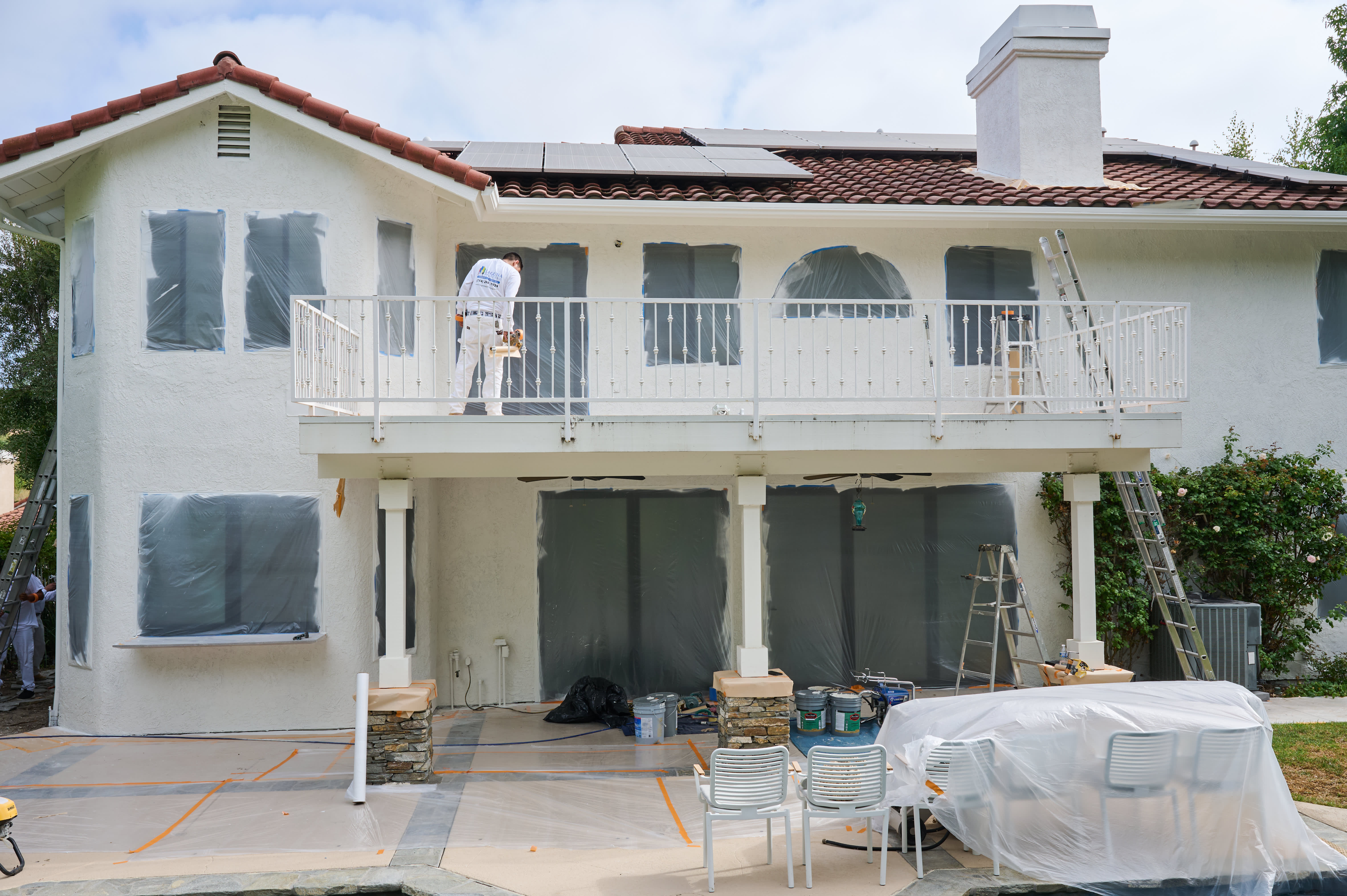
Cover windows and close shutters to keep dust and debris out
Pressure wash the walls at least two or three days before painting begins
Trim bushes or branches that touch the siding
Remove or loosen exterior fixtures like lights
How often you should repaint your home depends heavily on the climate in your area and the type of siding or trim that needs protecting. While estimates range from every three to 15 years, most homes only require painting every six to 10 years. Hot, sunny, or significantly wet conditions can age paint within just a couple of years to the point of at least requiring touch-up work.
Maintaining the paint on wooden siding and trim is especially crucial to avoid expensive repair or replacement work resulting from water intrusion. Small cracks in paint can quickly allow water to get into the material and cause damage.
Inspect your home's exterior paint every two years regardless of the type of siding, perform touch-up work if necessary, and consider repainting when many paint cracks, bubbling, or significant fading appear.
Painting your home represents a significant investment. However, the task is essential to avoid more costly damage down the road. While justifying the cost of the work is relatively easy, fitting the job into a budget can be more of a challenge. Fortunately, there are several things you can do to help manage costs.
Work with a pro: Professional painters get the best deals on paint, saving you money on the supplies and ensuring that your home gets a high-quality, even paint job done the first time.
Get multiple quotes: It’s wise to get at least three quotes from reputable companies to find the best deal.
DIY the prep work: If you’re not looking to DIY the whole project, you can still save money by doing things like cleaning the siding thoroughly and sanding away bubbling or flakey areas beforehand.
Maintain your siding: Keep the exterior of your home clean and in good condition to reduce the number (and cost) of repairs your pro has to do before painting.
Bundle home improvement jobs: Instead of painting the exterior of your house now and the interior six months later, consider doing it all at once. You could get a big discount by doing the two jobs together.
Review paint brands, colors, and finishes with your pro.
Discuss the prep work and surface treatments required for your project, along with their associated costs.
Review the timeline, start date, weather contingencies, and how the crew will protect other parts of your property.
Confirm if your pro will allow homeowners to take on small preparation tasks (like moving furniture or trimming bushes), which can reduce labor time.
Request a written breakdown of costs before signing a contract.
Home is the most important place on earth, which is why Angi has helped more than 150 million homeowners transform their houses into homes they adore. To help homeowners with their next project, Angi provides readers with the most accurate cost data and upholds strict editorial standards. We’ve surveyed over 30,000 real Angi customers about their project costs to develop the pricing data you see, so you can make the best decisions for you and your home. We pair this data with research from reputable sources, including the U.S. Bureau of Labor Statistics, academic journals, market studies, and interviews with industry experts—all to ensure our prices reflect real-world projects.
Want to help us improve our cost data? Send us a recent project quote to [email protected]. Quotes and personal information will not be shared publicly.
Custom Paint Jobs LLC took our exterior from drab to fab! We couldnt be happier.
 Custom Paint Jobs, LLC
From average costs to expert advice, get all the answers you need to get your job done.
Discover the cost to paint a commercial building exterior, including average prices, key cost factors, and tips to help you budget your next project.

The cost to paint a stucco house depends on its size, the type of paint used, and any required repairs. This guide will help you budget for the painting project.
The cost to paint trim on a house depends on several factors. This informative cost guide will help you budget for your upcoming paint project.
If you’re tired of seeing faded, chipping paint on your house every time you pull into the driveway, it’s time to repaint your home’s exterior. Follow these steps to prepare your home for a flawless exterior paint job.
Wondering who to hire for exterior painting? Learn when to call an exterior house painter, and get expert tips to choose the right contractor.
The best time to paint a home’s exterior depends on where you live. Read this to learn more about when to paint your house.