

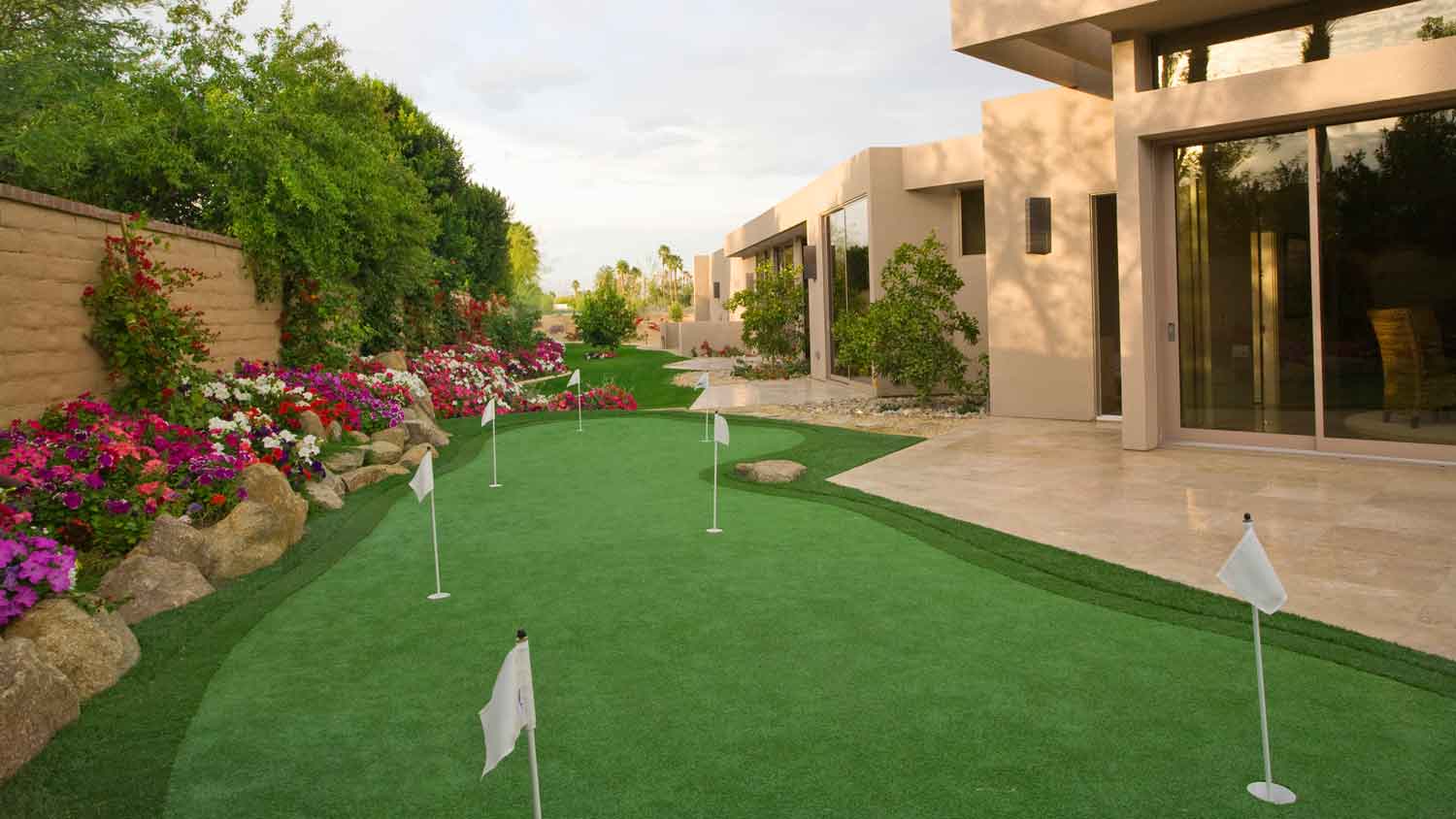
Looking to step up your golf game without leaving your property? This guide details backyard putting green costs to help you decide if this project is worth it.
Lawn service costs depend on your project and location. Check with a local pro for your specific job.


Artificial grass installation costs $3,244 to $8,716 for your project, with materials ranging from $2 to $8 per square foot.
Your turf type, blade shape, and yard accessibility determine labor complexity, and custom cuts for curves or pavers increase your total.
You should budget for excavation at $150 to $600, grass disposal, weed barriers, drainage installation, and grass edging to complete your project.
Hiring a local turf installation professional prevents drainage problems and uneven surfaces, so your artificial grass lasts longer and looks natural.
In 2026, the national average cost for artificial grass installation is $5,783, based on 2,284 verified projects from Angi Pros. Most homeowners pay between $3,244 and $8,716, with materials ranging from $2 to $8 per square foot—driven primarily by turf type, installation area size, and the extent of ground prep required.
Several factors determine the total price of an artificial turf project, from yard size and turf type to labor and ground prep. Understanding each factor before you get quotes helps you budget accurately and avoid surprises. Here is a breakdown of the key cost factors to consider:
| Yard Size (Sq. Ft.) | Average Turf Cost (Materials) in 2026 | Average Labor Cost in 2026 |
|---|---|---|
| 50 | $100–$400 | $200–$450 |
| 100 | $200–$800 | $400–$900 |
| 200 | $400–$1,600 | $800–$1,800 |
| 500 | $1,000–$4,000 | $2,000–$4,500 |
| 1,000 | $2,000–$8,000 | $4,000–$9,000 |
| 2,000 | $4,000–$16,000 | $8,000–$18,000 |
Artificial grass installation costs between $2 to $8 per square foot, though stores typically sell it per roll or linear foot. You'll pay $1 to $3 per square foot more for an artificial grass installation pro to cut curves or fit turf into non-standard-sized spaces, like between individual pavers. Straightforward rectangular yards are the most affordable to install, while irregular shapes and tight spaces like paver gaps add to your labor costs.
There are three main types of artificial grass, and the type you choose is one of the biggest drivers of your material cost. Selecting a turf that matches your traffic level and use case helps you avoid premature wear and costly replacements. Here is how the three main types compare:
| Artificial Grass Type | Cost per Sq. Ft. in 2026 |
|---|---|
| Nylon | $5–$8 per square foot |
| Polypropylene | $2–$5 per square foot |
| Polyethylene | $2–$7 per square foot |
The brand of artificial grass you choose can significantly affect your per-square-foot material cost, with high-end brands running several dollars more than common store brands. Mid-range and budget brands offer solid performance for most residential yards, while premium brands are better suited to specialized or high-visibility applications. Here is how popular brands compare on price:
| Brand | Cost per Sq. Ft. in 2026 |
|---|---|
| EasyTurf | $1.80 |
| Petgrow | $2–$3 |
| SunVilla | $3–$4 |
| SYNLawn | $5.50–$7.50 |
| ForeverLawn | $4.50–$9.50 |
| ProGreen | $4.50–$11.50 |
| Artificial Grass Blade Shape | Characteristics |
|---|---|
| V-Shaped | Highly durable and best for high-traffic areas |
| C-Shaped | Long-lasting and durable with a shiny appearance |
| U-Shaped | Feels like natural grass and is best for light or medium-traffic areas |
| S-Shaped | Very realistic looking and suitable for high-traffic areas |
| W-Shaped | Heat-resistant and durable |
| Seven stem | Considered to be the most attractive option and is best for high-traffic areas |
| Diamond | Soft texture and is best for medium to high-traffic |
| Omega | Realistic looking and feeling to natural grass |
Turf blades come in different shapes that mimic natural grass. Some are softer, which feels great on the feet, while others are stiffer and more durable. You can expect to spend more on highly durable, heat-resistant blade types (like “W”-shaped blades) than you would on softer, less durable blades (like “S”-shaped blades).

Installing a base material is essential to avoid wrinkles, bumps, and potential flooding in your artificial turf, and it costs $1.20 to $2.25 per square foot. The right subbase depends on your soil type, drainage needs, and local climate. Here is a breakdown of common subbase options and their costs:
| Artificial Grass Subbase | Average Cost per Sq. Ft. in 2026 |
|---|---|
| Crushed miscellaneous base (CMB) | $0.50–$2 |
| Class II road base | $0.35–$1.80 |
| Decomposed granite | $1.20–$2.25 |
Infill protects your artificial grass from the sun, provides cushioning underfoot, and keeps the blades upright, costing $0.30 to $1.75 per pound. You'll need about 1 pound of infill per square foot of artificial turf, so your infill budget scales directly with your yard size. Here is how common infill types compare on cost:
| Artificial Grass Infill Types | Average Cost per Pound in 2026 |
|---|---|
| Silica sand | $0.30 |
| Crumb rubber | $1.75 |
| Zeolite | $1.15 |
| Acrylic coated sand | $1 |
Labor costs range between $4 to $9 per square foot, depending on the size of the yard and the amount of excavation needed. Straightforward installs on flat, accessible ground fall toward the lower end, while complex jobs with uneven terrain or tight spaces push costs higher. Getting multiple quotes from installers helps you understand what's driving labor costs for your specific yard.
Prepping for artificial grass installation starts with excavating the yard to level the ground, which costs $50 to $200 per cubic yard and gives your lawn a clean, even base. Cleanup after installation—including disposing of old dirt and grass—costs between $8 to $25 per cubic yard. If the organic material can stay on your property rather than being hauled away, that disposal cost drops to an average of $1 to $15 per cubic yard.
Where you install artificial grass directly affects your total cost, since some locations require specialized materials and tools that a standard backyard install does not. Rooftops, stairways, pool areas, and concrete surfaces all carry higher installation costs than a typical backyard. If your project involves one of these locations, ask your installer for a site-specific quote before finalizing your budget.
Artificial grass lasts 10 to 20 years with very little maintenance, but there are some ongoing costs you'll incur to keep it in good shape. Routine upkeep is minimal compared to natural grass, though repairs, infill replacement, and periodic cleaning do add up over time. Here is what to expect for ongoing costs:
| Type | Cost |
|---|---|
| Maintenance and cleaning | $0.25–$0.35 per sq. ft. |
| Repairs or replacement | $2–10 per sq. ft. |
| Infill replacement | $0.30–$1.75 per lb. |
Calculations are based on a small- to -medium-sized turf installation, which is 200 square feet. We converted these dimensions to 3 cubic yards. Calculations rounded to the nearest whole number.
The size of the area you're installing artificial grass on is a large contributing factor to your overall cost—the more yards you turf, the more materials and labor time you will use. Another factor that impacts the price you pay is the turf itself—factors like brand, shape, and quality vary and could increase or decrease your price. Other considerations include:
The shape and accessibility of the area
What's installed underneath the turf
The infill you choose
Overall labor costs
Landscaping requirements
Speaking with a local turf installation pro can help you with a personalized quote for your specific wants and needs and can even help direct you to the turf type that would be best for your lawn.
| Cost Factor | Size | Price Range |
|---|---|---|
| Artificial Turf Materials | 200 sq. ft. | $400–$1,600 |
| Artificial Turf Installation Labor | 200 sq. ft. | $600–$1,800 |
| Infill Materials | 200 sq. ft. | $50–$350 |
| Excavation Yard Prep | 3 cubic yards | $150–$600 |
| Grass Disposal | 3 cubic yards | $24–$75 |
| Total | $1,224–$1,425 | |
| Total Per Square Foot | $6–$22 |

For the best longevity and appearance, most artificial grass projects require add-ons beyond the turf itself, and budgeting for these upfront prevents surprises. The most common add-ons range from site prep services to drainage and edging work. Some common add-ons include:
Grass removal: $1 to $2.75 per sq. ft.
Tree removal: $200 to $2,000
Irrigation: $2,400 to $4,200
Drainage installation: $2,100 to $7,000
Weed barrier: $0.40 to $0.80 per sq. ft.
Grass edging: $1 to $5 per linear foot
Yard regrading: $1,000 to $3,300

A few smart choices before and during your project can meaningfully reduce your artificial turf costs. Here are some tips that can save you money on artificial turf costs.
DIY the prep work: By handling prep yourself, you may be able to bring down labor costs by as much as $3 to $5 per square foot. Communicate with your installer first to confirm you're prepping correctly—clearing the top 2 inches of soil, removing weeds, and adding gravel to level the surface are all tasks most homeowners can handle.
Choose budget-friendly materials: Budget-friendly turf types can lead to higher long-term maintenance costs, but choosing more affordable materials in low-traffic areas is a practical way to save. Skip high-end brands and look for affordable manufacturers with strong ratings for your turf, subbase, infill, and edging.
Use recycled or reclaimed turf: Since turf is essentially plastic, it can be recycled and reclaimed with ease. Opting for recycled turf instead of brand-new turf is one of the most effective ways to reduce your overall project cost.
It costs between $2,000 and $4,000 to install artificial grass yourself. If you’re going the DIY route, expect to pay $685 for tools and materials, not including the cost of the turf.
Flooding, water damage, and misshapen turf from DIY installation all lead to costly repairs that will make you wish you had hired a pro with the proper equipment. Consider hiring a local turf installation pro for $3 to $9 per square foot for the best results.
DIY artificial grass installation can lead to inconvenient and costly mistakes. Here’s why it’s best to hire a pro for the job:
Professionals know how to prevent uneven surfaces, drainage issues, and premature wear.
DIY installation can lead to wrinkles, poor drainage, and premature damage, all of which can cost thousands to fix.
Reputable installers offer warranties for added protection and peace of mind.
Professionally installed artificial grass looks more natural, lasts longer, and can increase your property value.
If you want to assist your pro, consider taking on smaller tasks like:
Removing weeds, shrubs, and debris from the area before installation
Assisting with simple landscaping tasks around the work area
Organizing tools, turf rolls, and infill materials for your installer
Arranging furniture and outdoor decor once the turf is in place
Discuss with your pro which turf brand, base material, and infill best fit your budget.
Provide your pro with the measurements, shape, and layout of your yard.
Ask your pro about the prep work, clean up, and permits required for your project.
Ask about additional services, like irrigation system installation, that can be bundled with your project.
Home is the most important place on earth, which is why Angi has helped more than 150 million homeowners transform their houses into homes they adore. To help homeowners with their next project, Angi provides readers with the most accurate cost data and upholds strict editorial standards. We’ve surveyed thousands of real Angi customers about their project costs to develop the pricing data you see, so you can make the best decisions for you and your home. We pair this data with research from reputable sources, including the U.S. Bureau of Labor Statistics, academic journals, market studies, and interviews with industry experts—all to ensure our prices reflect real-world projects.
Want to help us improve our cost data? Send us a recent project quote to [email protected]. Quotes and personal information will not be shared publicly.
D1 Roofing delivers outstanding service from beginning to end, backed by a strong warranty and expert teams. I highly recommend them for their excellence in meeting and surpassing expectations with unmatched communication. Choosing D1 Roofing was flawless decision
 Division 1 Roofing LLC
We had our houses windows and back door replace this summer by Window Depot USA of Central. He gave us grate advise and saved my family lots money. The team did a fantastic job with installation. If you need help, they sure get job done right!
 Window Depot USA of Central Ohio
Wonderful. I am going to have them remove and replace my driveway in the spring.
 All Star Paving and Sealing
We were having 2”x 2” tile installed . There was a small installation error and the new additional replacement tile was from a different lot and the colors didn’t match. Joe assured us that he would rectify everything , which he did without hesitation. We decided to go with the 18” x 36” tile...
 CarifaTile
We had a 20+ year old landscape lighting system that needed replacement. Midwest Lightscapes worked with us to design a much improved lighting system, lighting the exterior of the house and the back yard. Installation of the 45 light system took one and one-half days, and went very smoothly....
 Midwest Lightscapes
Did an amazing job transforming my yard. Also installed sod in places, would recommend to everyone.
 Cardinal Landscaping & Construction LLC
They show up and they did take us on as a client which seems to be a problem with other lawn care providers. We have multiple properties and this one was located close to downtown and no one really wants to mess with it.
The worker came out when he was supposed to come. He informed me he would honor the Angie's List deal, but would not do any more work for me since my son in law owns lawn care company as well, even though they do not do the same type of work. He said he did not feel comfortable giving me...
 Bello Giardino LLC
E & L Lawn Care was super. They were very responsive before and after service. They were efficient and were able to complete the job within 1 day. I have had concern about one section of sod - the owner was pro-active and did a visit to evaluate. I have no doubt they will stand behind...
 E&L lawn care
From average costs to expert advice, get all the answers you need to get your job done.
Looking to step up your golf game without leaving your property? This guide details backyard putting green costs to help you decide if this project is worth it.
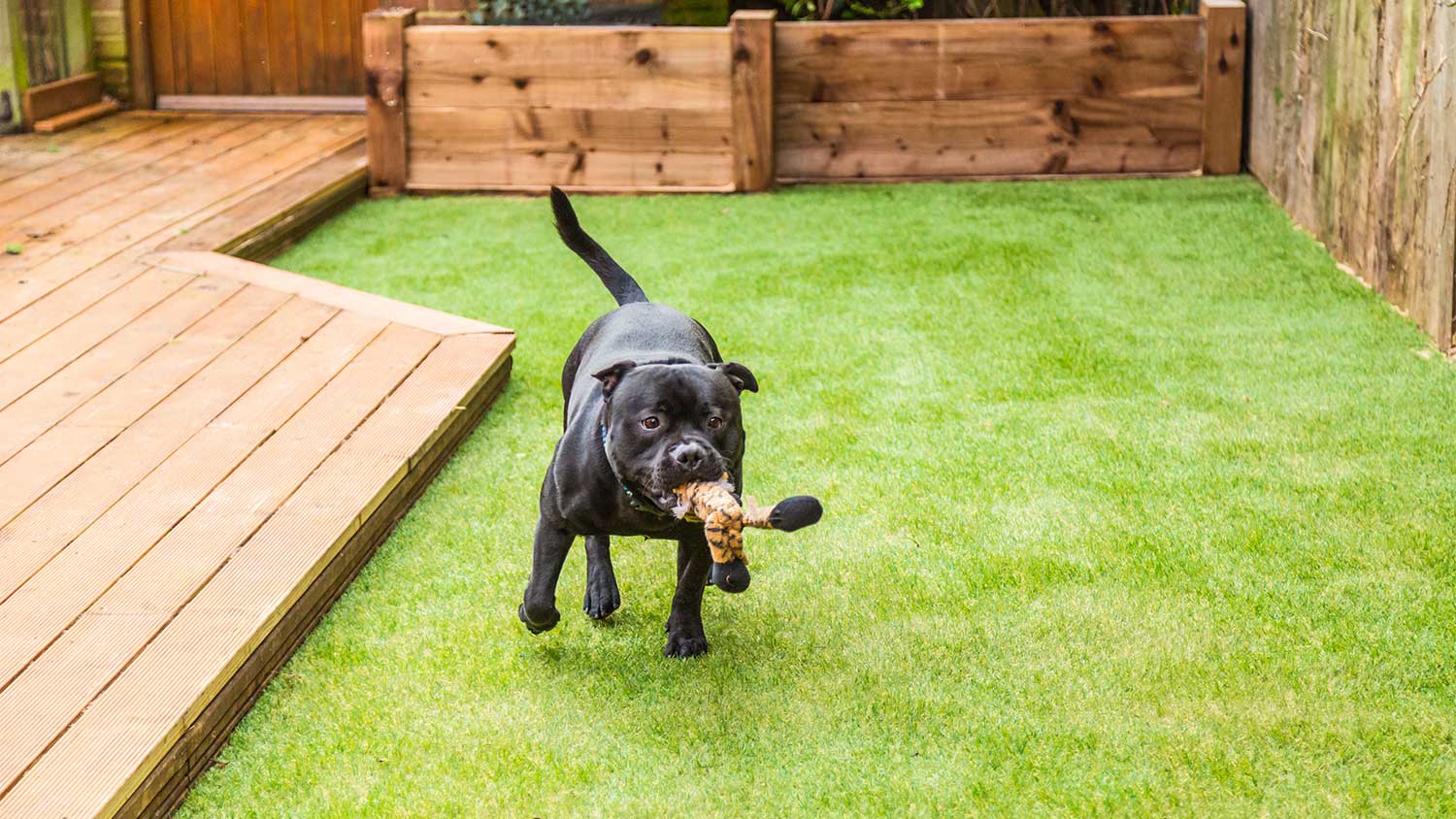
Wondering what’s the difference between artificial grass vs. turf and which one’s right for you? Get the pros and cons of each one here.
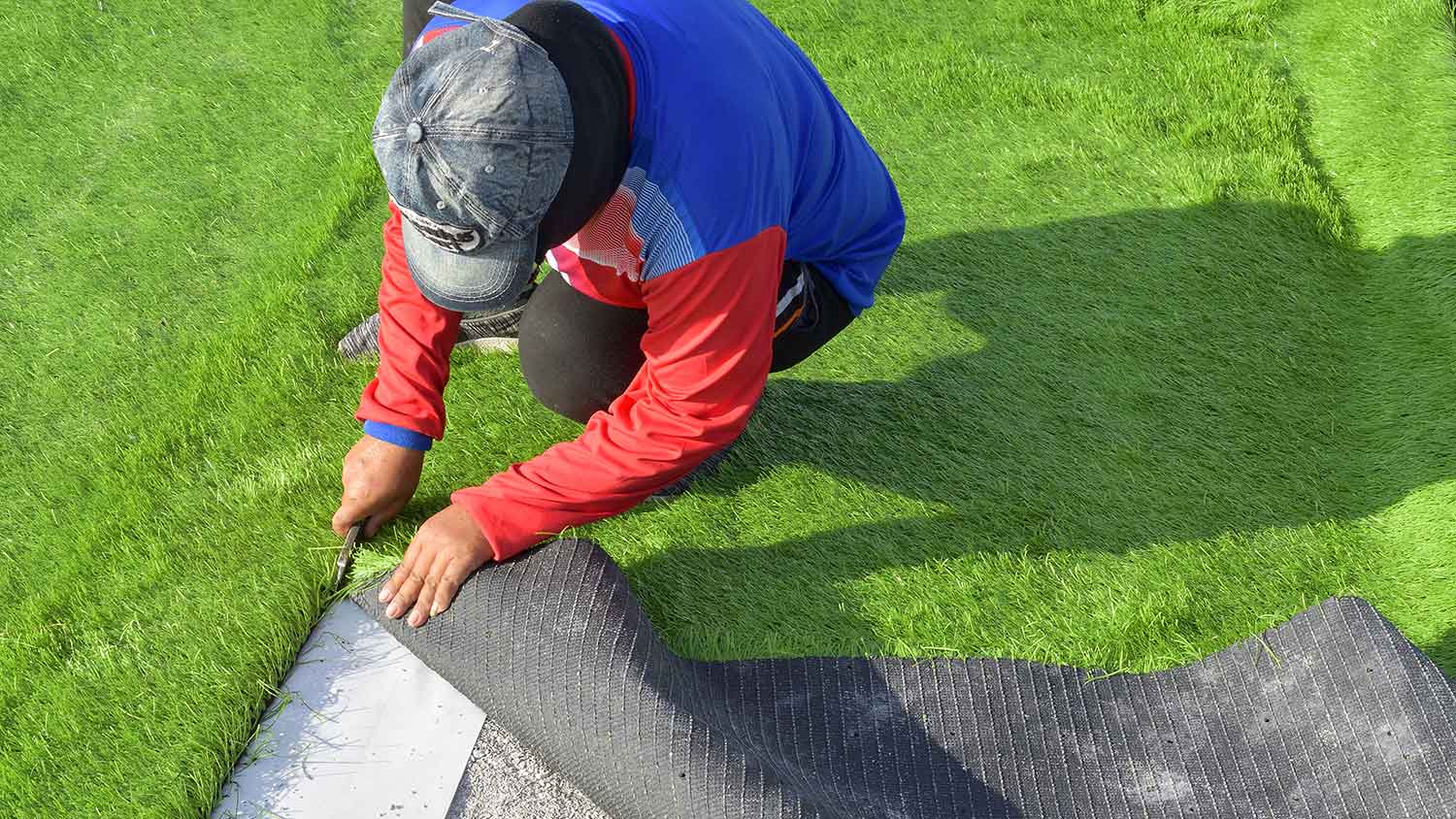
Learn how to hire an artificial grass installer with tips on finding qualified pros, questions to ask, and what to expect for your synthetic turf project.
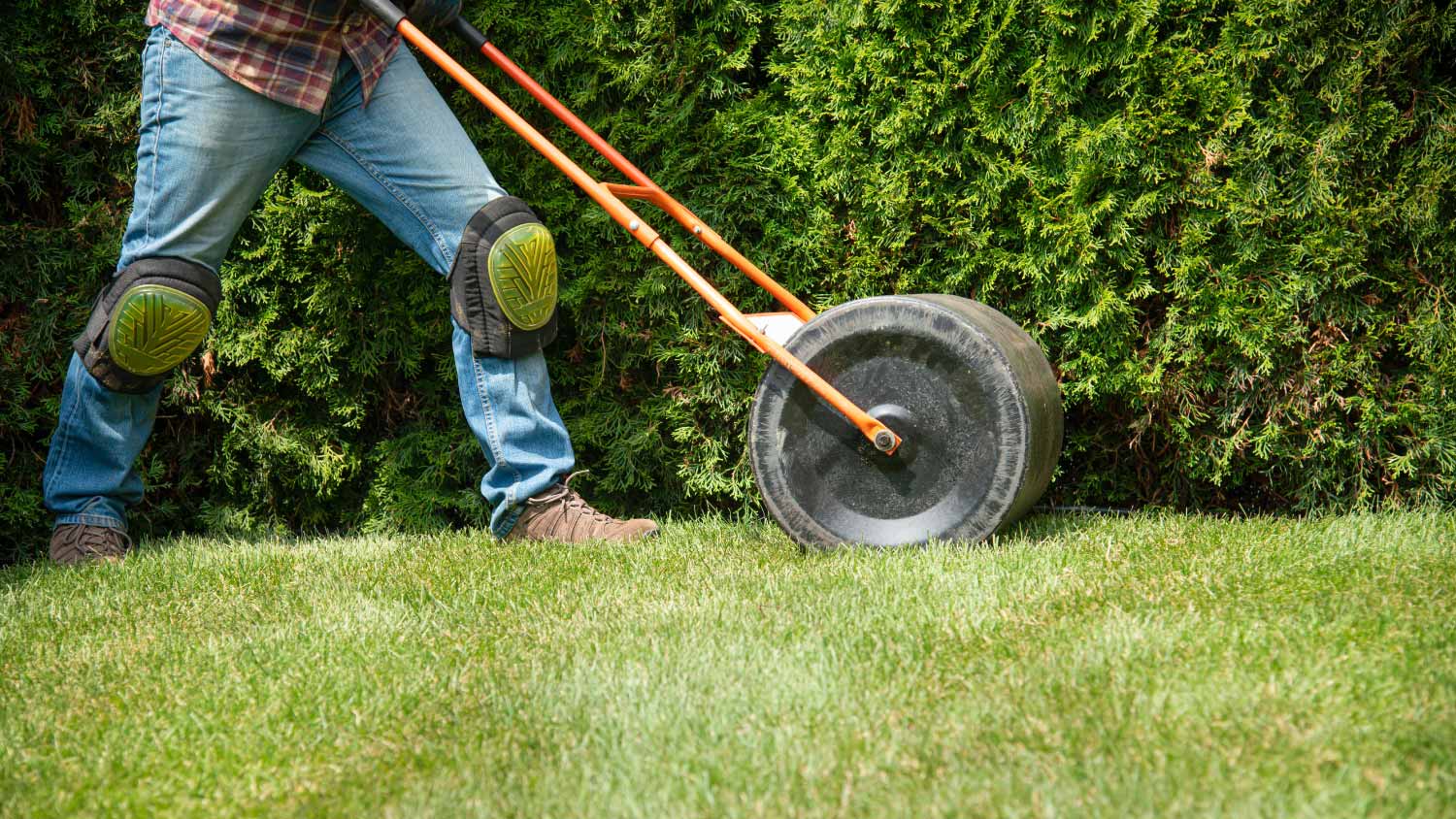
Looking to install synthetic grass for a putting green or play area? Learn what artificial turf questions you’ll need to discuss with your professional installer before you get started.
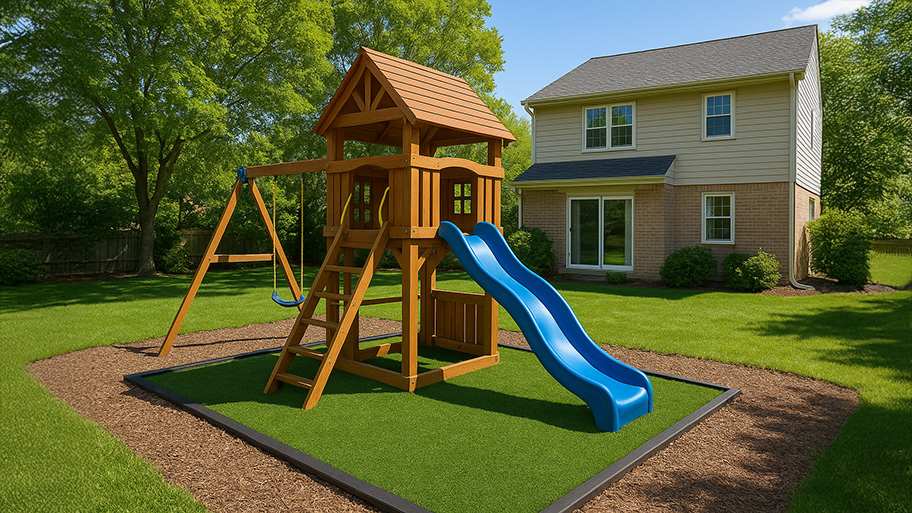
Artificial grass can enhance your home’s curb appeal with very little upkeep. Learn how to choose the artificial grass that’s right for your yard.
Wondering who to hire for artificial grass installation? Compare turf installers and landscapers, see how pros work, and choose your best fit.