

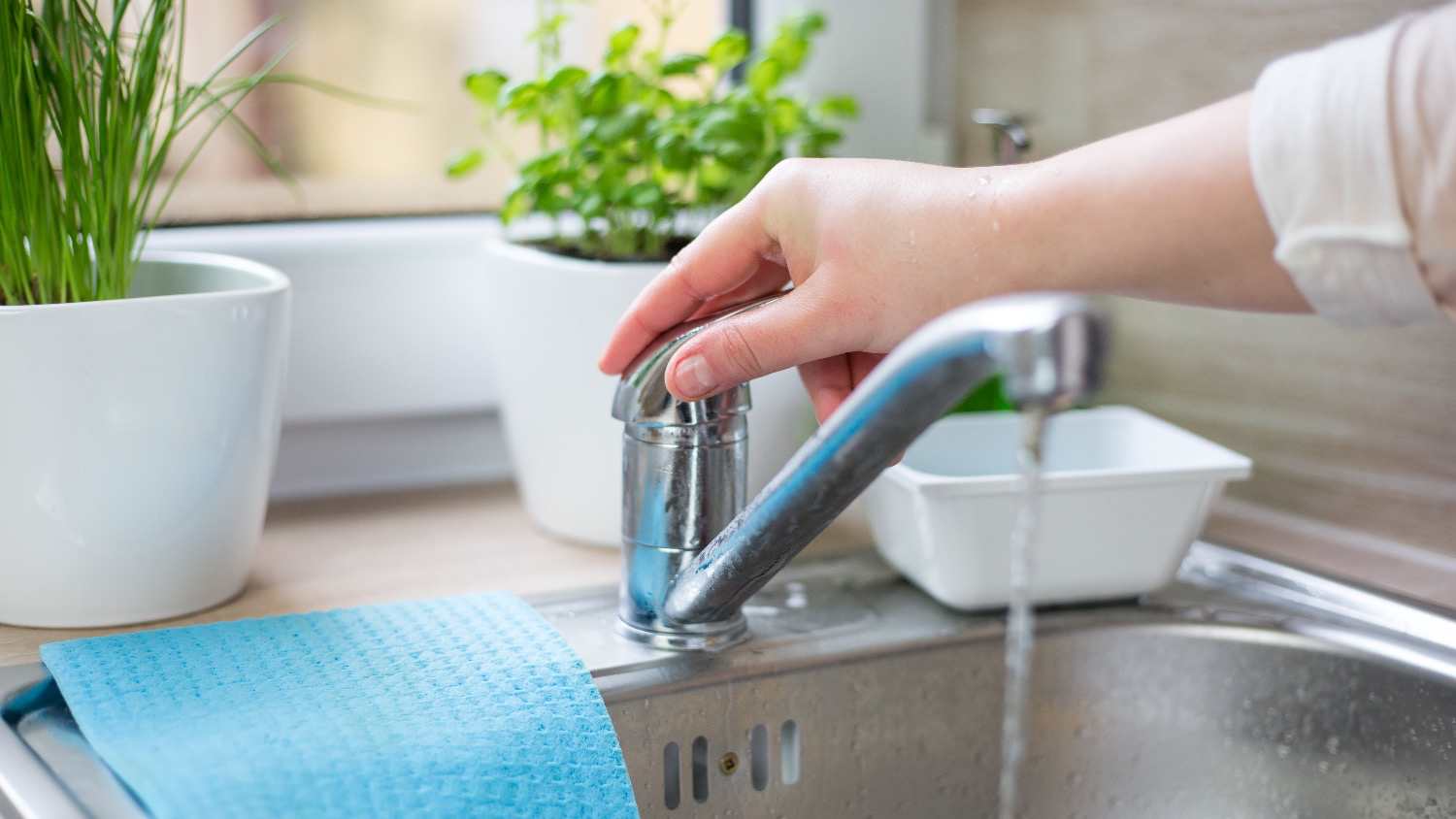
A burst pipe is a homeowner’s worst nightmare—but you can get ahead of the potential expense. This guide will help you budget for burst pipe repair costs.
Plumbing costs depend on your project and location. Check with a local pro for your specific job.

Pipe leak repairs cost $150 to $4,700, depending on your leak type, pipe location, and access.
Your pipe material and age affect repair difficulty, with cast iron harder to work with than PVC.
Budget for diagnostic visits, drywall, flooring, and mold cleanup, which can add $150 to $2,300.
Hiring a local plumbing repair professional fixes the cause, protects your home from water damage, and avoids repeat repairs.
In the event of a plumbing emergency, it is critical to know the location of your water main shut-off valve in case you need to quickly stop water from flowing into your home. If you are unsure, a pro can help you locate the valve and show you how to operate it.

In 2026, the national average cost for pipe leak repairs is $500. Most homeowners spend between $250 and $850, with the range determined by the type and location of the leak, the pipe material, and the accessibility of the damaged section. For more complex repairs behind walls or underground, costs can climb higher, and you may also need to budget for related work like repairs to flooring and drywall and mold cleanup.
The cost to fix a leaking pipe depends on several variables, including the type and location of the leak, the pipe material, and local labor rates. Understanding each factor helps you budget accurately for plumbing repair costs before a pro arrives.
Shaddai Plumbing team is great! They are very professional, they keep their word, they complete job without delays. Great quality. We had to replace old water pipes across 2-story home and their service was great. We asked to add additional water switches to be able to switch hot/cold water on and off in separate parts of home - and they did it. Now if it will be leak or other problem - we can switch off kitchen area, or second floor without impacting other parts of our home. Highly recommended!
The type of leak is the single biggest cost driver, with clog-related leaks on the lower end at $150 to $300 and waste line repairs reaching $150 to $4,700. Water line leaks fall in the middle, typically costing $190 to $1,500 or more to repair. Burst pipe repair, which costs $150 to $250 per linear foot to fix, is among the most expensive scenarios, with a typical job running $400 to $1,500 plus an additional $1,000 to $2,000 for water damage cleanup.

The types of pipes in your home influence repair difficulty and cost, with prices ranging from $0.40 and $20 per linear foot. Each material carries its own risk for plumbing problems. Newer homes typically use cost-effective plastic-based piping, while older homes may have copper, galvanized, or cast iron pipes that can be harder and more expensive to work with.
Costs vary significantly by pipe material, as the breakdown below shows:
| Pipe Type | Cost per Linear Foot in 2026 |
|---|---|
| Chlorinated polyvinyl chloride (CPVC) | $2–$8 |
| Cross-linked polyethylene (PEX) | $0.40–$2 |
| Polyvinyl Chloride (PVC) | $0.50–$5 |
| Polypropylene (PP) | $1–$10 |
| Galvanized | $3–$8 |
| Copper | $2–$10 |
| Cast Iron | $10–$20 |
CPVC is an affordable option that can last 50 to 70 years. You can use it for hot and cold water, so it's popular for water lines.
PEX is another highly versatile plastic. It's ideal because it doesn't corrode like metal pipes, resists scale buildup, and is compatible with CPVC. This type lasts 80 to 100 years.
PVC is lightweight, affordable, and easy to work with. Plumbers often use it for sewer plumbing in new construction. PP is a lightweight, durable material that's comparable to PVC.
Galvanized pipes have zinc coatings and last 50 years. If you live in an older home built before the 1940s, you may have galvanized pipes. The downside is that these can corrode over time, so keep an eye on your water quality.
Copper pipes last 40 to 50 years, and plumbers often use them for water supply lines.
Cast iron pipes are common in homes built before the 1960s. They last 50 years, although they can be susceptible to corrosion, which can lead to costly repairs or replacement.
Older pipes are more prone to corrosion, deterioration, and failure, making age a meaningful cost factor in pipe leak repairs. If your home dates to the pre-1940s era, you may face common plumbing problems in older homes and could need to consider a full plumbing system replacement rather than a targeted repair.
An exposed pipe in a crawl space or basement costs $150 to fix, while a pipe inside a wall runs $150 to $350 or more, a pipe behind a kitchen cabinet costs $500, and a ceiling pipe can reach $700 to $2,500. Harder-to-reach pipes require more labor, which raises the price.
These costs are for fixing the pipe only, and you’ll need to account separately for drywall repair.
Labor is a significant portion of any pipe leak repair bill, with plumbers charging $45 to $200 per hour and a minimum service fee of $50 to $100. If you need urgent after-hours help, emergency plumbers cost 1.5 to 3 times more than standard rates.
Where you live affects what you pay, with costs in different cities ranging from $150 to $750. Contractors in high-cost cities and coastal areas charge more than those in lower-cost regions.
The following table outlines the varying costs in some U.S. cities:
| City | Average Cost in 2026 |
|---|---|
| Austin, Texas | $175–$450 |
| Boston, Massachusetts | $200–$550 |
| Cincinnati, Ohio | $175–$450 |
| Los Angeles, California | $200–$600 |
| New York, New York | $200–$525 |
| Orlando, Florida | $150–$375 |
| San Francisco, California | $200–$600 |
| Seattle, Washington | $275–$750 |
The type of leak you have is one of the clearest indicators of what you'll spend, and understanding the differences can help you anticipate how much it'll cost to replace plumbing pipes or make targeted repairs.
A small, accessible water line leak costs around $190 to fix, while a main water line leak repair costs $340 to $1,500, or $100 to $200 per linear foot, depending on severity. A more involved repair that includes draining the system and installing a new shut-off valve runs $700, and excavation adds $40 to $200 per cubic yard for dirt removal. Landscaping restoration after a main line repair or replacement can range from $300 to $16,000, so factor that into your total budget.
Repairing a clog or damaged PVC pipe for interior drain lines near your sink or shower costs $150, rising to $300 for a severe clog. The cost of repairing your sewer line is considerably higher at $1,250 to $4,700.

Heating line leak repairs cost $150 to $650, or $6 to $7 per foot for standard gas line work. Furnace gas line repairs run $20 to $25 per linear foot, while water heater gas lines cost $10 to $18 per linear foot. Budget for potential add-ons like drywall repair or excavation, which can increase your total.

Fixing a leaking pipe often involves costs beyond the pipe repair itself, including diagnostic fees, hardware replacement, and damage remediation. Knowing what to expect from these additional expenses helps you avoid budget surprises.
| Additional Repairs | Average Cost in 2026 |
|---|---|
| Diagnostic fees | $80–$100 |
| New plumbing installation | $2,000–$15,000 |
| Faucet replacement | $170–$2,800 |
| Water pressure regulator replacement | $250–$450 |
| Plumbing stack replacement | $1,500–$4,000 |
| Well pump replacement | $940–$2,620 |
| Drywall repairs | $50–$75 per square foot |
| Flooring repairs | $200–$580 |
Plumbers charge $80 to $100 to diagnose a leaky pipe, and that fee is worth paying even when you think you know the source. Leaks often hide in places you cannot easily see, and a trained plumber can identify signs of damage you might overlook on your own.
When repairs are not possible or practical, new plumbing installation becomes necessary, with water main replacement costing $610 to $2,600, or $50 to $250 per linear foot. Full home repiping runs $2,000 to $15,000 and makes the most sense when your plumbing needs constant repairs, you are planning major renovations, or your home has hazardous materials such as lead pipes in pre-1920s homes or corrosion-prone galvanized pipes in pre-1940s homes.
In areas with acidic or resistive soil, corrosion-related leaks may also require soil replacement as part of the project.
Replacing a bathroom faucet costs $170 to $360, though luxury materials can push that figure to $2,800. Replacing a kitchen faucet costs $160 to $360 for materials and labor, with luxury installations reaching $1,200 or more.
A faulty water pressure regulator identified during a pipe leak inspection will need to be replaced, costing $250 to $450 for most single-family homes.
Replacing your plumbing stack costs $1,500 to $4,000, with prices on the higher end when your home uses expensive materials like copper or cast iron. The plumbing stack is the vertical pipe connecting your fixtures to the sewer system, and leaks from it can cause extensive wall damage and pose a health risk due to bacteria in wastewater.
Repairing a well pump costs $350 to $1,500, but if the pump is beyond repair, a full replacement runs $940 to $2,620. Deep-well projects cost substantially more than shallow pump installations, so factor that into your estimate if your well runs deep.
Drywall repair costs $50 to $75 per square foot, with a typical pipe leak job running $250 to $750 and a full ceiling repair costing $320 to $1,300. Water-damaged drywall adds labor at $60 to $90 per hour plus materials at $0.40 to $0.65 per square foot. If mold is present, costs climb significantly, with the average cost of mold remediation reaching $2,300.
Repairing your floor costs $200 to $580 on average, rising to $300 to $2,500 if the subfloor is damaged and up to $1,000 to $5,000 if rotting joists need attention. Material choice also affects the total: hardwood and bamboo run $5 to $25 per square foot, laminate costs $2 to $8 per square foot, and vinyl costs $2 to $7 per square foot.

A straightforward fix like replacing a damaged pipe under the kitchen sink can cost as little as $5 for a 10-foot PVC pipe, though that low figure only applies when no water damage to cabinets or flooring requires additional repair. Homeowners with plumbing experience and easy access to the leak may be able to handle the repair themselves, paying only for materials.
However, anything more complex than a simple fix should be handled by a licensed plumber to prevent costly mistakes and to keep your plumbing safe.
Repairing a pipe leak is a deceptively difficult task that should be left to a local plumber near you. They will address the underlying cause of the leak, preventing a recurrence that could lead to water damage. Unless the leak has a simple cause and fix, it's better to spend the money on a professional now than on major repairs later.
Hiring a professional plumber for your pipe leak is paramount. Here are just a few of the benefits you'll get:
They can safely tackle all major pipe repairs, including your water main, sewer lines, and heating lines.
You'll save time and further damage by addressing the underlying cause of the leak.
Plumbers come equipped with all the necessary tools to handle more complex pipe repair issues.
DIY mistakes can lead to additional water damage to your property.
There are some tasks that homeowners can do when prepping for professional pipe leak repairs:
Shut off the water valves.
Measure the amount of PVC pipe you'll need.
Inspect for water damage.
Clear the areas your pro will need to access.
When you notice a leaky pipe, it can be tempting to go with the first emergency plumber near you who picks up the phone. But assuming you have the time to get a few quotes, we recommend getting estimates from at least three plumbers. This makes it easier to choose the right contractor based on your budget and timeline.
It also gives you an opportunity to ask the plumber a few important questions before signing on the dotted line. Here are some questions you should ask a plumber about a pipe leak before asking them to repair it:
Are you licensed and insured?
How long will the repair take, and how soon can you start?
Are there permits required for this level of repair? Who handles the permit process?
Do you have testimonials from recent clients who are happy with their work?
What kind of piping do you recommend we use when replacing the leaky pipe, and how long should it last?
What routine maintenance do you recommend to protect the rest of my pipes?
Discuss all damage to the pipes and surrounding areas to determine the project scope.
Be ready to discuss costs, materials, and anything else you might have questions about.
Determine who is responsible for clean up and disposal.
Home is the most important place on earth, which is why Angi has helped more than 150 million homeowners transform their houses into homes they adore. To help homeowners with their next project, Angi provides readers with the most accurate cost data and upholds strict editorial standards. We extensively research project costs to develop the pricing data you see, so you can make the best decisions for you and your home. We rely on reputable sources, including the U.S. Bureau of Labor Statistics, academic journals, market studies, and interviews with industry experts—all to ensure our prices reflect real-world projects.
Want to help us improve our cost data? Send us a recent project quote to [email protected]. Quotes and personal information will not be shared publicly.
Positive experience. As previously stated, the replacement/repair could not be completed (no fault of the plumbing tech) b/c misinformation was rec?d by property management maintenance. Thanks to the plumbing tech for your efforts. Appreciate you!
 The Waterworks
If you want to pay the most exorbitant prices possible for your job, this is the company for you. “By the job” pricing is a rip-off, at least how these people use it. Every job is plugged into a category and prices are set by category. You might have a job that takes half an hour or one that...
 Benjamin Franklin Plumbing
Cole has been handling plumbing and general contracting for our four properties over the past three years, and he’s always done a great job. Most recently, he installed a sink and countertop in our retail store where none existed before, and it turned out exactly how we needed. He’s...
 ANB Renovations LLC
Matt is a consummate professional. The work turned out to be far more difficult than expected and rather than turn the job down, Matt rose to the occasion and completed a near impossible task. I can not recommend Greene's Plumbing Service more highly. On a scale of 1-5 I would give Matt a...
 Greene's Plumbing Service
Involved an extensive bathroom remodel, including removing tub & installing walk in shower, new drywall, custome tile work to ceiling, plumbing, etc. Overall, job was done on time and on budget. Nick & his team were very professional and had high attention to detail. Quality was great. Highly...
 Stamos Flooring and Remodeling LLC
Awesome company. Had a jacuzzi tub taken out and replaced with huge walk in shower with partial glass enclosure. Onyx to the ceiling with a decorative border, moved plumbing and installed hand held shower, new ceiling, flooring, and paint. Replaced window with glass block. Everything was done...
 Columbus Bath Design
The initial quoted price from a walk-through seemed high, but we discussed that the quote represented worst case scenario (re-wiring to two floors) and we were excited about the opportunity to have the work done in a timely manner with closing for fire safety reasons, etc. When the job was...
Initially, I called the Service People to have a leaking garbage disposal replaced. I had purchased a special deal through Angie's List: $79 for $200-worth of plumbing services. <br /> When I went to schedule the work, the earliest date I could get through Angie's List was after the upcoming...
This company did a very good job on the brick wall and it looks just amazing. The staff was always professional and was practically OCD on how the bricks were stacked and how they were laid. Although it took longer than expected, I am willing to sacrifice time over perfection anyday. The...
 My Handy Mate LLC Improvement & Remodeling
<p>I am so glad we called Rotor-Rooter. I was hesitant to call them because we usually prefer to give business to local providers. But when we had sewage back up in our basement on a Saturday evening, I had a hard time getting a hold of someone, not to mention the high weekend/evening rate...
 Roto-Rooter Plumbing & Water Cleanup
From average costs to expert advice, get all the answers you need to get your job done.
A burst pipe is a homeowner’s worst nightmare—but you can get ahead of the potential expense. This guide will help you budget for burst pipe repair costs.

Under the sink, behind the tub, or through the walls—pipe replacement costs for small projects run the gamut. Here's what to know.
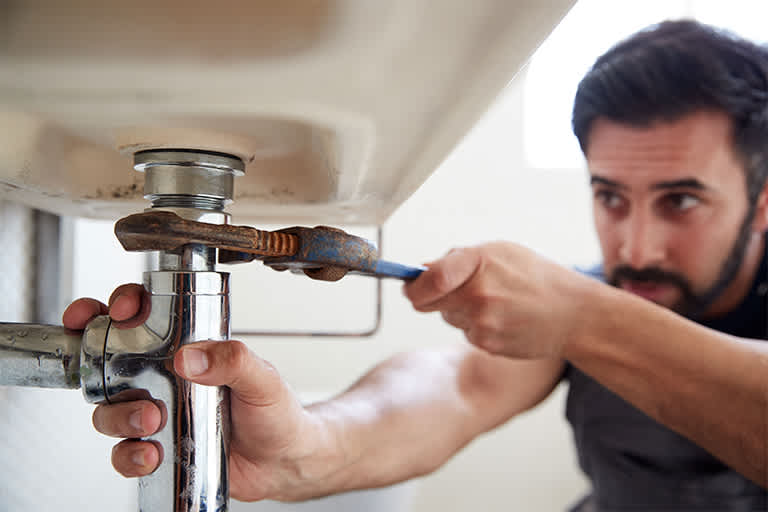
From leaky sinks and drippy faucets to water seeping from the bottom of your toilet, this guide will help you budget for bathroom leak repair costs.
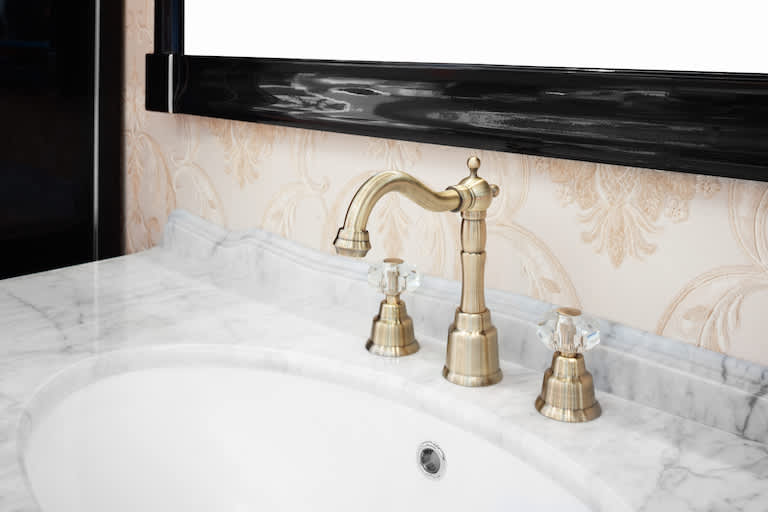
Need to stop a plumbing leak quickly and minimize water damage in your home? Buy yourself some time with these temporary fixes for a leaking pipe.
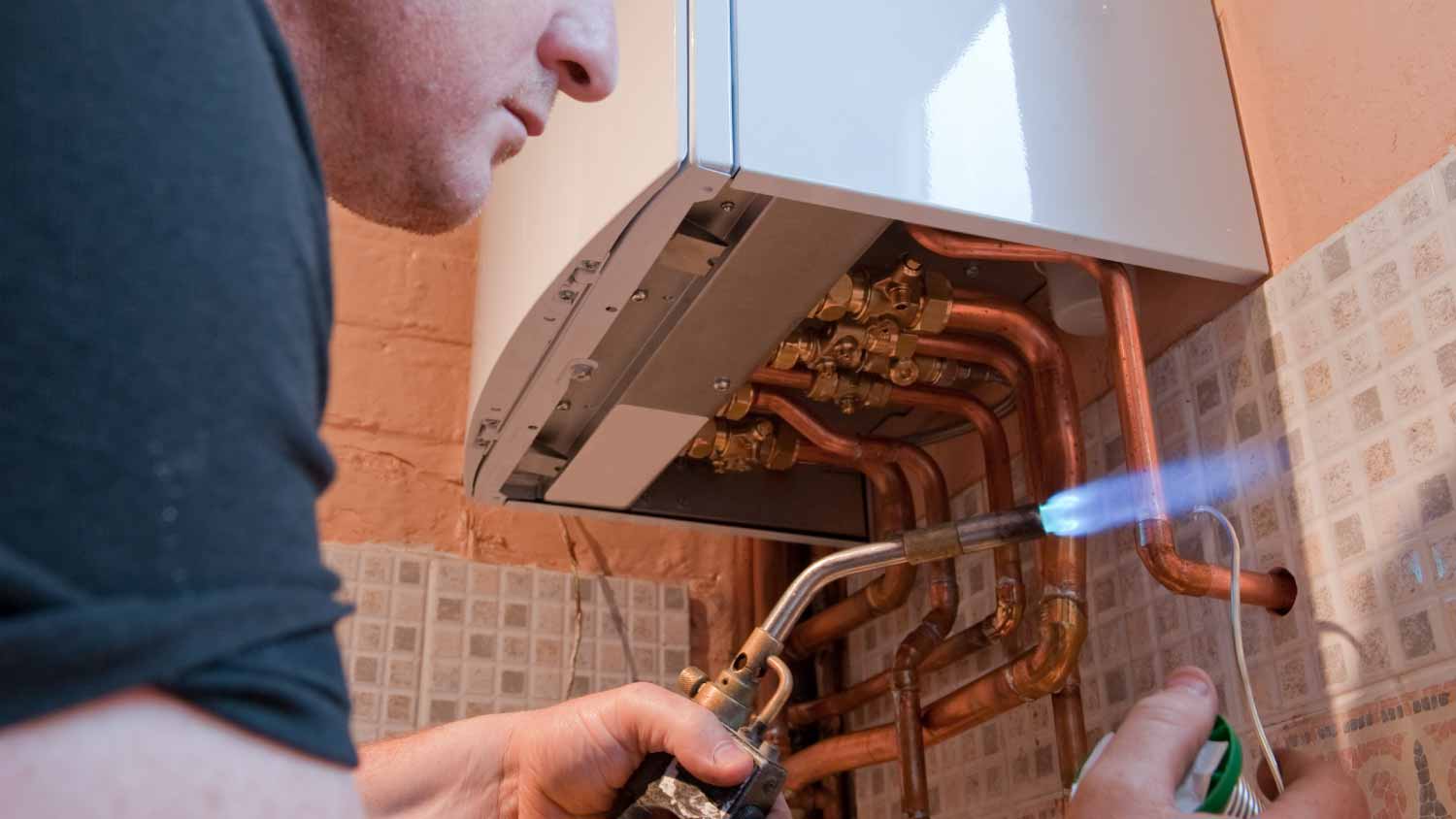
Copper is prone to leaks from corrosion, particularly pinhole leaks. This guide will show you how to fix a copper pipe leak in seven different ways.
Winter can be particularly harsh on your plumbing—from water heater issues to frozen pipes. As the weather gets chilly, use these tips to prepare your home and avoid a costly winter plumbing leak.