

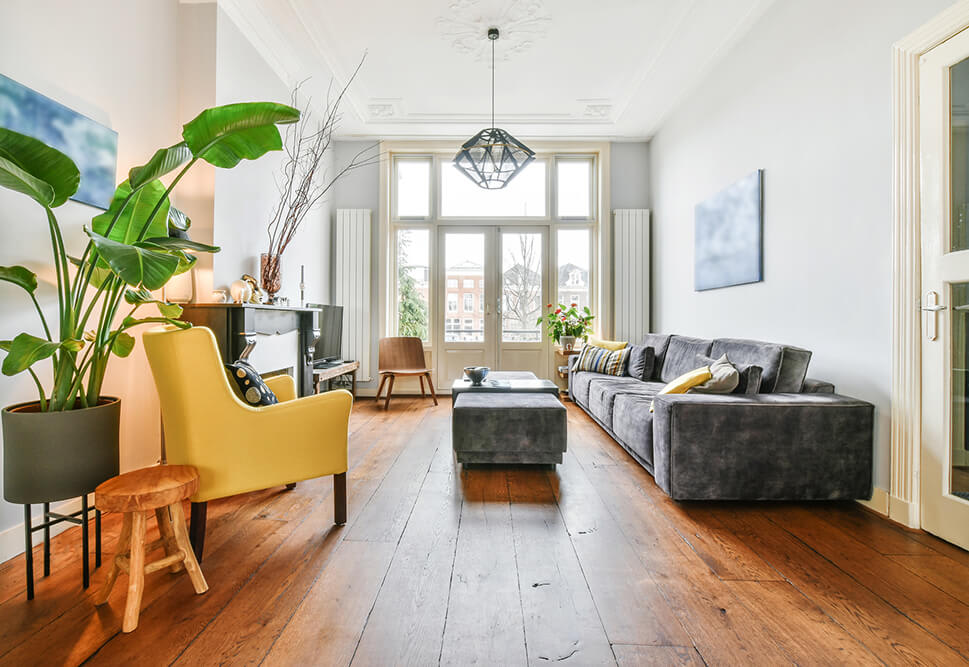
Both materials and labor determine hardwood floor installation costs. This guide breaks down all the prices you need to know before starting your new flooring project.
Hardwood flooring service costs depend on your project and location. Check with a local pro for your specific job.

Hardwood floor repair costs between $482 and $1,708 on average, depending on the type of damage your floors have sustained.
The wood species you have affects your repair costs, with exotic types like Brazilian walnut costing more than maple or oak.
You should budget for add-ons like interior painting, air duct cleaning, protective floor pads, or deep home cleaning to complete your project.
Hiring a local wood floor repair professional ensures your floors look polished and prevents accidental damage to existing boards.
In 2026, the national average hardwood floor repair cost is $1,079, based on 10,984 verified projects from Angi Pros. Most homeowners pay between $482 and $1,708, with the spread driven by the extent of the damage, the repair method used, and the wood species involved.
Several factors affect the cost of repairing a hardwood floor, including the size and type of problem you're addressing. The repair method you need also plays a significant role in your final costs. Understanding these variables upfront helps you set a realistic budget before calling a pro.
The type of problem you're fixing is one of the biggest drivers of hardwood floor repair costs, with prices ranging from $1 per square foot for minor scratches up to $100 per square foot for water damage. Common issues like cupping, gaps, and squeaks fall in the middle of that range. More severe problems — such as rot or extensive water damage — require more labor and materials, pushing costs significantly higher. Here is a breakdown of average costs by problem type:
| Type of Problem | Average Cost per Square Foot in 2026 |
|---|---|
| Uneven | $3–$60 |
| Scratches | $1–$8 |
| Cupping | $1–$8 |
| Mold and mildew | $10–$25 |
| Gaps | $7–$15 |
| Water damage | $8–$100 |
| Squeaky | $10–$50 |
| Rot | $50–$250 |
| Dents | $5–$25 |
Uneven Hardwood Floors: Repairing uneven floors typically ranges from $3 to $60 per square foot, depending on the cause. Common causes include excess moisture, foundation shifting, and poor structural design.
Hardwood Floor Scratches: Scratches normally cost between $1 and $8 per square foot to fix. Minor scratches only require inexpensive wood stain or touch-up markers, but deeper scratches involve sanding and refinishing the area, which costs more.
Hardwood Floor Cupping: Cupping refers to hardwood floors higher around the edges than the center, creating a cup-like effect. It's often caused by a moisture imbalance. Cupping repairs cost between $1 and $8 per square foot.
Mold and Mildew: Removing mold and mildew costs between $10 and $25 per square foot, depending on the extent of the damage. If your mold problem is severe, you may need to replace whole sections of the floor or subfloor, which can significantly increase your costs.
Hardwood Floor Gaps: Commonly caused by fluctuating humidity levels, hardwood floor gaps cost between $7 and $15 per square foot to fix.
Water Damage: Repairing water damage can cost anywhere from $8 to $100 per square foot, depending on the severity. Water damage can cause problems like warping, staining, and mold.
Squeaky Hardwood Floors: Squeaky floors are often caused by gaps between the subfloor and joists or loose boards. Fixing them normally costs between $10 and $50 per square foot.
Rotted Hardwood Floors: If your floors are exposed to moisture for too long, the wood can begin to rot, leading to decay and weakness. Fixing rotted floors ranges from $50 to $250 per square foot.
Dented Hardwood Floors: If you drop something heavy on the floor or move heavy furniture, it can leave a dent. Fixing dented hardwood floors costs between $5 and $25 per square foot.
The size of the damaged area directly affects your repair bill, since hardwood floor repairs are typically priced by the square foot. Larger areas require more materials and labor, so costs scale up accordingly. Getting an accurate square footage measurement before calling a pro helps you get more precise quotes. Here is how costs typically break down by square footage:
| Square Feet | Price Range in 2026 |
|---|---|
| 20 | $100–$500 |
| 50 | $250–$1,250 |
| 100 | $500–$2,500 |
| 150 | $750–$3,750 |
| 200 | $1,000–$5,000 |
| 300 | $1,500–$7,500 |
| 400 | $2,000–$9,500 |
The type of hardwood you have affects repair costs because different wood species vary in price, availability, and difficulty to work with. Common domestic species like maple and red oak are generally more affordable to repair. More expensive and exotic types like Brazilian walnut cost more because replacement boards are pricier and harder to source. Here is how average repair costs compare across common wood species:
| Wood Type | Average Repair Cost per Sq. Ft. in 2026 |
|---|---|
| Maple | $4–$15 |
| Red Oak | $5–$11 |
| White Oak | $5–$12 |
| Hickory | $6–$14 |
| White Ash | $6–$14 |
| Brazilian Walnut | $9–$15 |

The repair method your floors need is a key cost factor, since some approaches are far more labor-intensive and time-consuming than others. Simpler methods like filling and polishing sit at the lower end of the cost spectrum, while refinishing and resurfacing require more work and a higher investment. Matching the right method to your specific damage type helps you avoid overpaying for more than your floors actually need. Here is a breakdown of common repair methods and their costs:
| Repair Method | Cost Range in 2026 |
|---|---|
| Filling | $10–$15 |
| Polishing | $100–$300 |
| Patching | $600–$1,600 |
| Floorboard Replacements | $800–$2,000 |
| Refinishing | $1,100–$2,700 |
| Resurfacing | $1,200–$3,000 |
Filling: Filling involves using a putty-like wood filler to fill minor cracks, gaps, and holes, costing around $10 to $15 for the package. Most homeowners can complete this DIY repair by applying filler, smoothing it out, letting it dry, and sanding the area smooth.
Polishing: Polishing costs between $100 and $300 and helps restore shine to floors in good condition that have lost their luster. The process involves applying specialized polish or buffing compound to smooth out minor scratches and restore the floor's original appearance.
Patching: Patching usually costs between $600 and $1,600, depending on the size of the problem area. This process involves cutting out damaged sections and replacing them with new wood pieces that are sanded and finished to blend with existing flooring.
Floorboard Replacements: Replacing floorboards normally costs between $800 and $2,000 since new boards must match the exact type, size, and thickness of existing boards.
Refinishing: You can expect to pay anywhere from $1,100 to $2,700 to refinish your hardwood floors. This method is used for extensive surface-level damage like scratches and dents.
Resurfacing: Resurfacing costs between $1,200 and $3,000 and addresses deeper damage than refinishing can handle. The process involves deep sanding to remove damaged layers and applying multiple finish coats.
Hiring a local hardwood repair pro typically costs between $65 to $100 per hour, making labor one of the most variable line items in your repair budget. Simple fixes may wrap up in an hour or two, while more extensive damage can take multiple days. Most homeowners end up paying between $330 to $2,400 in total labor for hardwood floor repairs.
When repairing a hardwood floor, you may want to book additional services to further enhance or restore your home's appearance. Bundling related work into the same project window can save time and may reduce overall costs. Common add-ons homeowners pair with hardwood floor repairs include:
Interior painting cost: $1,000-$3,000
Air duct cleaning cost: $270-$500
Protective floor pads cost: $5-$15
Deep home cleaning cost: $200-$400
In many cases, repairing your hardwood floors makes more sense than replacing them. Minor issues like scratches, gaps, or squeaks can often be fixed without tearing up your entire floor.
However, replacement becomes necessary when your floors have extensive water damage, severe rot throughout multiple boards, or structural issues that affect the subfloor. If the damage covers most of your floor area or the wood has deteriorated beyond surface-level problems, replacement may be your only option.
Hiring a hardwood floor installation pro costs about $330 to $2,400, and for anything beyond minor repairs, that investment is well worth it. Minor fixes like small cracks are manageable as DIY projects, but complex work such as resurfacing or floorboard replacement should be left to professionals. Attempting advanced repairs without the right skills risks accidental damage to surrounding boards and a result that falls short of a clean, polished finish.
There are several reasons to hire an expert for hardwood repairs, including:
Preventing accidental damage to your existing floors
Ensure permanent repairs to flooring problems
Get a better-looking, more durable floor repair
Get solutions to multiple floor issues at once
Protection with work warranties
Complex hardwood repairs are better left to the professionals, but there are some smaller repairs and prep work tasks you can do yourself:
Repairing minor cracks with wood filler
Resecuring loose floorboards
Clearing the work area of furniture and other obstacles
Cleaning the area to provide a better view of the floor
There are several ways you can potentially save money on a hardwood floor repair, including:
Completing minor repairs yourself
Calling multiple prospective repair pros to find the best price
Bundling multiple repairs together for a potential discount
Doing prep work yourself, like moving furniture
Scheduling repairs during off-peak seasons, like winter
Shopping around for materials to find the best price
Using reclaimed or leftover materials
Next Steps: Finalize Your Project With a Pro
Talk to your pro about bundling multiple repairs for lower rates
See if it's possible to complete repairs with your existing floor materials, or if you'll need to replace any boards
Make sure you get a thorough diagnosis of the issues you're facing with your floor
Find out what method(s) your pro will use for your repair to ensure your budget is accurate
Talk to your pro about bundling multiple repairs for lower rates
See if it’s possible to complete repairs with your existing floor materials, or if you’ll need to replace any boards
Make sure you get a thorough diagnosis of the issues you’re facing with your floor
Find out what method(s) your pro will use for your repair to ensure your budget is accurate
Home is the most important place on earth, which is why Angi has helped more than 150 million homeowners transform their houses into homes they adore. To help homeowners with their next project, Angi provides readers with the most accurate cost data and upholds strict editorial standards. We’ve surveyed thousands of real Angi customers about their project costs to develop the pricing data you see, so you can make the best decisions for you and your home. We pair this data with research from reputable sources, including the U.S. Bureau of Labor Statistics, academic journals, market studies, and interviews with industry experts—all to ensure our prices reflect real-world projects.
Want to help us improve our cost data? Send us a recent project quote to [email protected]. Quotes and personal information will not be shared publicly.
This company does it right. Firstly, I want to say that Landan was a joy to work with. He was so kind, transparent, and had everything under control. His entire team showed up ready to work and they were all very respectful of the fact that we were in an office space. A little backstory – we...
 Krumlauf Floors
Terrible experience. Walls/trim/floors/cabinets/doors all have drip marks, overspray, etc. Tiling at the fireplace had to be redone by another vendor due to incorrect and shoddy install by Profect. Contractor had his children in our house while he was on site without prior authorization or...
 Profect painting & exteriors
**Would rate a 0 if i could** NEVER USE THIS COMPANY!!!!! They shattered my tv console and dresser, lost a mirror, and never finished the move. The broken furniture cost me over $600 to replace. They left me with 6+ hours of personal labor moving my 1BR apartment, when I was quoted a FULL...
 All My Sons Moving & Storage
Finished Basements Plus was wonderful from beginning to end! First, they came out quickly for an estimate. I had 4 estimates and theirs was by far the best. (2 of the estimates were more than $20K higher than for the exact same work). Beyond their fair pricing, the work was excellent. They...
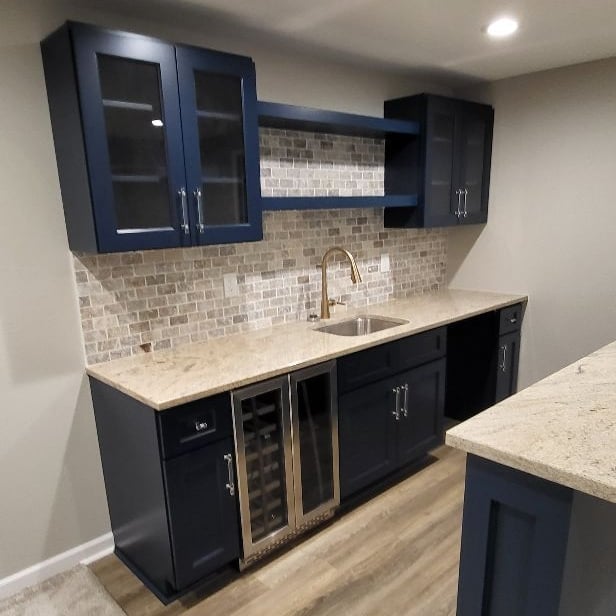 Finished Basements Plus Inc.
AFS was excellent from start to finish. Jess, the sales associate, was fantastic...very knowledgeable and very professional. The installation crew was excellent. I couldn't be more pleased with the process. Best of all, my new floor looks fantastic!
 America's Floor Source
It was wonderful working with Yordy and his team. They were very professional and are experts in what they do. They have completed the work on time, with better quality and with in fairly reasonable price. We just started with backsplash work , but liking his work, we went on to provide...
 Flooring Solutions
We were having 2”x 2” tile installed . There was a small installation error and the new additional replacement tile was from a different lot and the colors didn’t match. Joe assured us that he would rectify everything , which he did without hesitation. We decided to go with the 18” x 36” tile...
 CarifaTile
We hired Jim to replace our hardwood floors with new hardwood. He and his helper Jerry did a fantastic job. Their work ethic is impeccable!! We would highly recommend McColl Floors!
Description says they handle window repair including rotten hardwood - they called me back right away but didnâ t leave a voicemail. I followed up 3 days later and they said they donâ t do that kind of work.
 Window-Gurus
Chaz, the owner, was very responsive and he communicated with us throughout the entire process. The overall cost was in the middle compared to the three estimates we received. The installation crew was very professional. Chaz was considerate enough to send a crew back to our home to repair...
 Unique Hardwood Floor LLC
From average costs to expert advice, get all the answers you need to get your job done.
Both materials and labor determine hardwood floor installation costs. This guide breaks down all the prices you need to know before starting your new flooring project.
Materials and labor determine hardwood floor installation costs in Detroit, MI. Learn the prices you need to know before starting your hardwood project.
It’s impossible to keep floors damage-free over the years. Thankfully, the cost to refinish hardwood floors is far less than the price tag to replace them altogether.
Wondering who to hire to repair hardwood floors? Learn which pros handle repairs, how they work, and how to choose the right contractor.
Before repairing or partially replacing flooring, make sure to discuss these hardwood floor repair questions with a pro.
Learn how to repair hardwood floors—no matter the type of damage. This guide will help you buff out scratches, fill cracks, and get rid of pesky water stains.