

Circuit breakers help protect electrical circuits from overheating, which is especially important inside a home. Let’s go over the basics.
We break down the different types of circuit breakers for your home

Different types of circuit breakers protect your home's electrical system by shutting off power when they detect overloads, short circuits, or ground faults.
Single-pole breakers handle basic circuits in bedrooms and living areas, while double-pole breakers power high-energy appliances like your washing machine or dryer.
GFCI and AFCI breakers provide advanced protection against electrical shock and fire hazards, and dual-function breakers combine both features for your kitchen and laundry room.
Hiring a local electrical professional provides reliable guidance on breaker selection and installation, keeping your home safe with proper circuit protection and panel upgrades.
If you’re unsure of the types of circuit breakers, you’ve come to the right place. The function of circuit breakers is to shut off overloaded circuits before they become a serious hazard for electrical shocks, fires, or damage due to power surges. This guide will walk you through the most common types of circuit breakers, their features, and when to hire a professional electrician to install one.


Single-pole circuit breakers are the most common type of circuit breakers. They’re used in residential electrical panels to protect electrical circuits from overloads and short circuits. These are referred to as “single-pole” because they are designed to monitor the current of a single wire and trip in case of a short or electrical overload. They can handle between 15 and 30 amps and provide 120 volts to the circuit.
Since they can shut off circuits quickly by flipping a switch, a common question is whether turning off circuit breakers saves electricity. For example, does shutting off a circuit breaker before vacation conserve energy? While this can seem like an efficient solution, circuit breakers can wear down over time with frequent use, so it’s best to only use them for their intended purpose.
| Pros | Cons |
|---|---|
| Affordable | May wear down from frequent use |
| Easy to install | Not suitable for high-capacity (240-volt) appliances |
| Widely available | No ground or ARC fault protection |
Best For: Bedrooms, living areas, and other spaces with no water/plumbing.

Double-pole circuit breakers are designed to monitor the flow of electricity through two wires at the same time. You can easily identify these as a single breaker with two interconnected, side-by-side switches. These breakers are designed to trip if one or both of the wires short out or become overloaded. They can deliver either 240 volts or 120/240 volts to an electrical circuit and can accommodate a range of amperages from 15 to 200 amps.
| Pros | Cons |
|---|---|
| Manages 240-volt circuits, suitable for large appliances | More expensive than single pole breakers |
| Distributes electrical load more evenly across circuits, reducing strain on individual breakers | Installation and wiring can be more complex, often requiring professional expertise |
| More durable and reliable than single-pole circuit breakers | Takes up two slots in the breaker panel |
Best for: Circuits that supply power to high-energy-consuming appliances such as washing machines and dryers.

GFCI circuit breakers provide protection against ground faults, which occur when an unintentional electrical path occurs between a power source and a grounded surface. This happens when electricity escapes from its intended path (through wires or devices) and finds an alternative path to the ground.
Ground faults can be extremely dangerous because they can cause electrical shocks, burns, or even fires if the electricity flows through a person’s body or a conductive material. A GFCI outlet is specifically designed to prevent electrocution and is mandated by the National Electrical Code® for certain areas of a home, especially those susceptible to water exposure.
It’s important to note that GFCIs are more complex to install, and improper installation may prevent them from functioning properly, or potentially lead to premature wear and tear. It’s highly recommended to have GFCI outlets installed by a qualified local electrician.
| Pros | Cons |
|---|---|
| Protects against electrical shock by detecting ground faults and shutting off power instantly | More expensive than standard outlets |
| Easily resets with a button on the outlet, making it convenient to restore power | May require replacement more frequently than standard outlets, especially in high-moisture areas |
| Prevents electrical fires by interrupting the circuit when an imbalance is detected | Installation is more complex; professional installation is highly recommended |
Best For: Bathrooms, kitchens, and other wet areas where electrical shock risk is higher.

AFCI circuit breakers will trip when they detect arcing within electrical wiring. This happens when an electrical cord is damaged or its insulation becomes too thin, posing a significant fire hazard. Unlike standard single-pole and double-pole circuit breakers, AFCI breakers are able to detect electrical arcs, as they are only tripped by excessive heat. These breakers are mandated as part of the electrical code for newer houses.
| Pros | Cons |
|---|---|
| Reduces risk of electrical fires | More expensive than standard breakers |
| Provides enhanced protection for wiring | May require professional installation |
| Required by code in many new homes | Can be sensitive to harmless arcs |
Best For: Bedrooms, living areas, and anywhere to prevent electrical fires.

Dual-function circuit breakers combine the features of GFCI and AFCI breakers, offering protection against both ground and arc faults. They are suitable for areas requiring both types of protection and are required by the National Electrical Code for both kitchens and laundry rooms.
Prior to the development of these breakers, homeowners had to use both an AFCI breaker and a GFCI receptacle to ensure both levels of protection on a single circuit. If your home is relatively new or if you’ve recently updated your electrical panel, you might find these dual-function breakers in your panel instead of standard GFCI or AFCI breakers.
| Pros | Cons |
|---|---|
| Combines the features of AFCI and GFCI, protecting against both arc faults and ground faults | More expensive than single-function breakers |
| Reduces the risk of electrical fires and protects against electrical shock | Installation can be more complex, often requiring professional expertise |
| Meets code requirements for multiple areas | Dual functions can make troubleshooting and maintenance more complex |
Best For: Areas needing both ground fault and arc fault protection, like kitchens and laundry rooms.
A smart circuit breaker is an advanced type of circuit breaker that integrates with home automation systems, allowing remote monitoring, control, and protection of electrical circuits. Unlike traditional breakers, smart circuit breakers offer remote access through smartphone apps or web interfaces, allowing users to monitor real-time energy usage, receive alerts for unusual activity, and control circuits from anywhere. These types of circuit breakers provide advanced features, such as energy usage tracking and automated shutdowns.
| Pros | Cons |
|---|---|
| Remote monitoring and control | Higher cost than traditional breakers |
| Advanced safety features | Requires a compatible home automation system |
| Energy usage tracking | Complex to set up |
Best For: Smart homes and modern buildings needing advanced monitoring and control.
I recently had Mosby Electric perform an electrical installation on 8-14-2026, and I couldn’t be more satisfied with the service. From the moment I called, their team demonstrated fast arrival and professionalism. The electricians were highly knowledgeable, completing the installation...
 Mosby Electric
Great company! Price was competitive, technician showed up on time and completed the job (exterior electric Radon fan replacement) quickly. Would hire them again.
 MaGen Property Inspections and Radon Mitigation
I conferred with 2 other contractors before Armstrong Electric. Nick and his crew showed me that the project was not as convoluted as the other contractors made it appear to be. They completed the entire project on time. They were professional, friendly and cleaned up after at completion. I...
 ARMSTRONG ELECTRIC, LLC
The techs on my project, Shawn and Cliff, were great. They were prompt, courteous, and efficient. I am very happy with the results and would definitely contact Mr. Electric for any future electrical projects.
 Mr. Electric of Columbus
Victor was wonderful. He was on time, professional, and explained everything he was doing. He was thorough and figured out that the problem was electrical instead of with my HVAC system. Very knowledgeable. I will be using this company in the future for any HVAC needs. Thanks!
 Hubbs Heating & Air LLC
They were excellent. They did a great job. I was totally satisfied. They put tremendous effort in making sure the work was completed. They were great. They provided immediate response to any inquires I made. I would hire them again. I would recommend them to anyone who needs electrical work....
 JCB & Associates, LLC DBA Property-Tech Industries
Initially, the repairman could not find the problem. Apparently, there was some electrical shortage, but he could not find the definite problem. He left, but called back later to say he had a new idea. He returned and replaced the light switches on the doors. The refrigerator seemed to return...
 Appliance Pro LLC
The initial quoted price from a walk-through seemed high, but we discussed that the quote represented worst case scenario (re-wiring to two floors) and we were excited about the opportunity to have the work done in a timely manner with closing for fire safety reasons, etc. When the job was...
I have to tell you I am all about customer service - I will go out of my way and even pay more for it if you give me great customer service. <br> <br>In a world where this is hard to find, these guys were awesome! I can not sing their praises enough. They were prompt, personable, funny, got...
 Waibel Electric
When I challenged the markup on the generator, Bruder Electric withdrew its bid. They only want naïve customers.
From average costs to expert advice, get all the answers you need to get your job done.
Circuit breakers help protect electrical circuits from overheating, which is especially important inside a home. Let’s go over the basics.

Circuit breaker boxes give you the electricity you want and the safety you need in your home at the convenience of a switch. This guide will give you a comprehensive view of everything you need to know about your breaker box.
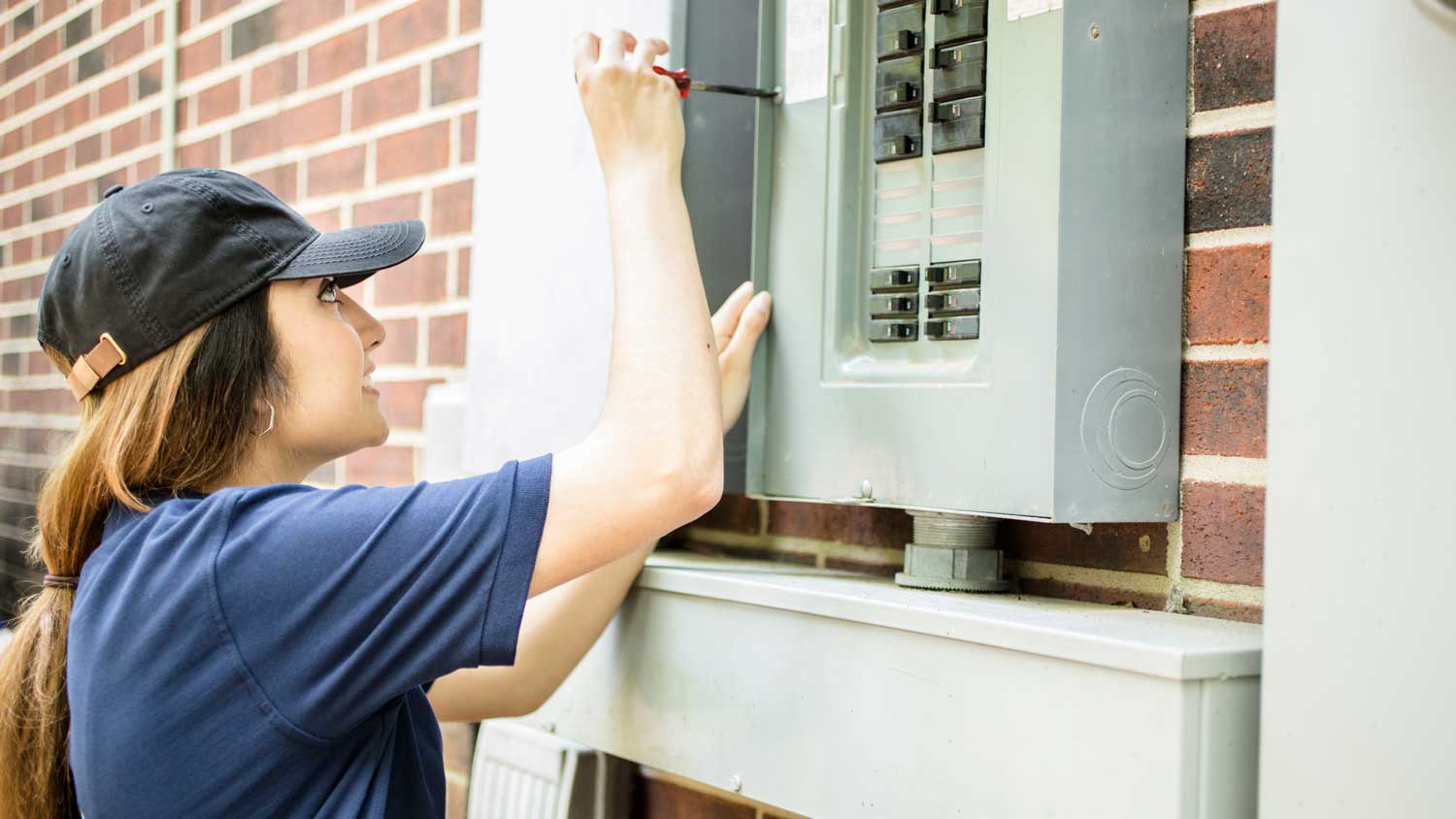
Flickering lights and breaker trips can be a sign that it’s time to replace a circuit breaker. Find out the cost, safety tips, and how to replace a circuit breaker.

Wondering how to tell if a circuit breaker is bad? There are several warning signs you should know to help keep your family, home, and electronics safe from shortages and fires. Keep reading to learn the signs to watch out for with circuit breakers.

If you’ve got a short circuit for tripped breakers, you’re not alone. There’s nothing more frustrating than appliances that trip breakers, causing you to lose power. Learn which appliances are prone to tripping and what you can do about it.

Circuit breakers and surge protectors protect your home electronics and wiring, but they work in different ways. Here’s what you should know about these vital components.