
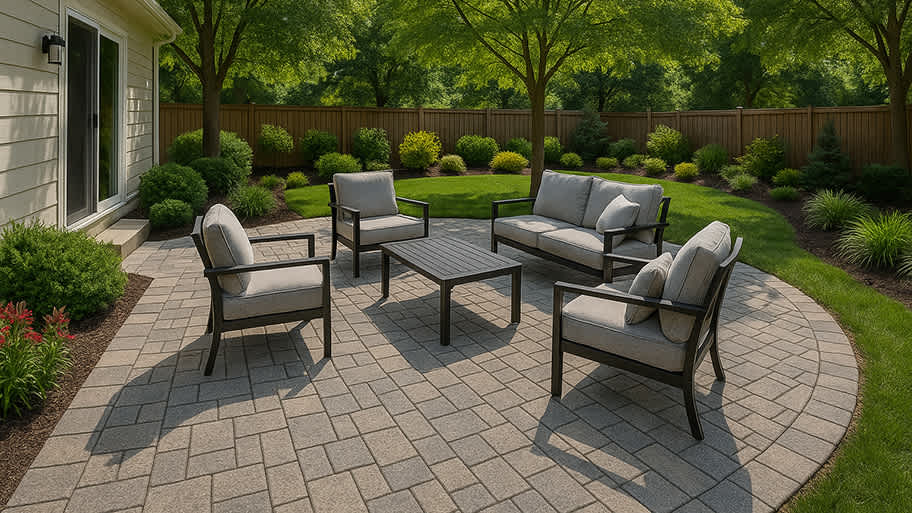
Thinking about installing concrete or brick pavers for a walkway or patio? Learn the cost of interlocking pavers in this informational guide.
Pave your way to success by avoiding these common pitfalls

The most common paver installation mistakes include skipping the slope for drainage, using dirt instead of gravel or sand as your base material, and forgetting to seal.
Expect to pay $150 or more to rent a gas plate compactor for proper base compaction, while paver sealant costs as low as $30 to protect your finished surface.
Your choice of paver material depends on your local climate, with limestone and sandstone resisting water better and lighter colors staying cooler in hot, sunny areas.
Hiring a local landscaping professional provides reliable guidance on proper base preparation and drainage solutions, helping you avoid shifting pavers and moisture damage over time.
Pavers add color and texture to walkways, pool areas, patios, and more. But there are some paver installation mistakes that can turn your new patio from an “oh wow!” into an “oh no.”
While paving installation may not be the easiest DIY, the potential cost savings will likely make it worth your while. Learn some common paver installation errors to avoid when doing this project to set yourself up for success.
Whether you’re installing a paver patio or a walkway that leads to your garden, you’re going to need a slope. This step encourages water to flow out and away from your worksite and prevents damage from moisture accumulation over time.
That doesn’t mean you necessarily need to build a steep incline, though. A slight slope of approximately 1/4 inch per every foot of length will ensure proper drainage without creating a noticeable slant.
Laying pavers without a base is one of the biggest paver installation mistakes you can make—but that’s not all you need to do to ensure perfection.
For one, you’ll need to use something more reliable than dirt to build your base. Since dirt shrinks by approximately 30%, it's not suitable for the base because it’ll cause your pavers to shift or look lopsided over time.
Instead, lay a base of gravel or washed concrete sand down before arranging your pavers. Both materials are superior options for this DIY project. Call a local landscaping company if you need help with laying the base.
A compacted base layer is key to making your paver installation last and look its very best. Whichever material you install at the base should be firmly patted down before laying any concrete.
A steel tamper for small areas can work, but we advise you to rent a gas plate compactor for larger surfaces. Although the rental might cost $150 or more, it'll be worth it in the long run.

Another one of the top paver installation mistakes is not laying a deep enough base. Expect to dig a 4- to 6-inch base for almost any paver installation job, but in some cases, as many as 9 inches might be necessary.
The more weight you expect to cover the surfaces—think a driveway versus a walkway—the deeper the base needs to be.
Remember to account for paver size and the inch of compacted sand or gravel at the base. Conduct your research before digging, or consult a local paver installer for additional help.
Unlike the base layer, which you need to compact before installing pavers, the sand layer at the top doesn’t necessarily need this treatment.
That’s because sand has a granular composition that actually compacts itself, unlike stones or soil, which are often uneven in size and are more likely to contain gaps or air pockets if not compacted.
Though you don’t necessarily need to do any compacting, you should smooth out the sandy surface before laying pavers in sand. You can use a rake or a shovel to do this by hand, but a compactor also does this job nicely.
It makes the process go faster than manual smoothing methods and ensures better results as well—perfect if you already have one rented for the project.
One of the most common paver installation mistakes is also one that is often overlooked: not using the click-and-drop method. This method is the most reliable installation option because it eliminates gaps and creates a solid and even surface that won’t slip or slide over time.
To use this method, start by lining up the corner of one paver to the corner of your edge. Use a hammer to lock it into place. Then, place another paver along the side of the first so that the ridges on the side of each paver interlock. You should hear a satisfying click as you lay it down. Hammer that into place and continue in your desired pattern.
You protected your new pavers at the base by compacting the bottom and digging a deep enough hole. But you should also be wary of protecting the surface, which you can ensure by applying paver sealant.
Sealant helps secure your paver sand and prevent pavers from shifting or becoming unbalanced over time. You'll find acrylic paver sealant for as low as $30 at home improvement stores. Applying sealant will also help you maintain your pavers for years.
Paver mistakes aren’t only limited to installation. With many different paver materials to choose from, it’s easy to pick the wrong one for your project.
Finding the best option for you comes down to a handful of factors. For starters, consider the weather and climate in your area. Is it rainy all the time or sunny every day? Some options, like limestone and sandstone, are more naturally resistant to water than others.
Similarly, lighter-colored pavers are better for hot spots because they don’t absorb heat as quickly as dark-colored pavers.
Looking for an easy option? Brick pavers may seem like a no-brainer, but they’re both more expensive and more likely to enable weed growth than others. Take all of these things into consideration before making your final choice.
Paver installation mistakes happen to the best of us. If you start to install your paver walkway and then quickly realize you’re in over your head, that’s okay.
If you have doubts about your ability to complete the project as intended, hire a hardscaper to help you. The lowest quote shouldn't be your top priority; instead, look for someone who has experience, great reviews, and gives you a fair price for the quality.
I recently moved to another state and chose United Trust Van Lines after comparing several companies. Their team was punctual, professional, and extremely careful with my belongings. I was especially impressed with how they handled my home office setup and fragile items. Everything arrived on...
 United Trust Van Lines, LLC
Mitchell and the crew were top tier i am so happy with my new roof
 Home Genius Exteriors
This company does it right. Firstly, I want to say that Landan was a joy to work with. He was so kind, transparent, and had everything under control. His entire team showed up ready to work and they were all very respectful of the fact that we were in an office space. A little backstory – we...
 Krumlauf Floors
Amazing job. Efficient and quick without compromising quality. Basement feels brand new. Would use them again in a heartbeat.
 AffordaPro Restoration
D1 Roofing delivers outstanding service from beginning to end, backed by a strong warranty and expert teams. I highly recommend them for their excellence in meeting and surpassing expectations with unmatched communication. Choosing D1 Roofing was flawless decision
 Division 1 Roofing LLC
I'm a repeat customer of All Star Paving & Sealing and I appreciate the service that all start paving has done for me in the past. I just recently had them out for an estimate and things couldn't have gone better. The staff that they send out to do the estimates are very knowledgeable. The...
 All Star Paving and Sealing
Supreme Brick & Chimney did an excellent job restoring the brick and mortar joints on my home. Their team was professional, knowledgeable, and completed the work on time. I highly recommend them and will hire them again in the future! Thanks!
 Supreme brick & chimney
Window Depot did an amazing job on my deck. I wasnt sure what I wanted to do, but their composite decking was affordable and will last a long time. I am excited to have family over, and I am no longer embarrassed by my backyard. Jeff and the ground crew were polite, respectful, and caring for...
 Window Depot USA of Central Ohio
They are very reliable and available. They the drains all the time
 The Waterworks
We had a 20+ year old landscape lighting system that needed replacement. Midwest Lightscapes worked with us to design a much improved lighting system, lighting the exterior of the house and the back yard. Installation of the 45 light system took one and one-half days, and went very smoothly....
 Midwest Lightscapes
From average costs to expert advice, get all the answers you need to get your job done.
Thinking about installing concrete or brick pavers for a walkway or patio? Learn the cost of interlocking pavers in this informational guide.
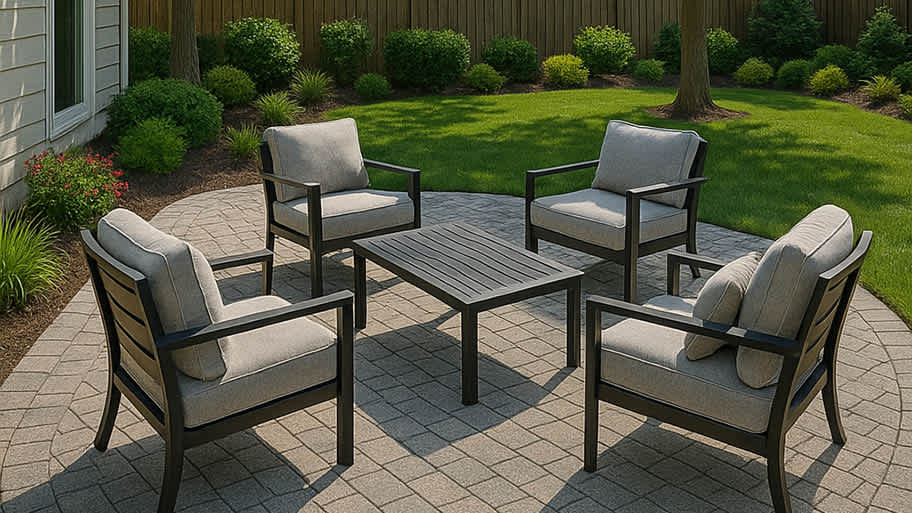
Looking to elevate your backyard aesthetic with a patio? Use this paver patio cost guide to help you estimate your total project cost before you get started.
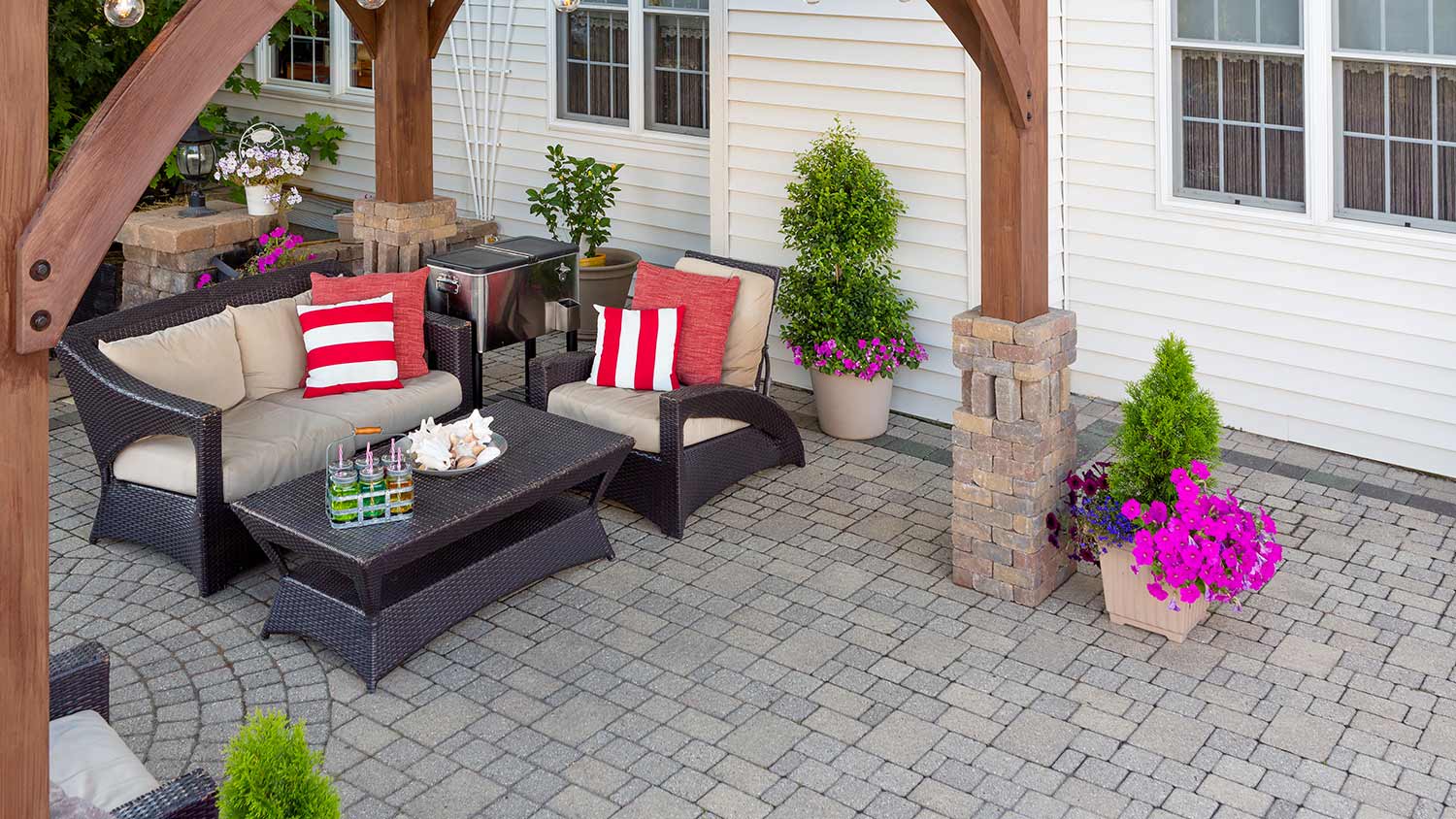
Discover travertine pavers costs to learn about installation, materials, and labor prices, plus tips to save on your travertine paver project.
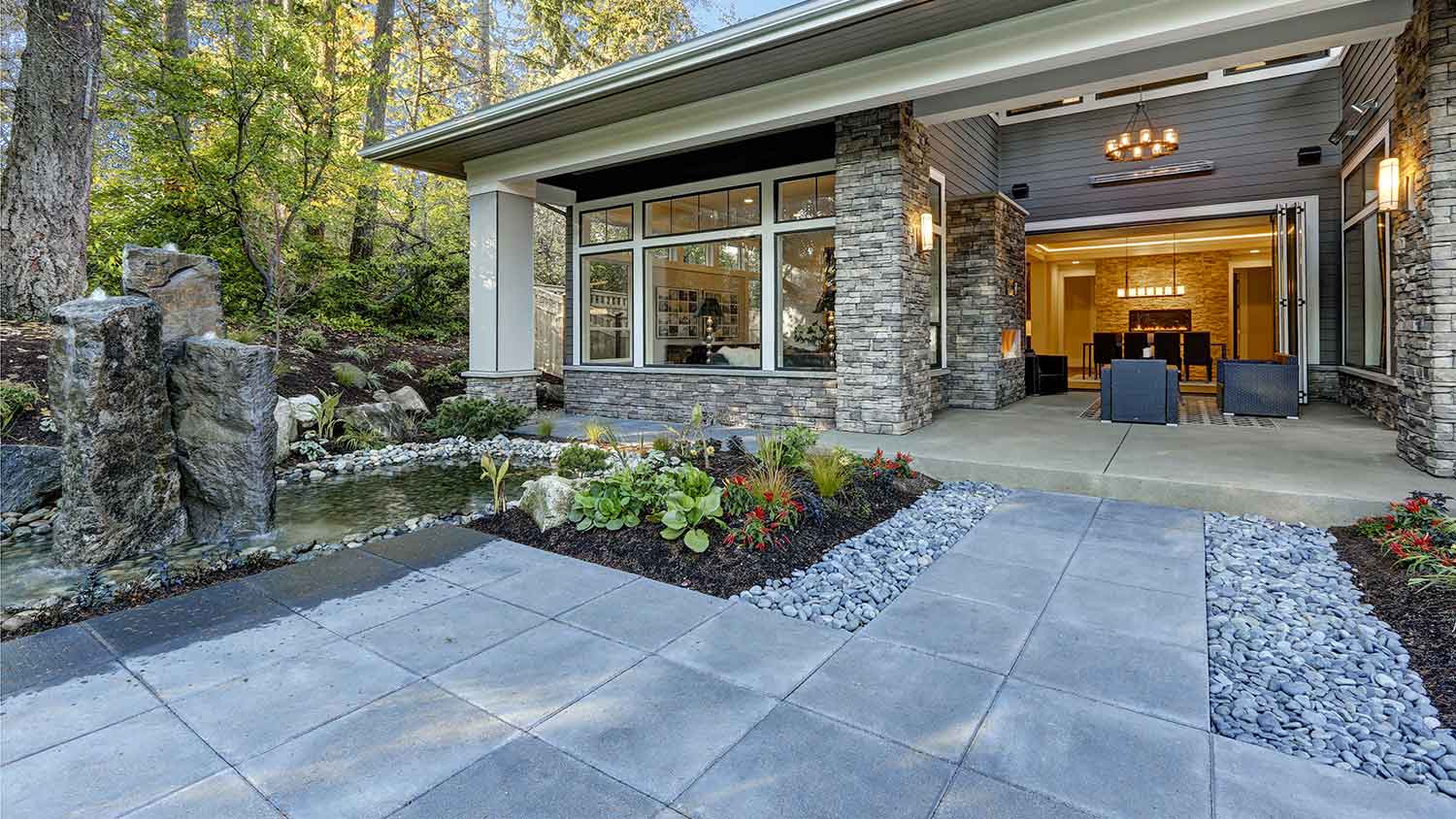
Pavers come in many styles and can create a sturdy base for your patio. This article notes all the tools and materials you need to install concrete pavers.
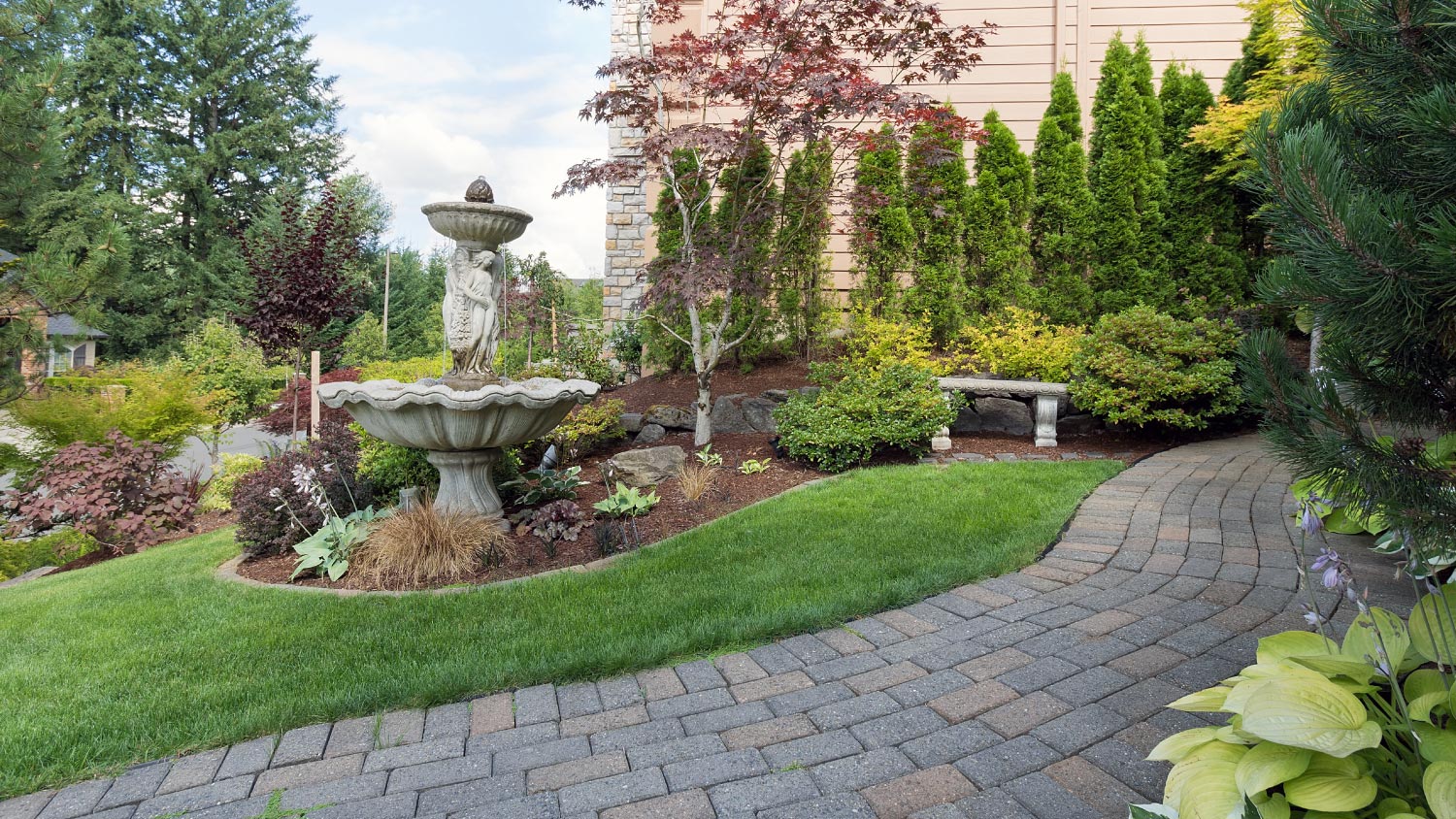
Have you noticed your pavers sinking or would you like to forget about the stains on your driveway? Here are common paver problems and what to do about them.
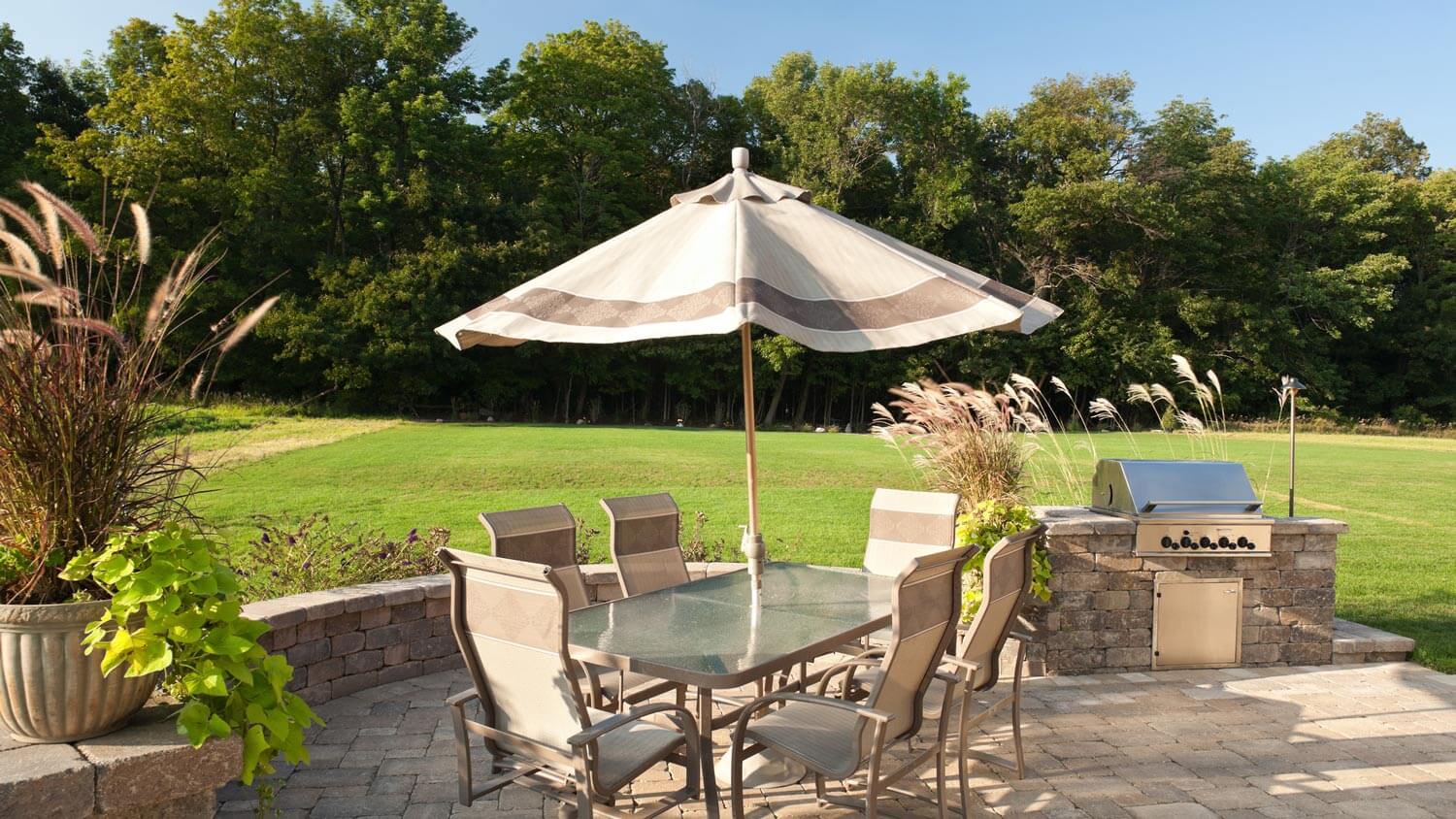
Learn how to install proper drainage to prevent water from pooling on your patio’s concrete pavers, which can wreak havoc on your foundation and landscaping.