
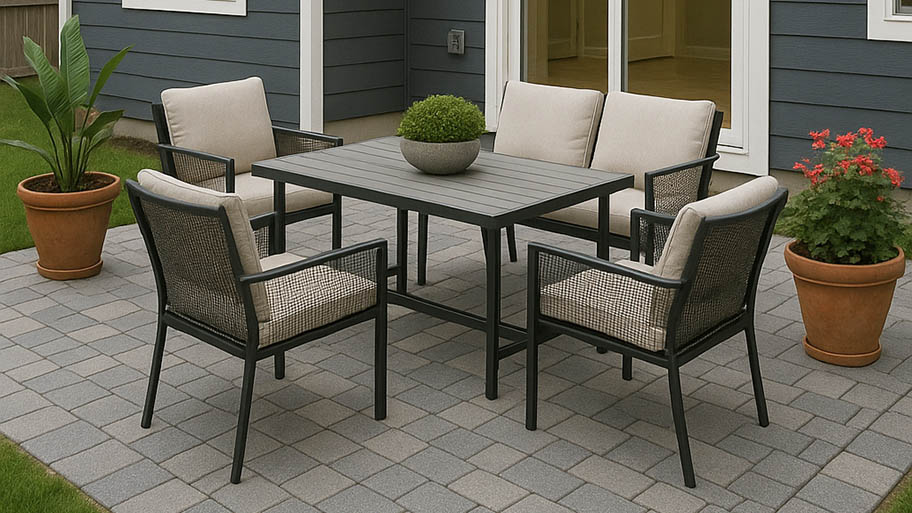
Before breaking out the sledgehammer, consider adding pavers over concrete in your yard. Learn how to save money and tons of time.
Find the right path

Concrete pavers versus natural stone pavers differ in texture and shape, as concrete creates a smooth surface while natural stone offers unique patterns.
Natural stone pavers cost $6 to $20 per square foot for materials, while concrete pavers cost $10 to $30 per square foot with labor.
Your choice between concrete and natural stone depends on your budget, desired look, and how you plan to use the space in your home.
Hiring a local paver installation professional takes the heavy lifting off your shoulders and ensures proper placement, whether you choose concrete or natural stone.
Pavers are popular materials often used for pathways, driveways, and even patios due to their versatile design options and strong durability. Concrete pavers and natural stone pavers are two of the most popular types of pavers nowadays.
Concrete and natural stone pavers are both favored by homeowners for very similar reasons. They are both durable. They come in pieces, making them easy to install. They both provide an eye-catching aesthetic. They can also increase your property’s value. Nonetheless, concrete and stone pavers still differ in the following key areas:
Pricing: Natural stone pavers tend to be a lot more expensive than concrete pavers.
Appearance: Each natural stone paver has a unique pattern, whereas concrete pavers provide a more consistent look.
Surface: Natural stone pavers create a textured surface, whereas concrete pavers usually ensure a smooth, flat surface.
Shape: Natural stone pavers can come in irregular shapes, whereas concrete pavers are usually rectangular or square-shaped.
Because of these key differences, concrete and stone pavers may be suitable for different purposes and projects in your home. It’s important to understand the pros and cons of each so you know which one is the best choice for your project.

Concrete pavers are a versatile material suitable for various outdoor projects, including driveways, patios, walkways, and decks. Generally, they are more functional than decorative and should be used in high foot-traffic areas. Concrete pavers cost $10 to $30 per square foot with labor included.
| Pros | Cons |
|---|---|
| Creates a smooth surface | Can crack from erosion or water damage |
| Highly durable | Needs seasonal sealing and maintenance |
| More affordable than natural stone pavers | Less eco-friendly than natural stone |
| Easy repairs | Shorter lifespan |
Best for: driveways
In addition to its modern, industrial look, homeowners favor concrete pavers for many other reasons as well. The biggest advantages of concrete pavers include:
Smooth and even surface: Concrete pavers create a smooth surface.
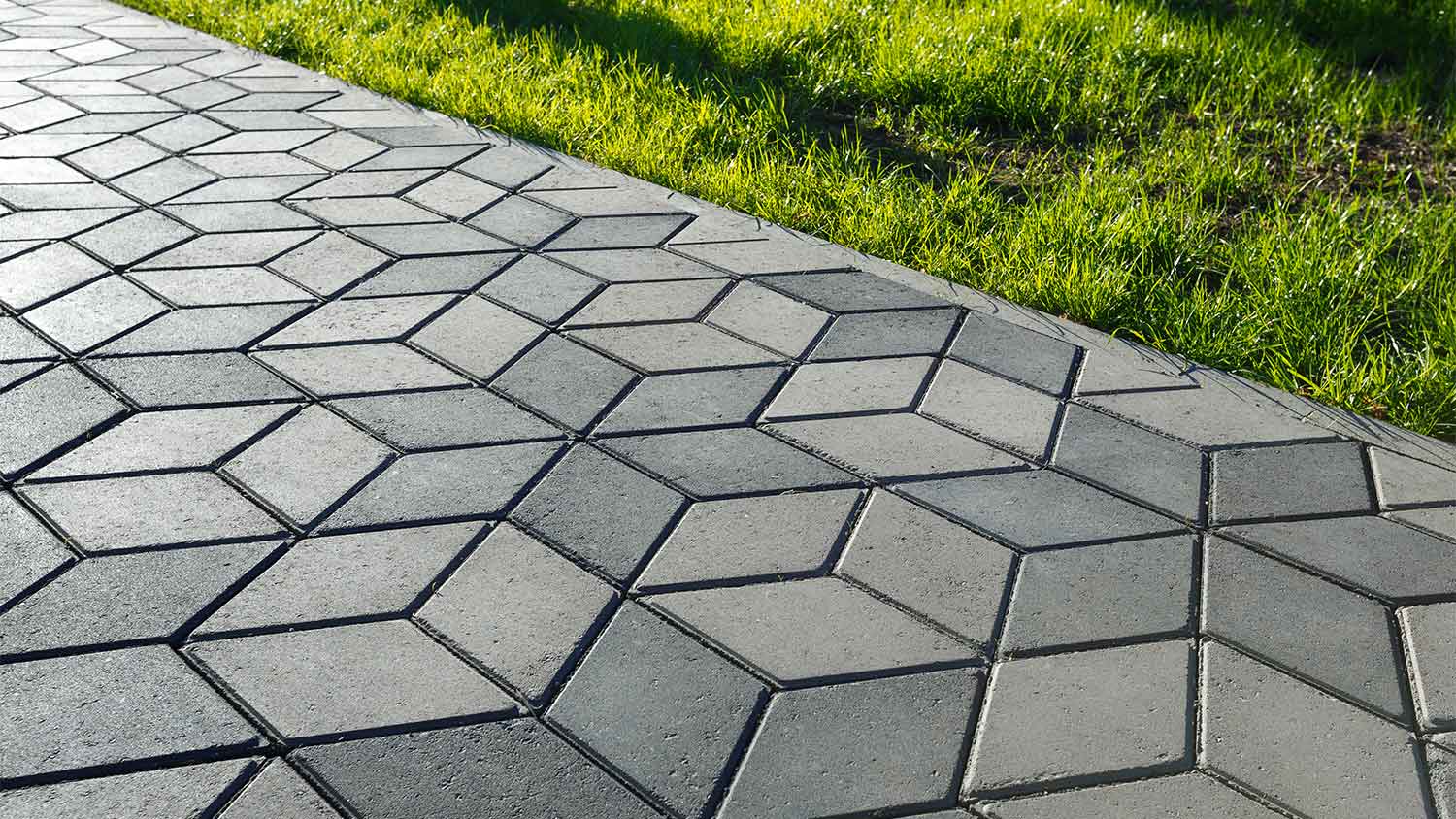
Various design options: Concrete pavers come in different sizes and finishes and, when fully installed, can create a sophisticated interlocking or grid visual.
Extremely durable: Concrete is extremely durable against impact and pressure. They can also be sealed to stand against chemical and oil spills.
Easily replaceable: Unlike stamped concrete, concrete pavers can be individually replaced, minimizing the cost of repair.
More affordable: Concrete pavers are generally more affordable than natural stone pavers.
However, concrete pavers do come with certain drawbacks:
Water damage: Concrete is vulnerable to water damage and can crack or bulge due to pooling water. They can also crack from erosion.
Maintenance needs: Concrete pavers need to be sealed seasonally to retain their color.
Shorter lifespan: Concrete pavers tend to have a shorter lifespan than natural stone pavers
Pollution in production: The concrete manufacturing process is less eco-friendly.

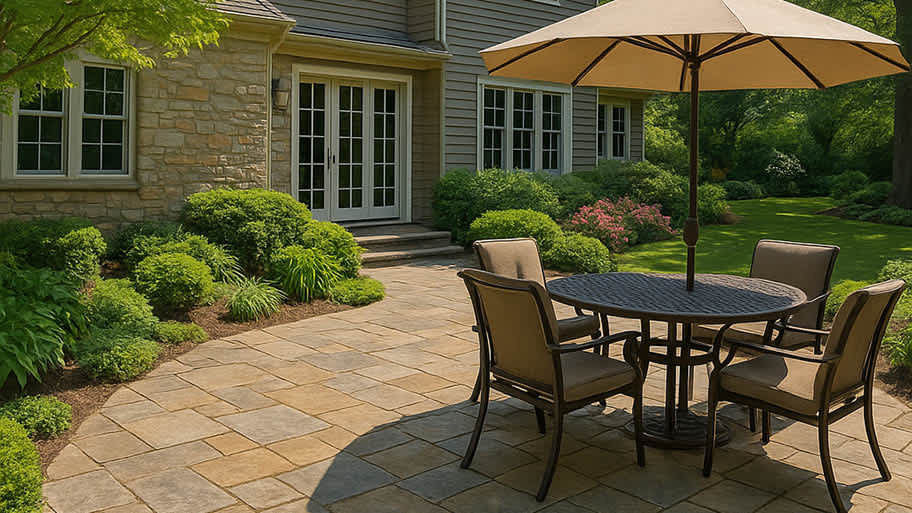
Natural stone pavers are the classic choice for those wanting a timeless look. Common natural paver options include flagstones and bluestones. Flagstones are a sedimentary rock bound together by thousands of years of pressure, such as sandstone, limestone, and slate. Bluestones are a special type of flagstone formed by fusing waterbody deposits. Bluestones got their name due to their rich, blue-gray color. Natural stone pavers cost between $6 and $20 per square foot in terms of material. Installation cost varies from $30 to $40 per square foot.
| Pros | Cons |
|---|---|
| Timeless look with various shapes and colors | Uneven surface |
| Low maintenance | Higher cost |
| Extreme durability | Labor-intensive installation |
| Eco-friendly |
Best for: Walkways, patios, pool decks.
Natural stone pavers stand out in competition for many reasons:
Classic look: Nothing can beat the timeless look natural stone pavers bring.
Design versatility: Natural stone pavers come in various shapes, sizes, and finishes. Some flagstone pieces may even be irregularly shaped.
Low maintenance: Other than basic cleaning, natural stone pavers require barely any maintenance
Extremely durable: Natural stone pavers last longer than concrete pavers
Eco-friendly: Natural stone pavers are more sustainable and recyclable.
Uneven surface: Natural stone pavers may create an uneven surface, which can be challenging for those bound by wheelchairs.
Higher cost: Natural stone pavers tend to be more expensive than concrete pavers.
Labor-intensive installation: Installing natural stone pavers is a heavy-duty job that should only be done by experienced pros. The project can also take longer to complete.
Concrete pavers and natural stone pavers each stand out for certain reasons. Knowing what you need and your project limitations, like budget and timeframe, can help you make the right choice between concrete and natural stone pavers.
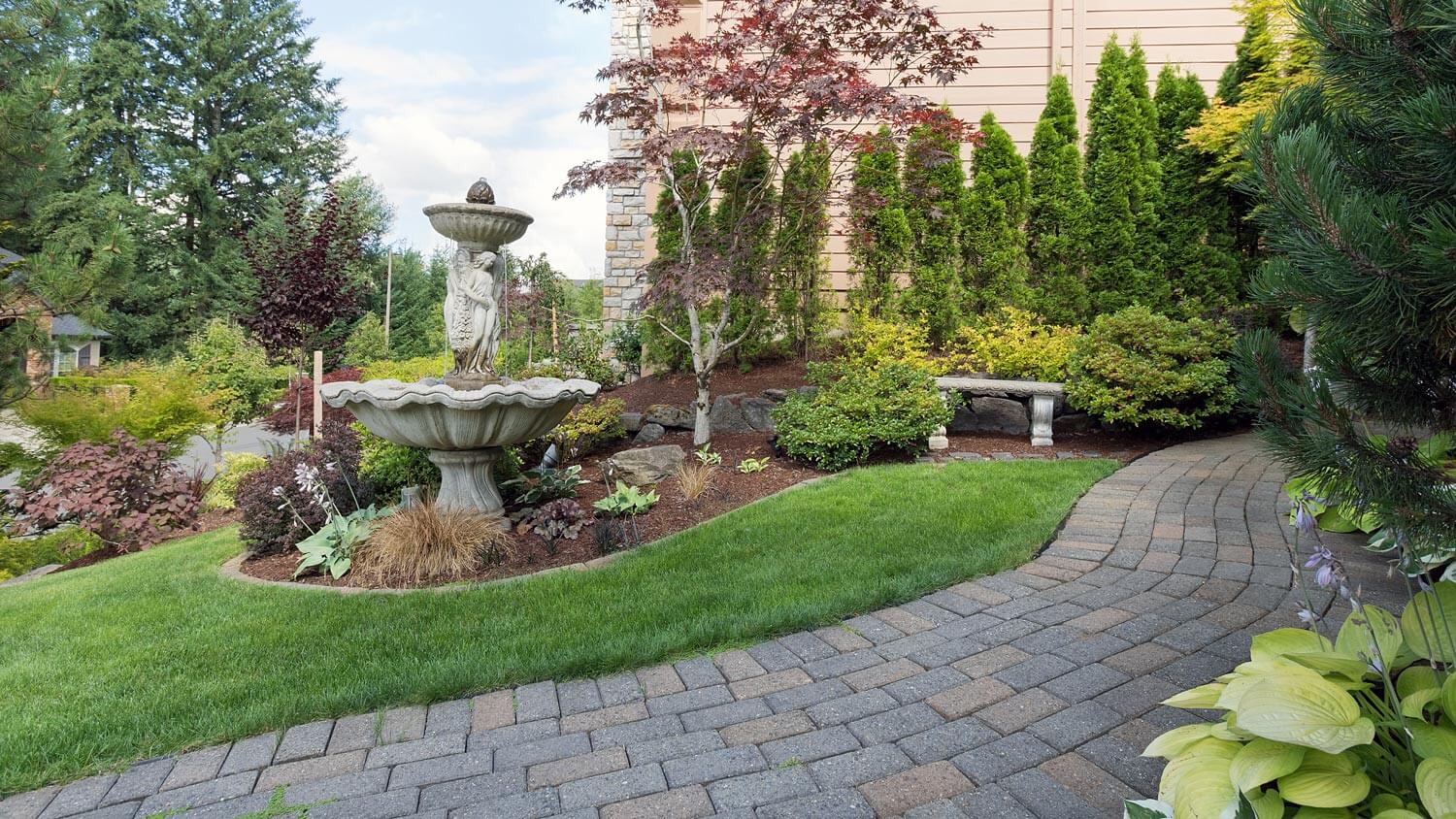
Natural stone pavers provide your home with a classic, sophisticated appearance. They also come in many different shapes and sizes, including irregular shapes. This design versatility makes natural stone pavers the perfect option for those looking to enhance their curb appeal.
Natural stone pavers are far more durable than concrete pavers, as proven by the many historic stone buildings that still stand tall today. Natural stone pavers are also highly resistant to erosion and water damage. It’s very rare that a natural stone paver chips or breaks.
Concrete pavers are more affordable than natural stone pavers. Therefore, they may be a better choice if you have a modest budget or need to cover a large surface. A concrete paver driveway costs $10 to $25 per square foot, whereas stone pavers would cost $15 to $60 per square foot.
Concrete pavers are easier to install than natural stone pavers. A handy homeowner with a helpful friend may DIY concrete paver installation. Meanwhile, natural stone installation is extremely labor-intensive and time-consuming. However, we recommend you hire a professional paver company for the project, regardless of your choice of material.
The name says it all. Natural stone pavers are more eco-friendly than concrete pavers. A massive amount of energy is consumed to manufacture concrete. Concrete pavers also have a higher carbon footprint because many ingredients used in the manufacturing process are shipped from other areas.
The textured surface of natural stone pavers can sometimes be challenging for those relying on wheelchairs. Natura stone pavers are also frequently placed with gaps in between, where grass can grow and wheelchairs may get caught. The smooth concrete pavers provide more accessibility. However, concrete pavers should be properly sealed to prevent slip and fall risks under wetter conditions.
I recently moved to another state and chose United Trust Van Lines after comparing several companies. Their team was punctual, professional, and extremely careful with my belongings. I was especially impressed with how they handled my home office setup and fragile items. Everything arrived on...
 United Trust Van Lines, LLC
Mitchell and the crew were top tier i am so happy with my new roof
 Home Genius Exteriors
This company does it right. Firstly, I want to say that Landan was a joy to work with. He was so kind, transparent, and had everything under control. His entire team showed up ready to work and they were all very respectful of the fact that we were in an office space. A little backstory – we...
 Krumlauf Floors
Amazing job. Efficient and quick without compromising quality. Basement feels brand new. Would use them again in a heartbeat.
 AffordaPro Restoration
D1 Roofing delivers outstanding service from beginning to end, backed by a strong warranty and expert teams. I highly recommend them for their excellence in meeting and surpassing expectations with unmatched communication. Choosing D1 Roofing was flawless decision
 Division 1 Roofing LLC
I'm a repeat customer of All Star Paving & Sealing and I appreciate the service that all start paving has done for me in the past. I just recently had them out for an estimate and things couldn't have gone better. The staff that they send out to do the estimates are very knowledgeable. The...
 All Star Paving and Sealing
Supreme Brick & Chimney did an excellent job restoring the brick and mortar joints on my home. Their team was professional, knowledgeable, and completed the work on time. I highly recommend them and will hire them again in the future! Thanks!
 Supreme brick & chimney
Window Depot did an amazing job on my deck. I wasnt sure what I wanted to do, but their composite decking was affordable and will last a long time. I am excited to have family over, and I am no longer embarrassed by my backyard. Jeff and the ground crew were polite, respectful, and caring for...
 Window Depot USA of Central Ohio
They are very reliable and available. They the drains all the time
 The Waterworks
We had a 20+ year old landscape lighting system that needed replacement. Midwest Lightscapes worked with us to design a much improved lighting system, lighting the exterior of the house and the back yard. Installation of the 45 light system took one and one-half days, and went very smoothly....
 Midwest Lightscapes
From average costs to expert advice, get all the answers you need to get your job done.
Before breaking out the sledgehammer, consider adding pavers over concrete in your yard. Learn how to save money and tons of time.
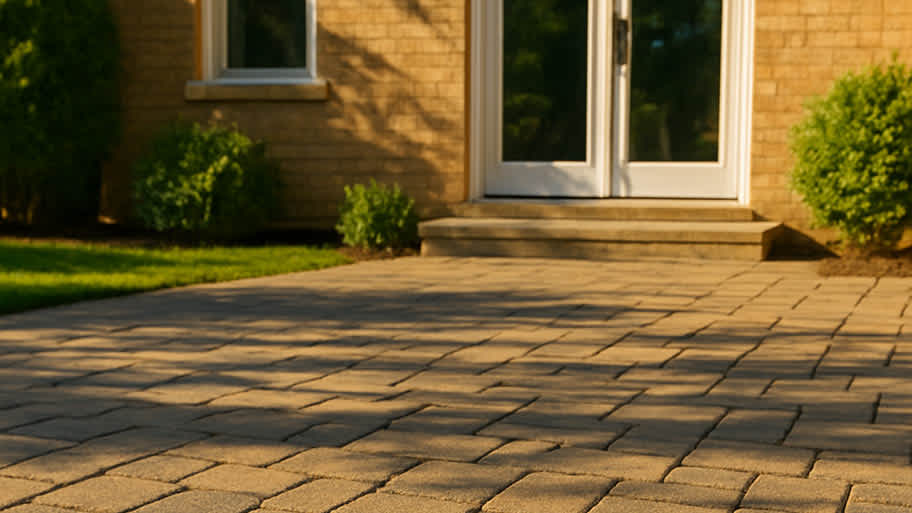
Comparing concrete pavers versus brick pavers for your next project? See how the cost, appearance, maintenance, ROI, and more can impact your decision.
Choose the right material for your patio, walkway, or driveway. Learn the differences between pavers vs. concrete so you can make the right choice for your project.
Choosing the right type of pavers for your hardscape can be a challenge with all the options on the market. Check out the most popular varieties to narrow down your list.
Interlocking pavers are popular for outdoor living spaces, such as walkways and patios. Learn the different types of pavers, including materials, sizes, and more.
From concrete pavers to brick to stone, there are many types of pavers to dress up your yard. Here are some paver stone tips to transform your landscape.