

Top-rated radon detection and reduction specialists.

Get matched with top radon detection and reduction specialists in Gordon, WI

Enter your zip and get matched with up to 5 pros

Need a pro for your radon detection and reduction project in Gordon, WI?

Select your specific project to find the pro for you.

Find Radon detection and reduction specialists in Gordon

Avatar for Northland Home Inspections
Northland Home Inspections
4.5(
28
)
Radon Gas - Testing

Serving Gordon, WI and surrounding areas

Approved

In business since 2019

Free estimates

Credit card accepted

"Todd listened to my concerns and was very knowledgeable when he answered any questions I had. I would definitely recommend him! The seller was also present at the inspection and she was also very happy with Todd's work."
Response time8 hrs
5 neighbors recently requested a quote
Recommended by92%of homeowners

Avatar for Koti-Home, LLC
Koti-Home, LLC
5.0(
2
)
Radon Gas - Testing

Serving Gordon, WI and surrounding areas

In business since 2015

Free estimates

Emergency services offered

"Brandon is great! He helped me out when I found myself in a time crunch for getting an inspection. He was very thorough and honest. He even checked out the treehouse in the back yard! I would highly recommend Koti-Home!"
Home Ispected
Response time7 hrs
Recommended by100%of homeowners
Microbe Guard
1.0(
1
)
Radon Gas - AbatementRadon Gas - Testing

Serving Gordon, WI and surrounding areas

In business since 2004

Microbe Guard of Western Wisconsin, LLC has been successfully completing mold remediation projects since 2004; we offer a professional and experienced approach when handling microbial remediation projects. There are thousands of types of mold that occur naturally in our environment. Most are harmless, some cause allergic reactions and others can be toxic enough to create severe health problems in some individuals. Microbe Guard of Western Wisconsin, LLC will help you determine the mold types and concentration levels in your home or workplace with our state of the art testing equipment. The remediation process includes identifying mold, locating and eliminating the source of moisture intrusion, properly containing the affected area from the rest of your home, running HEPA "air scrubber machines," removing and encapsulating mold, and properly disposing of all contaminated materials. Indoor Air Quality is of the most importance to you and your family. Contaminants such as mold can create serious health issues. Microbe Guard of Western Wisconsin, LLC will manage your project from beginning to end with our knowledge and expertise. We look forward to working with you.

Radon Detection and Reduction questions, answered by experts

The natural breakdown of uranium in soil, rock, and water can cause radon to appear in a home. The gas seeps into homes through cracks in foundations, walls, or floors, as well as through gaps around pipes or construction joints. Radon levels are influenced by soil composition, building materials, and ventilation. Poorly sealed or airtight homes can trap radon, allowing it to accumulate.

Testing every 2-5 years or upon adjusting occupancy or structural changes maintains safe environments.

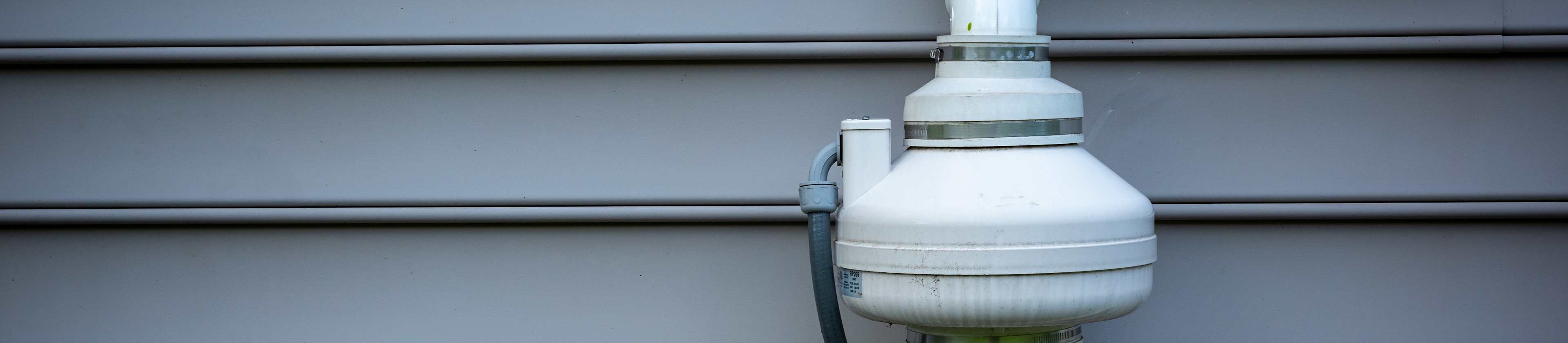
You can vent radon out of your house sometimes by simply opening a window, but it won’t remove the source, and will likely rise above recommended levels quickly. A professional will be needed to assess your home, and determine the best strategy for radon removal. Active radon sump pumps and soil depressurization systems are often used to forcefully vent the radon from your home.

No level of radon is technically safe, but since it is present everywhere, complete avoidance is impossible. The average radon level in homes across the United States is 1.3 picocuries per liter (pCi/L). The Environmental Protection Agency (EPA) recommends taking preventative measures if your home's radon levels are between 2 and 4 pCi/L or higher.

The lifespan of a radon mitigation system depends on the type of system and its maintenance. With proper care, a system can last for many decades. Passive systems tend to last longer as they have fewer components that require replacement. Active systems, which have more moving parts like fans, generally have a shorter lifespan. For instance, water filtration devices and active pressurization systems require more frequent maintenance. While the system as a whole is durable, the radon fan in an active system typically has a lifespan of 5 to 10 years and will need to be replaced. As long as the fan is working, the mitigation system should function correctly.

The Gordon, WI homeowners’ guide to radon detection and reduction services

From average costs to expert advice, get all the answers you need to get your job done.