


Top-rated paving pros.

Get matched with top paving pros in Arkansaw, WI

Enter your zip and get matched with up to 5 pros

Need a pro for your paving service project in Arkansaw, WI?

Select your specific project to find the pro for you.

Find Paving pros in Arkansaw

Kuehndorf Services
4.4(
11
)
Interlocking Pavers for Patios, Walks & Steps - Install

Serving Arkansaw, WI and surrounding areas

Approved

In business since 2018

Free estimates

Credit card accepted

"Zack contacted me within minutes of submitting my request. I hired him to snowplow my large, circular driveway (250+ feet from road to garage). We just had our first significant snow. He showed up early the next morning, and did such an excellent job! Far exceeded my expectations. Would recommend him without hesitation. Also, really nice guy!"
Response time2 days
11 neighbors recently requested a quote
Recommended by80%of homeowners

Tru-Cut Lawn & Landscape
4.1(
11
)
Interlocking Pavers for Patios, Walks & Steps - Install

Serving Arkansaw, WI and surrounding areas

In business since 2012

Free estimates

Credit card accepted

"h got the job done within a narrow window of time between the rain and their other projects. Though our project was small , they did it anyway. The only question we have is why they didn't install the border liner like they said they would. Don't know if they are done or not. We paid half done but haven't received a bill yet."
Response time2 days
Recommended by100%of homeowners
Showing 1-10 of 26
Paving Services questions, answered by experts

Asphalt and tarmac are not the same thing. Traditional tarmac, short for tarmacadam, uses tar as a binder to hold crushed stone together. Asphalt uses bitumen—a byproduct of crude oil—to bind aggregate. Though tarmac was once a go-to for roads, asphalt has become the modern standard. And these days, most surfaces referred to as “tarmac” are actually asphalt. So, while the names may overlap, the key distinction lies in the binder—tar for tarmac and bitumen for asphalt.

An ideal driveway gradient is between 2% and 5%. Anything lower than 1% or higher than 15% can cause problems for your car or property. A driveway with less than a 1% slope increases your likelihood of flooding and water damage, while a driveway with a 15% grade or higher can be too steep for safe traveling.

Driveway pavers are often worth the cost. Paver types like cobblestone, brick, and concrete are highly durable, and permeable paver options can be tremendously eco-friendly. While you may pay more for a paver driveway, you’ll see great returns from the increased curb appeal and low maintenance compared to other types of driveways.

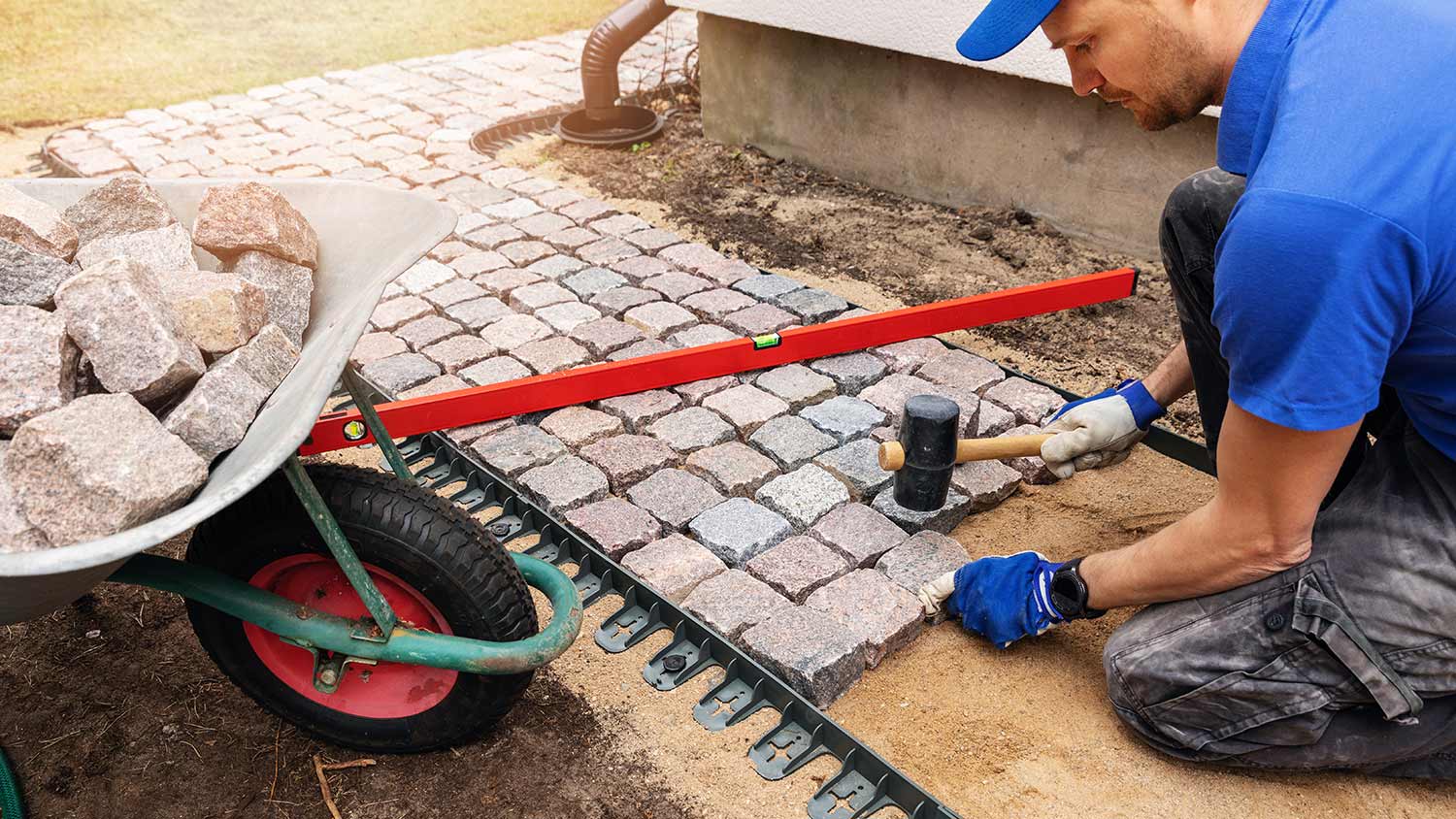
You should place a layer of thick landscaping fabric directly over the concrete slab and then a thin layer of leveling sand over that to protect the pavers from moisture. For border pavers, you should plan on locking them in place with polyurethane adhesive. This will prevent them from shifting under foot traffic.

The dimensions of a driveway apron vary based on local building codes, the width of your driveway, and the distance between the driveway and the road. On average, aprons range from 12 to 24 feet wide and 8 to 18 feet long. Typically, the end of the apron connected to the driveway matches its width—such as 10 to 12 feet for a single-car driveway—while the end at the street flares out to allow cars to turn in and out more easily. In some areas, you may not be responsible for the portion of the apron that extends beyond the sidewalk, but this depends on local laws.

The Arkansaw, WI homeowners’ guide to paving services

From average costs to expert advice, get all the answers you need to get your job done.