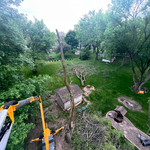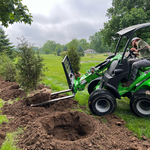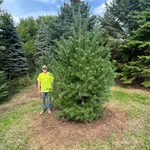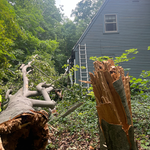





Top-rated tree service pros.

Best tree service pros near Allenton, WI

Enter your zip and get matched with up to 5 pros

Need a pro for your tree service project in Allenton, WI?

Select your specific project to find the pro for you.

TRUSTED BY ALLENTON, WI HOMEOWNERS

  • Average homeowner rating star icon4.7
    Average homeowner rating
  • Verified reviews icon205
    Verified tree services reviews

Top-Rated Tree service pros in Allenton - Updated Nov 2026

Avatar for CB Trees LLC
CB Trees LLC
5.0(
5
)
Tree RemovalTree Removal - For Business

Serving Allenton, WI and surrounding areas

Approved

Free estimates

Offers commercial services

"Arrived on time and prepared. Worked efficiently removing a large silver maple with significant trunk damage. Did a fantastic job working around other trees, fence lines, and a garden. Great communication and easy to work with. Would definitely hire again/recommend."
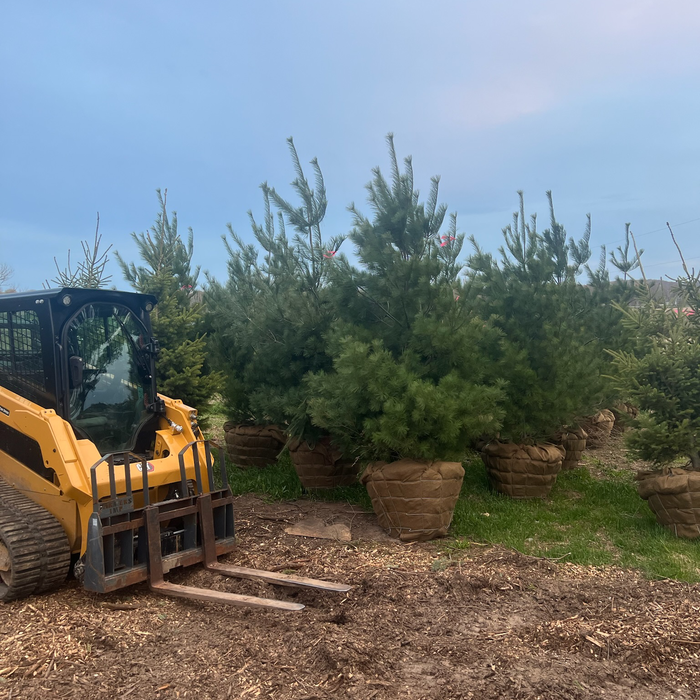
Large pine tree removal
4 neighbors recently requested a quote
Avatar for Woodya look at that tree service
Woodya look at that tree service
New to Angi
Tree RemovalTree Stump - RemoveTree Trimming

Serving Allenton, WI and surrounding areas

Approved

Free estimates

Emergency services offered

Small jobs welcome

I’m Nick Herman, from the Green Bay area. Most of my career has been in flexo printing — running plants, training operators, and solving problems when the line is down. That same mindset is how I run Woodya Look At That Tree Service. I started it as a one-man operation because I like being on the tools and I like finishing a job clean. I do removals, storm cleanup, and large hardwoods — oaks included — using proper lowering and rigging so we’re not tearing up yards. I’m not a big crew with a fancy truck wrap. I’m the guy who shows up, assesses the tree, and takes it down safely. If that’s what you need, the number is 920-634-6352.

100’ Oak
9 neighbors recently requested a quote
Kyle
New to Angi
Tree RemovalTree Trimming

Serving Allenton, WI and surrounding areas

Approved

I’m a hardworking, dependable guy who takes pride in every job I do. I believe in showing up, working hard, and finishing the job promptly and to the best of my ability. I don’t believe in cutting corners—I put the time and effort in to make sure the job is done right.\n\nI’m also a proud husband and father, and providing for my family and setting a good example for my kids is what motivates me every day. I treat every job with the same respect and dedication I would give to my own home.

...
Showing 1-10 of 76
Tree Service FAQs, answered by experts

As a general rule, the protected area should be about 1½ times as wide as the canopy of the tree’s leaves. This digging measurement can vary by tree species and the age of the tree. Of course, that can be a lot of fencing for larger trees, which is why our first step is about making difficult decisions on which trees to save.

Trees naturally want to grow upward, so one may straighten all by itself, though this only comes into play when a tree is leaning just a small amount. For trees growing into an awkward position or those leaning heavily in one direction, the above steps are necessary to ensure the tree gets back on the right path. This also holds true for trees planted in a spot with unstable soil.

The best time to prune Japanese flowering cherry trees depends on where you live and the type of flowering cherry tree. Some trees benefit from being pruned toward the end of winter or early spring, after the last freeze. Meanwhile, other trees do well after blooming, in late spring or early summer. Avoid pruning your flowering cherry tree in the early winter, as this encourages open wounds that can lead to infections or infestations. 

The felling notch you make before you make the final cut will determine which way the tree will fall. The cut will be in a wedge or triangle, and the tree will fall from the highest point of the triangle. You can use this, as well as the process described above, to estimate where a tree will fall. 

It takes anywhere from three to seven years for a stump to decompose on its own. This timeframe can depend on the kind of tree and your climate. The lower to the ground the stump is, the faster it rots. If you kill a tree stump with salt, boiling water, herbicide, light deprivation, or burning, the tree stump decomposes faster. 

The Allenton, WI homeowners’ guide to tree services

From average costs to expert advice, get all the answers you need to get your job done.