



Top-rated electricians.

Get matched with top electricians in Edgewood, WA

Enter your zip and get matched with up to 5 pros

Need a pro for your electrical service project in Edgewood, WA?

Select your specific project to find the pro for you.

TRUSTED BY EDGEWOOD, WA HOMEOWNERS

  • Average homeowner rating star icon4.5
    Average homeowner rating
  • Verified reviews icon860
    Verified electrical services reviews

Find Electricians in Edgewood

Custom Electrical Contractors, Inc.
4.7(
40
)
Electric Vehicle Charging Station Installation - Materials Not ProvidedElectric Vehicle Charging Station Installation - Materials Provided by ConsumerElectrical Wiring or Panel Upgrade+3 more

Serving Edgewood, WA and surrounding areas

Approved

In business since 2005

Free estimates

Emergency services offered

"Custom electric was very friendly, they showed up when they said they would and they performed the requested work exactly as I asked. I am very pleased with their service and will hire them again if I ever need electrical work."
Response time3 days
Recommended by100%of homeowners
...
Showing 1-10 of 426
Electrical questions, answered by experts

Daisy-chaining refers to placing multiple GFCI outlets in a row along the same circuit. This won’t do any harm, but it’s of limited usefulness because a properly-placed GFCI can monitor all downstream outlets on its own. Multiple GFCI installations won’t usually increase safety except in special cases.

Yes, pool pumps use a significant amount of electricity, making them one of the biggest energy consumers in a home. A pool pump can use up to three times as much electricity as a refrigerator. Typically, a residential pool pump consumes about 1 kilowatt-hour (kWh) for every hour it runs. Because pumps often need to run for about eight hours a day to properly filter the water, this can add up to an annual consumption of 3,000 to 5,000 kWh, which can cost between $480 and $800 per year based on average electricity rates.

The amount of electricity your pump uses depends on its size, energy efficiency, and daily run time. To lower your energy consumption, you can choose an energy-efficient or variable-speed pump, ensure it is correctly sized for your pool, and run it only for the minimum time required to keep the water clean.

An undersized whole-house generator has the potential to overheat and shut down when you try to run a central AC system. This scenario can not only damage the whole-house generator, but can also trip your home’s breakers or cause electrical damage. To avoid this situation, hire a local generator installer to correctly size your whole-house generator.

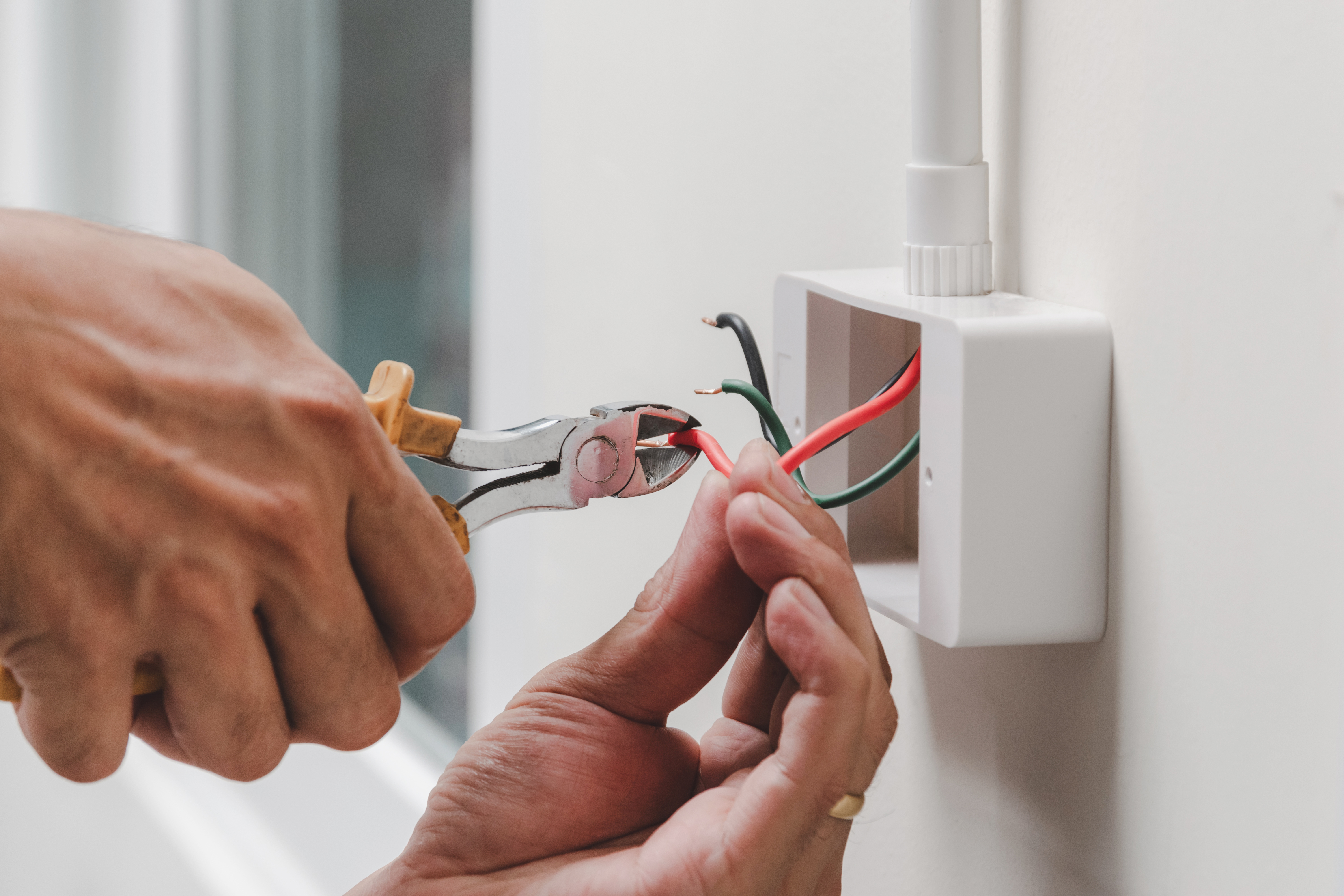
The color of your cable will help you to identify its function. In the U.S., the National Electrical Code (NEC) designates the color code for electrical cables. “Hot” cables are black, red, and blue. In cases of higher voltage lines, orange might also be used to indicate a hot cable. White or gray indicates a neutral, and green or green with a yellow stripe indicates a ground.
First, check the current electrical code in your area to ensure spaces you’re considering meet the requirements. After that, your outlet’s location is up to you. If you’re moving it to hide wiring, you may want to move it in a spot that will also be hidden from view, such as behind a media center or table. As long as you meet the spacing guidelines set by electrical codes, you should be able to pick any spot in your home for an outlet. 

The Edgewood, WA homeowners’ guide to electrical services

From average costs to expert advice, get all the answers you need to get your job done.