




Top-rated weed maintenance pros.

Get matched with top weed maintenance pros in Chesapeake, VA

Enter your zip and get matched with up to 5 pros

Need a pro for your weed maintenance project in Chesapeake, VA?

Select your specific project to find the pro for you.

TRUSTED BY CHESAPEAKE, VA HOMEOWNERS

  • Average homeowner rating star icon4.4
    Average homeowner rating
  • Verified reviews icon805
    Verified weed maintenance services reviews

Find Weed maintenance pros in Chesapeake

No results for Weed maintenance pro in

Try adjusting your search criteria.
Weed Services questions, answered by experts

It’s not legal to intentionally damage a neighbor’s tree. Even if the roots of a tree encroach into your yard, if you damage or kill a tree that belongs to your neighbor, you can be held liable for the damage in most cases. Since herbicides can spread through the tree, causing damage to the whole tree and not just the roots that are on your side of the property line, you shouldn’t poison your neighbor’s tree. The other downside to this method is that if the tree dies, it can fall onto your property and cause more damage, so herbicides are best avoided in this circumstance.

Landscaping fabric can only help to prevent weed growth in the short term. It's not an ideal long-term solution because dirt will eventually make its way on top of it, causing weeds to sprout. These fabrics can also leave microplastics in the environment for many, many years, so pulling weeds using one of the methods in this guide as soon as you see them is a better long-term prevention strategy.

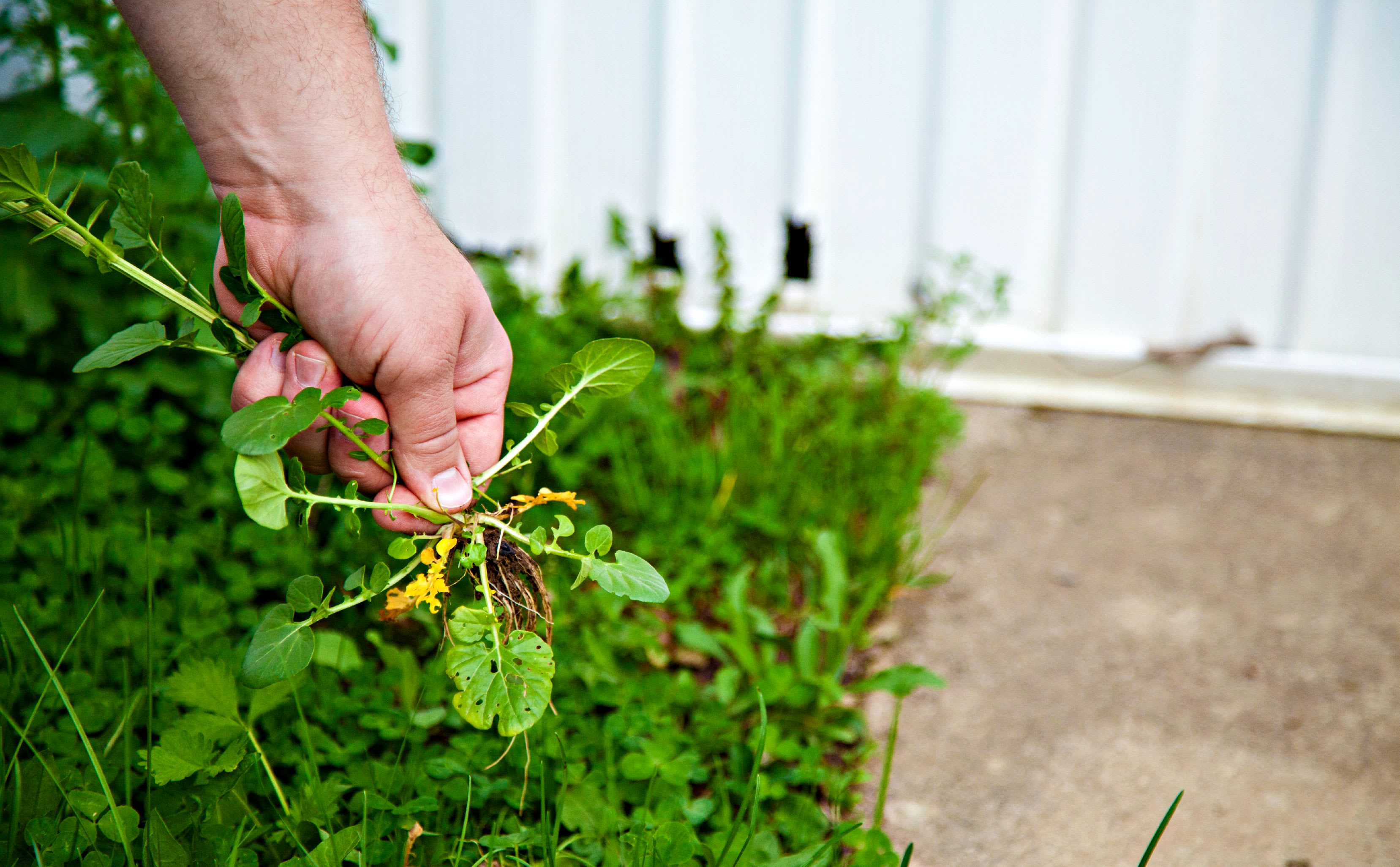
No, definitely not. Pulling weeds by hand is the single most effective way to remove them because you're eliminating the entire plant—roots and all—so it won’t have a chance to grow or spread. Setting time aside a few times per week to pull weeds can keep them at bay. If the number of weeds gets overwhelming, then you can resort to other methods.

Johnsongrass and crabgrass are invasive weeds that can overtake your lawn. Crabgrass is a low-growing grass most often seen in lawns, flower beds, and vegetable gardens. While you may find Johnsongrass growing in your lawn, it will also grow in pastures, crop fields, and the edge of the road. Johnsongrass is much coarser than crabgrass. If left alone, Johnsongrass can grow up to 8 feet tall. 

Yes, Johnsongrass is a hard weed to kill. It has the ability to grow fast and spread even quicker, so it requires a detailed plan and thorough application to eliminate it. The best plan of action is to kill Johnsongrass while the weed is establishing itself by hiring a lawn care professional or following the steps above. 

The Chesapeake, VA homeowners’ guide to weed maintenance services

From average costs to expert advice, get all the answers you need to get your job done.