


Top-rated excavation pros.

Get matched with top excavation pros in Chatham, VA

Enter your zip and get matched with up to 5 pros

Need a pro for your excavation project in Chatham, VA?

Select your specific project to find the pro for you.

Find Excavation pros in Chatham

Avatar for Gabriel & Gail Better Business
Gabriel & Gail Better Business
3.6(
33
)

Serving Chatham, VA and surrounding areas

In business since 1999

Free estimates

Emergency services offered

"

Initially, he seemed like he was very very knowledgeable, very friendly and gave us thoughts that he knew what he was doing. They arrived on time. They're very good. The crew was pretty quick and efficient. One problem I had was they didn't come with enough materials. They had to reschedule for a completion of some. There were some minor issues that we ran into. They were supposed to paint the chimney cap and never actually did that. It's not a big deal but the other thing was the warranty and we kind of had a fight with them for the warranty to actually be processed. The warranty was the big thing and it was a lifetime warranty and I guess there were personal things that came up. It was just basically what I've learned late, but it took us probably eight months to get the warranty to be processed. That was my biggest concern, but the warranty company ensures me that everything is good even though the paperwork has the wrong number on there and I am assuming that's because they had the wrong number initially which is why they didn't have enough material.

"
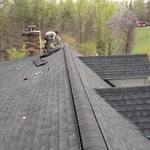
Charcoal GAF High Definition Shingle
Vent Ridge Installation
Recommended by75%of homeowners
Showing 1-10 of 28
Excavating questions, answered by experts

No, a ditch isn’t a trench. A ditch is an open, relatively shallow channel that’s carved out of the ground and used for drainage purposes. In contrast, a trench is a deeper excavation that’s entirely underground. Trenches have many uses, including gas lines, sewage systems, and electrical wiring. Unlike trenches, ditches don’t get filled back in with dirt after they’re dug.

Concrete blocks are the cheapest way to base a shed. However, the space in between allows critters to go under, burrow, and even damage your shed’s frame. For a more pest-proof option, consider building a shed base with gravel or paver stones. Both options are fairly affordable and easy enough for a DIY project. For gravel, you can build a wooden frame to contain the loose material.

Excavation is priced in cubic yards, so you’ll need to find the volume of the area in order to calculate costs. Multiply the length, width, and proposed depth of your excavation site, then convert it into yards to get the volume. Multiply this figure by the price per cubic yard.

Most homeowners can measure by hand to get a rough estimate, even if it’s tedious. You may want to pull out a tape measure or use a string to help mark the area.

A trench that is less than 5 feet deep often doesn't require a protective system. Most residential trenches will not go this deep (the typical residential drainage trench is just 18 inches deep). In the event that an excavator needs to dig more than 5 feet beneath the surface, a protective system is required unless the excavation is in entirely stable rock.

The rules and regulations regarding groundwater use vary between states. To find out if you can dig a well on your property, you’ll have to consult these regulations, address any compliance requirements, and get the appropriate permits. It’s also important to check that your intended location has the right geology and water table to support a well.

The Chatham, VA homeowners’ guide to excavation services

From average costs to expert advice, get all the answers you need to get your job done.

What do you need done? We’ll find top pros.
  • 🌱 "Mow a small front yard"
  • 🛠 "Fix a leaking pipe under the sink"
  • 🏠 "Repair shingles on an asphalt roof"