






Top-rated electricians.

Get matched with top electricians in Springville, UT

Enter your zip and get matched with up to 5 pros

Need a pro for your electrical service project in Springville, UT?

Select your specific project to find the pro for you.

TRUSTED BY SPRINGVILLE, UT HOMEOWNERS

  • Average homeowner rating star icon4.5
    Average homeowner rating
  • Verified reviews icon459
    Verified electrical services reviews

Find Electricians in Springville

Avatar for Mister Sparky of Salt Lake
Mister Sparky of Salt Lake
4.4(
41
)
Electrical Switches, Outlets & Fixtures - Install or RepairElectric Vehicle Charging Station Installation - Materials Not ProvidedElectrical Wiring or Panel Upgrade+8 more

Serving Springville, UT and surrounding areas

Approved

In business since 2021

Free estimates

Emergency services offered

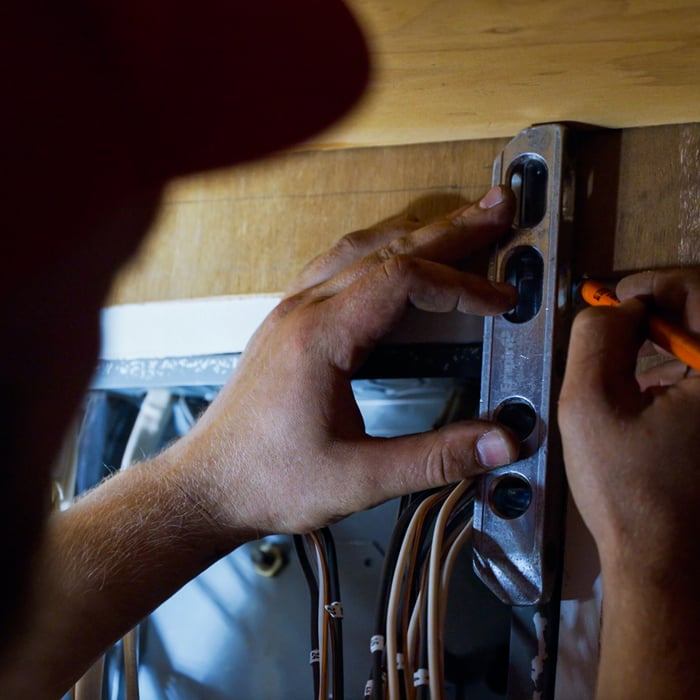
"Braxton installed our new smoke detectors after locating and repair loose/improper electrical connections that may have been causing operational issues and false alerts. After two weeks operation is flawless. Customer service was excellent and I was mostly impressed with Technician arriving on time."
Working hard
Smoke detector
Smoke detector/CO detector combo
Spectacular work
Details matter

+3

Response time7 hrs
36 neighbors recently requested a quote

Recommended by60%of homeowners
Avatar for ERDMANN BROTHERS ELECTRIC INC.
ERDMANN BROTHERS ELECTRIC INC.
5.0(
13
)
Electric Vehicle Charging Station Installation - Materials Not ProvidedElectric Vehicle Charging Station Installation - Materials Provided by ConsumerElectrical Wiring or Panel Upgrade

Serving Springville, UT and surrounding areas

Approved

In business since 1980

Free estimates

Credit card accepted

"We had a fantastic all-around experience. with Keno. From the initial walkthrough, to discussing our options, to the actual completion of the work, we were superimpressed. I've worked with plenty of electricians who always try to sell you on unnecessary upgrades or extra costs--this experience was the complete opposite of that. Keno actually talked us out of a higher cost install and helped us find a better solution at a lower cost. Will be a customer for life."


Panel change/upgrade
...
Showing 1-10 of 182
Electrical questions, answered by experts

Many wire nuts can accommodate three wires of various gauges; you should check the packaging of the nut to confirm you are buying the correct size. In addition, there are screw terminals that accommodate various numbers of wires; these might also be called “terminal blocks,” and exist to connect multiple wires. 

240V is the standard for more demanding appliances in the United States, whereas 220V is more common elsewhere. The voltage isn’t very different in any practical sense. The United States is a newer country compared to many other regions in the world with a faster adoption of new electrical needs. Appliances in the United States are often bigger than other parts of the world.

To prevent a plug from overheating, always ensure that the electrical load connected to the plug does not exceed the plug's capacity. If the plug feels hot to the touch or emits a burning smell, immediately shut off the circuit breaker and unplug all devices from the hot outlet. Prevent electrical fires by avoiding using extension cords or adapters with the plug, as they can cause it to overheat due to increased resistance. Additionally, ensure that the plug is properly inserted into the outlet and that the outlet is not damaged or loose. 

How far you can run underground electric depends on the wire gauge (generally AWG) and the circuit voltage. Too much voltage drop in an electrical circuit can negatively affect performance, so the smaller the voltage drop, the better. Ideally, it shouldn't exceed 3%. The smaller the wire and the longer the run, the more significant the voltage drop. 

For example, with a 120-volt circuit, you can run 60 feet of 12 AWG cable without losing more than 3% voltage. With a 240-volt circuit, you can run 120 feet of 12 AWG wire while maintaining a voltage drop of 3% or less.

No. Blue wires and black wires are different. Even though both are used as hot wires, they serve different functions. Black wires are far more common in residential properties. They are always hot, can be positive or negative, and usually carry electricity from a power source to an outlet. Blue wires have a specialized usage in residential properties, generally as traveler wires, and are more common in commercial properties.

The Springville, UT homeowners’ guide to electrical services

From average costs to expert advice, get all the answers you need to get your job done.