



Top-rated excavation pros.

Get matched with top excavation pros in Lancaster, TX

Enter your zip and get matched with up to 5 pros

Need a pro for your excavation project in Lancaster, TX?

Select your specific project to find the pro for you.

TRUSTED BY LANCASTER, TX HOMEOWNERS

  • Average homeowner rating star icon4.3
    Average homeowner rating
  • Verified reviews icon15
    Verified excavation services reviews

Find Excavation pros in Lancaster

Avatar for Dumpster Dog
Dumpster Dog
5.0(
10
)

Serving Lancaster, TX and surrounding areas

Approved

In business since 2023

Free estimates

Credit card accepted

"This is hands-down the best company Iâ  ve ever seen theyâ  re quick to respond. They do what they say theyâ  re going to do for the best price."
Junk Removal
Junk Removal
Junk Removal
Junk Removal
Junk Removal

+16

Response time10 hrs
37 neighbors recently requested a quote
Recommended by77%of homeowners

Avatar for 888 BUILDERS, INC.
888 BUILDERS, INC.
4.0(
20
)

Serving Lancaster, TX and surrounding areas

Approved

In business since 1990

Free estimates

Small jobs welcome

"3,120 square foot house completed in May. Completed the job quickly and at a fair price. Very knowledgeable. I would hire him again because he did everything he said he would do and kept the job clean and organized."
El Barco
Response time1 day
30 neighbors recently requested a quote
Recommended by57%of homeowners
Avatar for BarB construction
BarB construction
5.0(
2
)

Serving Lancaster, TX and surrounding areas

Approved

In business since 2021

Free estimates

Credit card accepted

"Luke did an excellent job building a fence and two water gaps. Though he didn’t have to, he repaired inferior work performed by another company on another part of the ranch."
1 neighbors recently requested a quote
Avatar for Ace-High lawn and home services
Ace-High lawn and home services
5.0(
2
)

Serving Lancaster, TX and surrounding areas

Approved

Free estimates

Emergency services offered

Small jobs welcome

"Got a house from a builder with a terrible yard and garden with no underlayment and weed protection. Ace-Higher Lawn and Home Services provided excellent service and got everything taken care of quickly. Great people. 5 stars."
Full yard makeover
34 neighbors recently requested a quote
...
Showing 1-10 of 364
Excavating questions, answered by experts

The physical constraints of hand-drilling a well limit the depth you can achieve. Manually digging with picks and shovels may only lead to shallow wells of up to 60 feet in depth. To reach greater depths, you need more specialized equipment. The diameter of your well and the tools you’re using will determine how far down you can dig.

Professional installers often include a deep layer of crushed gravel under permeable pavers to allow more runoff to soak through into the soil below. Many installations will include multiple layers of gravel, with coarser aggregate at the base and finer aggregate that sits on top of that bottom layer. Above the gravel, you’ll often find coarse sand that helps reduce paver shifting over time. Some permeable paver designs include a water collection system set into the gravel layer to route runoff to a safe area for disposal.
You do not have to dig footers for a deck as long as it meets local code and holds up to weather in your area. If you live somewhere that experiences high winds and earthquakes, you may need to dig for your deck posts. Deck blocks, post anchors with base plates, and helical pile systems are the three no-dig deck post options you can choose from if local code permits.

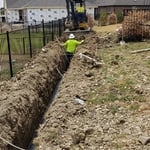
Trenching and boring are two distinct methods for installing underground utilities. Trenching involves digging a channel using equipment like an excavator, trencher, backhoe, or shovel. While it is a simpler process, it causes significant disruption to the surface, landscaping, and surrounding ecosystems.

Boring, also known as directional boring, is a less invasive alternative that uses a drill to create a tunnel for utility lines without disturbing the surface. This method is more precise and is ideal for installations that need to go underneath buildings, roads, or bodies of water. Although boring is less disruptive, it is generally more expensive than trenching.

In the United States, a depth of 36 inches (three feet) for underground water lines is the accepted industry standard. This depth varies from location to location based on local conditions. In areas with colder winters, they may be buried deeper to prevent frozen well water pipes : This is usually at least six inches below the frost level. The International Plumbing Code calls for a minimum of 12 inches below grade.

The Lancaster, TX homeowners’ guide to excavation services

From average costs to expert advice, get all the answers you need to get your job done.