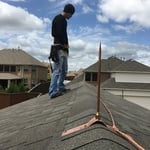
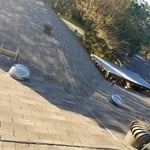
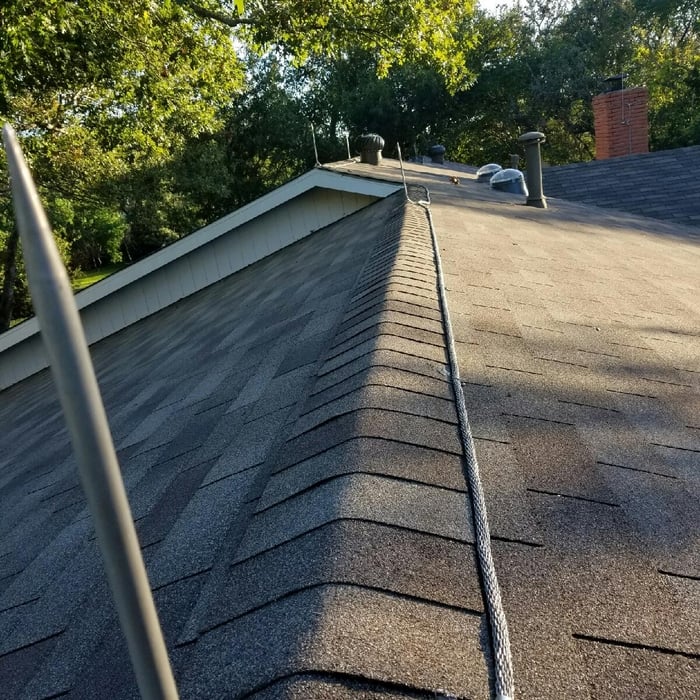
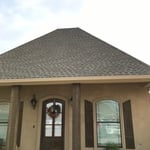
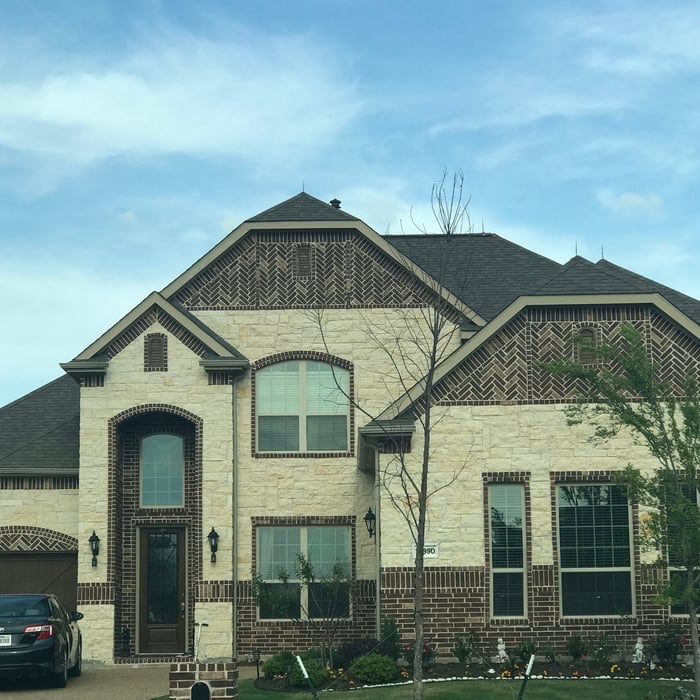
"Ed Riley is extremely knowledgeable about what causes lighting and how to protect from it. He explained to me which and how structures develop static electricity that lead to lighting discharges in a way that the physics made sense to me. They were also reasonably priced and kept their word. Definitely recommend them."
J Corrigan Lightning Rods Has been in business for over 50 plus years. We specialize in all your lighting rod needs. We also provide high quality customer service. We do service in the states of Texas, Colorado, Louisiana, Oklahoma, Mississippi and Alabama. Please give us a call today.
The modern suburban and small town home of today has become an ideal lightning target. The home owner would do well to recognize lightning for the destructive force that it is and protect against this major life and fire hazard.\n\nDonohue's Lightning Rods is based in Missouri, near the factory where most of the residential and commercial lightning rod supplies are manufactured. Jim travels regularly to Texas, Louisiana, Arkansas, Missouri, Kansas, Montana, Wyoming, Colorado, and New York. Call today to find out when Jim will be in your area. For installations outside Missouri, Kansas, or Texas, Jim waits until there are a few customers lined up, thus being able to provide the same quality services at affordable prices.\n\n\n**WE DO NOT DO ELECTRICAL SERVICES.** (ONLY LIGHTNING RODS)
Our Company provides a one-stop solution for all of your voice, internet, and telecom needs. Leveraging the Cloud we provide your Office state-of-the-art telephones for little or no upfront cost striving to keep your monthly costs the same. Sound too good to be true? Give us a call and we will show you how.
Local electrician offering dependable side work at fair prices. I handle everything from small fixes to full installs, with a focus on honest work and quick turnaround. If you need it done right without the hassle, I’ve got you covered.\n
"Jim Benton of Country Boys Electric came out the day after my call for a bid. He walked through our shell of a log cabin in the woods, was very thoughtful, made many great suggestions about where to put lights and plugs, described the work they would do and within a few days we has his written bid. We liked and trusted Jim immediately and they started to work in a few days. His workers were very professional, arrived on time, worked well with us. They did all the wiring and then had to wait about a month for the sheetrock and painters to do their work. We called them back and they were ready to install lights and fans and finish the job. We were so please with their work. They were very reliable and on time, even though they had to drive 40 miles from their shop to our place each day.We would highly recommend them to others. "
"Excellent installation in timely, professional, clean and courteous, Received a full proposal prior to work for solar panels to deliver 80 percent or more of yearly electricity needs. The entire start to finish service was fantastic. Thanks,"
Here at Volt Electrical Services we sustain our business on quality and integrity. We are experts in our trade and our commitment to quality from beginning to end of your project. We look forward to earning your business. Call us at 512-774-1957 anytime with any questions you may have. Guaranteed BEST RATES in Town
Any light bulbs made from toxic materials, such as CFL bulbs and fluorescent light tubes, should not be thrown in the garbage. These bulbs need to be sent to hazardous waste collection sites run by your municipality or sent through a specialized mail-back recycling program. Earth911 allows you to search and find a recycling location near you.
Electric bills tend to be lower in spring and fall because people use less electricity during these seasons. Milder temperatures allow for less use of heating and cooling, unlike during winter and summer, which usually bring more extreme temperatures.
Yes, most electric and automatic gates can be opened manually. They are equipped with a manual override or release mechanism that detaches the motor from the gate, allowing it to be moved by hand. This feature is essential during power outages or other emergencies.
To activate the manual override, you will typically need a specific key or tool. In some cases, you may also need a screwdriver to remove a cover to access the release mechanism. The use of a key is a common security measure to prevent unauthorized individuals from manually opening the gate.
Because every model is different, it is highly recommended to consult your gate's user manual to familiarize yourself with the specific procedure before you need to use it. Keep any necessary keys or tools in an accessible location. Be aware that automatic gates can be very heavy, so opening and closing them manually may be difficult.
In North America, electric gates are also subject to the UL 325 Standard for Safety, which includes provisions to allow emergency responders to access the property.
The American Wire Gauge system calculates wire size diameters using the complicated formula D(AWG)=.005·92((36-AWG)/39) inch. A simpler rule of thumb is that every six-gauge decrease doubles the wire diameter, and every three-gauge decrease doubles the wire’s cross-sectional area. On the other hand, wavenumbers are typically measured in reciprocal meters (1/m or m−1) or reciprocal centimeters (1/cm or cm−1).
If you plan to have a refrigerator or other appliances that require electricity, you will need an electrical outlet in your outdoor kitchen. Be sure to comply with all National Electrical Code® (NEC®) codes for electrical wiring and outlets in kitchens. If you do not plan to install a refrigerator or any other appliances that require electricity as part of your outdoor kitchen features, then you do not need to install electrical outlets. However, it is a good idea to install at least one electrical outlet should you decide to use any appliances that require electricity.
The Dimmitt, TX homeowners’ guide to electrical services
From average costs to expert advice, get all the answers you need to get your job done.
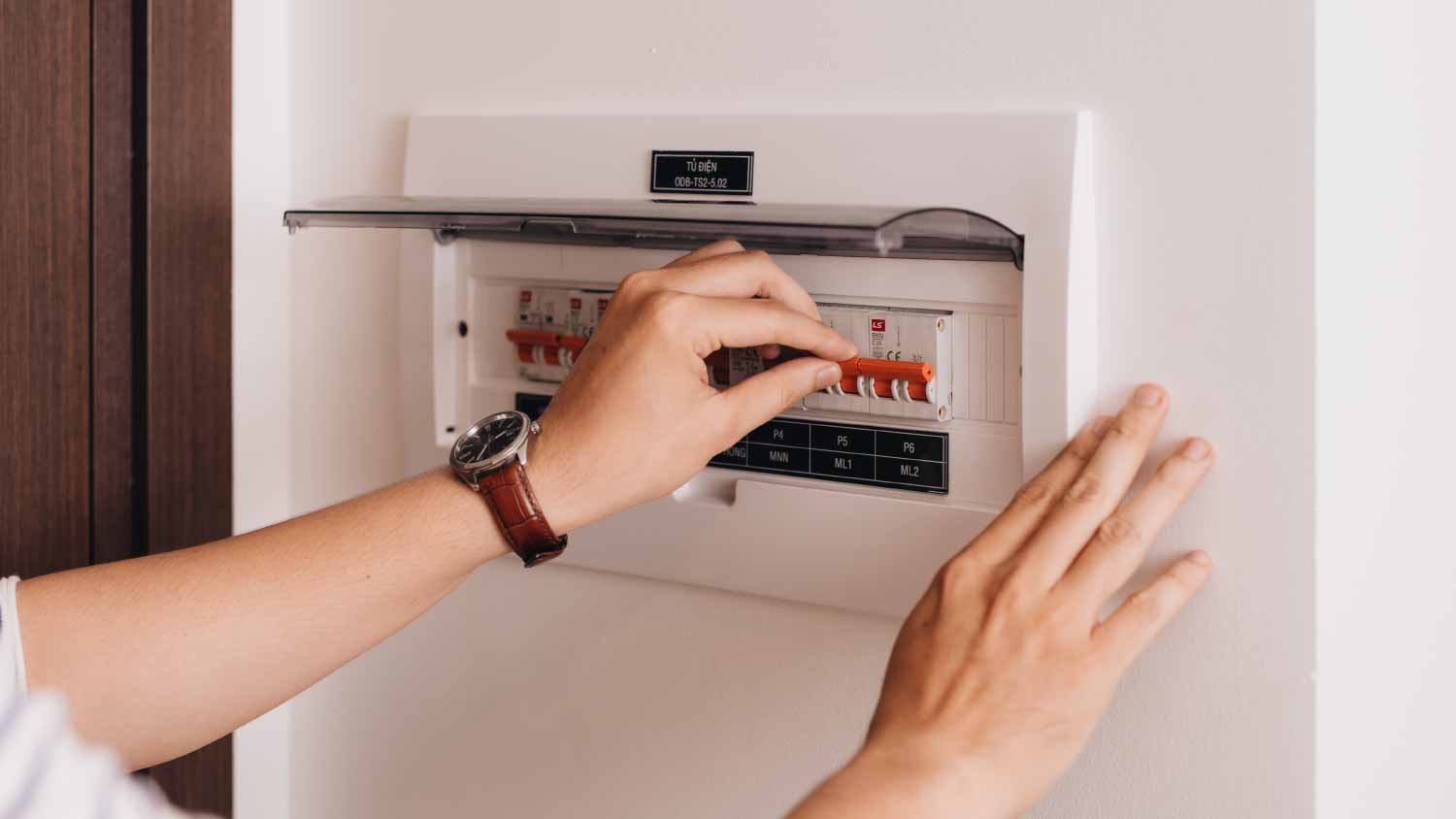
Is it time to upgrade your electrical panel? For the sake of safety, find out sooner than later by exploring our top signs that it’s time for an upgrade.