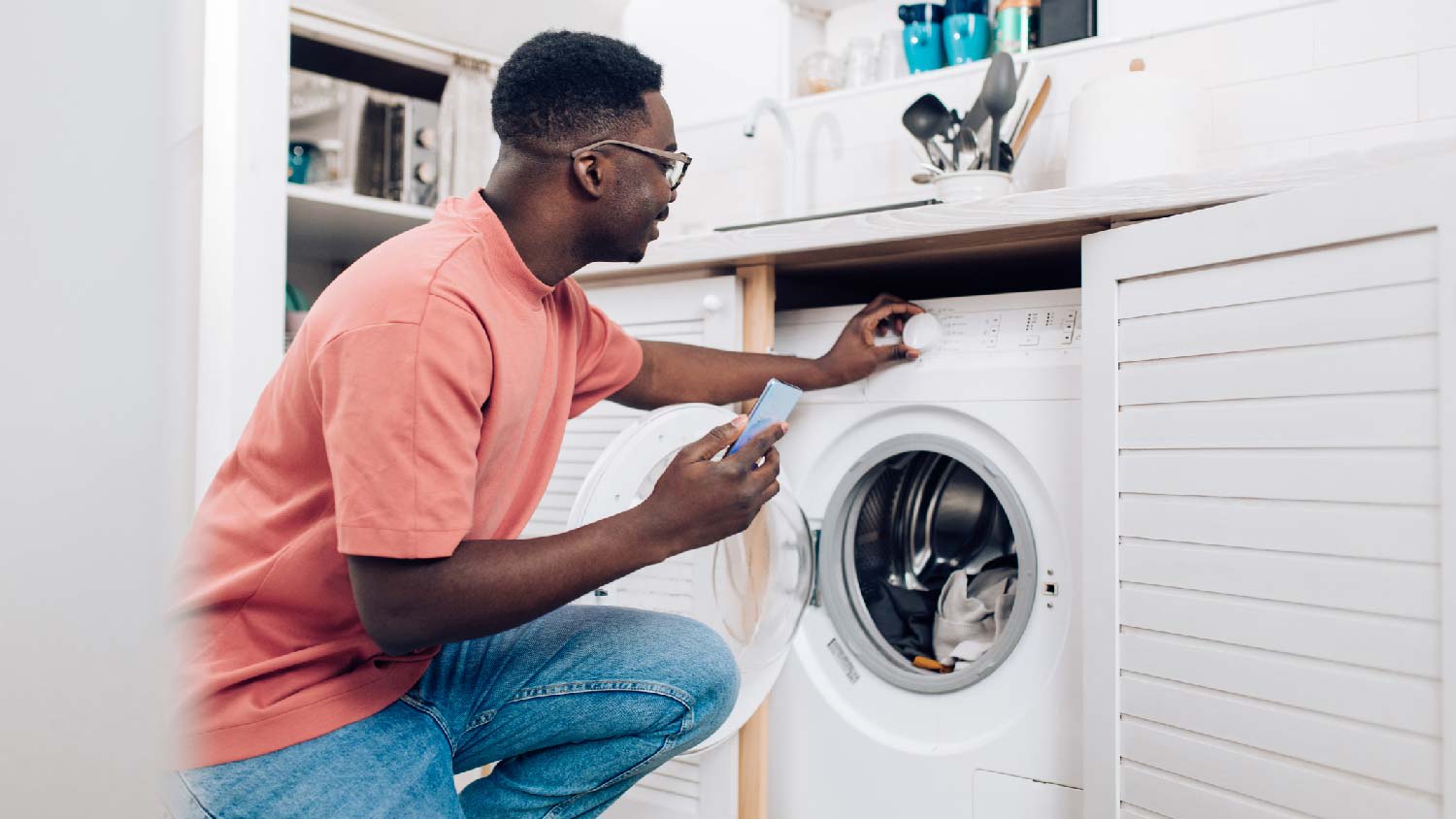
If your water softener repair is fairly straightforward, like a simple filter replacement, then you can probably do it yourself with little risk. However, anything beyond a simple fix should be addressed by someone with extensive plumbing expertise to avoid costly water softener problems, like leaks.
That said, even simple problems can be complicated to diagnose, particularly if your water softener is attached to a whole-house treatment system. So, unless you feel absolutely certain that the problem is an easy fix that you can take on yourself, it's probably best to hire a plumber to diagnose and fix the problem.
Hard water stains can be a headache because they will reoccur as long as hard water flows through. Thankfully, hard water stains are not permanent. With the right tools and an appropriate cleaning routine, you can prevent hard water stains from ever building up. However, you might feel like you are stuck in a constant cleaning cycle. In that case, you may consider hiring a contractor to perform routine cleaning.
The primary difference between a water softener and a water filter lies in what they remove from the water. A water softener is designed to remove hard minerals like calcium and magnesium. In contrast, a water filter has a broader effect, removing various contaminants above a certain size, which can include bacteria and other impurities.
To decide which you need, consider your goal. If you want to eliminate hard minerals, choose a softener. If you want to remove a wide range of contaminants, a filter is the better option. Filters are also generally less expensive to install. Depending on your water supply, you may need to install both for comprehensive treatment.
A lower-end water softener would cost around $900, not including installation. Each home has different requirements, water hardness, and number of inhabitants, so there’s a huge range in pricing—$600 to over $6,000. The average water softener repair bill is around $500, meaning it’s a much better option to repair any issues and only replace your softener if absolutely necessary.
Whether you need a license or permit for water softener installation depends on your location. Some municipalities require the installer to hold a plumbing license, while others may only require a permit and an inspection. In some cases, both a permit and a licensed installer are necessary, and some areas have no requirements at all. Often, only certified plumbers and electricians are allowed to pull the necessary permits. To find out the specific regulations in your area, you can contact your local building department. Alternatively, a local water softener installer or plumber will be familiar with the requirements and can typically pull the permits for you. Regardless of local laws, it is always recommended to hire a licensed professional to ensure the system is sized and installed correctly. You can use tools like Angi’s state licensing tool to verify an installer's license status.
The Rosebud, SD homeowners’ guide to water softener services
From average costs to expert advice, get all the answers you need to get your job done.
Water softeners work to remove unwanted minerals from hard water through a filtration and recharge cycle. Keep reading to learn how a water softener works.
There are four common softener alternatives available on the market today. We compare and contrast each one to help you find your best-fit solution in this blog.
Water softeners rid your home of hard minerals and, well, soften your water. Even better, the regeneration process is an automatic cycle that works when you’re least likely to use it.
Water softeners remove hard minerals from your tap water, improving plumbing systems and water-using appliances. Here are the most efficient water softeners out there.