Here at Custom Cut Construction we are dedicated to providing you with exceptional customer service. We specialize in all areas of siding from vinyl to metal to wood we�ll be there to make sure it�s done right the first time. We can also take care of your framing installs and repairs as well as exterior paint work. We have just opened business this year and are backed by over 20 year�s experience. Please give us a call today and set up your free no obligation estimate.
David Ferguson's construction business is dedicated to quality and outstanding customer service. Our job is to provide you with quality service at a great price. Please don't wait call us today.
Yes, transforming a deck into a sunroom is an absolute possibility. Building a sunroom involves framing in the deck area with walls, adding windows, and affixing a roof. This project is not an easy task, but it does provide a stylish addition to your house. Not all deck designs support this type of renovation project, so consult a professional deck builder before beginning.
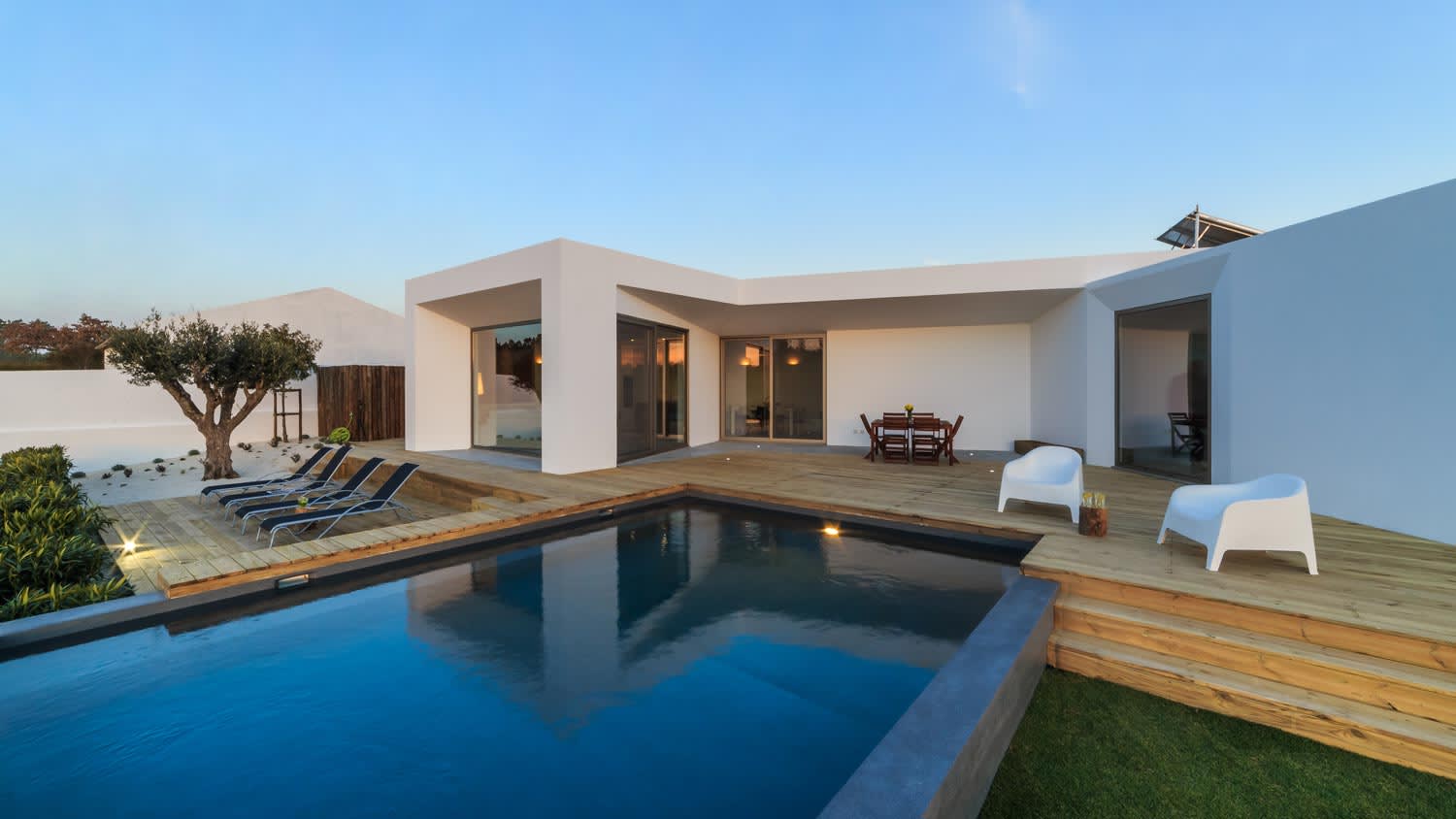
Yes. Freestanding or floating decks are exactly what the name implies—structures with their own support beams. You can build a deck yourself and place it next to a house for the illusion of a connected deck without the hassle. Or you can construct it in a separate part of your yard for a dedicated outdoor entertainment space. For the purpose of removing a freestanding deck, the steps are the same as an attached deck, but you don’t have to cut the deck away from the home.
Decks require several inspections during and after the building process, but the specifics vary depending on where you live. Most areas mandate that decks comply with local building codes and safety regulations for the foundation, framing, and structure. Some pros recommend a footing inspection, which verifies the depth, width, and location of the various footings to ensure they offer enough foundational support.
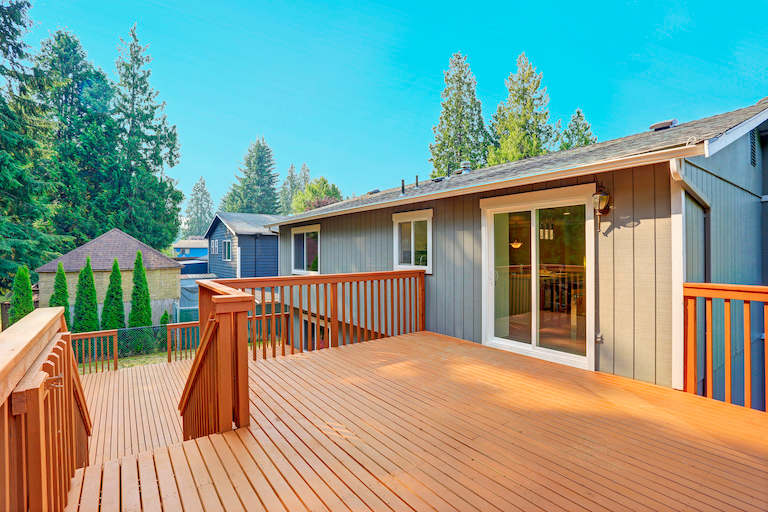
Some elevated decks require stairs that lead to the ground level per the local fire codes in some municipalities. In other regions, a staircase is an optional feature that can increase accessibility and convenience for homeowners who want ground-level access to their deck. Additionally, a staircase is necessary if your home doesn't have an existing door leading to the deck.
As with patios, there are many types of deck choices to choose from to add personalization to your home. Some common deck options include:
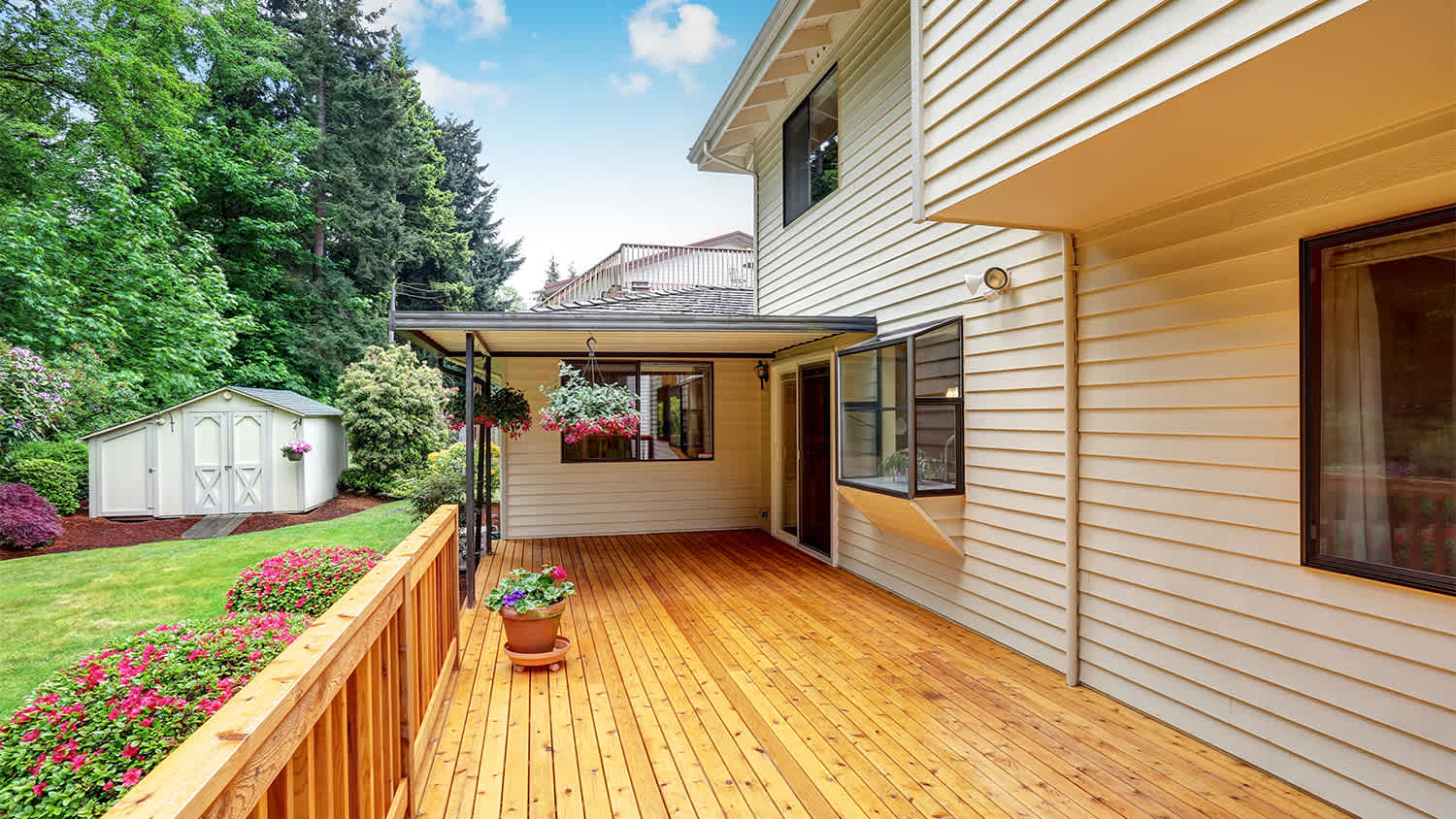
Attached decks are anchored to the home and include simple ground-level options or multi-level structures with stairways and separate landings.
Detached island decks are not attached to the home; they’re a freestanding structure in the yard.
Wraparound decks connect the back of the house with at least one other side and often are built with railings for safety.
Multi-level decks connect your deck through varying levels of elevation, featuring landings that are attached to stairs.
The Murdo, SD homeowners’ guide to deck repair services
From average costs to expert advice, get all the answers you need to get your job done.
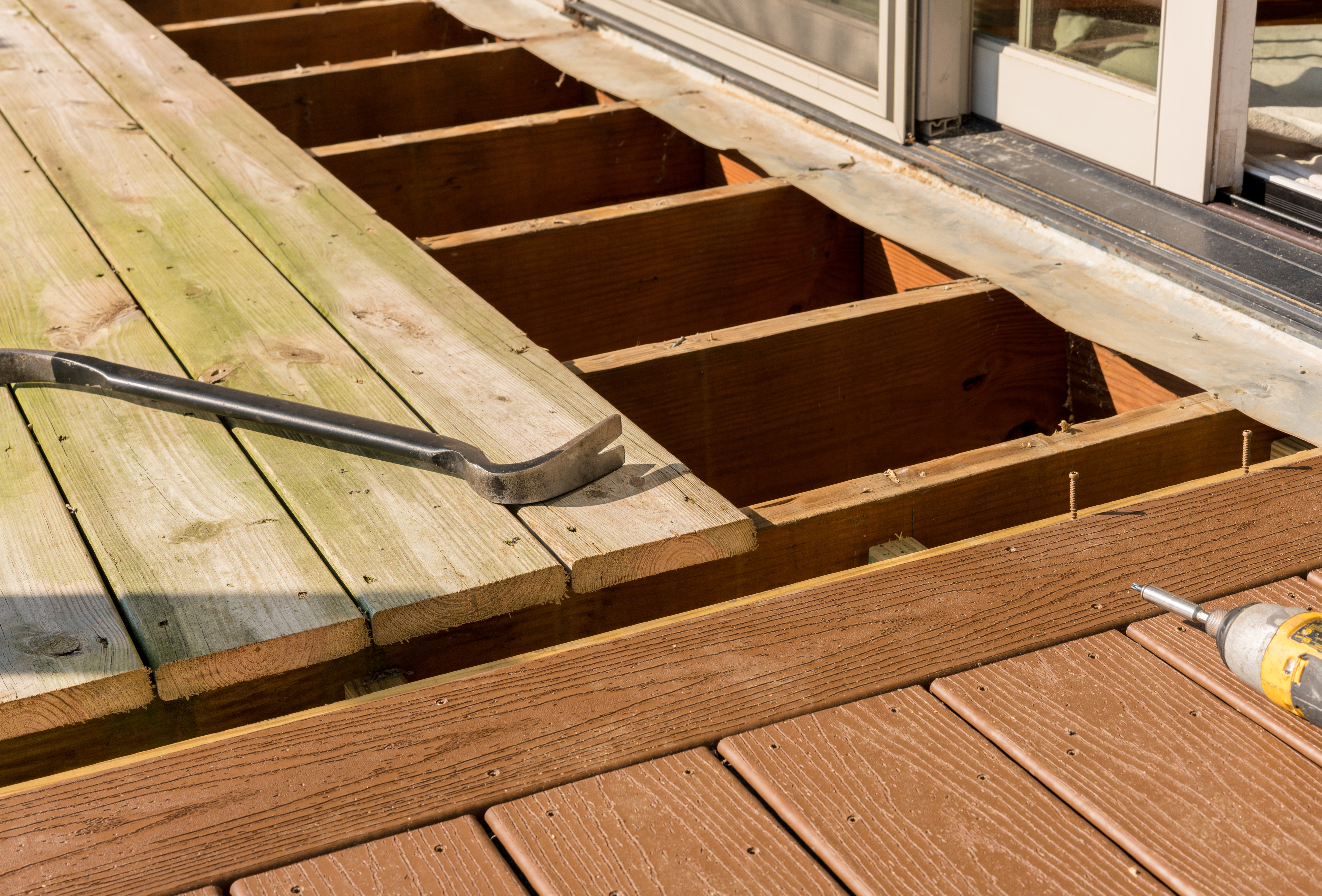
Deck replacement costs depend on materials, any structural damage you need to fix, and more. This guide explores how much it costs to replace or repair a deck.
Refinishing your deck is a great way to restore its appearance and fall in love with your outdoor space. Use this guide to learn how much it costs based on factors like size and type.
Old and run-down porch railings can be an eyesore and pose a risk of falling. Find out how much it costs to replace your worn out porch railings with new materials.
If your deck is in bad shape, this deck repair checklist will help you inspect, clean, maintain, and repair it without missing any vital steps in the process.